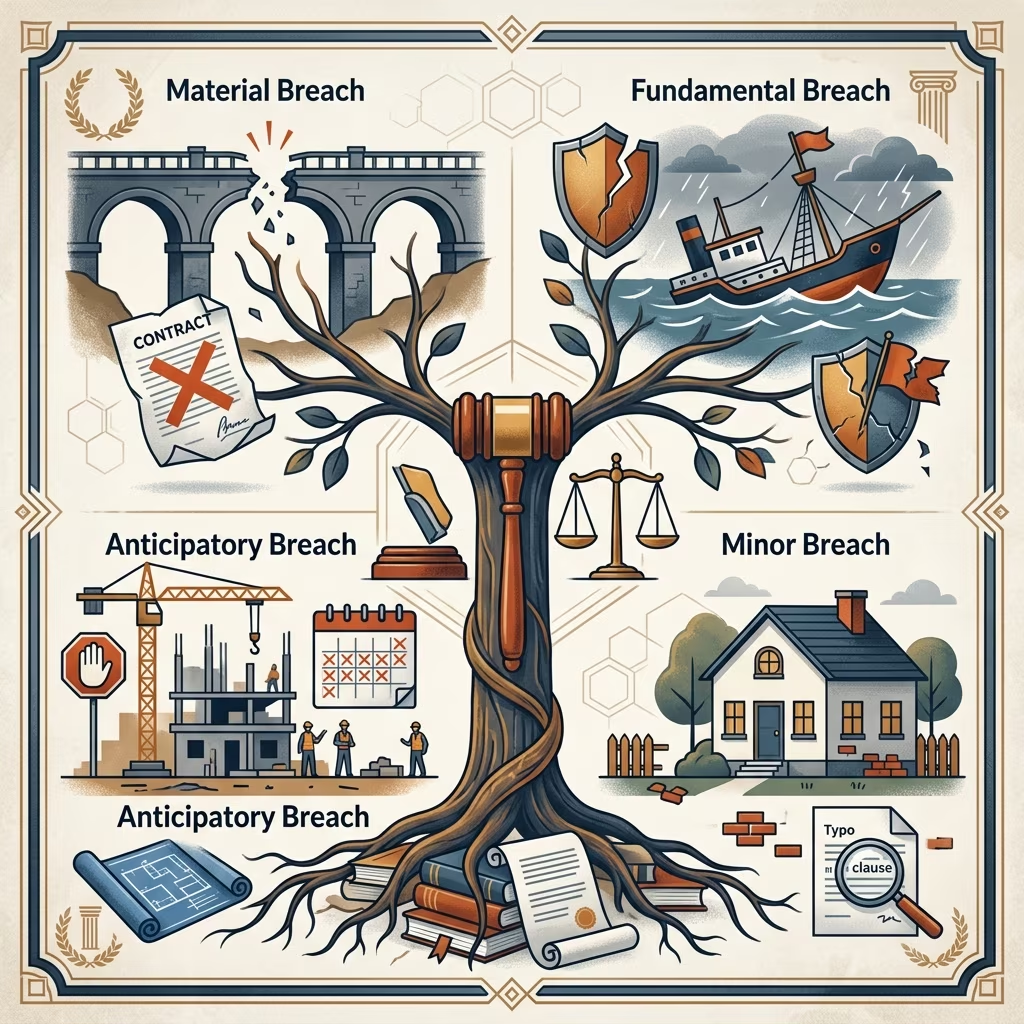
Business contracts are designed to create certainty: who does what, by when, and on what terms. When one party fails to do what they promised, a breach of contract occurs and legal rights are triggered for the non‑breaching party. Not all breaches are equal, so understanding the different types of breach is essential for deciding how serious the problem is and what to do next.
This guide explains the four commonly recognized types of contract breach—minor, material, anticipatory, and actual—along with their consequences, typical legal remedies, and practical prevention strategies.
What Does “Breach of Contract” Mean?
A breach of contract is a failure by one party to uphold their obligations under a legally binding agreement. This may involve not performing at all, performing late, performing in a defective way, or clearly indicating in advance that performance will not occur.
To establish a breach in court, a claimant typically must show:
- A valid, enforceable contract existed.
- The non‑breaching party performed, or was ready and willing to perform, their obligations.
- The other party failed to perform as required by the contract.
- The breach caused measurable loss or damage.
Once a breach is proven, different types of remedies—such as money damages or court orders—may be available, depending on the kind and seriousness of the breach.
The Four Main Types of Contract Breach
Legal and commercial practice commonly distinguishes four principal categories of breach:
- Minor (partial) breach
- Material (total) breach
- Anticipatory breach
- Actual breach
These categories are not just labels; they influence whether you may terminate the contract, what damages you can seek, and whether you must continue performing your own obligations.
| Type of Breach | Timing | Severity | Typical Rights |
|---|---|---|---|
| Minor (partial) | At or after performance date | Low to moderate | Seek compensation for limited loss; often must continue performance. |
| Material | At or after performance date | High | May suspend or terminate contract and claim damages. |
| Anticipatory | Before performance is due | Moderate to high | Can treat contract as breached immediately and pursue remedies. |
| Actual | On or after due date | Varies | Seek damages or other relief once non‑performance occurs. |
Minor (Partial) Breach: Imperfect Performance
A minor breach—sometimes called a partial or immaterial breach—occurs when a party deviates from the contract in a relatively small way, but the overall purpose of the agreement is still achieved. The non‑breaching party receives most, though not all, of what was promised.
Key Characteristics of a Minor Breach
- The breach relates to a non‑essential term or a small portion of the obligations.
- The contract can still be substantially carried out.
- The non‑breaching party usually must continue performing their own duties.
- Legal remedies typically focus on compensation for the specific shortfall, not termination of the entire contract.
Because minor breaches do not undermine the core bargain, courts generally allow the contract to remain in force while awarding damages proportionate to the harm suffered.
How Businesses Commonly Respond to Minor Breaches
- Document the issue (dates, communications, and impact on operations).
- Notify the breaching party and request corrective action within a specific timeframe.
- Calculate direct losses, such as extra costs incurred to fix or work around the problem.
- Negotiate adjustments—for example, discounts or revised timelines—if continued collaboration is valuable.
Material (Total) Breach: Breakdown of the Core Deal
A material breach is a serious failure to perform that undermines the central purpose of the contract and deprives the non‑breaching party of the benefit they reasonably expected to receive. In many jurisdictions, a material breach can justify terminating the agreement and seeking substantial damages.
Indicators of a Material Breach
- A major obligation is not performed at all or is performed in a clearly unacceptable way.
- The non‑breaching party is left without the core value or benefit of the contract.
- The failure is not easily cured without significant delay or cost.
- Continuing the contract would be unfair or commercially unreasonable.
Because material breaches go to the heart of the bargain, they often allow the non‑breaching party to stop their own performance, cancel remaining obligations, and pursue more extensive remedies in court.
Typical Legal Consequences of Material Breach
- Right to terminate or rescind the contract in whole or in part.
- Compensatory damages to put the non‑breaching party in the position they would have been in had the contract been properly performed.
- In appropriate cases, specific performance may be ordered, compelling the breaching party to perform a unique obligation (for example, delivering unique goods or real estate).
- Other remedies such as restitution (return of benefits) or, in exceptional situations, punitive damages may be available depending on the governing law and facts.
Anticipatory Breach: Repudiation Before Performance Is Due
An anticipatory breach, often called anticipatory repudiation, arises when one party makes it clear—either through words or conduct—that they will not fulfill their future contractual obligations, even though the time for performance has not yet arrived.
Examples include an explicit statement that the party will not perform, or actions showing they are unable or unwilling to perform, such as disposing of goods needed to satisfy the contract.
Why Anticipatory Breach Matters
- It allows the non‑breaching party to act immediately instead of waiting for the deadline to pass.
- The non‑breaching party may treat the contract as terminated and mitigate losses by finding alternative suppliers or customers.
- Damages can be calculated based on the expected performance that will now not occur.
- In some systems, the non‑breaching party can demand adequate assurance of future performance; failure to provide assurance may itself confirm the breach.
Options When Faced with Anticipatory Breach
- Affirm the contract and insist on performance, while reserving rights to claim damages later.
- Terminate the contract and treat the repudiation as an immediate breach.
- Seek substitute performance to reduce financial impact, documenting replacement costs.
- Issue a formal notice referencing the anticipatory breach and outlining intended remedies.
Actual Breach: Non‑Performance When Performance Is Due
An actual breach occurs when the time for performance has arrived and a party either refuses to perform, performs incompletely, or performs in a way that clearly conflicts with the contract terms.
Actual breach is sometimes used as a broad label covering both minor and material breaches that occur at or after the agreed time; the legal consequences depend on how serious the failure is.
Common Forms of Actual Breach
- Failure to deliver goods or services by the agreed deadline.
- Failure to pay the agreed price or fees.
- Defective or incomplete performance, such as delivering substantially non‑conforming goods.
- Partial performance that does not meet the standard or quantity required under the contract.
Once an actual breach occurs, the non‑breaching party can rely on contractual provisions and applicable law to determine remedies, which may range from price adjustments to full termination and damages.
Legal Remedies for Breach of Contract
The law aims to protect the expectation created by a contract—putting the injured party in the position they would have been in if the agreement had been performed. Remedies vary with the type and severity of breach, but several commonly recognized options include:
- Compensatory damages – monetary awards covering proven financial losses directly caused by the breach, such as lost profits, extra costs, or replacement expenses.
- Consequential (indirect) damages – in some cases, additional losses that were reasonably foreseeable at the time of contracting, such as downstream business impacts.
- Specific performance – a court order requiring the breaching party to carry out their obligations, generally reserved for unique goods or circumstances where money alone is inadequate.
- Rescission – cancellation of the contract, releasing both parties from further obligations, often combined with restitution.
- Restitution – returning benefits already exchanged so that parties are restored, as far as possible, to their pre‑contract position.
- Alternative dispute resolution (ADR) – mediation or arbitration, commonly used to resolve contract disputes more quickly and privately than court litigation.
Practical Steps When You Suspect a Breach
If you suspect a breach—whether minor, material, anticipatory, or actual—taking structured steps early can preserve your rights and improve outcomes.
- Review the contract carefully
Identify the specific clauses that appear to have been breached and any notice or cure requirements the contract imposes. - Gather evidence
Collect signed contracts, emails, invoices, delivery records, and internal notes showing non‑performance and financial impact. - Assess the type and seriousness of the breach
Consider whether the failure is minor or material, and whether it is actual or anticipatory, as this influences available remedies. - Send a formal notice of breach
Where informal discussions fail, a written notice could outline the facts, refer to relevant contract provisions, and specify a deadline for remedy. - Seek legal advice
Consult a qualified attorney to understand jurisdiction‑specific rules, potential damages, and strategic options before terminating or filing suit.
Preventing Breaches Through Better Contract Management
While no contract can eliminate risk entirely, well‑drafted agreements and robust contract management can significantly reduce the likelihood and impact of breaches.
- Define obligations clearly – specify scope, quality standards, timelines, payment terms, and acceptable methods of performance.
- Include breach and remedy clauses – outline what counts as material breaches, cure periods, liquidated damages, and termination rights.
- Add dispute resolution provisions – mediation or arbitration clauses can provide a structured path for resolving disagreements.
- Monitor performance regularly – track milestones, deliveries, and payments to identify potential problems early.
- Maintain clear communication – prompt, documented communication about delays or changes can prevent misunderstandings escalating into breaches.
- Use contract management tools – technology solutions can centralize contracts, automate alerts, and improve compliance.
Frequently Asked Questions (FAQs)
Is every failure to follow a contract a material breach?
No. Many failures are classified as minor breaches when they affect only small or non‑essential aspects of the agreement. Only breaches that significantly deprive the non‑breaching party of the core benefit of the contract are treated as material.
Can I immediately terminate the contract after any breach?
Not necessarily. Your ability to terminate depends on the type of breach, the language of your contract, and the laws of the applicable jurisdiction. Termination is typically reserved for material or fundamental breaches and may require following specific procedural steps.
What should I do first if I think the other party will not perform in the future?
If you foresee non‑performance, you may be facing an anticipatory breach. Review your contract, document the reasons for your concern, consider requesting written assurances, and seek legal advice before deciding whether to terminate or wait for actual breach.
Do I always have to go to court to enforce my rights?
No. Many contracts now include mediation or arbitration clauses, and parties frequently resolve disputes through negotiation or ADR without litigation. However, when informal or ADR methods fail, court action may be necessary to secure a binding judgment.
Can I recover all business losses caused by a breach?
Recovery is limited to losses that are proven and legally recognized. Courts typically award compensatory damages for direct losses, and sometimes consequential damages if they were reasonably foreseeable at the time of contracting. Some categories of loss, such as speculative future profits, may be harder to recover.
References
- What is a Breach of Contract? Types, Causes, and Examples — Icertis. 2024-05-01. https://www.icertis.com/contracting-basics/what-is-a-breach-of-contract/
- The 4 Types of Breach of Contract: Explained with Examples — Sirion. 2023-09-15. https://www.sirion.ai/library/contract-management/types-of-breach-of-contract/
- 4 Main Types of Contract Breaches — Becker Law LLC. 2022-11-10. https://beckerlawllc.com/4-main-types-of-contract-breaches/
- The Different Types of Contract Breaches and Their Legal Consequences — Jimerson Birr. 2025-07-02. https://www.jimersonfirm.com/blog/2025/07/the-different-types-of-contract-breaches-and-their-legal-consequences/
- Understanding Breach of Contract: Types, Legal Issues, and More — Investopedia. 2024-03-20. https://www.investopedia.com/terms/b/breach-of-contract.asp
- Contract Breaches: Types, Consequences, and Solutions — YouTube (educational legal content). 2023-08-18. https://www.youtube.com/watch?v=hBlA3OW1cHg