
Phone Tracking: 5 Practical Steps To Reduce Location Exposure
Uncover how easily your smartphone reveals your every move and learn proven strategies to reclaim your location privacy today.
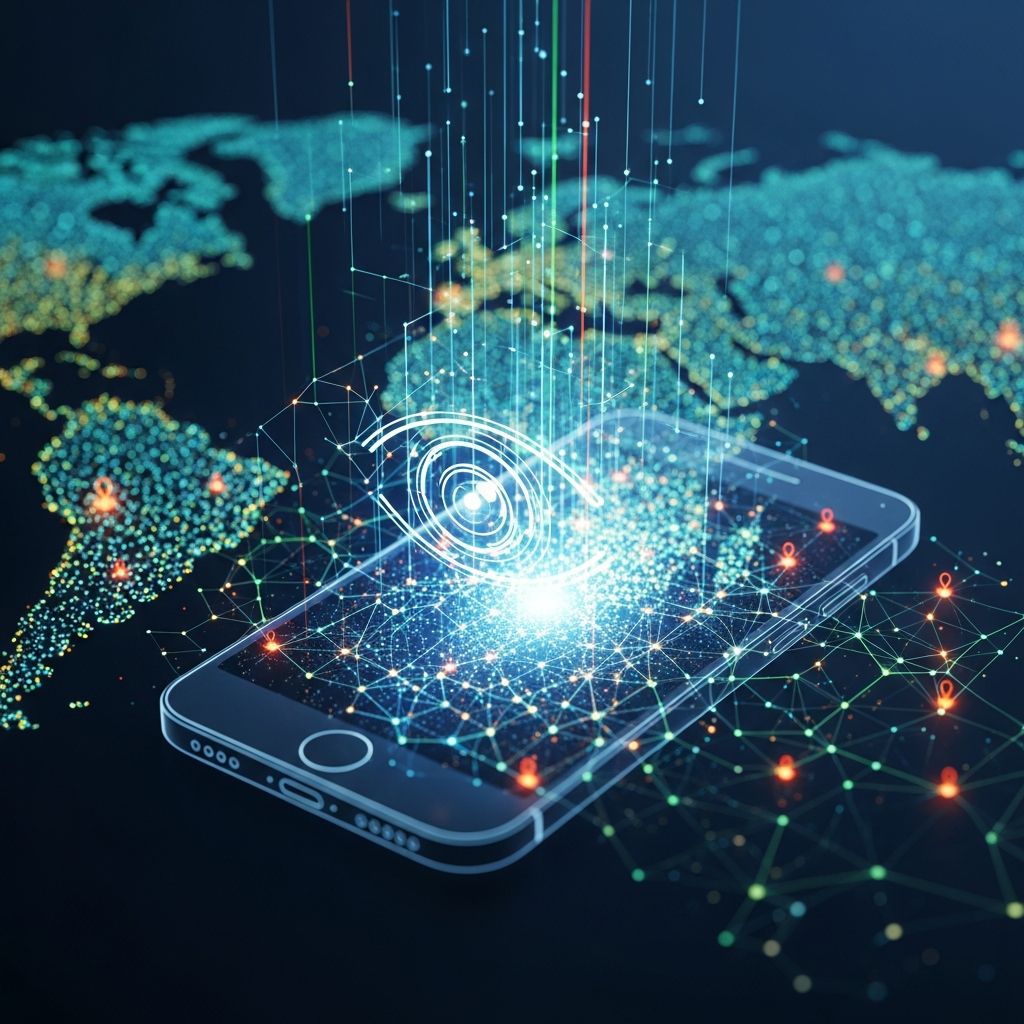
Your smartphone is a powerful tool, but it constantly broadcasts your location through multiple channels, often without your full awareness. Carriers, apps, law enforcement, and even malicious actors can access this data under various circumstances, raising serious privacy concerns.
Understanding the Core Mechanisms of Phone Tracking
Modern smartphones determine location using several interconnected technologies.
Cell tower triangulation
identifies your position by measuring signals from nearby cellular towers, a method carriers use routinely to route calls and data. This provides approximate location accuracy within a few hundred meters in urban areas.**Wi-Fi and Bluetooth scanning** enhances precision by detecting nearby networks and devices. Even when location services are disabled, phones emit probe requests that can reveal presence near specific hotspots. GPS satellites offer the highest accuracy but require active location services.
These systems combine to create a detailed movement profile. For instance, apps bundle data from all sources, sharing it with third parties unless restricted.
Who Can Access Your Location Data?
Several entities have pathways to your phone’s location information:
- Cellular Carriers: They collect triangulation data continuously and retain it for billing and network management. Law enforcement can compel disclosure via court orders.
- Mobile Apps: Thousands of apps request location permissions, often sharing data with advertisers. Malicious apps disguised as utilities can enable remote tracking.
- Law Enforcement: Agencies access data through warrants or lower standards like court orders. The ACLU notes frequent warrantless access to cell records.
- Hackers and Stalkers: Spyware like Pegasus infiltrates devices silently, tracking in real-time without user interaction.
| Entity | Access Method | Legal Threshold | Accuracy Level |
|---|---|---|---|
| Carriers | Triangulation logs | Court order/warrant | ~100-500m |
| Apps | GPS/Wi-Fi | User permission | 5-50m |
| Law Enforcement | Provider data/Stingrays | Varies by jurisdiction | Variable |
| Hackers | Spyware/phishing | Illicit | High (GPS) |
Legal Landscape: Warrants, Court Orders, and Your Rights
In the U.S., the Fourth Amendment protects against unreasonable searches, but cell location data access standards vary. The Supreme Court ruled in Carpenter v. United States (2018) that historical location data over seven days requires a warrant based on probable cause. However, real-time tracking or shorter periods often needs only a court order or subpoena.
Cell site simulators (“Stingrays”) mimic towers to capture signals from targeted phones and bystanders, sometimes used with minimal oversight. Advocacy groups like the EFF and ACLU push for stricter warrant requirements across all tracking methods.
State laws add layers; California mandates warrants for real-time location in many cases. Internationally, GDPR in Europe imposes fines on unauthorized data sharing, but enforcement lags for mobile tracking.
Real-World Tracking Threats: From Governments to Stalkers
Government surveillance programs vacuum carrier data, justified for national security. Commercial entities sell aggregated location histories to marketers, creating detailed behavioral profiles.
Individuals face risks from domestic abusers using stalkerware or SIM cloning, which duplicates cards to intercept location via towers. Public Wi-Fi exposes data through man-in-the-middle attacks, where hackers position between your phone and networks to snoop location signals.
Spyware proliferation alarms experts; tools like Pegasus, once state-exclusive, now appear in consumer scans at rates of 2.5 per 1,000 devices. Social engineering tricks users into installing trackers via fake apps or phishing links.
Practical Steps to Minimize Location Exposure
Complete privacy requires trade-offs, but layered defenses reduce risks:
- Device Controls: Disable location services when unnecessary. Toggle off Wi-Fi/Bluetooth scanning in settings (iOS: Settings > Privacy > Location Services; Android: Location > App permissions).
- Airplane Mode/Faraday Bags: Blocks all signals instantly. Use for sensitive travel.
- Burner Phones: Anonymous prepaid devices for high-risk scenarios, avoiding personal identifiers.
- VPN and App Vetting: Encrypt traffic; review permissions regularly and delete suspicious apps.
- OS Updates: Enable MAC randomization (standard on recent iOS/Android) to obscure Wi-Fi probes.
For journalists or activists, EFF recommends dedicated devices left behind during operations.
Advanced Threats and Countermeasures
Zero-click exploits bypass defenses, infecting via iMessage or WhatsApp without interaction. Counter with endpoint detection software and avoid clicking unknowns.
SIM cloning demands vigilance: Monitor for duplicate activity via carrier portals and enable SIM PINs. Public hotspots? Use VPNs religiously and disable auto-connect.
Even location-off, towers reveal coarse positions. Only powering off or Faraday pouches fully mitigate.
Frequently Asked Questions
Can my phone be tracked with location services turned off?
Yes, via cell towers, Wi-Fi probes, or Bluetooth. Spyware ignores settings. Use airplane mode or Faraday bags for true protection.
Does law enforcement need a warrant for my location data?
For historical data spanning days, yes per Supreme Court ruling. Real-time or short-term often requires less. Push for reforms via ACLU/EFF.
Are tracking apps detectable?
Often hidden, but signs include battery drain, data spikes, or unfamiliar processes. Scan with reputable antivirus; check app permissions.
Is WhatsApp or iMessage safe from location tracking?
End-to-end encryption protects content, but metadata and carrier data expose location. Review platform policies for law enforcement requests.
How accurate is cell tower tracking?
Urban: 50-300 meters; rural: kilometers. Combined with Wi-Fi/GPS, it builds precise timelines.
Future Trends: Emerging Tech and Privacy Battles
5G densifies towers, sharpening triangulation. Ambient computing (smart cities) amplifies Wi-Fi tracking. Regulators respond: EU AI Act classifies tracking as high-risk; U.S. bills target data brokers.
Users must stay proactive. Privacy-by-design defaults, like randomized identifiers, evolve, but vigilance remains key.
References
- Ask a security trainer: Is mobile device location tracking a real risk? — Freedom of the Press Foundation. 2023-05-15. https://freedom.press/digisec/blog/ask-a-security-trainer-is-mobile-device-location-tracking-a-real-risk/
- Location Tracking + Cell Phone Privacy: What You Need to Know — Really.com. 2024-02-20. https://www.really.com/post/location-tracking-cell-phone-privacy-what-you-need-to-know
- Mobile Phones: Location Tracking — Electronic Frontier Foundation (EFF). 2024-08-10. https://ssd.eff.org/module/mobile-phones-location-tracking
- Can someone track my phone? A guide to detection and prevention — Norton. 2025-11-05. https://us.norton.com/blog/emerging-threats/can-someone-track-my-phone
- Mobile phone tracking — Wikipedia (citing U.S. Supreme Court precedents). 2026-03-28. https://en.wikipedia.org/wiki/Mobile_phone_tracking
Similar Articles








Read full bio of medha deb




