
Cell Phone AMBER Alerts: A 2025 Guide To How To Respond Safely
Discover how Wireless Emergency Alerts deliver urgent child abduction notifications to your phone, enhancing public response and child safety efforts.
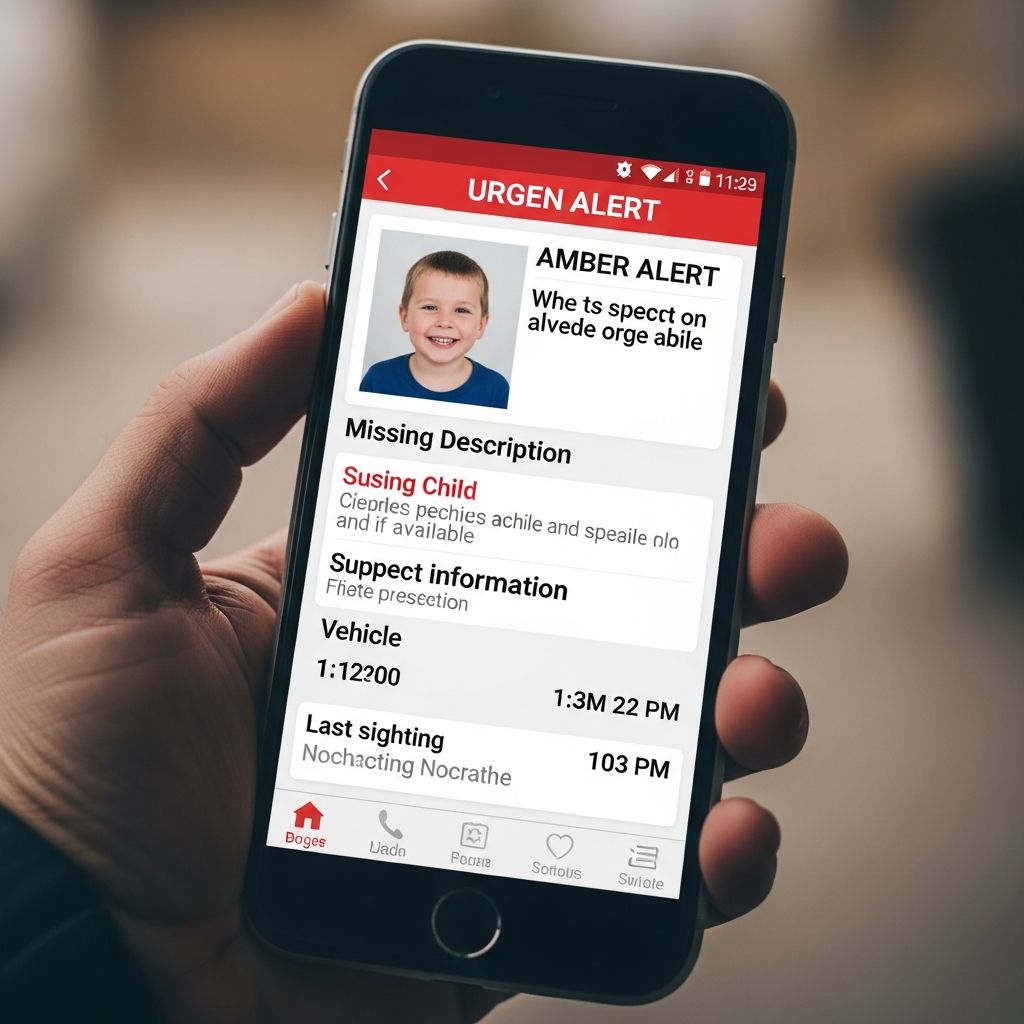
Cell phone AMBER Alerts are a cornerstone of modern public safety systems, delivering urgent notifications about child abductions directly to mobile devices across targeted geographic areas. These alerts leverage the Wireless Emergency Alert (WEA) program to mobilize communities swiftly, often leading to rapid recoveries of missing children.
The Foundation of AMBER Alerts
Named after Amber Hagerman, a nine-year-old abducted and murdered in 1996, the AMBER Alert system emerged to address gaps in child abduction responses. Congress formalized it in 2003 through the PROTECT Act, establishing national guidelines while allowing states to adapt criteria. Today, it integrates multiple dissemination channels, with cell phone alerts proving most immediate for reaching the public.
These alerts activate only when specific conditions align: law enforcement confirms a child under 18 (or vulnerable adult in some states) has been abducted; there’s reasonable belief of imminent danger; sufficient descriptive details exist for the child, suspect, and vehicle; and the case meets local activation thresholds. This rigorous vetting prevents alert fatigue while prioritizing high-risk scenarios.
Wireless Emergency Alerts: The Delivery Mechanism
The WEA program, managed by the Federal Emergency Management Agency (FEMA) in partnership with the FCC and Department of Homeland Security, powers cell phone AMBER Alerts. Unlike standard texts, WEAs broadcast via cell towers to all compatible devices in the alert zone, ensuring wide coverage without needing recipient phone numbers or location tracking.
When authorities issue an alert, it’s geo-targeted to affected areas. Towers rebroadcast the message—typically under 360 characters—with a unique tone and vibration, overriding silent mode. This one-way system reaches WEA-capable phones (most post-2013 models) automatically, though rural areas may experience ‘overwarning’ due to tower range overlaps.
| Alert Type | Description | Opt-Out Possible? |
|---|---|---|
| Presidential Alerts | National emergencies declared by the President | No |
| Imminent Threat Alerts | Tornadoes, flash floods, evacuations | Yes |
| AMBER Alerts | Child abductions meeting criteria | Yes |
This table outlines WEA categories, highlighting AMBER Alerts’ role alongside weather and national threats.
Step-by-Step: Issuing a Cell Phone AMBER Alert
- Law Enforcement Assessment: Officers verify abduction criteria, gathering suspect details, vehicle info, and child description.
- State Coordination: Local agencies request activation via state clearinghouses (e.g., NY State Police Special Victims Unit), ensuring accuracy before approval.
- Broadcast Initiation: Approved alerts route to FEMA’s Integrated Public Alert & Warning System (IPAWS), notifying carriers and broadcasters.
- Cell Tower Activation: Towers in the geo-fenced area push the WEA to devices, displaying on screens with audio-visual cues.
- Multi-Channel Expansion: Simultaneously, alerts hit TV/radio, highway signs, digital billboards, lottery screens, and apps like Google.
This multi-pronged approach maximizes reach, with cell phones providing the fastest, most personal delivery.
Technical Realities and Common Experiences
Users often wonder why alerts arrive at varying times or outside intended zones. Signal strength, carrier differences, and tower bouncing cause delays—some receive alerts hours later upon entering the area. No personal data is collected; it’s a blind broadcast, preserving privacy while risking overwarning in sparse regions.
Phones emit a distinctive siren-like sound, even on mute, to grab attention. Messages include essentials: child/suspect photos (if available), descriptions, last seen location, and action steps like ‘Call 911 if sighted.’ Post-alert, updates cancel or resolve the situation.
Effectiveness and Real-World Impact
Since inception, AMBER Alerts have facilitated over 1,200 child recoveries nationwide, with cell phone integration boosting response times. A 2023 DOJ report credits WEAs for 30% faster public tips in urban activations. High-profile cases, like the 2013 DiMaggio kidnapping, demonstrate cross-state efficacy, ending with suspect apprehension.
Challenges persist: 24% of alerts involve family abductions with lower risk, prompting refined criteria. Rural coverage gaps and opt-outs (up to 10% in some demographics) temper reach, but overall success rates exceed 90% for confirmed stranger abductions.
Managing Your Phone’s Alert Settings
All WEA-capable devices receive alerts by default. Presidential ones are mandatory; opt out of AMBER and threats via Settings > Safety & Emergency (Android) or Notifications > Government Alerts (iOS). Carriers like Verizon/AT&T offer device-specific toggles—check CTIA.org for guides.
- Verify compatibility: iPhone 4S+, most Androids post-2013.
- Update OS for latest geo-fencing improvements.
- Test via FEMA’s app; false positives are rare.
Opting out reduces utility in crises—experts urge keeping them on.
Public Role: How to Respond Effectively
If alerted:
- Stay Vigilant: Scan for described individuals/vehicles without pursuing.
- Report Safely: Dial 911 or the hotline; provide location and details.
- Share Responsibly: Forward via social media, but verify official sources.
- Follow Updates: Cancellation alerts confirm resolutions.
Communities mobilized via phones have spotted suspects at gas stations, rest stops, yielding recoveries within hours.
Future Enhancements and Policy Evolution
Next-gen WEAs promise richer media (photos/videos), precise geo-targeting via 5G, and AI-optimized messaging. FEMA’s 2025 upgrades address overwarning with tower micro-zones. States like Minnesota expand to endangered runaways, broadening impact.
Federal funding via the 2022 Infrastructure Act bolsters infrastructure, ensuring equity in underserved areas. Public education campaigns emphasize response etiquette, sustaining trust.
Frequently Asked Questions (FAQs)
Do AMBER Alerts track my location?
No, WEAs broadcast blindly from towers without accessing personal data or GPS.
Why did I get an alert far from the incident?
Tower range (up to 10 miles rural) causes spillover; it’s by design for safety.
Can I silence AMBER Alert sounds?
Opt out via phone settings, but retain for emergencies—sounds ensure notice.
How quickly do alerts transmit?
Typically seconds to minutes; delays stem from carrier queuing or movement.
Are all missing child cases AMBER-eligible?
No, only abductions with imminent harm and actionable details qualify.
Conclusion: A Lifesaving Network
Cell phone AMBER Alerts exemplify technology’s role in safeguarding children, turning bystanders into rescuers. By understanding and engaging this system, we amplify its power—every alert is a chance to save a life.
References
- Wireless Emergency Alerts – What are they and how do they work? — National Weather Service. 2023-05-15. https://www.weather.gov/riw/WEA_Info
- What happens when there is an AMBER Alert? — Minnesota Department of Public Safety. 2024-02-10. https://dps.mn.gov/divisions/bca/bca-divisions/investigative-services/additional-investigative-services/alerts-issued-bca/amber-alert/what-happens-when-there-amber-alert
- How the Amber Alert System works — YouTube (News Transcript). 2023-11-20. https://www.youtube.com/watch?v=yVzOKt5Azqw
- Amber Alerts on Your Cellphones: What You Need to Know — KQED. 2014-02-19. https://www.kqed.org/news/105794/amber-alerts-on-your-cell-phones-what-you-need-to-know
- What are Amber Alerts and how effective are they? — Signal Cleveland. 2024-01-12. https://signalcleveland.org/what-are-amber-alerts-and-how-effective-are-they/
- Frequently Asked Questions – AMBER Alert — U.S. Department of Justice (OJP). 2025-01-08. https://amberalert.ojp.gov/about/faqs
- Amber Alerts Now Using Cellphones — North Metro TV. 2023-09-05. https://northmetrotv.com/news-headlines/amber-alerts-now-using-cellphones/
Similar Articles








Read full bio of medha deb




