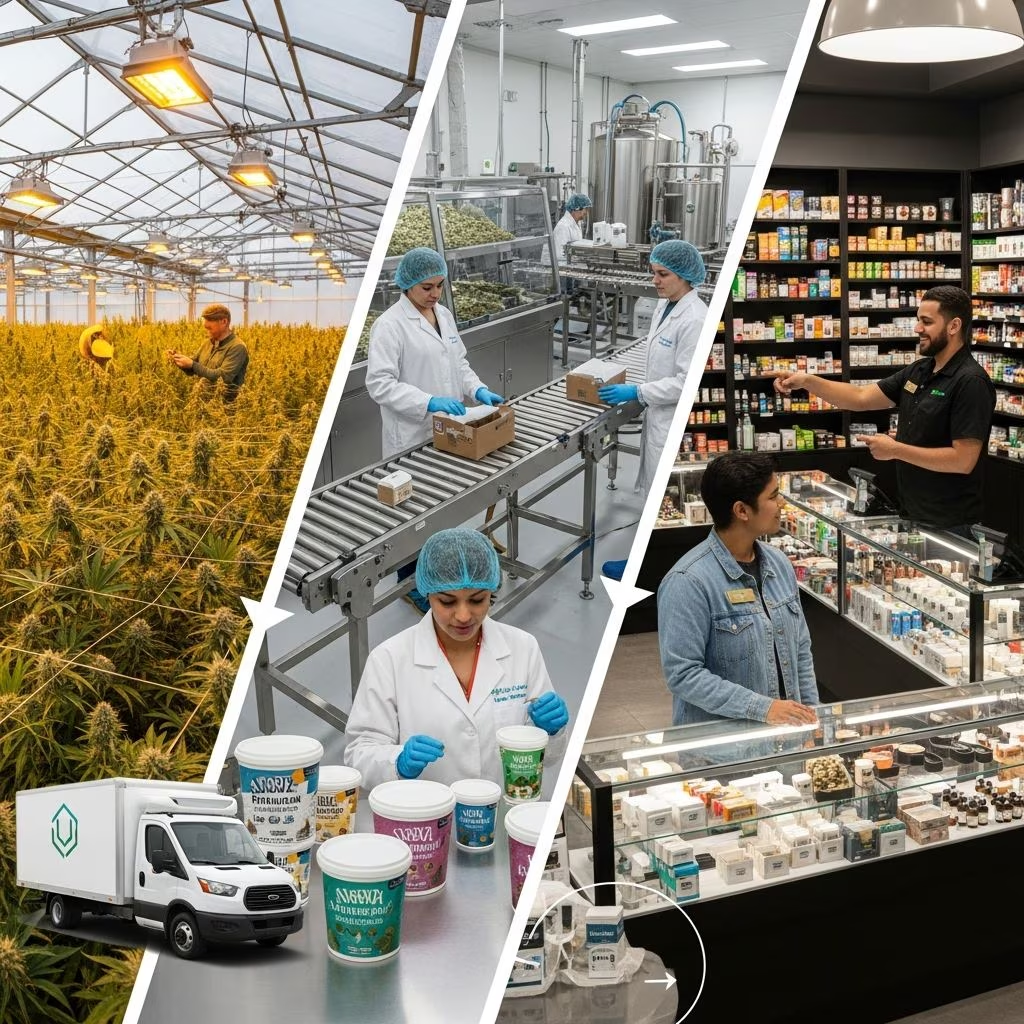
The cannabis industry has grown exponentially in states where adult-use and medical marijuana are legal, creating a robust market for dispensaries. However, strict regulations dictate who can supply these retail outlets, ensuring compliance with both state and federal laws. This article delves into the key players in the supply chain, licensing prerequisites, and navigational challenges for businesses aiming to participate.
Understanding the Cannabis Ecosystem
The cannabis supply chain begins with cultivation and ends at the consumer through licensed dispensaries. Cultivators grow the plant, processors transform raw flower into products like edibles or concentrates, distributors handle transportation and storage, and dispensaries sell directly to customers. Each stage requires specific licenses to prevent illicit activity and maintain product safety.
In most regulated markets, vertical integration—where one entity controls multiple stages—is limited. For instance, dispensary owners typically cannot also operate as cultivators or processors, promoting competition and oversight. This separation safeguards against monopolies and ensures quality control at every level.
Licensing Essentials for Suppliers
Securing a license is the cornerstone of legal participation in cannabis supply. State agencies oversee applications, fees, background checks, and operational plans. Prospective suppliers must demonstrate financial stability, secure facilities, and adherence to testing standards for contaminants like pesticides and heavy metals.
- Cultivator Licenses: Allow growing cannabis indoors, outdoors, or in greenhouses. Requirements include land use approvals and environmental impact assessments.
- Processor Licenses: Permit extraction, infusion, and packaging. Facilities must meet strict sanitation and ventilation codes.
- Distributor Licenses: Essential for moving products between licensed entities. Vehicles require GPS tracking and temperature controls.
Applications often involve public hearings and social equity considerations, prioritizing applicants from communities impacted by past drug wars. Processing times vary, but approvals can take months, delaying market entry.
State-by-State Variations in Supply Rules
Cannabis laws differ significantly across states, affecting supplier eligibility. New York, for example, mandates separate licenses through the Office of Cannabis Management (OCM), prohibiting retail license holders from obtaining cultivator or distributor permits simultaneously. Applications are submitted via the New York Business Express portal, with ongoing rounds for various license types.
New Jersey maintains a public list of permitted businesses, including retailers and manufacturers, with expiration dates ensuring renewal compliance. Businesses must display licenses prominently, underscoring transparency.
California requires dual state and local licenses for commercial activity, plus seller’s permits for tax compliance from the California Department of Tax and Fee Administration (CDTFA). Maryland’s Cannabis Administration issues grower, processor, and dispensary licenses, with provisions for out-of-state adult-use buyers but no reciprocity for medical patients.
Massachusetts uses the Cannabis Industry Portal for applications, covering establishments from cultivation to wholesale. These frameworks highlight a patchwork of regulations demanding localized expertise.
| State | Key Licensing Body | Supplier Restrictions | Application Portal |
|---|---|---|---|
| New York | Office of Cannabis Management (OCM) | No dual retail/cultivation licenses | NY Business Express |
| New Jersey | Cannabis Regulatory Commission | Public permit lists with expirations | State website |
| California | Department of Cannabis Control & CDTFA | State + local licenses required | CDTFA portal |
| Maryland | Maryland Cannabis Administration | Incubator licenses available | State map & portal |
| Massachusetts | Cannabis Control Commission | Background checks mandatory | MassCIP |
Federal Constraints on Interstate Commerce
Despite state legalization, cannabis remains a Schedule I substance under federal law, banning interstate sales and transport. Suppliers cannot ship products across state lines, even between legal markets. This confines businesses to intrastate operations, limiting scalability.
Workarounds like brand licensing exist, where a brand owner funds a distributor to purchase from in-state cultivators, then delivers via licensed partners in branded packaging. However, mailing is prohibited; ground delivery licenses are mandatory, complicating direct-to-consumer models.
Violations risk federal enforcement, including asset forfeiture and criminal charges. Businesses must consult attorneys to mitigate these risks, especially amid evolving banking restrictions under federal anti-money laundering rules.
Operational Challenges for Suppliers
Beyond licensing, suppliers face hurdles like seed-to-sale tracking systems, mandatory lab testing, and packaging/labeling standards. Products must include potency, allergen warnings, and child-resistant features. Waste disposal follows biohazard protocols to prevent diversion.
Taxation adds complexity: California imposes excise taxes alongside sales tax, requiring separate permits. Inventory management software ensures compliance with possession limits and audit trails.
Social equity programs in states like New York offer fee waivers and priority to justice-involved individuals, fostering inclusive growth. However, high startup costs—often exceeding $500,000—deter entrants without capital.
Emerging Trends in Cannabis Distribution
Innovation drives the sector forward. Microbusiness licenses allow small-scale operations encompassing cultivation, processing, and retail, ideal for startups. Cooperatives enable collective ownership among farmers, pooling resources for efficiency.
Delivery services are booming, with licensed couriers bridging suppliers and dispensaries. Direct-to-consumer platforms preview products online, fulfilled by local delivery partners, mimicking e-commerce giants while navigating legal limits.
Sustainability gains traction: water-efficient grows, organic practices, and recyclable packaging appeal to eco-conscious consumers, influencing supplier selection by dispensaries prioritizing green credentials.
Compliance Pitfalls and Risk Mitigation
Common violations include unlicensed transport, adulterated products, and exceeding purchase limits. Penalties range from fines to license revocation. Regular audits and third-party testing mitigate risks.
Dispensaries vet suppliers rigorously, demanding proof of licensure, test results, and insurance. Partnerships thrive on transparency, with blockchain tracking enhancing trust in provenance.
Legal counsel is indispensable for navigating amendments, like Maryland’s 2023 Cannabis Reform Act enabling dual medical/adult-use sales. Staying informed via state portals prevents costly missteps.
Frequently Asked Questions (FAQs)
Who qualifies as a legal cannabis supplier to dispensaries?
Licensed cultivators, processors, and distributors holding state-approved permits, adhering to tracking and testing mandates.
Can dispensaries grow their own cannabis?
In most states, no—regulations prohibit vertical integration to ensure market fairness and safety.
Is interstate cannabis supply allowed?
No, federal law prohibits it, restricting operations within state borders.
What documents are needed for a supplier license?
Business plans, financials, site diagrams, background checks, and equity certifications, varying by state.
How do taxes impact cannabis suppliers?
Excise, cultivation, and sales taxes apply; separate permits like California’s seller’s permit are required.
Future Outlook for Suppliers
As more states legalize—potentially 24 by 2026—the supply chain will expand, demanding adaptable businesses. Federal rescheduling to Schedule III could ease banking and research, spurring innovation. Suppliers investing in compliance, technology, and equity will dominate this $30 billion-plus market.
References
- Cannabis Licensing · NYC311 — New York State Office of Cannabis Management. 2023. https://portal.311.nyc.gov/article/?kanumber=KA-03503
- Permitted & Licensed Cannabis Businesses — State of New Jersey. 2026. https://www.nj.gov/cannabis/businesses/permitted/
- Getting Started for Cannabis Businesses — California Department of Tax and Fee Administration. 2023. https://cdtfa.ca.gov/industry/cannabis/getting-started.htm
- Adult-Use Cannabis FAQs — Maryland Cannabis Administration. 2023-05-03. https://cannabis.maryland.gov/pages/cannabisfaq.aspx
- Licensing Process — Cannabis Control Commission Massachusetts. 2023. https://masscannabiscontrol.com/licensing-process/
- General Information — Department of Cannabis Regulation, City of Los Angeles. 2023. https://cannabis.lacity.gov/licensing-compliance/licensing-information/general-information