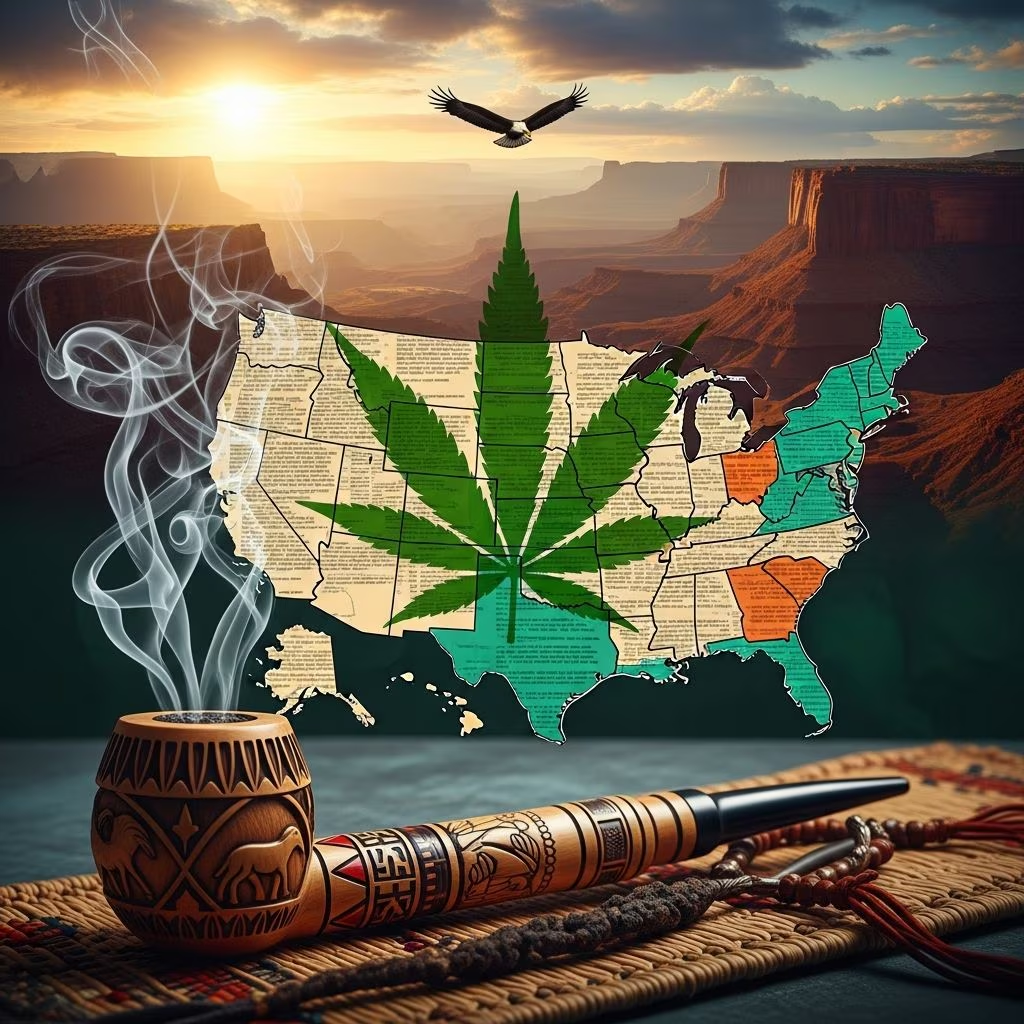
Native American tribes exercise unique authority over cannabis activities within their reservations, often diverging from surrounding state laws due to their sovereign status. This autonomy allows for legalization efforts even where federal law prohibits marijuana nationwide.
The Foundation of Tribal Autonomy in Cannabis Regulation
Tribal sovereignty forms the bedrock of how reservations approach cannabis. As sovereign governments, tribes can establish their own rules for possession, cultivation, and sales on reservation lands, independent of state jurisdiction. This principle gained clarity in 2013 with the Cole Memorandum and a 2014 follow-up, which extended federal non-interference policies—originally for states—to the 326 federally recognized tribes.
Despite marijuana’s Schedule I status under federal law, tribes have pursued legalization for medical and recreational purposes. This shift reflects broader U.S. trends where states have liberalized cannabis, prompting tribes to capitalize on untapped markets. However, federal oversight persists, particularly in law enforcement on reservations.
Prominent Tribes Leading Cannabis Legalization
Several tribes have pioneered cannabis programs, balancing cultural values, health needs, and economic opportunities. Key examples illustrate diverse approaches:
- Oglala Sioux Tribe (Pine Ridge Reservation, South Dakota): In 2020, tribal citizens voted to legalize both recreational and medical marijuana, contrasting with the reservation’s century-long alcohol ban. Dispensaries like No Worries serve locals and out-of-state visitors, emphasizing marijuana as a safer alternative to opioids and meth amid high premature death rates from violence and crashes.
- Omaha Tribe of Nebraska: This tribe became Nebraska’s first to enact comprehensive cannabis rules, permitting medical use and recreational sales to adults 21+. Non-tribal visitors can purchase on-site, with regulations including licensing, oversight commissions, and tribal ownership priorities. Implementation targets economic expansion through new businesses.
- Flandreau Santee Sioux Tribe (South Dakota): Legalized in 2015, this tribe mandates on-site consumption and limits growth to authorized sites, showcasing early adoption post-Cole Memo.
- St. Regis Mohawk Tribe (New York): Approved adult-use cannabis in 2021, requiring tribal licensing for dispensaries and restricting all activities to reservation boundaries. Adult members may cultivate up to 12 plants.
These cases highlight a growing list of over a dozen tribes, including Pinoleville Pomo, Red Lake, and others, that have legalized cannabis in some form.
Economic Opportunities and Community Impacts
Cannabis legalization offers tribes vital revenue streams. On Pine Ridge, dispensaries draw 40% non-local customers from South Dakota and Nebraska, despite recreational bans in those states. Owners report boosting tribal economies without relying on alcohol, which voters rejected even for casino sales.
The Omaha Tribe anticipates business growth via partnerships and strict enforcement, positioning itself ahead of Nebraska’s medical rollout. Challenges include sourcing—many require on-reservation cultivation—and barriers like limited banking due to federal illegality. Tribal attorney Paul Mooney notes tribes face hurdles in licensing and financing not shared by states.
| Tribe | Legalization Year | Key Features | Economic Note |
|---|---|---|---|
| Oglala Sioux | 2020 | Recreational & medical; alcohol banned | 40% out-of-state sales |
| Omaha | 2024 | Medical & recreational sales to 21+ | Tribal business boost |
| Flandreau Santee | 2015 | On-site consumption only | Early market entry |
| St. Regis Mohawk | 2021 | Licensed dispensaries; home grow | All ops on-tribal lands |
Federal and State Tensions in Enforcement
Federal policy maintains marijuana’s illegality, with the Justice Department clarifying no role in facilitating tribal legalization. Reservations remain exempt from state laws, but transport off-reservation risks prosecution—e.g., South Dakota charges for exiting Pine Ridge without a medical card.
Incidents like the Oglala Sioux’s 2000s hemp destruction underscore federal intervention risks. Yet, non-enforcement in bordering counties like Pennington suggests practical tolerance. Tribes like Omaha prepare legal defenses of sovereignty against state pushback.
Health Perspectives and Public Safety Measures
Tribal dispensary patrons cite marijuana’s role in addressing mental health and chronic issues prevalent in communities. On Pine Ridge, it’s viewed less harmful than alcohol, meth, or opioids driving reservation mortality.
Regulations emphasize safety: age limits, on-reservation consumption, and tribal-grown products. Oversight bodies ensure compliance, prioritizing veteran and member access in some codes.
Broader Tribal Landscape and Policy Variations
While 84% of tribes reside in medical-legal states, most tribal codes still criminalize cannabis, per National Congress of American Indians data. Only a fraction—about 10% of the population—in full recreational states like Colorado pursue it aggressively.
Menominee Reservation’s 2015 vote favored medical (77%) over recreational (58%), reflecting cautious progress under exclusive federal jurisdiction.
Frequently Asked Questions
Can non-tribal members buy cannabis on reservations?
Yes, many tribes like Omaha and Oglala allow sales to adults 21+ while on reservation lands, but transport off-reservation is prohibited and risky.
Does state law apply to tribal cannabis sales?
No, federal Indian reservations are generally exempt from state jurisdiction, enabling independent regulation.
Is cannabis legal on all reservations?
No, tribes decide independently; while some have legalized, most codes still criminalize it despite state laws.
What happens if you leave a reservation with cannabis?
You risk state charges, as seen in South Dakota bordering Pine Ridge, though enforcement varies.
Can tribes grow cannabis commercially?
Yes, under tribal rules like Flandreau’s authorized sites, but federal banking and licensing barriers persist.
Future Prospects for Tribal Cannabis Markets
As federal reform stalls, tribes leverage sovereignty for self-determination. Economic incentives may spur more adoptions, but resolving banking access and interstate conflicts remains crucial. Tribes’ models could influence national policy, blending tradition with innovation.
(Word count: 1678)
References
- Tribe Embraces Recreational Marijuana Sales on Reservation Where Alcohol Is Banned — KFF Health News. 2023-10-01. https://kffhealthnews.org/news/article/tribal-land-recreational-marijuana-sales-where-alcohol-banned/
- Omaha Tribe legalizes medical and recreational marijuana on reservation lands — Nebraska Public Media. 2024-11-01. https://nebraskapublicmedia.org/es/news/news-articles/omaha-tribe-legalizes-medical-and-recreational-marijuana-on-reservation-lands/
- Cannabis on American Indian reservations — Wikipedia (sourced primaries). 2024-01-15. https://en.wikipedia.org/wiki/Cannabis_on_American_Indian_reservations
- Policy Statement Regarding Marijuana Issues in Indian Country — U.S. Department of Justice. 2015-01-28. https://www.justice.gov/sites/default/files/faqs_policy_statement_regarding_marijuana_issues_in_indian_country_28jan15.pdf
- Marijuana policy and tribal communities in the United States — PMC/NCBI. 2024-06-01. https://pmc.ncbi.nlm.nih.gov/articles/PMC12328202/
- Tribes Face Unique Barriers to Entering the Cannabis Industry — The Regulatory Review. 2024-06-06. https://www.theregreview.org/2024/06/06/tribes-face-unique-barriers-to-entering-the-cannabis-industry/
- Marijuana Policy in the U.S.- Information for Tribal Leaders — National Congress of American Indians. 2015-01-01. https://archive.ncai.org/Marijuana_Policy_in_the_U.S.-_Information_for_Tribal_Leaders.pdf