
Cannabis in Dining: Legal Paths for Restaurants
Exploring the evolving regulations allowing restaurants to incorporate cannabis into menus amid state-by-state legalization.
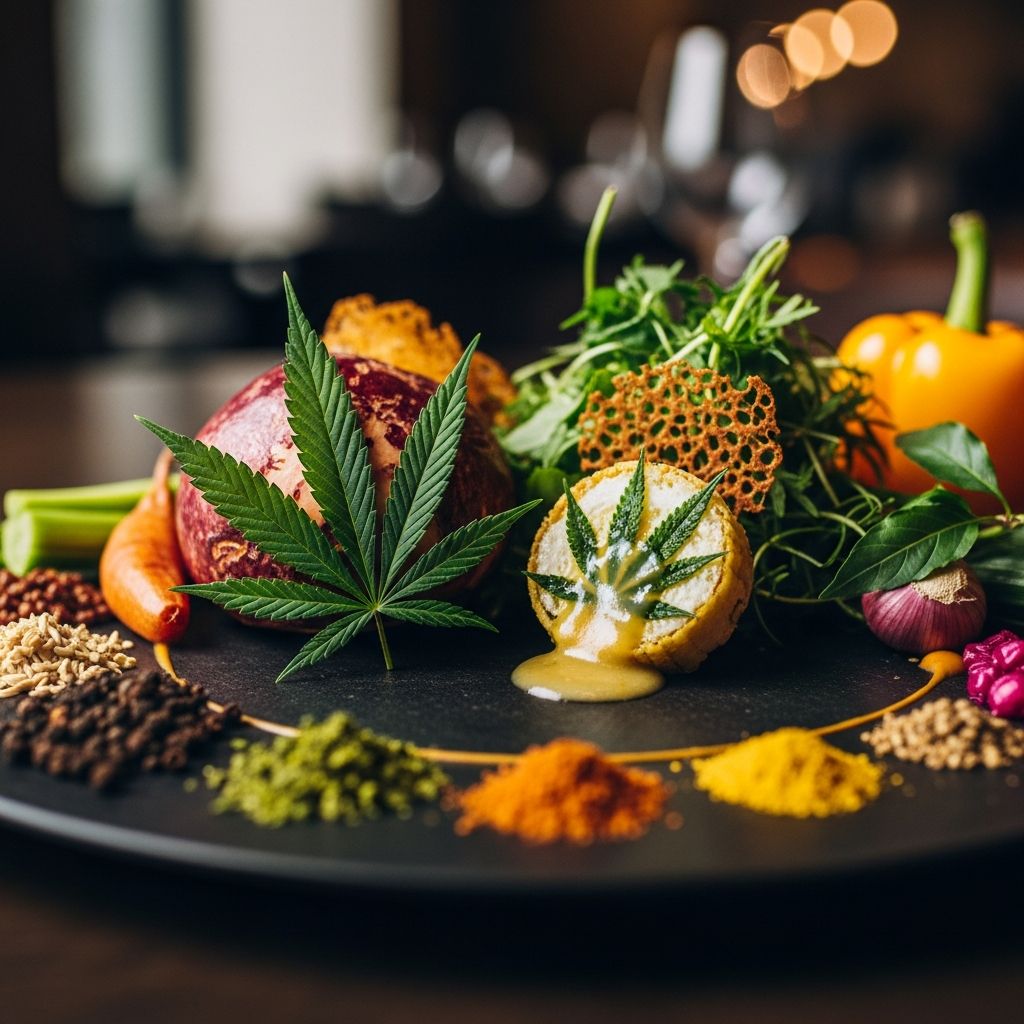
Restaurants exploring cannabis integration face a patchwork of federal restrictions and state innovations. While federal law prohibits marijuana with over 0.3% THC, hemp-derived products open limited avenues, and several states now permit on-site consumption at specialized venues.
Federal Foundations: Hemp vs. Marijuana Distinctions
The 2018 Farm Bill marked a pivotal shift by legalizing hemp—defined as cannabis containing less than 0.3% delta-9-THC—while maintaining Schedule I status for marijuana exceeding this threshold. This distinction allows hemp-derived cannabinoids like CBD to enter commerce, but the FDA deems them unsafe for food or supplements absent approval, creating enforcement gaps where infused items proliferate in eateries nationwide.
Proposed updates in the 2024 Farm Bill signal tighter controls, potentially limiting hemp to non-intoxicating compounds only. Restaurants must scrutinize product sourcing: only state-licensed hemp extracts comply federally, yet interstate sales of infused foods remain barred.
- Hemp eligibility: Under 0.3% delta-9-THC qualifies as legal federally.
- FDA stance: No GRAS (Generally Recognized as Safe) status for cannabinoids in consumables.
- Practical reality: Widespread availability despite regulatory warnings.
State Variations in Cannabis Culinary Permissions
Cannabis legalization spans 24 states for adult use by 2026, but restaurant infusion lags due to silos between food service and cannabis licensing. No state universally empowers traditional restaurants to produce THC-infused dishes for resale; instead, hybrid models emerge via consumption lounges or microbusinesses.
| State | On-Site Consumption | Food Service Allowed | Key Restrictions |
|---|---|---|---|
| California | Local opt-in for retailers | Prepackaged or non-prepared | No alcohol co-sales; indoor smoking possible locally |
| Colorado | BYO or sales-enabled lounges | Hot drinks, pastries if licensed | Isolated consumption zones; no alcohol |
| Illinois | Dispensaries/tobacco stores | Prepackaged only | Designated locked areas |
| Michigan | Locally approved BYO | Full prep with dual licensing | Ventilation required; partitioned from alcohol |
| Nevada | Separate lounges | Compliant with health codes | Ventilated smoking rooms |
This table illustrates how states tailor permissions, often requiring separate endorsements beyond standard food handler permits.
Navigating Consumption Lounges and Hybrid Venues
Emerging ‘cannabis cafes’ blend dining with consumption, as in California’s 2025 law enabling retailers to offer non-cannabis foods alongside lounges. These venues host events with live entertainment but prohibit alcohol crossovers. Colorado pioneered BYO models, where patrons supply cannabis for on-site use, paired with venue-provided snacks under food safety oversight.
Michigan stands out, allowing full kitchens in partitioned spaces with ventilation to protect staff. Minnesota permits infused drinks at hemp retailers but bans smoking, favoring edibles. These hybrids demand dual compliance: cannabis handling plus health department inspections for potency labeling and cross-contamination prevention.
Challenges in Food Safety and Dosing Precision
Infusing cannabis complicates food safety. THC activation requires precise decarboxylation, and uneven distribution risks over- or under-dosing. Health codes unprepared for per-plate potency testing steer traditional restaurants away, favoring pre-packaged dispensary products.
Public consumption bans persist even in legal states, confining experiences to licensed enclosures. Staff training on impairment protocols, ventilation, and waste disposal adds layers. Interstate transport prohibitions further limit supply chains.
Best Practices for Aspiring Cannabis Eateries
Success hinges on location-specific licensing. In mature markets like Colorado or Nevada, pursue lounge endorsements; elsewhere, partner with dispensaries for pop-ups.
- Verify sourcing: Use lab-tested, state-compliant extracts only.
- Label meticulously: Include mg THC per serving, allergens, and warnings.
- Implement age/ID checks: 21+ enforced rigorously.
- Design spaces: Ventilation, isolation from non-consumers.
- Consult experts: Legal counsel for hybrid operations.
Monitor FDA enforcement, which remains lax but could intensify. Trends favor low-dose, functional infusions appealing to wellness diners.
Future Outlook: Expansion and Innovation
By 2026, more states eye on-site models to capture tax revenue and tourism. Minnesota’s entertainment-integrated lounges and Maryland’s patio expansions hint at diversification. Federal rescheduling of cannabis to Schedule III could ease banking and research, indirectly benefiting culinary applications.
Innovation thrives in edibles: gummies, beverages, and savory infusions gain traction where permitted. Restaurants innovating non-intoxicating hemp drinks sidestep THC hurdles while capturing trends.
Frequently Asked Questions
Can any restaurant add cannabis to its menu?
No, most require specialized licenses; traditional spots risk penalties for unlicensed infusion.
What about CBD-only infusions?
Hemp-derived CBD is federally legal but FDA-prohibited in food; state laws vary, urging caution.
Are cannabis and alcohol combinable in one venue?
Prohibited nationwide in licensed cannabis spaces to prevent dual impairment.
How do states handle food prep in lounges?
Ranges from prepackaged to full kitchens, always under health regs and isolation.
What’s the penalty for non-compliance?
Fines, shutdowns, or license revocation; FDA actions possible for interstate issues.
Word count: 1782 (excluding metadata and references).
References
- Understanding Legality of Non-Alcoholic and Cannabis-Infused Beverage Trends — Modern Restaurant Management / Irina Dashevsky, Greenspoon Marder. 2024. https://modernrestaurantmanagement.com/understanding-legality-of-non-alcoholic-and-cannabis-infused-beverage-trends/
- What to Know About CBD-Infused Food Regulations for Your Restaurant — Parts Town. 2023. https://www.partstown.com/about-us/cbd-food-regulations-for-your-restaurant
- State-By-State On-Site Consumption Laws — Marijuana Policy Project. 2024. https://www.mpp.org/issues/legalization/state-by-state-on-site-consumption-laws/
- Why Cannabis Restaurants Don’t Exist—And How They Might Soon — Chef Roilty. 2024. https://www.chefroilty.com/blog/cannabis-restaurants-in-denver-colorado
- Cafe con Cannabis: California’s Cannabis Café Law and Trademark Considerations — Blunt Truth Law. 2024-10. https://www.blunttruthlaw.com/2024/10/cafe-con-cannabis-californias-cannabis-cafe-law-and-trademark-considerations/
Similar Articles








Read full bio of Sneha Tete




