
Cannabis Degree: Do You Need One? Practical Guide For 2025 Now
Uncover if formal cannabis education is essential for thriving in the booming marijuana business world, or if practical experience suffices.
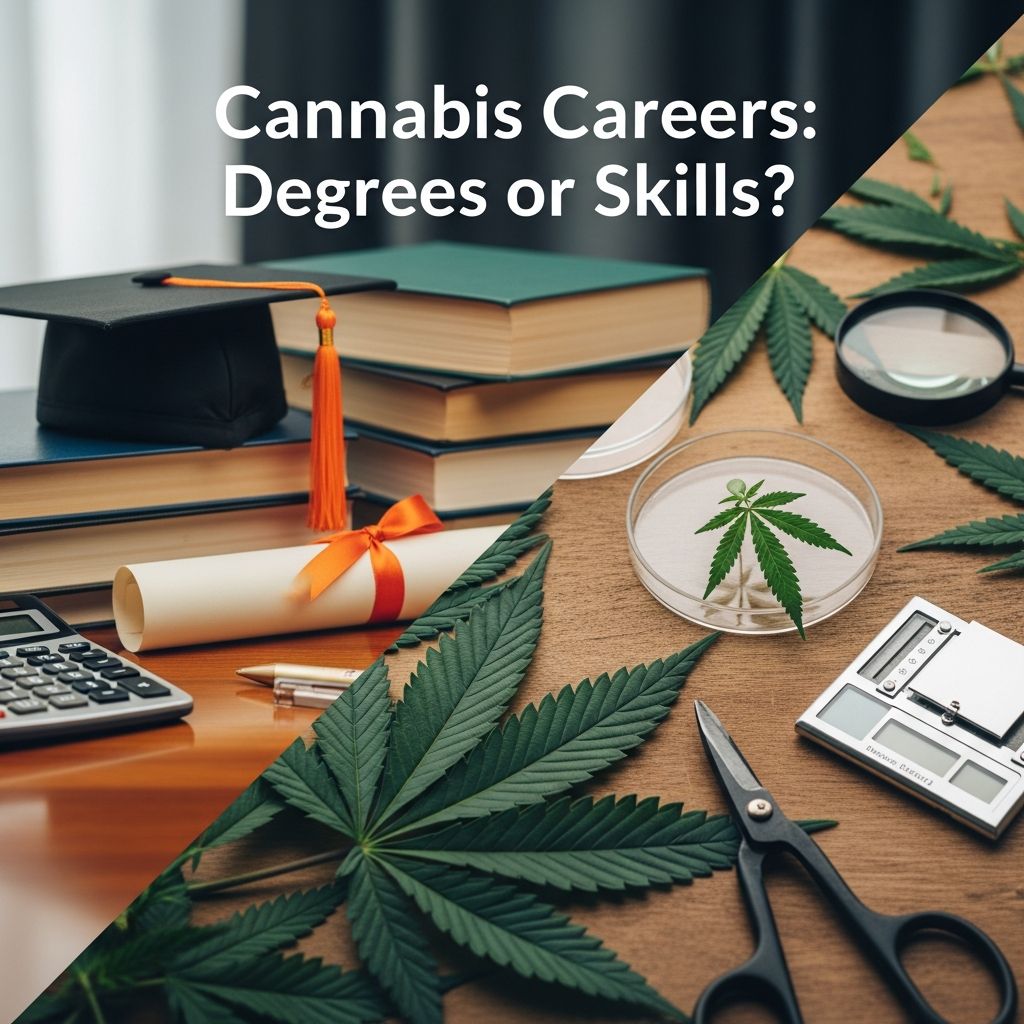
The cannabis sector has exploded into a multi-billion-dollar powerhouse, drawing entrepreneurs, scientists, and business minds eager to capitalize on legalization trends across numerous states and countries. But a pressing question lingers for aspiring professionals: do you truly need a formal degree in cannabis studies to break in and thrive? This comprehensive guide dives deep into the educational landscape, weighs the pros and cons of specialized programs, and outlines practical pathways to success without a diploma.
Understanding the Cannabis Industry Boom
The marijuana market’s growth is nothing short of phenomenal. Legal sales in the U.S. alone surpassed $30 billion in recent years, with projections indicating continued expansion as more regions embrace recreational and medical use. This surge creates diverse opportunities in cultivation, retail, processing, compliance, and ancillary services like consulting and technology.
Entry barriers vary widely. Cultivation roles demand botanical knowledge, while dispensary positions prioritize customer service and regulatory savvy. Business owners must navigate financing, marketing, and legal hurdles unique to this federally restricted plant. While passion fuels many entrants, the question remains: does structured education provide an unbeatable edge?
Available Educational Pathways in Cannabis
Higher education has responded swiftly to industry demands, offering programs from quick certificates to full bachelor’s degrees. These curricula blend traditional disciplines like agriculture, business, and law with cannabis-specific modules.
- Certificates: Short-term options (6-12 months) focus on essentials like plant propagation, dispensary operations, and compliance. Ideal for quick workforce entry as budtenders or production assistants.
- Associate Degrees: Two-year programs combine general education with hands-on training in horticulture, extraction, and business basics, preparing students for mid-level technical roles.
- Bachelor’s Degrees: Four-year tracks, such as Cannabis Business B.S., integrate management, marketing, science, and policy. Programs like those at Pittsburgh Institute of Technology emphasize entrepreneurship and supply chain skills.
- Master’s Levels: Advanced studies delve into research, policy, and advanced cultivation, suiting leadership or R&D positions.
Institutions like Lake Superior State University offer tailored B.S. in Cannabis Business, requiring 124 credits including sociology of cannabis and mobile marketing courses, with a focus on distinguishing cannabis operations from standard businesses.
Core Subjects in Cannabis Programs
Cannabis curricula emphasize interdisciplinary knowledge. Students explore:
- Plant science: Biology, genetics, pest management, and optimization for THC/CBD yields.
- Business acumen: Finance, operations, branding, and supply chain logistics tailored to cannabis.
- Regulatory compliance: State/federal laws, licensing, and risk management.
- Consumer education: Pharmacology, product development, and sales techniques.
Hands-on components, including labs and internships, bridge theory to practice, giving graduates a portfolio of real-world experience.
Do You Really Need a Cannabis Degree?
Not necessarily. While degrees confer specialized knowledge and networking, the industry values proven skills and adaptability over credentials. Many pioneers entered via unrelated fields like agriculture, hospitality, or tech, leveraging transferable expertise.
| Degree Path | Pros | Cons | Best For |
|---|---|---|---|
| Certificate | Quick, affordable, job-ready skills | Limited depth, less prestige | Entry-level roles |
| Bachelor’s | Comprehensive training, leadership prep | Time-intensive, costly | Management/entrepreneurship |
| No Degree | Flexible, cost-free entry; real-world focus | Self-directed learning curve | Experienced professionals |
Employers often prioritize licenses, passion, and performance. A degree shines in competitive markets or regulated roles but isn’t a universal gatekeeper.
Alternative Routes to Cannabis Success
Leveraging Transferable Skills
Professionals from farming, retail, or finance adapt readily. Cultivators benefit from agricultural backgrounds, while marketers excel in branding hemp-derived products. Online courses from platforms like Coursera offer cannabis modules without full commitment.
Certifications and Licensing
State-specific licenses (e.g., cultivator, dispensary agent) hold more weight than degrees. Industry certs in safety, sales, or extraction provide targeted credentials. Networking at trade shows like MJBizCon builds connections faster than classrooms.
Apprenticeships and On-the-Job Training
Many operations hire trainees, offering paid learning in cultivation or retail. This immersive approach yields practical expertise employers crave.
Pros and Cons of Pursuing a Cannabis Degree
Advantages:
- Credibility boost in hiring and funding pitches.
- Structured knowledge of evolving regulations.
- Access to internships and alumni networks.
Drawbacks:
- High tuition (e.g., $4,664 for Illinois online cert).
- Rapid industry changes may outpace curricula.
- Federal stigma limits some employer recognition.
Career Opportunities with and Without Degrees
Degree holders target high-level spots:
- Dispensary managers (avg. $70K+ salary).
- Compliance officers.
- Product developers.
Non-degree paths include:
- Budtenders ($15-25/hr).
- Cultivation techs.
- Sales reps.
Entrepreneurs often succeed sans degrees by bootstrapping small grows or consultancies.
State Regulations and Education’s Role
Laws differ starkly. States like Colorado and California mandate training for handlers, favoring certified individuals. New York’s DOL highlights ag skills for cultivators. Education aligns with these, but experience fulfills many requirements.
Future Trends in Cannabis Education
As legalization spreads, expect more programs, including MBAs in cannabis finance and PhDs in cannabinoid research. Hybrid/online formats increase accessibility. However, micro-credentials may eclipse degrees for agility.
Frequently Asked Questions (FAQs)
What is the quickest way to start a cannabis career?
Obtain a state agent card and entry-level cert, then apply for budtender roles. Hands-on experience trumps formal education initially.
Are online cannabis programs legitimate?
Yes, accredited ones like Illinois’ Cannabis Production cert provide solid foundations remotely.
Can I transfer business skills to cannabis?
Absolutely—management, marketing, and sales expertise applies directly, often with minimal retraining.
How much do cannabis managers earn?
Average $60K-$100K annually, higher with degrees or experience in mature markets.
Is a degree required for cannabis business ownership?
No, but it aids licensing, funding, and operations in complex states.
Charting Your Path Forward
Assess your goals: quick entry favors certs or self-study; leadership roles benefit from degrees. Blend education with networking and hustle for optimal results. The cannabis industry rewards innovators, not just scholars.
References
- Best Marijuana-Related Degrees For The Cannabis Industry — The Best Schools. 2023. https://thebestschools.org/degrees/marijuana-degrees/
- Bachelor of Science in Cannabis Business — Pittsburgh Institute of Technology. 2024-10-15. https://www.pit.edu/programs/bachelor/bachelor-of-science-in-cannabis-business/
- Cannabis Business – Lukenda School of Business — Lake Superior State University. 2024. https://www.lssu.edu/lukenda-school-of-business/lukenda-school-of-business/all-academic-programs/cannabis-business/
- Urban Agriculture: Applied Cannabis Studies Pathway — City Colleges of Chicago. 2024. https://www.ccc.edu/olive-harvey/site/cannabis-program/
- Cannabis Production and Management — University of Illinois Online. 2025-01-20. https://online.illinois.edu/online-programs/programs/cannabis-production-and-management
- Cannabis Career Exploration — New York Department of Labor. 2024-05-10. https://dol.ny.gov/cannabis-career-exploration
- How To Get a Job in the Cannabis Industry in 10 Steps — Indeed Career Advice. 2025-03-01. https://www.indeed.com/career-advice/finding-a-job/how-to-get-job-in-cannabis-industry
Similar Articles








Read full bio of Sneha Tete




