
Outdoor Recreation vs. Legal Boundaries: Camping Rights
Know your rights: understanding camping laws and property rights across America.
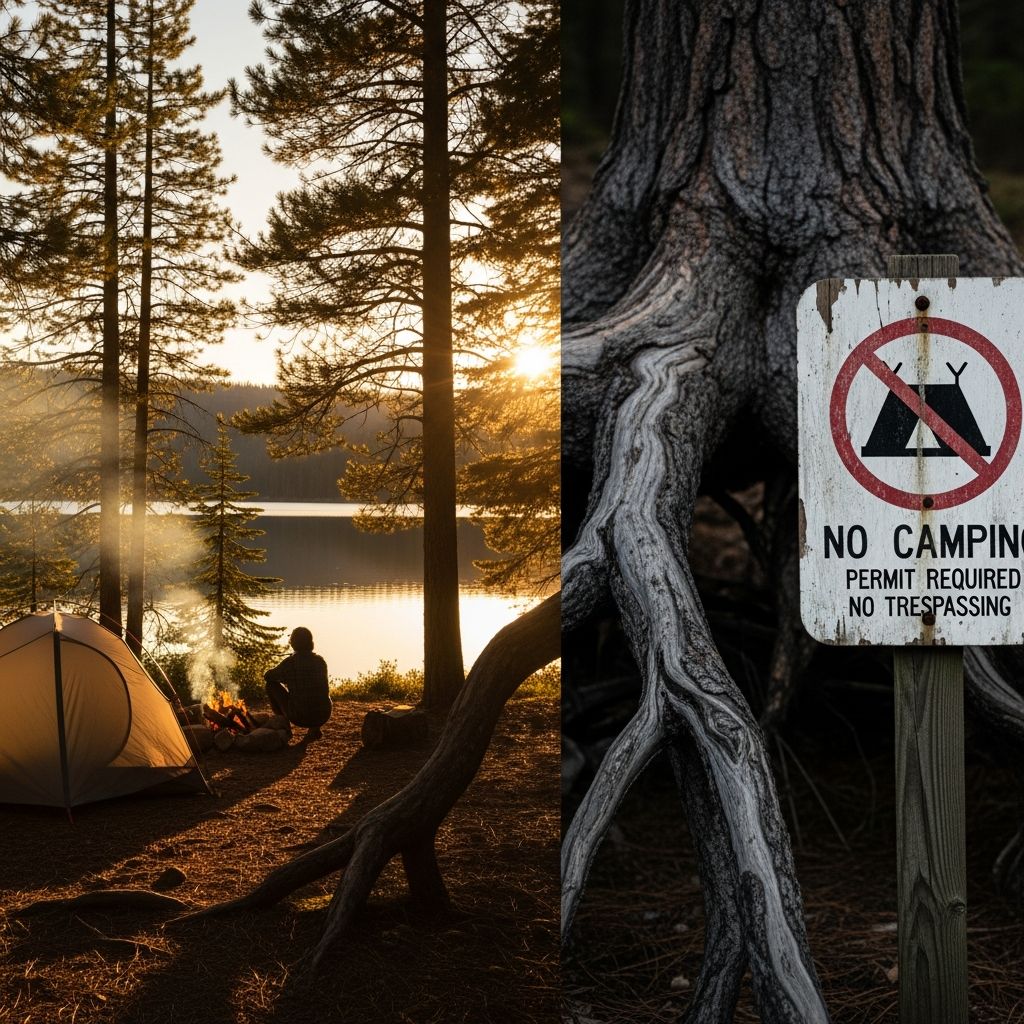
Understanding the Line Between Adventure and Legal Trouble
Summer brings the desire to escape into nature, pitch a tent, and enjoy the great outdoors. However, many people fail to recognize a critical distinction that could result in serious legal consequences: the difference between recreational camping on permitted land and unlawfully trespassing on someone else’s property. Each year, countless individuals find themselves facing criminal charges simply because they did not understand the legal framework governing where they can and cannot camp. This article explores the essential distinctions between legitimate outdoor recreation and criminal trespassing, examines how different states define and enforce these boundaries, and provides practical guidance for ensuring your summer adventures remain both enjoyable and lawful.
The Fundamental Legal Definition of Trespassing
At its core, trespassing occurs when someone enters or remains on property without authorization from the owner or an authorized representative. The definition sounds straightforward, but the legal reality is considerably more nuanced. Most jurisdictions require that a person knowingly enter or remain on another’s land, meaning there must be an intentional element to the violation. This knowledge requirement means that accidentally wandering onto someone’s property due to unclear boundaries might not constitute criminal trespassing in all circumstances, though it certainly could in others depending on state law and the presence of warning signage.
What distinguishes camping from trespassing is fundamentally a matter of permission and location. Camping, in its legal context, typically refers to the act of establishing a temporary place to live through the use of bedding, sleeping bags, tents, stoves, or fires intended for overnight habitation. When this activity occurs on private land without the owner’s consent, it transforms from legitimate recreation into criminal trespassing. When it occurs on designated public lands or private property with proper authorization, it remains lawful outdoor recreation.
State-by-State Variations in Trespassing Laws
One of the most important lessons for outdoor enthusiasts is that trespassing laws are not uniform across the United States. Each state has developed its own statutory framework, definitions, and enforcement mechanisms. Understanding these variations is essential before planning any camping trip, particularly if it involves travel across multiple states.
Western States and Notice Requirements
California presents a particularly strict approach to trespassing enforcement. Under California Penal Code Section 602.8, any person who enters onto private property that is enclosed or cultivated without written permission from the owner or authorized agent is guilty of trespassing. Furthermore, even uncultivated and unenclosed land becomes protected when the owner posts signs forbidding trespass at intervals of no fewer than three signs per mile along all exterior roads and trails entering the land. This explicit signage requirement means that California property owners have a clear mechanism to protect their land, and failure to post adequate signage can potentially affect the enforceability of trespassing laws.
Montana takes a distinctly different approach that actually favors property owners. Under Montana Code Section 45-6-201, criminal trespassing is defined as entering and remaining without the license or privilege to do so. The critical distinction in Montana is that privilege to enter is presumed unless the landowner has posted notice denying entry onto private land. This means that in Montana, if an owner has not explicitly posted notice, a person might have an implied privilege to be on the land. This approach places the burden on property owners to actively exclude trespassers rather than on potential trespassers to seek permission.
New Mexico defines trespassing as knowingly entering and remaining on property without verbal or written permission. Importantly, New Mexico law also criminalizes the act of removing no trespassing signage itself, treating this destruction of warning devices as a separate misdemeanor offense.
Midwestern and Eastern Approaches
Illinois Criminal Code 720 ILCS 5/21-3 requires that property owners ensure written notice forbidding entry is posted in a visible way at the main entrance to the land or property. In municipalities with populations under 2,000,000, Illinois also permits the use of “purple marks” on poles or trees as an alternative method of preventing trespassing. This creative solution provides property owners with flexibility in how they communicate their intent to exclude trespassers.
Wisconsin addresses trespassing comprehensively in Chapter 943 of its criminal code, specifically sections 943.13-943.15. Wisconsin defines trespassing as entering or remaining on enclosed, cultivated, or undeveloped land of another without express or implied consent of the owner or occupant. Wisconsin provides extensive details on signage requirements regarding “posted” land, giving property owners clear guidance on how to effectively protect their property.
Connecticut’s approach, under CGS § 53a-109, covers trespassing on land that a person knows they are not licensed or privileged to be on. This includes recreational activities such as hunting, fishing, and trapping. The statute applies to fenced or enclosed areas or premises that are posted in a manner prescribed by law or reasonably likely to come to the attention of intruders. Connecticut treats violations as infractions subject to fines rather than criminal misdemeanors in many cases.
Arkansas law under § 5-39-101 and § 5-39-203 deems trespassing to occur whenever someone enters and remains without proper consent from the owner, an authorized representative, or when notice has been posted in a conspicuous manner. Notably, Arkansas distinguishes between types of trespassing: if the trespassing involves a vehicle or occupiable structure, it is considered a Class B misdemeanor, whereas other forms are Class C misdemeanors.
Notable Gaps in Legal Protections
Delaware presents an interesting case study in what one state does not require. Delaware trespassing laws are outlined under Delaware Law § 820–829. While the state prohibits entering and remaining unlawfully without consent from the landowner or authorized person, or entering onto a fenced or enclosed area, Delaware law notably lacks verbiage around unenclosed areas and signage that would still cause trespassers to be charged. This gap in Delaware law means that for uncultivated, unenclosed land without signage, enforcement of trespassing laws may be more limited than in other jurisdictions.
The Critical Role of Signage and Notice
Across virtually all states, the method by which property owners communicate their intent to exclude trespassers significantly impacts legal enforcement. Signage requirements vary considerably and serve as a crucial threshold question in many trespassing prosecutions.
Visibility and Adequacy Standards
For trespassing charges to stick, prosecutors must often prove that the defendant had notice they were not permitted on the property. In Georgia and many other states, challenges to trespassing charges frequently involve questioning whether signs were actually visible and readable. A faded sign, a sign knocked over, or signage hidden behind overgrown vegetation may not constitute legally sufficient notice. This creates a practical burden for property owners: signs must not only exist but must be maintained in a condition that reasonably communicates the restriction to potential intruders.
Multiple Methods of Posting
Some jurisdictions permit multiple approaches to establishing notice. Illinois allows both traditional “No Trespassing” signs and purple marking systems. Arkansas requires only that notice be “conspicuous,” which can be satisfied through various means. This flexibility recognizes that different landscapes and property configurations may benefit from different warning methods. Property owners in rural areas might rely on painted marks on trees, while urban property owners typically use posted signs at entrances.
Permission: Express, Implied, and Ambiguous Circumstances
Understanding the concept of permission is equally important as recognizing the role of signage. Permission to enter property does not always require a written invitation or explicit verbal authorization. In many jurisdictions, permission can be implied by the owner’s past actions or the situation itself. For example, if a landowner has historically allowed campers to use a particular area of their property, implied permission might be inferred even if no explicit authorization is given for the current visit.
However, implied permission can be withdrawn. If a property owner has previously allowed camping but then posts signs or verbally notifies individuals that camping is no longer permitted, the implied permission is revoked. Proceeding to camp after such notice would constitute clear trespassing despite the historical pattern of allowance.
Specific Categories of Trespassing Violations
Many states recognize that trespassing is not monolithic. Different contexts warrant different legal treatments, particularly when the trespassing occurs in specialized environments or involves specific activities.
Agricultural Land Protection
Georgia and several other states maintain specific statutes protecting agricultural land from unauthorized entry. These laws recognize that uninvited entry onto farms can result in crop damage or create biosecurity risks that threaten livestock health. These specialized provisions often carry enhanced penalties compared to general trespassing violations.
Railroad Property
Trespassing on railroad property constitutes its own specific offense in many jurisdictions due to the obvious and immense safety dangers involved. Trains cannot stop quickly, and individuals on railroad tracks face severe injury or death. Legal systems treat railroad trespassing with particular seriousness precisely because of these inherent hazards.
The Penalties for Illegal Camping and Trespassing
Understanding the potential consequences of illegal camping is essential for recognizing why respecting property boundaries matters. Penalties vary significantly by state, the nature of the trespass, and whether it is a first or repeat offense.
Financial Penalties: Fines for trespassing violations can range from relatively modest amounts to substantial sums. In California, offenders face fines of $75 for first offenses, $250 for second offenses, and charges of misdemeanor for third offenses. In Oregon municipalities with camping ordinances, fines for violating these restrictions start at $295 and can result in criminal trespass charges if repeated. Some jurisdictions impose maximum fines reaching $2,000 or higher for camping on private land without permission.
Criminal Records: A trespassing conviction results in a criminal record that can affect employment opportunities, housing applications, and professional licenses. Depending on the severity and specific circumstances, offenders might be charged with misdemeanor or felony trespassing.
Loss of Recreation Privileges: Many states, including New Mexico, tie trespassing violations to the loss of hunting or fishing licenses, effectively prohibiting the individual from engaging in their recreational activities for specified periods.
Navigating Ambiguous Property Boundaries
One common source of confusion for outdoor enthusiasts involves situations where property boundaries are genuinely unclear. On large, open properties with no visible fences or markers, how is someone supposed to know where public land ends and private property begins? This legitimate question creates gray areas in trespassing law.
In such circumstances, several factors might be considered:
- Presence or absence of any visible boundary markers or signage
- Whether the land is developed, cultivated, or undeveloped
- Customary public use patterns in the area
- Whether the property owner has previously excluded trespassers
- Local understanding of where private and public lands meet
While these factors provide some guidance, the safest approach remains obtaining explicit permission before camping on land you do not own. The ambiguity is a risk that courts resolve on a case-by-case basis, but individual defendants cannot reliably predict outcomes.
Finding Legal Camping Opportunities
Understanding where you can and cannot camp is only half the equation. Knowing where you can legally camp ensures summer adventures proceed without legal consequences. Legal camping options include:
- Designated Public Campgrounds: State and federal agencies operate campgrounds specifically designed for recreational camping. These facilities provide clear authorization for camping activities and typically offer amenities and safety infrastructure.
- Private Campgrounds: Many private property owners operate commercial campgrounds where camping is explicitly permitted in exchange for fees.
- Public Lands with Camping Permission: National forests, public lands, and state parks often permit dispersed camping in designated areas. Permission parameters vary by location and must be verified before camping.
- Private Land with Owner Consent: Some landowners grant explicit permission for camping on their property. This requires direct contact and clear agreement before establishing a campsite.
Best Practices for Summer Campers
Armed with knowledge of trespassing laws and legal camping opportunities, outdoor enthusiasts can follow practical steps to ensure their adventures remain both enjoyable and lawful:
- Research the specific state and local laws governing your intended camping location before traveling
- Verify that any property you plan to camp on is either public land designated for camping or private land on which you have explicit owner permission
- Look for visible No Trespassing signs or boundary markers and respect them
- Contact property owners directly if you are uncertain about camping permission
- Use designated public campgrounds when available
- Document any permission granted, particularly for private land camping
- Check local ordinances regarding open fires and camping equipment in public areas
Frequently Asked Questions
Q: Can I camp on publicly owned land without restrictions?
A: Not necessarily. While public lands often permit camping, they frequently have designated camping areas, seasonal restrictions, and permit requirements. Always verify specific regulations for the public land you plan to use.
Q: What should I do if I discover I’m camping illegally?
A: Leave immediately and respectfully. If you encounter law enforcement, be polite and explain your misunderstanding. Leaving promptly demonstrates good faith and may result in warnings rather than citations.
Q: Does verbal permission from a landowner protect me against trespassing charges?
A: Verbal permission can constitute legal authorization in many states. However, it creates evidentiary challenges if disputes arise. Written permission provides stronger documentation of your right to be on the property.
Q: Can I camp on property with old or faded No Trespassing signs?
A: Even faded signs may constitute valid notice, but their legibility and visibility matter in legal proceedings. The safer approach is to assume any visible sign indicates the owner intends to restrict access and seek explicit permission instead.
Q: Are there differences between camping and trespassing on private agricultural land?
A: Yes. Many states impose enhanced penalties for trespassing on agricultural land specifically because of concerns about crop damage and biosecurity risks. Agricultural trespassing may warrant more serious charges than general property trespassing.
Q: What if property boundaries are genuinely unclear?
A: When in doubt, seek written permission from the property owner or use clearly designated public camping areas. The legal risk created by ambiguous boundaries is not worth assuming.
References
- State By State Guide to No Trespassing Laws & Signage — Signs.com. Accessed April 2026. https://www.signs.com/blog/state-by-state-guide-to-no-trespassing-laws-signage/
- Understanding Criminal Trespassing Charges in Georgia — Challenge My Charge. Accessed April 2026. https://challengemycharge.com/criminal-trespassing-charges/
- What Happens if You Camp on Private Land Without Permission — Legal Clarity Authority. Accessed April 2026. https://legal-clarity-authority.com/Article?slug=what-happens-camp-private-land-without-permission
- United States Supreme Court Lifts Restrictions on Public Camping Laws in the Ninth Circuit — Ahead of Schedule Law. July 2024. https://www.aheadofschedulelaw.com/2024/07/articles/real-estate/united-states-supreme-court-lifts-restrictions-on-public-camping-laws-in-the-ninth-circuit/
- United States Supreme Court Lifts Restrictions on Public Camping Laws — JD Supra. June 2024. https://www.jdsupra.com/legalnews/united-states-supreme-court-lifts-8843779/
Similar Articles








Read full bio of medha deb




