
Business vs Personal Debt: Liability Risks Explained
Understand when your business structure protects personal assets from debts and how to avoid common pitfalls that expose you to liability.
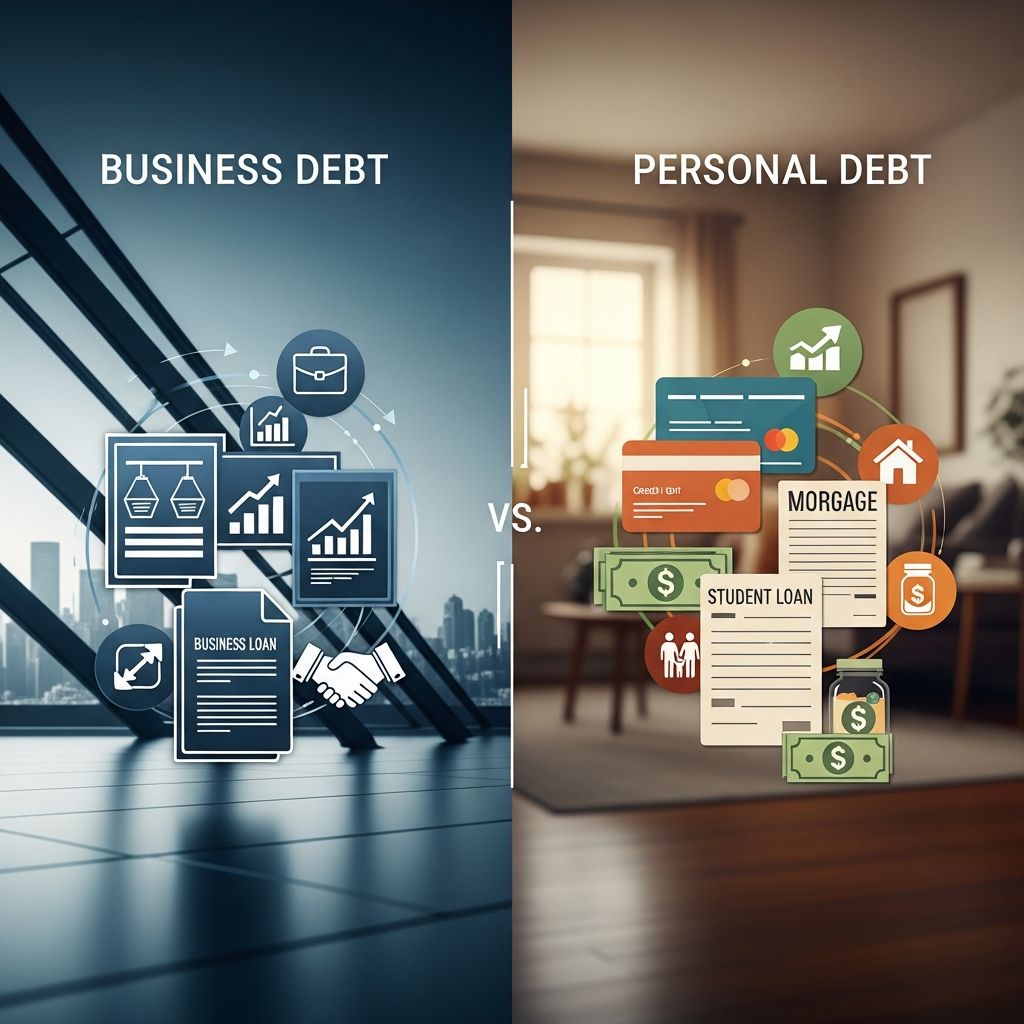
Business owners often wonder if their company’s financial obligations can reach into their personal savings, homes, or other assets. The answer hinges on the legal structure of the business and specific actions taken by the owner. While entities like LLCs and corporations provide a foundational layer of protection, certain circumstances can bridge the gap between business debts and personal liability.
Understanding Core Business Structures and Their Protections
Choosing the right business entity is the first line of defense against personal exposure to debts. Sole proprietorships and general partnerships offer no separation between the owner and the business, meaning creditors can pursue personal assets directly for any business-related obligations. In contrast, limited liability companies (LLCs) and corporations treat the business as a distinct legal entity, shielding owners’ personal property from company debts under normal conditions.
For instance, in an LLC, creditors typically can only claim business-owned assets like inventory or equipment, leaving personal bank accounts and real estate untouched. This separation is a key reason many small businesses opt for these structures, with data showing average small business debt around $195,000, underscoring the importance of this shield.
When Protection Fails: Common Exceptions to Limited Liability
Even with protective structures, personal liability can arise through deliberate choices or oversights. Here are the primary scenarios:
- Personal Guarantees: Lenders frequently require owners to personally back business loans, credit lines, or cards. If the business defaults, creditors can seize personal assets to satisfy the debt. This is common for startups lacking established credit.
- Veil Piercing: Courts may disregard the business entity if owners treat it as an extension of themselves, such as by commingling funds or ignoring formalities like separate bank accounts and proper record-keeping. Proving this requires evidence of abuse, but it remains a risk.
- Fraud or Illegal Acts: Engaging in deception, misrepresentation, or unlawful activities strips away protections, allowing courts to hold owners accountable personally.
- Regulatory Violations: Failing to comply with tax, employment, or other laws can trigger personal penalties, such as unpaid withholding taxes owed to the IRS or state agencies.
- Contractual Oversights: Signing agreements in a personal capacity rather than on behalf of the business exposes individuals directly.
Comparative Overview of Business Structures
To clarify protections, consider this table comparing common structures:
| Structure | Personal Liability for Business Debts | Key Risks |
|---|---|---|
| Sole Proprietorship | Full | All personal assets at risk |
| General Partnership | Full (joint and several) | Partners liable for 100% of debts |
| Limited Partnership | Full for general partners; limited for limited partners | General partners fully exposed |
| LLC | Limited | Guarantees, veil piercing, fraud |
| Corporation | Limited | Similar to LLC; requires formalities |
This comparison highlights why transitioning from a proprietorship to an LLC can significantly reduce risk.
Maintaining the Separation: Best Practices for Asset Protection
To maximize liability shields, owners must actively uphold distinctions between personal and business affairs. Essential steps include:
- Operate exclusively from dedicated business bank accounts and credit cards, avoiding any personal fund transfers.
- Adhere to corporate formalities: hold regular meetings, keep minutes, and file annual reports as required by state law.
- Ensure all contracts, leases, and loans are executed in the business’s name, not personally.
- Obtain adequate insurance, such as general liability and directors & officers (D&O) policies, to cover potential claims.
- Consult legal and accounting professionals during formation and ongoing operations to navigate complexities.
Neglecting these can invite “alter ego” claims, where courts view the business as indistinguishable from the owner.
Real-World Implications: Loans, Taxes, and Bankruptcy
Business loans often demand personal guarantees, especially for new ventures, turning corporate debt into personal obligations upon default. Tax non-compliance, like failing to remit payroll taxes, imposes direct personal liability on responsible parties. In bankruptcy scenarios, if personally liable, owners may need to file personal Chapter 7 or 13 rather than business filings, potentially affecting personal assets while allowing business continuity in some cases.
For example, under New York law, while LLCs generally protect owners, veil-piercing claims succeed when formalities are ignored. Nationally, courts scrutinize commingling and undercapitalization as veil-piercing indicators.
Strategic Planning for Long-Term Security
Beyond basics, advanced strategies enhance protection. Consider forming holding companies or using trusts for personal assets. Regularly audit finances to detect and correct mingling early. For high-risk industries, umbrella insurance adds layers of defense.
Owners should periodically review entity status with attorneys, especially during growth phases or debt increases. Proper planning not only averts liability but also boosts credibility with lenders and partners.
Frequently Asked Questions (FAQs)
What happens if my LLC can’t pay its debts?
Creditors pursue LLC assets only; personal assets remain protected unless exceptions like guarantees apply.
Can I use personal credit cards for business expenses?
Avoid this to prevent commingling, which risks veil piercing. Use business accounts exclusively.
Is personal liability possible in a corporation?
Yes, via personal guarantees, fraud, or failure to follow corporate formalities.
How do I form an LLC to ensure protection?
File articles of organization with your state, draft an operating agreement, and obtain an EIN. Consult a lawyer for compliance.
What if I’m in a partnership and my partner incurs debt?
In general partnerships, you’re jointly liable for the full amount.
Conclusion: Empower Your Business with Knowledge
Proactive structuring and management keep personal finances safe from business debts. By selecting appropriate entities and following best practices, owners safeguard their future while pursuing entrepreneurial goals.
References
- Can I Be Held Personally Responsible for My Company’s Debts And Liabilities? — Canales PLLC. 2023. https://www.canalespllc.com/can-i-be-held-personally-responsible-for-my-companys-debts-and-liabilities/
- Liability for Business Debts: Are You Liable for Business Debts? — Patriot Software. 2024-10-11. https://www.patriotsoftware.com/blog/accounting/liability-for-business-debts/
- When Are Business Owners Personally Liable? — GreatLawyers. 2024-10-11. https://www.greatlawyers.com/2024/10/11/when-is-business-owner-personally-liable/
- When You Might Be Personally Liable for LLC or Corporate Debt — Nolo. 2023. https://www.nolo.com/legal-encyclopedia/personally-liable-llc-corporate-debt-bankruptcy.html
- Your Personal Liability for Business Debts — TheBankruptcySite.org. 2023. https://www.thebankruptcysite.org/topics/your-personal-liability-business-debts
- How an LLC Can Help Shield Your Personal Assets from Business Risks — Nice Law Firm. 2024. https://nicelawfirm.com/resources/blog/how-an-llc-can-help-shield-your-personal-assets-from-business-risks/
- Leveraging Limited Liability for Asset Protection — Wolters Kluwer. 2024. https://www.wolterskluwer.com/en/expert-insights/leveraging-limited-liability-for-asset-protection
Similar Articles








Read full bio of Sneha Tete




