
Bridging the Digital Divide: Internet as a Basic Human Right
Exploring the modern connectivity chasm and why broadband access is essential.
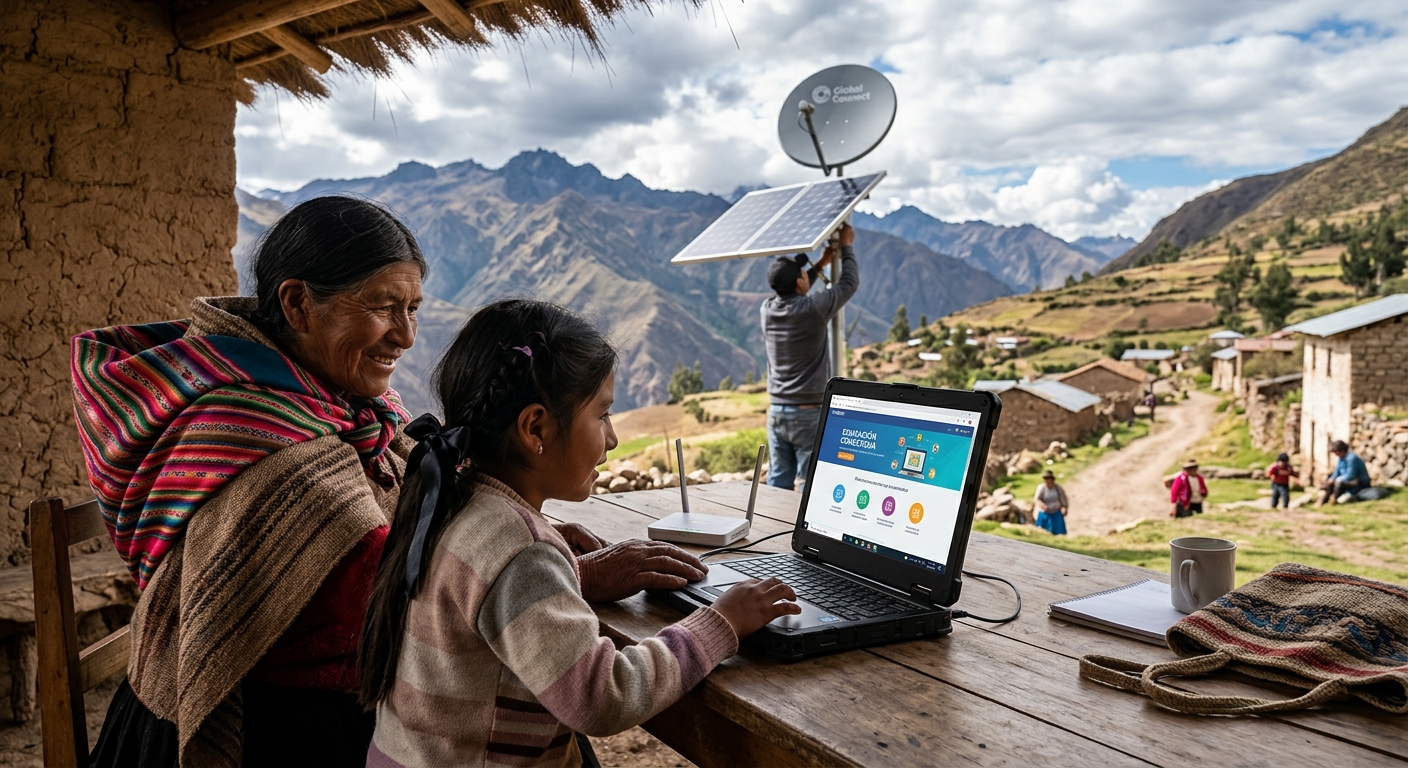
The Modern Connectivity Chasm
Imagine a bustling household managed by a single parent, responsible for the well-being and education of multiple school-aged children. In decades past, the primary logistical hurdles of such a family revolved around physical necessities: securing reliable transportation, preparing nutritious meals, and keeping the lights on. Today, an invisible yet formidable barrier dictates the trajectory of this family’s success and daily functionality: the presence or absence of a high-speed internet connection. In the twenty-first century, broadband is no longer a luxury reserved for entertainment; it is the digital oxygen required to breathe in the modern economy.
As society rapidly digitizes, every facet of human participation—from submitting a job application to consulting a doctor, from paying utility bills to completing elementary school homework—has migrated online. For households operating without a stable broadband connection, the world becomes a labyrinth of insurmountable analog hurdles. Navigating life without home internet forces families to make exhausting compromises, such as rationing cellular data, spending hours sitting in the parking lots of fast-food restaurants to catch a free Wi-Fi signal, or simply missing out on critical opportunities entirely.
The assumption that everyone is connected is embedded in the architecture of modern institutions. Schools assume children can watch streaming educational videos after hours; employers assume applicants can navigate web-based assessment portals. When these basic assumptions meet the reality of the disconnected, the result is a systemic exclusion that reinforces generational poverty and stifles upward mobility. Understanding this connectivity chasm is the first step toward recognizing why equitable internet access must be treated not as a commercial commodity, but as a fundamental human right.
By the Numbers: Who is Left Behind?
Despite the ubiquitous presence of technology in urban centers, a vast portion of the country remains disconnected. The illusion of universal connectivity shatters when we examine the data surrounding broadband infrastructure and adoption rates. The digital divide is not merely a geographic issue; it is heavily fractured along the lines of income, race, and community resources.
Recent federal evaluations illustrate the severity of this infrastructure deficit. The Federal Communications Commission (FCC) reported in 2024 that approximately 24 million Americans still lack access to fixed broadband connectivity capable of meeting basic modern standards. While rural and tribal lands are disproportionately affected by a lack of physical fiber and cell towers, urban and suburban environments face a different, equally paralyzing barrier: affordability.
Research from the Pew Research Center highlights how heavily the digital divide is influenced by household earnings. According to their demographic analysis, households on the lower end of the income spectrum are heavily penalized in the digital age. This affordability crisis ensures that the most vulnerable populations are the ones actively cut off from the tools necessary to improve their economic standing.
Broadband Adoption Disparities
| Demographic / Income Group | Percentage Lacking Home Broadband (Est.) | Primary Barrier to Access |
|---|---|---|
| Households earning less than $30,000/year | ~43% | Cost / Affordability |
| Rural Communities | ~20% – 25% | Infrastructure / Deployment |
| Black and Hispanic Adults | ~25% – 32% | Systemic economic barriers |
| Adults Aged 65 and Older | ~22% | Digital Literacy / Fixed Incomes |
The “Homework Gap” and Educational Inequality
Perhaps the most devastating consequence of the digital divide is its impact on children and the public education system. The U.S. Department of Education has increasingly focused on what is termed the “homework gap”—the distinct disadvantage faced by students who lack the digital resources at home required to complete school assignments. When the final school bell rings, the educational day is far from over, but for millions of children, their ability to participate in learning comes to an abrupt halt.
Modern curricula are inextricably tied to cloud-based platforms. Textbooks have been replaced by interactive modules, and paper submissions have been swapped for online portals. Consider the plight of a family with several children sharing a single, pre-paid smartphone. A mother trying to ration a meager cellular data plan cannot possibly support the bandwidth required for three children to simultaneously participate in virtual tutoring, research historical databases, and stream instructional videos.
The Pew Research Center indicates that while smartphone ownership is relatively high across all demographics, mobile devices are woefully inadequate for rigorous academic work. Typing a five-page essay on a five-inch screen or navigating complex educational software without a reliable Wi-Fi connection places an undue cognitive and physical burden on low-income students. Consequently, these students are more likely to receive lower grades, miss assignment deadlines, and experience high levels of stress, perpetuating a cycle of academic inequity that places them years behind their better-connected peers.
Economic and Healthcare Ramifications
The penalties of being disconnected extend far beyond the classroom, seeping into the economic vitality and physical health of households. In today’s job market, the analog application is all but extinct. Job seekers must scour online boards, maintain digital resumes, and often participate in video interviews. Without home broadband, a parent looking to secure better employment is forced to rely on the limited operating hours of local public libraries, severely restricting their ability to act on timely opportunities.
Furthermore, the rise of remote work has created a dual economy. Those with high-speed internet have access to a global job market, flexible hours, and the ability to earn a living safely from home. Those without are geographically tethered to the physical labor market immediately surrounding them, which often offers lower wages and fewer benefits. This lack of access effectively locks low-income families out of the fastest-growing sectors of the modern economy.
On the public health front, broadband access has literally become a matter of life and death. Telehealth services have revolutionized how we deliver medical care, allowing patients to consult specialists, renew vital prescriptions, and receive mental health counseling without the burdens of transportation and childcare. The FCC has found compelling data correlating broadband access with improved public health metrics. For instance, their analytics have shown that communities with higher rates of internet adoption experience significantly lower rates of chronic conditions, such as diabetes. When individuals can seamlessly access health portals, track their data, and consult physicians digitally, overall community health stabilizes.
From Luxury to Essential Utility: A Paradigm Shift
To solve the digital divide, there must be a fundamental shift in how policymakers, corporations, and the public view internet service. It can no longer be categorized alongside cable television or premium entertainment services. Instead, broadband must be viewed through the same lens as water, electricity, and heating—as an essential public utility.
In the 1930s, the United States faced a similar crisis of infrastructure. Large metropolitan areas were fully electrified, allowing for rapid industrial and economic advancement, while vast swaths of rural America were left in the dark. Market forces alone were insufficient to solve the problem, as private companies argued it was not profitable to lay miles of electrical wire for a handful of rural farms. It required bold federal intervention, notably the Rural Electrification Act, to declare that all Americans deserved access to power.
Today, fiber-optic cables are the new electrical lines. Leaving broadband deployment entirely to the free market ensures that low-income neighborhoods and sparsely populated rural regions will remain indefinitely underserved. Providers inherently prioritize expanding infrastructure in affluent, densely populated areas where return on investment is guaranteed. Recognizing the internet as a fundamental human right mandates that governments step in to subsidize, regulate, and actively build the infrastructure required to connect every home, regardless of its zip code or the income bracket of its inhabitants.
Strategic Interventions for Universal Access
Eradicating the digital divide requires a multi-pronged approach that addresses both infrastructure deployment and consumer affordability. Over recent years, various initiatives have attempted to bridge this gap, though sustained effort is required to prevent marginalized families from slipping back into the analog void.
- Federal Subsidies and Support: Programs like the Affordable Connectivity Program (ACP) provided critical lifelines to low-income households by subsidizing monthly internet bills. Ensuring the longevity and permanent funding of such programs is vital for families who must choose between buying groceries and paying for a Wi-Fi connection.
- Infrastructure Grants: Programs like the Broadband Equity, Access, and Deployment (BEAD) Program are injecting billions of dollars into states to physically lay fiber-optic cables in unserved and underserved regions, directly combating the rural infrastructure gap.
- Community Broadband Networks: Many municipalities are bypassing corporate internet service providers entirely to build their own community-owned broadband networks. These municipal networks prioritize universal access and affordability over massive profit margins, treating internet provision as a local public service.
- Digital Literacy and Hardware Initiatives: Simply providing a wire to a house is not enough. Families need modern devices—laptops or desktop computers, not just smartphones—and the digital literacy training required to use them safely and effectively.
The story of a parent struggling to raise children without internet access is not a marginal anomaly; it is an acute symptom of a systemic failure. As we look to the future, bridging the digital divide is not merely an act of charity or a technological upgrade. It is an urgent civil rights imperative, ensuring that every individual has the foundational tools required to participate in, contribute to, and benefit from the modern world.
Frequently Asked Questions (FAQs)
What exactly is the “digital divide”?
The digital divide refers to the growing gap between demographics and regions that have access to modern information and communications technology, and those that do not. This includes not just the physical infrastructure of high-speed internet, but also the affordability of service, access to capable devices like laptops, and the digital literacy required to navigate the web.
What is the “homework gap”?
The homework gap is a specific consequence of the digital divide affecting K-12 and college students. It describes the barrier students face when they are assigned homework that requires internet access (like researching databases, submitting assignments online, or streaming educational videos) but lack a reliable broadband connection at home, putting them at a severe academic disadvantage.
Why isn’t a smartphone with a data plan enough for internet access?
While smartphones are highly prevalent, they lack the computing power, screen size, and software compatibility required for intensive tasks like writing term papers, utilizing complex educational platforms, or performing sophisticated remote work. Furthermore, cellular data plans often have strict data caps or throttling limits, making them unsuitable for continuous streaming and heavy bandwidth usage required by a multi-person household.
How does internet access impact public health?
High-speed internet is essential for accessing telehealth services, allowing patients to virtually meet with doctors, therapists, and specialists. The FCC has found data indicating that higher internet adoption in communities correlates with better health outcomes and lower prevalences of chronic diseases, as connected individuals have easier access to medical information, patient portals, and remote care management.
References
- Federal Communications Commission FCC 24-27 STATEMENT OF COMMISSIONER ANNA M. GOMEZ — Federal Communications Commission. 2024-03-14. https://docs.fcc.gov/public/attachments/FCC-24-27A5.pdf
- Internet, Broadband Fact Sheet — Pew Research Center. 2025-11-20. https://www.pewresearch.org/internet/fact-sheet/internet-broadband/
- Advancing Digital Equity for All — U.S. Department of Education. 2022. https://tech.ed.gov/advancing-digital-equity/
- Studies and Data Analytics on Broadband and Health — Federal Communications Commission. 2024-01-26. https://www.fcc.gov/health/maps
- What we know about internet use, smartphone ownership and digital divides in the U.S. — Pew Research Center. 2026-01-08. https://www.pewresearch.org/short-reads/2026/01/08/what-we-know-about-internet-use-smartphone-ownership-and-digital-divides-in-the-us/
Similar Articles








Read full bio of medha deb


