
Hotel Room Privacy: 5 Practical Tips Every Traveler Should Use
Understand when your privacy in a hotel room is legally protected, when it ends, and what you can do if it is violated.
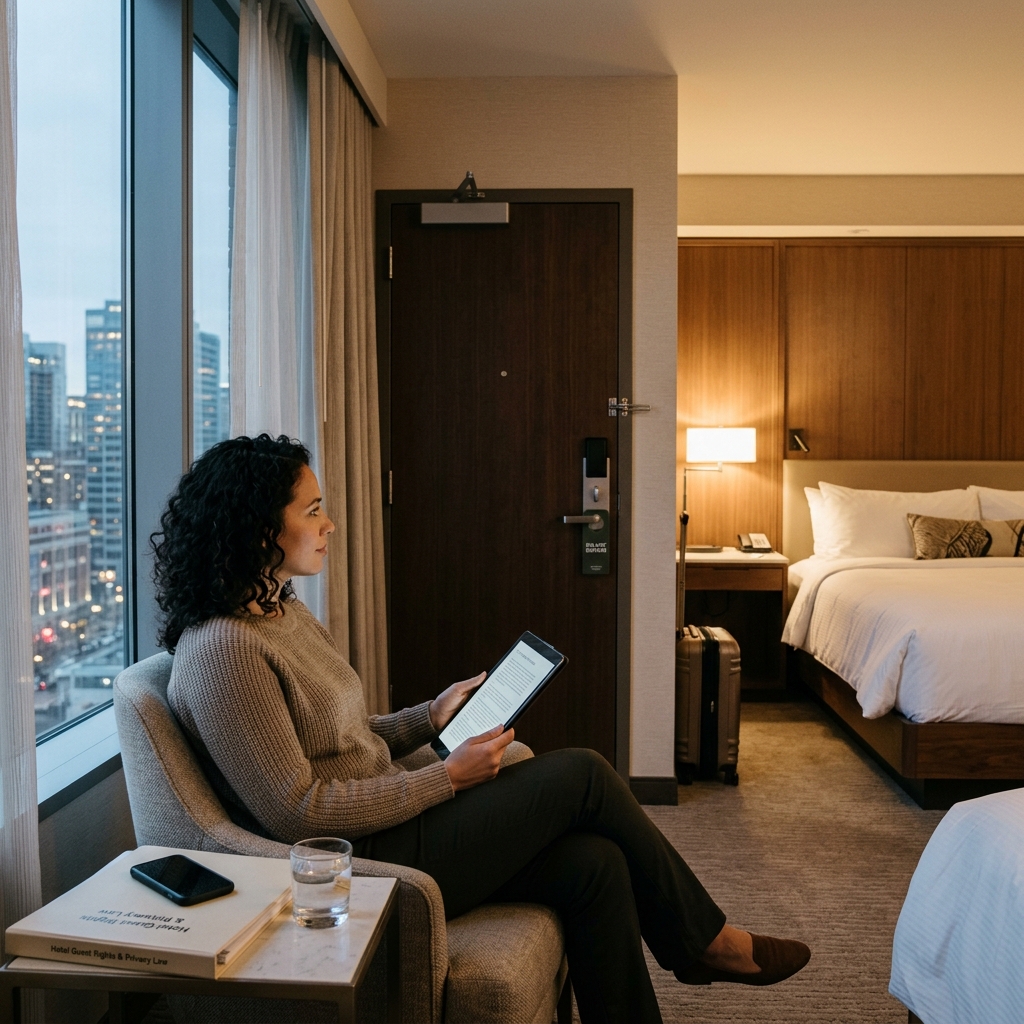
Most travelers assume that once the door to their hotel room closes, they are as private as they would be at home. In many situations, the law supports this expectation: courts generally recognize that a registered guest has a reasonable expectation of privacy inside a hotel room during the paid stay, and that constitutional protections such as the Fourth Amendment can apply. At the same time, that privacy is not absolute, and there are well-defined circumstances where hotel staff, police, or even hidden camera operators may lawfully or unlawfully intrude.
This article explains how privacy in hotel rooms works under U.S. law, when and why it can lawfully be limited, and what you can do if your rights are violated. It is an informational overview and not tailored legal advice; laws vary by jurisdiction, and you should consult an attorney about specific situations.
1. Why Hotel Room Privacy Is Legally Significant
Hotel rooms occupy a unique position in privacy law. They are neither fully public nor fully private; instead, they are temporary spaces that guests use as if they were their home for the duration of a stay. Courts have long recognized that people reasonably expect privacy in such spaces, meaning that constitutional and statutory protections can apply.
- Fourth Amendment protection: In the United States, the Fourth Amendment protects against unreasonable searches and seizures by the government. It applies where a person has a reasonable expectation of privacy, which includes hotel and motel rooms, subject to limitations.
- Common law and statutory privacy rights: Beyond the Constitution, state tort law and statutes protect individuals against intentional intrusions into their private life, including unauthorized recordings or disclosures of room information.
- Contract and consumer expectations: When guests pay for a hotel room, they enter a contractual relationship with the hotel. This contract typically includes an implicit promise that the room will not be arbitrarily entered or monitored, except for legitimate operational reasons like housekeeping or emergencies.
Because of these overlapping protections, both hotels and law enforcement must carefully navigate when and how they access guest rooms, and guests have meaningful recourse when those boundaries are crossed.
2. The Concept of “Reasonable Expectation of Privacy” in a Hotel Room
The phrase reasonable expectation of privacy is central to understanding your rights. Courts assess whether society is prepared to recognize a particular expectation as reasonable. Hotel rooms generally qualify, but only under certain conditions.
| Situation | Typical Privacy Expectation | Legal Implications |
|---|---|---|
| Registered guest, paid-up, before checkout | High | Fourth Amendment protections apply; police generally need a warrant or an exception. |
| After checkout time, no extension or payment | Low to none | Privacy interest usually ends; hotel may repossess room and consent to police search. |
| Guest lawfully evicted (e.g., non-payment) | Ends upon eviction steps | Once eviction is commenced (lockout, removal of belongings, notice), privacy rights are extinguished. |
| Unauthorized visitor or guest-of-guest | Case-specific | Privacy may depend on the relationship to the registered guest and how the room is being used. |
During the ordinary, paid stay, guests and their overnight invitees generally share a protected privacy interest in the room. That interest is strongest when the hotel has not taken steps to terminate the tenancy and when the use of the room is consistent with hotel policies.
3. When Hotel Staff May Enter Your Room
Even with strong privacy expectations, hotel staff are not completely barred from entering guest rooms. They retain limited rights of access for operational and safety reasons, but those rights must be exercised carefully to avoid violating guest privacy.
3.1 Routine Access: Housekeeping and Maintenance
Hotels normally reserve the right to enter for legitimate business purposes, including:
- Housekeeping: Cleaning and linen service during the stay, particularly when the guest requests or consents to service.
- Maintenance and repair: Addressing reported problems such as leaks, electrical issues, or malfunctioning equipment.
- Safety checks: Ensuring that the room is safe and that no hazardous conditions exist for guests or staff.
These entries are generally permissible when performed in good faith and in accordance with hotel policy. However, staff cannot convert routine access into an excuse to search personal belongings or assist law enforcement in an informal search of the room.
3.2 Exceptional Situations: Emergencies and Rule Violations
There are limited circumstances where a hotel can enter or reclaim a room without the guest’s consent due to overriding concerns:
- Imminent danger: If staff reasonably believe there is an emergency (for example, fire, obvious medical distress, or dangerous activity), entry may be justified to protect life or property.
- Non-payment or fraud: When a guest fails to pay or uses a stolen credit card, hotels may terminate the tenancy and regain possession of the room, which also affects the guest’s privacy interest.
- Disturbances and rule violations: Persistent violation of “house rules” or conduct that disturbs other guests can lead to eviction and loss of privacy expectation once the hotel takes affirmative steps to repossess the room.
Once the hotel has lawfully ended the tenancy and taken steps such as locking the guest out or removing belongings, courts generally treat the guest’s privacy rights in that room as extinguished.
4. Police Searches of Hotel Rooms: Warrant Requirements and Exceptions
Police access to hotel rooms raises critical privacy questions. Because guests usually have a reasonable expectation of privacy, law enforcement cannot freely enter or search a room without respecting constitutional constraints.
4.1 General Rule: Warrant Required During a Valid Stay
During the ordinary course of a paid stay, when the guest’s tenancy has not expired or been terminated, courts have held that police generally need a valid search warrant, or must fit within a recognized exception, to lawfully enter and search a hotel room.
- Guest consent: The guest may voluntarily allow police to enter and search. Only the guest or someone with actual authority over the room can consent; hotel employees are not authorized to consent on the guest’s behalf while the tenancy is ongoing.
- Search warrant: Absent consent or an emergency, police typically obtain a judge-issued warrant based on probable cause to search the room.
Hospitality law guidance consistently warns hotels not to admit police to a room during a valid tenancy without a warrant or lawful exception, emphasizing that only the guest may consent to such entry.
4.2 Warrant Exceptions That May Apply
Even when a privacy interest exists, courts recognize exceptions under the Fourth Amendment that allow warrantless searches in specific, narrowly defined circumstances.
- Exigent circumstances: Situations involving immediate danger to life, risk of serious property damage, or imminent destruction of evidence can justify entry without a warrant.
- Plain view doctrine: If police are lawfully inside the room (for example, after being invited in) and see contraband or evidence in plain view, they may seize it without another warrant.
- Incident to lawful arrest: When police lawfully arrest someone in or near the room, they may conduct a limited search incident to that arrest, subject to established restrictions.
These exceptions are narrow and fact-dependent. Guests retain protection against broad, exploratory searches not justified by specific legal grounds.
4.3 When Privacy Ends: Checkout, Eviction, and Holdover Guests
Your privacy interest does not last indefinitely. Courts have held that once the checkout time passes and the hotel has not extended your stay, or once you are lawfully evicted, your expectation of privacy in the room generally expires.
- After communicated checkout time: Many decisions treat privacy as ending at checkout, though hotel policies and practices can modify this—such as routinely allowing late departures or extensions.
- Eviction steps: Locking you out, removing your belongings, or leaving a clear notice of eviction all signal that the hotel has repossessed the room and that privacy protections have ended.
- Holdover guests: Guests who remain past checkout without authorization are often treated as trespassers with diminished or no Fourth Amendment protection, though details depend on the jurisdiction.
Once your privacy interest ends, hotel staff with proper authority may consent to police searches of the room without your involvement.
5. Hidden Cameras, Video Voyeurism, and Surveillance in Hotels
Another major privacy concern involves hidden cameras and other forms of unauthorized recording inside hotel rooms. Federal law and many state statutes treat this as a serious crime when it targets areas where a person reasonably expects privacy, such as bathrooms and bedrooms.
5.1 Federal Video Voyeurism Law
The Video Voyeurism Prevention Act of 2004, codified at 18 U.S.C. § 1801, makes it a federal offense to knowingly capture an image of a person’s private areas without consent, in a place where that person has a reasonable expectation of privacy, including hotel rooms.
- Applies to intentional, non-consensual recording of intimate areas in private spaces.
- Penalties may include up to one year in federal prison and substantial fines for violations.
- Victims can pursue both criminal complaints and civil lawsuits for damages, depending on circumstances and state law.
States often have parallel statutes that address unlawful surveillance or voyeurism, which can expand protections and provide additional civil remedies for victims.
5.2 Hotel Surveillance vs. Guest Room Privacy
Hotels commonly use visible security cameras in public areas such as lobbies, hallways, and parking lots for safety reasons. This type of surveillance generally does not violate privacy law because guests do not have a strong privacy expectation in public or semi-public spaces. The legal boundary is crossed when cameras are hidden or placed inside guest rooms or private bathroom areas without consent.
Key distinctions include:
- Public areas: Visible cameras for security purposes are typically lawful and disclosed through signage or policies.
- Private guest room interiors: Secret recording devices used to capture guests in intimate situations can violate federal and state laws and be grounds for civil damages.
6. What Hotels Must Do to Safeguard Guest Privacy
Hotels have both legal and ethical responsibilities to protect the privacy of their guests. Hospitality law guidance emphasizes that a guest’s room is treated as the guest’s property for the duration of the tenancy, subject to recognized exceptions.
6.1 Limiting Access and Disclosure
To safeguard privacy, hotels are expected to implement policies that:
- Restrict access: Limit room access to authorized staff performing legitimate functions such as housekeeping, maintenance, or emergency response.
- Control information sharing: Avoid disclosing guest room numbers, stay dates, or occupancy status to unauthorized third parties, except when legally compelled (for example, via subpoena).
- Train staff: Educate employees on privacy policies, including how to respond to inquiries from visitors or law enforcement.
Failure to protect guest privacy can expose hotels to civil liability for negligence, invasion of privacy, or breach of duty if harm results from improper disclosure or unauthorized access.
6.2 Responding to Suspected Criminal Activity
Hotels frequently face situations where guests may be engaged in illegal or dangerous activity. Guidance for innkeepers stresses a balanced approach: while guests retain privacy rights even when suspected of crime, hotels must act to protect other guests and comply with the law.
- Document suspicious behavior and consult legal counsel or law enforcement where appropriate.
- Use established procedures to terminate the tenancy if necessary (for example, non-payment or serious violations of house rules).
- Cooperate with police within the boundaries of privacy law, for instance by allowing access after tenancy has lawfully ended.
7. Practical Tips for Guests to Protect Their Privacy
While many legal rules operate behind the scenes, guests can take simple steps to reduce the risk of privacy breaches during their stay.
- Confirm checkout policies: Ask the front desk about checkout time and late departure options. Assume your strongest privacy interest ends at checkout unless you have an agreed extension.
- Use door locks and safes: Engage deadbolts or security latches when in the room, and store sensitive items in the room safe when possible.
- Be cautious with police requests: You are generally not required to consent to a search or open your door to police. Politely declining consent preserves your Fourth Amendment rights.
- Minimize visible contraband: Never leave illegal items in plain sight; anything visible to lawfully present officers may be seized under the plain view doctrine.
- Stay alert to hidden devices: If you notice unusual wires, lenses, or devices, document them, report immediately to hotel management, and consider contacting law enforcement.
8. Frequently Asked Questions (FAQ)
Do I have the same privacy in a hotel room as in my own home?
During a valid, paid stay, you have a substantial, though not identical, privacy interest in your hotel room. Courts recognize hotel rooms as places where the Fourth Amendment can apply, meaning police usually need a warrant or an exception to search. However, hotels retain limited rights to enter for housekeeping, maintenance, and emergencies.
Can hotel staff let the police into my room without my permission?
Generally, no—while your tenancy is active, hotel staff are not authorized to consent to a police search of your room. Only the guest can give valid consent during the stay. After your privacy interest ends, such as after checkout or lawful eviction, hotel staff with authority may consent to a search.
What happens if I stay past checkout time?
Once checkout time has passed and the hotel has not extended your stay, courts often treat your privacy interest as diminished or ended. The hotel may take steps to evict you, repossess the room, and, in some circumstances, allow police to enter without your consent. Specific outcomes can depend on hotel practices and local law.
Is it legal for a hotel to use hidden cameras in my room?
Secret cameras that capture guests in private situations inside a hotel room can violate federal and state laws. The Video Voyeurism Prevention Act makes it a federal crime to knowingly record a person’s private areas without consent in a place like a hotel room, where they reasonably expect privacy. If you suspect you have been recorded, you may have both criminal and civil remedies.
What should I do if I believe my hotel privacy has been violated?
If you think your privacy has been unlawfully breached—by unauthorized entry, improper disclosure of your information, or hidden recording—consider taking these steps:
- Document what happened, including dates, times, and any physical evidence.
- Report the incident to hotel management and request written confirmation of your complaint.
- Contact local law enforcement if you suspect criminal conduct, such as illegal surveillance or theft.
- Consult a lawyer experienced in privacy or hospitality law to evaluate potential claims and remedies.
References
- Safeguarding Guests’ Right to Privacy Poses a Dilemma for Hoteliers — HospitalityLawyer.com / J. Sherry. 2019-01-01. https://hospitalitylawyer.com/wp-content/uploads/2019/01/Safeguarding-guests-right-to-privacy.pdf
- Do Police Need a Warrant to Search My Hotel Room? — Wallin & Klarich. 2023-06-01. https://www.wklaw.com/do-police-need-a-warrant-to-search-my-hotel-room/
- Guest Room Privacy and the Fourth Amendment — Foster Garvey. 2020-02-10. https://www.foster.com/newsroom/blog/guest-room-privacy-and-the-fourth-amendment
- Hotel Video Voyeurism Laws — Lipcon, Margulies & Winkleman, P.A. 2022-03-15. https://www.lipcon.com/hotel-video-voyeurism/
- Fourth Amendment Expectations of Privacy in Hotel Rooms — Seton Hall Circuit Review / D. C. King. 2012-01-01. https://scholarship.shu.edu/cgi/viewcontent.cgi?article=1048&context=circuit_review
- Does a Holdover Hotel Guest Have a Reasonable Expectation of Privacy? — LLRMI / Legal Update. 2025-01-20. https://www.llrmi.com/articles/legal_updates/2025-couch-v-state/
Similar Articles








Read full bio of Sneha Tete


