
Can A Breathalyzer Be Fooled? 5 Myths And How Tests Really Work
A practical look at common breath-test myths, why they fail, and what actually affects results.
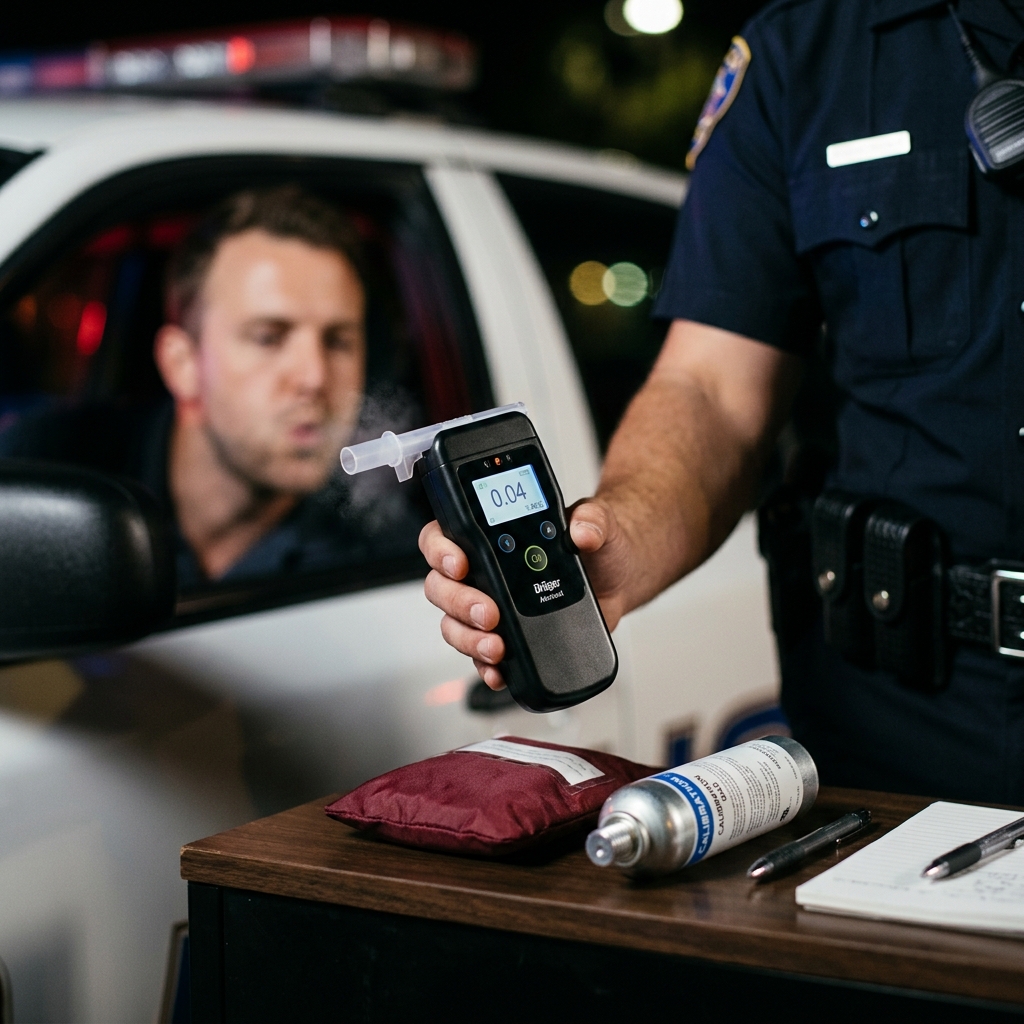
Can a Breathalyzer Be Fooled?
The short answer is no: the common tricks people share online do not reliably fool a breathalyzer at the roadside. Breath testing devices are designed to detect alcohol in a sample of deep lung air, which is why covering the smell of alcohol or trying to hide it in your mouth does not change the chemistry the device measures. In DUI cases, the real question is usually not whether a driver can beat the machine at the moment of testing, but whether the test was administered correctly and whether the result is scientifically reliable.
That distinction matters. A driver may hear about pennies, mints, mouthwash, coffee, or breathing techniques, but those ideas are mostly myths. Some may have no effect at all, while others can make things worse by adding alcohol to the mouth or creating an unusual test pattern that attracts more attention.
How Breath Tests Actually Measure Alcohol
Breathalyzers do not smell your breath in the ordinary sense. They estimate blood alcohol concentration by analyzing alcohol vapor in air that comes from the lungs. The idea is that alcohol in the blood passes into the air exchanged in the lungs, and the machine converts that reading into an estimate of BAC or BrAC. Because the measurement is tied to the body’s alcohol level rather than the smell of alcohol on the tongue, tricks aimed at masking odor do not solve the underlying problem.
- Devices are built to detect alcohol vapor, not perfume, gum, or mint flavor.
- Results are affected by testing conditions, device maintenance, and sample quality.
- Some substances can distort results, but they do not create a dependable method for “beating” the test.
This is why the better legal question is whether the test was accurate, not whether a person can outsmart it with a quick trick.
Common Myths That Do Not Work
Many breathalyzer myths persist because they sound plausible to someone who has been drinking. In practice, they are weak or useless. Some are based on misunderstanding how the device works, while others are just folk advice repeated until it sounds true.
| Myth | Why It Fails |
|---|---|
| Using copper coins | A coin in the mouth does not remove alcohol from lung air and does not alter the machine’s chemical reading. |
| Mints, gum, or breath spray | These may hide the odor of alcohol, but they do not reduce the amount of alcohol in the breath sample. |
| Drinking coffee | Caffeine may make a person feel more alert, but it does not speed up alcohol metabolism. |
| Eating food | Food can slow absorption earlier, but it does not instantly lower BAC once alcohol is already in the system. |
| Using mouthwash | Some mouthwashes contain alcohol and may temporarily increase the amount of alcohol near the mouth. |
These myths share a common flaw: they focus on changing appearance or sensation instead of changing the amount of alcohol already absorbed into the body.
Why Coffee, Water, and Food Do Not Sober You Up
One of the most persistent misunderstandings is that drinking coffee or water can rapidly lower BAC. Coffee may help a person feel less sleepy, but it does not remove alcohol from the bloodstream. Water can help with dehydration, but it does not chemically eliminate alcohol either. The liver still does the work, and it does so at its own pace.
Food is different only in a limited way. Eating before or while drinking can slow how quickly alcohol enters the bloodstream, but it cannot undo drinking that has already happened. Once alcohol has been absorbed, time is the main factor that reduces BAC.
That means there is no reliable shortcut. A person who is over the limit cannot “fix” the problem with a cup of coffee, a bottle of water, or a snack on the side of the road.
The Problem With Mouthwash, Mints, and Similar Products
People often assume that anything with a strong flavor can clean up a breath sample. That is not how breath testing works. Breath fresheners may reduce the odor of alcohol, but they do not eliminate the alcohol molecules that matter to the device. In some cases, products used to freshen breath can make the situation worse.
- Alcohol-based mouthwash can leave trace alcohol in the mouth.
- Strong mints or gum may hide odor but do not change BAC.
- Sprays and lozenges do not remove alcohol absorbed into the body.
Because some breath tests can be influenced by residual alcohol in the mouth, using these products right before a test may create an issue rather than solve one. A person who has just used mouthwash can appear to have alcohol in the mouth, even if the main source of alcohol in the body is different.
What About Hyperventilating or Holding Your Breath?
Breathing techniques are among the few myths that have any scientific basis, but that basis is weak and not dependable in real-world use. Hyperventilating may slightly lower a reading in some conditions because it changes the air in the lungs. Holding the breath may do the opposite and increase the reading. The problem is that any effect is usually small, inconsistent, and not something a person can control with precision during a traffic stop.
Even where a change exists, it is not a guaranteed escape hatch. A tiny reduction in a reading does not mean the driver is safe to drive or immune from a DUI arrest. It may also do nothing at all depending on the device, the testing protocol, and the person’s actual alcohol level.
In short, breathing tricks are not a dependable method for avoiding a breath test result. They are at best a narrow scientific curiosity, not a practical defense strategy.
Why Some Tests Produce False Positives or Unreliable Results
Although people cannot reliably trick a breathalyzer, that does not mean every result is perfect. Breath tests can be challenged when the equipment is not maintained properly, when the operator makes a mistake, or when outside factors interfere with the sample. This is one reason defense lawyers review the testing process carefully in DUI cases.
- Improper calibration can affect accuracy.
- Poor maintenance can reduce reliability.
- Testing too soon after drinking or using certain products may skew results.
- Medical or environmental factors can complicate interpretation in some cases.
These concerns do not mean breath tests are useless. They mean the numbers should be tested against proper procedures and supporting evidence. A result is only as trustworthy as the process used to obtain it.
How Officers and Courts View Breath Test Results
In many DUI cases, a breath test is only one piece of evidence. Officers also look at driving behavior, physical signs of impairment, statements made during the stop, and performance on field sobriety tests. Courts may later examine whether the device was certified, whether the officer followed the required steps, and whether the sample was collected under acceptable conditions.
That is why a driver should not assume that beating the machine, even if possible, would end the legal issue. The state may still use other evidence to support a DUI charge. Likewise, a defense attorney may challenge the stop itself, the testing method, or the reliability of the result.
The key point is that a breathalyzer reading is not always the final word. It can be powerful evidence, but it is still evidence that can be examined, questioned, and, in some cases, excluded or reduced in value.
What Actually Matters After Drinking
If someone has been drinking, the only reliable way to reduce BAC is time. The body metabolizes alcohol gradually, and no beverage, supplement, food, or gadget can make that process happen instantly. A person who plans to drive should not rely on internet myths, home remedies, or supposed hacks.
Practical alternatives are straightforward:
- Do not drive after drinking.
- Arrange a ride before you start drinking.
- Wait long enough for the body to process the alcohol.
- Remember that feeling sober is not the same as being under the legal limit.
People often underestimate impairment because tolerance can make them feel more functional than they really are. Breath tests are intended to provide an objective measure, which is why guesswork and confidence are poor substitutes for sobriety.
When a Breath Test Can Be Challenged in DUI Defense
Defense lawyers may challenge a breath test when the facts suggest the result is inaccurate or the process was flawed. Common challenges may involve whether the device was calibrated, whether the officer observed the driver for the required period, whether mouth alcohol affected the sample, and whether the result matches the rest of the evidence.
Potential defense issues include:
- Unreliable device maintenance or calibration records
- Improper test administration
- Signs of mouth alcohol contamination
- Conflicting evidence from the stop or roadside tests
These are legal and scientific issues, not tricks. They focus on whether the government can trust the result, which is very different from trying to disguise alcohol at the moment of testing.
FAQs About Breathalyzer Myths
Can mints or gum lower a breathalyzer reading?
No. They can cover the smell of alcohol, but they do not remove alcohol from the breath sample.
Does drinking water help before a breath test?
Water may help with dryness or dehydration, but it does not lower BAC in a meaningful way.
Can coffee make you pass a breathalyzer?
No. Coffee may make someone feel more awake, but it does not speed up alcohol elimination.
Will a penny or coin under the tongue work?
No. That idea has no reliable scientific support and does not change the amount of alcohol measured in deep lung air.
Can you challenge a breathalyzer result in court?
Yes. Breath test results can be challenged if there are problems with the device, the procedure, or the surrounding evidence.
Bottom Line for Drivers
Breathalyzer myths are popular because they offer a quick answer to a serious problem, but most of them fail because they do not address the actual source of the test result. A breathalyzer measures alcohol linked to the body’s internal alcohol level, not just the smell on the breath. That is why mints, coffee, water, coins, and similar tricks do not provide a real solution.
The safest and most legally sound approach is simple: do not drive after drinking. If a test result is in dispute, the issue should be handled through the evidence, the science, and the law rather than through myths that promise more than they can deliver.
References
- Is It Possible To Trick a Breathalyzer? – FindLaw — FindLaw. 2026-07-10. https://www.findlaw.com/dui/arrests/how-to-trick-a-breathalyzer-myths.html
- Alcohol and Breath Testing — National Institute on Alcohol Abuse and Alcoholism. 2024-01-01. https://www.niaaa.nih.gov/publications/brochures-and-fact-sheets/alcohol-and-breath-testing
- Alcohol Impairment and Breath Alcohol Concentration — National Highway Traffic Safety Administration. 2024-01-01. https://www.nhtsa.gov/risky-driving/drunk-driving
- Ignition Interlock Device Program — Centers for Disease Control and Prevention. 2024-01-01. https://www.cdc.gov/transportationsafety/impaired_driving/interlock.html
- Breath Alcohol Testing — National Institute of Standards and Technology. 2023-01-01. https://www.nist.gov/topics/forensic-science/breath-alcohol-testing
Similar Articles








Read full bio of medha deb




