Breastfeeding on Planes: Legal Rights Guide
Empowering nursing mothers with essential laws, airline policies, and practical tips for stress-free air travel.
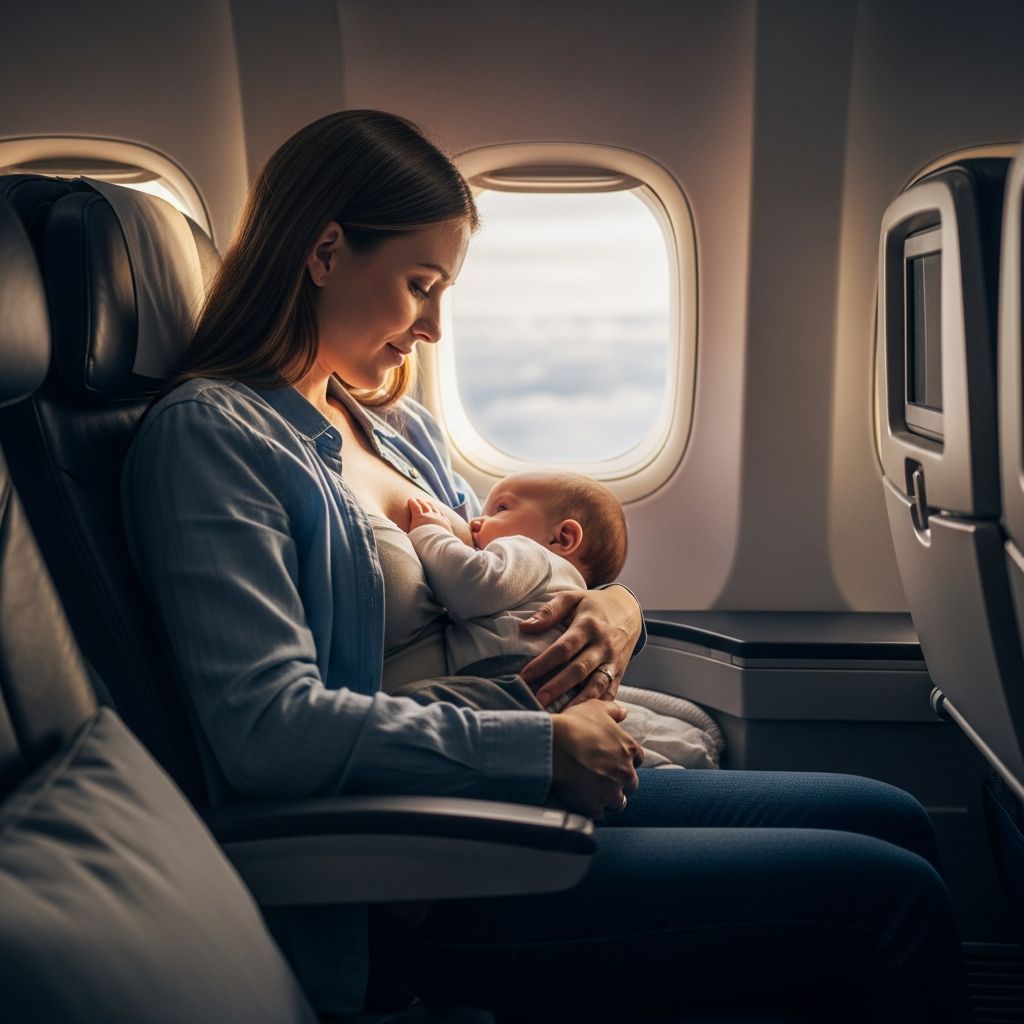
Nursing mothers have protected rights to breastfeed on airplanes under U.S. federal laws and many international regulations, allowing discreet feeding during flights without interference.
Understanding U.S. Federal Protections for Nursing Travelers
Federal legislation in the United States explicitly supports breastfeeding mothers during air travel, addressing both airport facilities and onboard needs. The Friendly Airports for Mothers (FAM) Act mandates that medium and large hub airports provide private, non-bathroom lactation spaces in each terminal, along with baby changing tables in restrooms. This ensures mothers can pump or nurse comfortably before or after flights.
Complementing the FAM Act, the Bottles and Breastfeeding Equipment Screening Enhancement (BABES) Act, passed in 2025, updates TSA protocols for screening breast milk, formula, and related items. It requires consistent officer training, clear communication of rights, and hygiene standards to prevent contamination, with guidance updates every five years. These laws collectively reduce barriers for traveling parents.
TSA Guidelines: Navigating Security with Breast Milk
Transportation Security Administration rules exempt breast milk, formula, toddler drinks, and baby food from the standard 3.4-ounce liquid limit, classifying them as medically necessary. Parents can carry unlimited quantities in carry-on bags, even if the baby is not traveling. Frozen, fresh, or thawed milk is permitted, and ice packs or gel packs are allowed for cooling, with or without milk present.
At checkpoints, declare these items for additional screening, which may involve visual inspection, swab testing, or X-ray. TSA officers are trained under the BABES Act to handle items hygienically. For pumping equipment, manual and electric pumps are allowed, though batteries must comply with general rules.

The Future of AI: Preventing a Big Tech Monopoly >

| Item | TSA Allowance | Notes |
|---|---|---|
| Breast Milk | Unlimited quantity | Fresh, frozen, or thawed; exempt from 3-1-1 rule |
| Ice Packs | Allowed | Even without milk; for cooling purposes |
| Breast Pumps | Carry-on only | Electric pumps OK post-takeoff |
| Formula/Baby Food | Unlimited | Medically necessary exemption |
Major U.S. Airlines: Policies Supporting Nursing Mothers
Domestic carriers align with federal protections, welcoming breastfeeding onboard and in facilities. Southwest Airlines permits nursing anywhere on the plane or in lounges, offering extra ice for milk storage while adhering to food safety rules. Alaska Airlines respects mothers’ discretion to cover or not, providing ice but no refrigeration.
- Delta Air Lines: Supports breastfeeding in-flight and at airports; staff assist in finding lactation rooms.
- United Airlines: Allows nursing or pumping onboard and in gates.
During takeoff and landing, secure babies with approved restraints—lap infants use extension belts—while continuing to nurse for comfort.
International Airline Policies: A Global Overview
Airlines worldwide generally accommodate nursing mothers, often without formal policies but through supportive crew training. In Europe, British Airways endorses breastfeeding at any time, including ascent and descent, with seatbelts fastened. EasyJet permits feeding onboard freely, and SWISS Air offers discreet galley spaces if requested.
Asia-Pacific carriers are equally accommodating. Cathay Pacific allows nursing throughout flights, with electric pumps usable post-takeoff announcement. Air New Zealand and Virgin Australia recommend breastfeeding during pressure changes to ease ear discomfort.
Middle Eastern airlines like Etihad provide fridge storage for expressed milk and a Flying Nanny service for settling babies.
Practical Strategies for Breastfeeding During Flights
Plan ahead to minimize disruptions. Nurse during boarding to avoid hunger cries, and request bassinet seats for long-hauls if available. Pack nursing covers, extra layers for temperature changes, and a portable pump. Hydrate well, as cabin air is dry, and walk the aisles to maintain milk supply if space allows.
For long flights, scout airport lactation pods via apps or websites. Pre-pump and store milk in TSA-approved coolers. Time feeds for turbulence-prone phases to soothe babies naturally.
Addressing Common Challenges and Passenger Rights
While laws protect rights, occasional misunderstandings occur. Politely assert your legal protections, citing the BABES or FAM Acts if needed. Crew are trained to assist, not obstruct. In the UK, the Equality Act 2010 safeguards public breastfeeding, extending to transport.
Report issues to airline customer service or TSA feedback lines. Organizations like MomsRising advocate for enforcement.
Frequently Asked Questions
Can I breastfeed during takeoff and landing?
Yes, most airlines allow it if the baby is securely belted.
Do I need my baby present to carry breast milk through TSA?
No, exemptions apply regardless.
Are electric breast pumps allowed on planes?
Yes, after the electronics-permitted announcement.
What if an airline staff objects to nursing?
Reference federal laws and request a supervisor.
Do international flights have lactation spaces?
Many airports do; check ahead.
Future Trends in Air Travel for Nursing Parents
Ongoing advocacy promises more standardized global policies. The BABES Act’s five-year reviews will incorporate tech like non-invasive scanners, reducing screening stress. Airports expand pods with power outlets and sinks. Airlines may introduce onboard pumping stations as family travel rises post-pandemic.
Health experts from the CDC emphasize continuing breastfeeding during travel for immunity benefits. With these evolutions, nursing mid-flight becomes routine.
References
- Breastfeeding On A Plane – Is It Legal? What You Need To Know — Volar Curry. 2019. https://www.e-lactancia.org/media/papers/Volar-Curry2019_-_ThruParenting.pdf
- Flying With Breast Milk: What Parents Should Know — Mamava. 2025. https://www.mamava.com/mamava-blog/tsa-rights-with-breast-milk
- TSA Breast Milk Rules Explained: A Stress-Free Guide (2025) — MilkStork. 2025. https://go.milkstork.com/tsa-breast-milk-guide
- Travel Recommendations for Nursing Mothers — Centers for Disease Control and Prevention (CDC). 2026. https://www.cdc.gov/infant-toddler-nutrition/breastfeeding/travel-recommendations.html
- New U.S. law to hold TSA accountable on breast milk and formula — Rep. Scott Peters. 2016. https://pettersen.house.gov/news/documentsingle.aspx?DocumentID=1509
- Breastfeeding Traveler Information — US Breastfeeding Committee. 2026. https://www.usbreastfeeding.org/breastfeeding-traveler-information.html
Similar Articles






Read full bio of medha deb