Writing a check without sufficient funds can trigger a cascade of financial penalties and legal troubles. While accidental overdrafts often result in fees, intentional bad checks may constitute fraud, leading to misdemeanor or felony charges depending on state laws and circumstances.
Understanding What Makes a Check Bounce
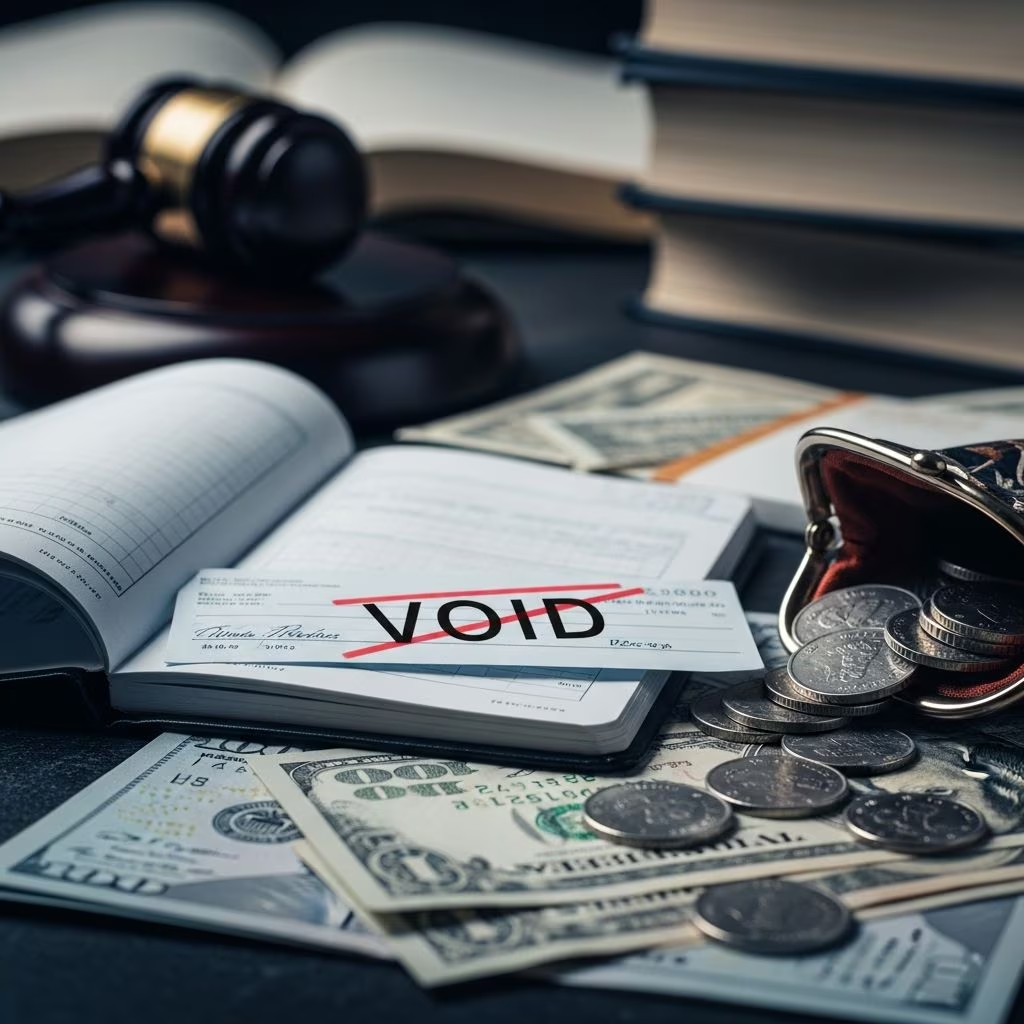
A bounced check, also known as a returned check or NSF (non-sufficient funds) check, occurs when a bank declines to honor it due to inadequate balance in the drawer’s account. This happens during the verification process where the payee’s bank contacts the payer’s bank to confirm funds availability. Common triggers include insufficient balance, account closure, mismatched details like signatures or dates, or a stop-payment order.
- Insufficient funds: The primary cause, where account balance falls short of the check amount.
- Account issues: Closed, frozen, or mismatched account numbers prevent processing.
- Technical errors: Incorrect payee names, dates, or signatures lead to rejection.
- Stop payments: Drawer instructs bank not to honor the check, often for disputes.
Banks typically notify account holders promptly, but the payee suffers immediate inconvenience and potential losses.
Immediate Financial Consequences for the Check Writer
The fallout begins with fees. Banks charge NSF or overdraft fees, often $30-$35 per incident, while merchants add returned check fees of $20-$40. Multiple bounced checks in quick succession amplify costs exponentially.
| Fee Type | Typical Amount | Charged By |
|---|---|---|
| NSF Fee | $30-$35 | Bank |
| Overdraft Fee | $30-$35 | Bank |
| Merchant Returned Check Fee | $20-$40 | Payee/Merchant |
| Late Payment Fee | Varies | Service Provider |
Repeated incidents may lead to account closure, blacklisting in shared databases like ChexSystems, complicating future banking, and negative credit reporting if unresolved.
Legal Ramifications: From Civil to Criminal
Accidental bounces usually stay civil, involving fee recovery. However, knowingly issuing a bad check shifts to criminal territory, classified as check fraud or theft by deception in most jurisdictions.
Criminal intent is key: prosecutors must prove the writer knew funds were insufficient and aimed to defraud. Penalties escalate with check amount, frequency, and prior offenses.
- Misdemeanor: Typically for checks under state thresholds (e.g., $950 in California), punishable by fines and up to 1 year in jail.
- Felony: Larger amounts or patterns, with prison terms up to 3 years and steeper fines.
State-Specific Examples
Laws vary widely. In California, Penal Code §476a criminalizes bad checks with intent to defraud; over $950 elevates to felony with up to 3 years imprisonment. Victims can pursue triple damages up to $1,500 after a demand letter.
Federal oversight exists via laws like Check 21, but enforcement is state-driven. Repeat offenders face heightened scrutiny.
Victim Perspectives: Rights and Recovery Options
Payees aren’t powerless. Many states allow statutory fees beyond the check amount. A structured demand process strengthens claims.
- Send certified demand letter detailing amount, fees, and 30-day payment deadline.
- If ignored, sue in small claims (under $10,000) or superior court.
- Recover check amount, bank fees, service costs, and treble damages where applicable.
Good faith disputes (e.g., defective goods) may exempt stop payments from penalties, but valid reasons are required.
Prevention Strategies to Avoid Bounced Checks
Proactive measures safeguard against mishaps.
- Balance monitoring: Use apps, alerts, and regular reconciliations.
- Overdraft protection: Link to savings or credit lines, though fees apply.
- Alternatives: Opt for electronic payments, debit cards, or cash for reliability.
- Buffer funds: Maintain cushion balances for float times.
Educate on check processing: funds aren’t instantly deducted; 1-2 day lags exist.
Steps to Take After a Check Bounces
Swift action minimizes damage.
- Contact payee immediately to arrange repayment and apologize.
- Notify bank; request fee waivers for first offenses or errors.
- Pay outstanding amount promptly via wire, cash, or certified funds.
- Review account for fraud or errors; update practices.
Cashier’s checks, drawn on bank funds, rarely bounce if from insured institutions.
Long-Term Impacts on Credit and Banking
Unresolved bounces report to credit bureaus after 30-60 days, dropping scores 100+ points. ChexSystems flags writers, blocking new accounts for 5 years. Restoration requires payment proof and time.
Frequently Asked Questions
Is it always illegal to bounce a check?
No, accidental bounces are civil matters with fees. Criminality requires proven knowledge of insufficient funds and fraudulent intent.
Can a cashier’s check bounce?
Rarely; legitimate ones from FDIC-insured banks use institutional funds, guaranteeing payment unless the bank fails.
What if I stop payment on a check?
Valid for disputes, but invalid stops without cause may lead to bad check claims. Notify payee promptly.
How long do I have to make good on a bounced check?
Typically 30 days post-demand letter; state laws dictate timelines for civil recovery.
Does a bounced check affect my credit score?
Yes, if unpaid over 30 days, reported as collections, severely impacting scores.
Navigating Check 21 and Modern Banking Shifts
The 2004 Check 21 Act digitized check processing, speeding clearances but raising bounce risks without physical returns. Banks must promise fund restitution within 10 days for errors, yet consumers face higher fees. Shift to digital payments reduces risks; embrace ACH, apps like Venmo, or cards.
In summary, bounced checks blend financial pitfalls with legal perils. Knowledge empowers avoidance and resolution, protecting reputations and wallets alike.
References
- Bad Checks — State of California Department of Justice. Accessed 2026. https://oag.ca.gov/consumers/general/bad-checks
- What You Need To Know About California’s Bad Check Law – California Penal Code Section 476(a) — Williams & Kojanis. Accessed 2026. https://www.wklaw.com/what-you-need-to-know-about-californias-bad-check-law-california-penal-code-section-476a/
- California’s “Bad Check” Law § 476a — LA Criminal Defense Attorney. Accessed 2026. https://www.lacriminaldefenseattorney.com/criminal-defense/misdemeanors/bad-checks/
- Bounced Check: The True Costs and What You Can Do — NerdWallet. Accessed 2026. https://www.nerdwallet.com/banking/learn/true-cost-of-a-bounced-check
- What is a Bounced Check? — Chase Bank. Accessed 2026. https://www.chase.com/personal/banking/education/basics/what-happens-if-you-bounce-a-check