
Inflatable Bounce House Accidents: Risks and Legal Recourse
Uncover the growing dangers of bounce house incidents, from wind-related tragedies to injury statistics, and explore legal protections for families.
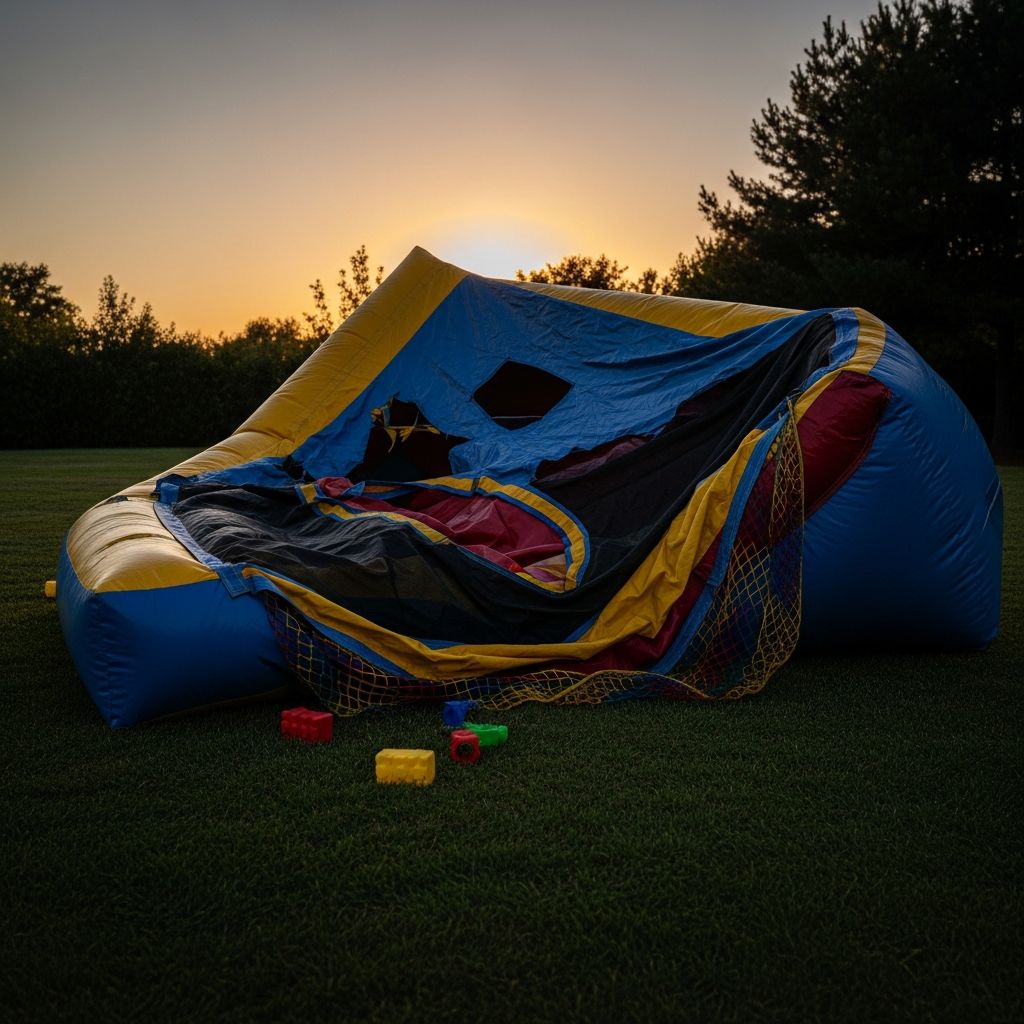
Inflatable bounce houses have become staples at parties, fairs, and events, delighting children with their bouncy appeal. However, these structures pose significant hazards, leading to a sharp rise in injuries and even fatalities, often due to wind gusts, overcrowding, or poor anchoring. Families facing such tragedies deserve to understand both the risks and pathways to accountability through personal injury law.
The Alarming Rise in Bounce House-Related Injuries
Over the past two decades, pediatric injuries from inflatable amusements have skyrocketed, reflecting increased popularity and at-home use. A detailed analysis of emergency department visits from 2000 to 2019 reveals a dramatic escalation: only 5,599 cases occurred between 2000 and 2004, compared to 82,748 from 2015 to 2019. This 15-fold increase from 1995 to 2010 alone underscores the urgent need for better oversight, as home inflatables proliferate without uniform standards.
Demographic patterns highlight vulnerabilities: boys account for 53.9% of injuries, with fractures (25.8%), strains (25.7%), and contusions (14.5%) topping the list. Lower extremities suffer most frequently, and while 96.4% of cases result in discharge, the volume strains healthcare systems. Concussions, though rare, double in likelihood for children over six.
Common Mechanisms Behind Bounce House Mishaps
Injuries typically stem from three primary causes: collisions inside the structure, falls from heights (35.8% of cases), or ejections during movement. Risk amplifiers include insufficient supervision—bounce houses create a deceptive sense of enclosure—overloading beyond capacity, and mixing age/weight groups. Summer months (May to October) see 70% of incidents, aligning with peak outdoor events.
- Overcrowding: Exceeding participant limits destabilizes the structure, heightening collision risks.
- Age and Size Mismatches: Younger, lighter kids face greater harm from older, heavier jumpers.
- Environmental Factors: Wind is a notorious culprit, lifting unsecured units skyward.
- Setup Errors: Inadequate staking or positioning near hazards like trees or power lines.
Devastating Real-World Cases of Wind-Propelled Bounce Houses
Wind gusts have turned joyful play into horror in multiple documented events. In one tragic incident at a Maryland baseball stadium, a sudden gust hoisted a bounce house 15-20 feet into the air, ejecting children onto the field. A 5-year-old boy from La Plata succumbed to his injuries at Children’s Hospital, while another child required hospitalization. Emergency responders, including stadium EMS and volunteers, responded swiftly, but the damage was irreversible.
Another school fundraiser saw a massive wind burst launch a bounce house, tossing two children 20 feet to the ground. Miraculously, they recovered after treatment, but the event exposed setup vulnerabilities at public gatherings. In a Long Island park during a field day, an inflatable slide with climbing wall overturned, injuring at least 14 elementary students, including one with a broken leg. Overcrowding (14 kids on the slide) and questioned anchoring fueled parental outrage and an ongoing probe.
These cases illustrate a pattern: inflatables at supervised events like stadium games or school outings still fail catastrophically, often due to unpredictable weather and operator lapses.
Safety Standards and Regulatory Gaps
Federal and state guidelines exist, but enforcement lags. The U.S. Consumer Product Safety Commission (CPSC) advises anchoring all points, limiting users, and avoiding use in winds over 20 mph. Yet, no mandatory national certification governs operators, leaving reliance on voluntary ASTM standards for design and operation.
| Risk Factor | Recommended Mitigation | Common Failure |
|---|---|---|
| Wind Exposure | Secure with stakes/sandbags; monitor forecasts | Unanchored or lightweight setups |
| Supervision | One adult per 5-6 kids; no food/drink | Distracted or absent guardians |
| Capacity | Follow manufacturer limits strictly | Overloading for ‘fun’ |
| Maintenance | Inspect for tears/leaks daily | Ignored wear and tear |
Studies urge stronger regulations, as warnings from healthcare experts over 30 years have yielded little change.
Prevention Strategies for Parents and Event Planners
Proactive steps can avert disasters. Parents should verify operator credentials, insurance, and adherence to protocols. Choose units sized for age groups, positioned away from hazards, and never use in breezy conditions. Supervise constantly, enforce rules like single-file entry and no flips/somersaults.
- Select reputable rental companies with proof of inspections.
- Confirm weather-safe policies and backup plans.
- Educate kids on boundaries pre-play.
- Document setup photos for potential claims.
Communities benefit from awareness campaigns, as CHOC’s trauma research emphasizes education alongside regulation.
Navigating Legal Claims After a Bounce House Injury
When negligence causes harm, victims pursue compensation via premises liability or product defect claims. Key liable parties include rental companies (for faulty equipment/setup), event hosts (inadequate oversight), and manufacturers (design flaws). Proving breach of duty—e.g., ignoring wind warnings or overcrowding—is crucial.
Claims process:
- Gather Evidence: Photos, videos, witness statements, medical records.
- Seek Medical Care: Document all treatments for injury severity.
- Consult Attorney: Personal injury lawyers assess viability on contingency.
- File Timely: Statutes of limitations vary (1-3 years typically).
Damages cover medical bills, lost wages, pain, and wrongful death. Successful suits have secured settlements for fractures, concussions, and fatalities, holding operators accountable.
Frequently Asked Questions (FAQs)
Who is responsible if a bounce house injury occurs at a rented event?
Primarily the rental company for setup/anchoring failures, or the host for poor supervision. Shared liability is common based on negligence proof.
Can I sue for a minor bounce house injury like a sprain?
Yes, if negligence contributed and costs (medical, etc.) justify it. Even minor cases build records for patterns.
What wind speed is safe for inflatables?
Under 20 mph per CPSC; deflate and secure immediately if gusts approach.
Are home bounce houses safer than rented ones?
No—96% of injuries happen at home due to lax rules, despite assumptions.
How do I choose a safe bounce house rental?
Check insurance, reviews, ASTM compliance, and operator training certifications.
Broader Implications for Child Safety Policy
The trajectory demands policy shifts: mandatory operator licensing, weather monitoring tech in inflatables, and school/event mandates. Pediatric centers like CHOC advocate integrating trauma data into public health initiatives, potentially curbing the upward trend. As usage grows, so must safeguards to preserve the joy without jeopardy.
In conclusion, while bounce houses spark smiles, their risks are real and rising. Informed vigilance and legal readiness empower families to protect children and seek justice when failures occur. (Word count: 1678)
References
- Distribution of Injury in Inflatable Jumping Amusements in the U.S. Over the Last 20 Years — CHOC Children’s Hospital of Orange County. 2023. https://care.choc.org/bounce-house-injuries-continue-to-jump/
- At least 14 kids hurt when inflatable bounce house overturns in Long Island park — ABC7 New York. 2023-06-07. https://abc7ny.com/post/wyandanch-park-inflatable-slide-children-hurt-long-island/11958423/
- 5-year-old killed after wind propels bounce house into the air — ABC News. 2025-06-07. https://abcnews.com/US/5-year-killed-after-wind-propels-bounce-house/story?id=112546421
Similar Articles








Read full bio of medha deb




