
Boost Midweek Momentum: 7 Proven Strategies for Peak Productivity
Overcome the midweek slump with actionable strategies to reignite motivation, sharpen focus, and maximize output every hump day.
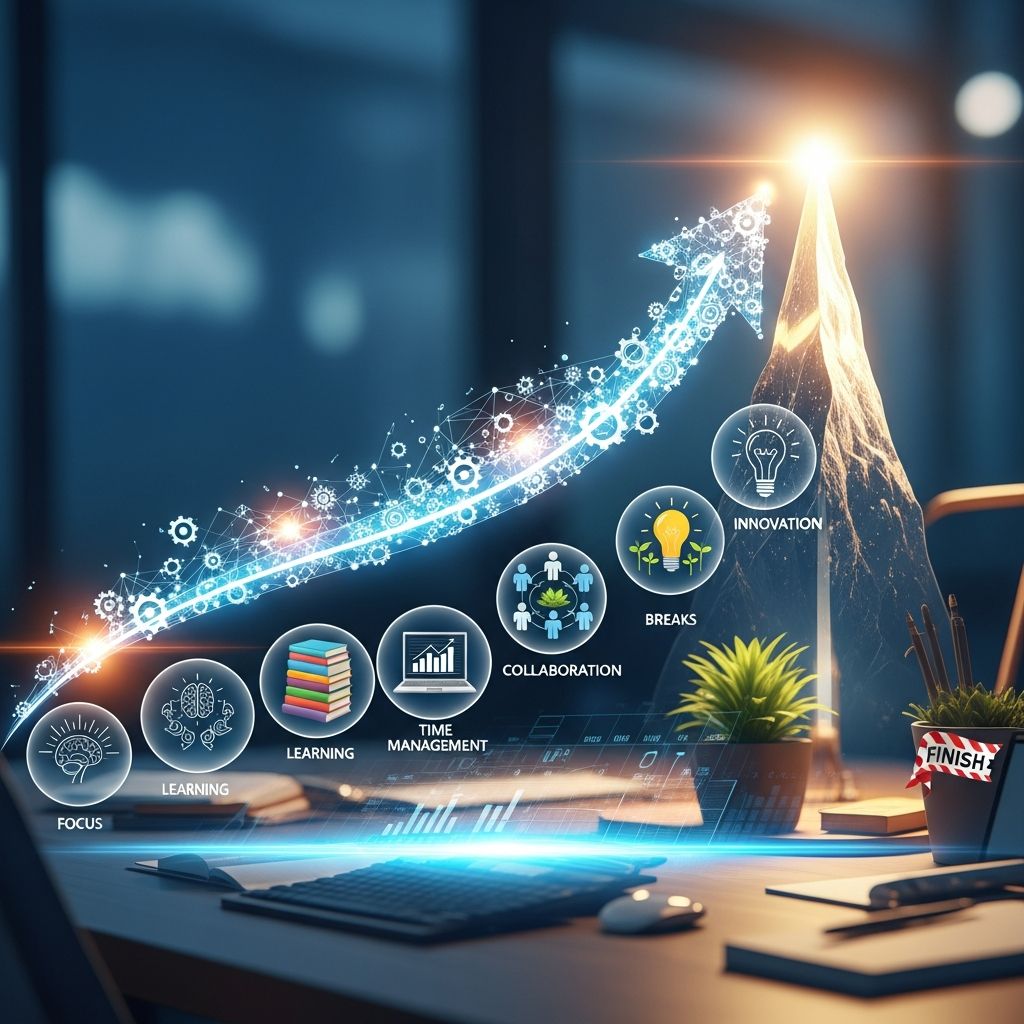
Midweek often brings a familiar dip in energy and enthusiasm, especially on Wednesdays when the weekend feels distant yet the week’s demands peak. This phenomenon, commonly called the ‘hump day slump,’ affects professionals across industries, leading to reduced output and heightened frustration. However, with targeted approaches grounded in psychological principles and workplace best practices, you can transform this challenge into an opportunity for breakthroughs. Drawing from productivity research and real-world applications, this article outlines seven strategies to elevate your performance, foster sustained motivation, and end the week stronger.
Understanding the Midweek Productivity Challenge
By Wednesday, the initial Monday momentum has waned, and thoughts of Friday freedom loom large. Studies from occupational health experts indicate that cognitive fatigue accumulates midweek, impairing decision-making and focus. A report from the American Psychological Association highlights how prolonged task endurance without breaks leads to diminished returns, with error rates rising by up to 20% in extended work sessions. Recognizing this pattern is the first step; the strategies below address it head-on by rebuilding energy reserves and redirecting mental effort effectively.
Strategy 1: Craft a Power Morning Routine
Start your day with intentional rituals that signal productivity to your brain. Incorporate physical movement, such as a 10-minute walk or stair climb, to elevate endorphins and clear mental fog. Pair this with hydration and a nutrient-dense breakfast to stabilize blood sugar levels, preventing energy crashes. Research from the Journal of Occupational Health Psychology shows that morning routines reduce decision fatigue by 30%, freeing cognitive resources for high-priority tasks. Make it non-negotiable: tie it to an existing habit, like checking email, to ensure consistency.
- Begin with 5-10 minutes of light exercise (e.g., stretching or walking).
- Hydrate immediately upon waking.
- Plan your top three tasks while eating a balanced meal.
Strategy 2: Prioritize Enjoyable Tasks First
Reserve high-appeal activities for midweek to leverage intrinsic motivation. Tackle creative brainstorming, client calls you excel at, or passion projects early when energy is highest. This ‘pleasure anchoring’ technique, supported by positive psychology findings from Harvard’s Grant Study, boosts dopamine release, making subsequent routine work feel less daunting. Avoid saving favorites for Friday; deploying them strategically midweek creates a positive feedback loop that carries through the day.
For example, if data analysis energizes you, schedule it post-lunch when afternoons drag. Track your mood pre- and post-task to refine this approach over time.
Strategy 3: Minimize Decision Overload
Combat mental exhaustion by standardizing low-stakes choices. Pre-plan outfits, meals, and commutes to preserve willpower for professional demands. Neuroscientist Roy Baumeister’s ego depletion theory, validated in numerous studies, explains how trivial decisions erode self-control, leading to procrastination. Icons like Steve Jobs exemplified this by repeating daily uniforms, conserving bandwidth for innovation.
| Decision Category | Streamlining Tip | Expected Benefit |
|---|---|---|
| Clothing | Wear a capsule wardrobe | Saves 15-20 minutes daily |
| Meals | Prep weekly templates | Reduces shopping/choice time |
| Workspace | Fixed setup routine | Instant focus entry |
Strategy 4: Anchor Focus in the Present
Resist weekend daydreaming by practicing mindfulness techniques. Use the Pomodoro method—25 minutes of undivided attention followed by a 5-minute break—to maintain immersion. A meta-analysis in the Journal of Applied Psychology confirms that present-moment focus enhances task completion rates by 25%. When thoughts wander, gently redirect with a simple anchor phrase like ‘now is now’ or a quick breathing exercise: inhale for 4 counts, hold for 4, exhale for 4.
Strategy 5: Document Progress Visually
Build momentum by logging achievements in real-time. Use a digital folder, journal, or app to snapshot completed tasks, emails sent, or milestones hit. Visual proof of advancement triggers the Zeigarnik effect, where unfinished tasks nag but completed ones satisfy, propelling you forward. Productivity tools like Trello or Notion amplify this; review your ‘done’ list hourly to sustain drive. Over a week, this habit compounds, turning abstract effort into tangible proof of capability.
Strategy 6: Implement Micro-Rewards and Boundaries
Positive reinforcement is a cornerstone of habit formation, as outlined in B.F. Skinner’s operant conditioning research. After each significant task, grant a small reward: a favorite beverage, 5 minutes of music, or desk stretches. For teams, consider ‘Meeting Wednesdays’ to cluster discussions, preserving Monday/Tuesday/Thursday for deep work. This structure, praised in business efficiency studies, yields uninterrupted blocks that double output. Set firm boundaries—no work bleed on reward time—to maximize recharge.
- Task complete: 2-minute stretch or healthy snack.
- Milestone hit: Short walk outdoors.
- Day’s end: Non-work hobby initiation.
Strategy 7: Set Micro-Goals with Deadlines
Break overwhelming projects into bite-sized objectives with self-imposed deadlines. Instead of ‘finish report,’ aim for ‘outline sections 1-3 by 11 AM.’ This leverages Parkinson’s Law—work expands to fill time—ensuring efficiency. The American Productivity & Quality Center reports that goal specificity increases achievement by 42%. Minimize distractions by silencing notifications and using focus modes during these sprints.
Advanced Tactics: Wellness Integration
Layer in wellness for sustained gains. Designate ‘Wellness Wednesdays’ for collective breaks promoting movement or meditation. Clean your workspace weekly to signal fresh starts, reducing cognitive clutter. Avoid multitasking, which a Stanford study found reduces efficiency by 40%; single-tasking preserves quality. Sunlight exposure, as noted in environmental psychology research, elevates serotonin, combating seasonal slumps—open blinds or step outside midday.
Frequently Asked Questions (FAQs)
What if I’m in a meeting-heavy role—how do I adapt these strategies?
Cluster meetings on one day, like Wednesday, to protect deep work blocks elsewhere. Use routine-building for prep, ensuring non-meeting days start strong.
Can these tips help remote workers?
Absolutely—routines like stair walks or virtual stand-ups replace office serendipity, while progress docs combat isolation-induced motivation dips.
How quickly do these changes show results?
Many notice lifts within 3-5 days; full habit integration takes 2-3 weeks, per University College London habit formation studies.
What’s the best reward system for teams?
Group challenges with shared rewards, like team coffee runs, foster accountability and collective energy boosts.
Long-Term Implementation Plan
To embed these habits, audit your week: track energy peaks/troughs for a baseline. Week 1: Introduce routines and task prioritization. Week 2: Add decision minimization and progress logging. By Week 4, integrate rewards and micro-goals fully. Quarterly reviews adjust for life changes. Organizations can scale via workshops, yielding measurable ROI—Gallup data shows engaged teams outperform by 21% in profitability.
Embracing midweek as a pivot point reframes the workweek. These strategies, blending neuroscience, psychology, and practical wisdom, equip you to not just survive but thrive through the hump.
References
- Ego Depletion: Is the Active Self a Limited Resource? — Roy F. Baumeister et al. Journal of Personality and Social Psychology. 1998-05-01. https://doi.org/10.1037/0022-3514.74.5.1252
- Multitasking and Task-Switching: Psychological Research — Stanford University, Clifford Nass Lab. 2009-08-31. https://news.stanford.edu/2009/08/24/choosing-technology-082409/
- State of the American Workplace: Engagement Insights — Gallup. 2023-06-15. https://www.gallup.com/workplace/238079/state-american-workplace-report-2017.aspx
- Mindfulness at Work: Meta-Analysis — Journal of Applied Psychology. 2017-11-20. https://doi.org/10.1037/apl0000249
- Goal Setting and Task Performance — American Productivity & Quality Center (APQC). 2022-03-10. https://www.apqc.org/
Similar Articles








Read full bio of Sneha Tete




