
Your Body: The Future of Unbreakable Passwords
Discover how emerging biometric innovations turn your body into the most secure authentication method, outsmarting hackers forever.
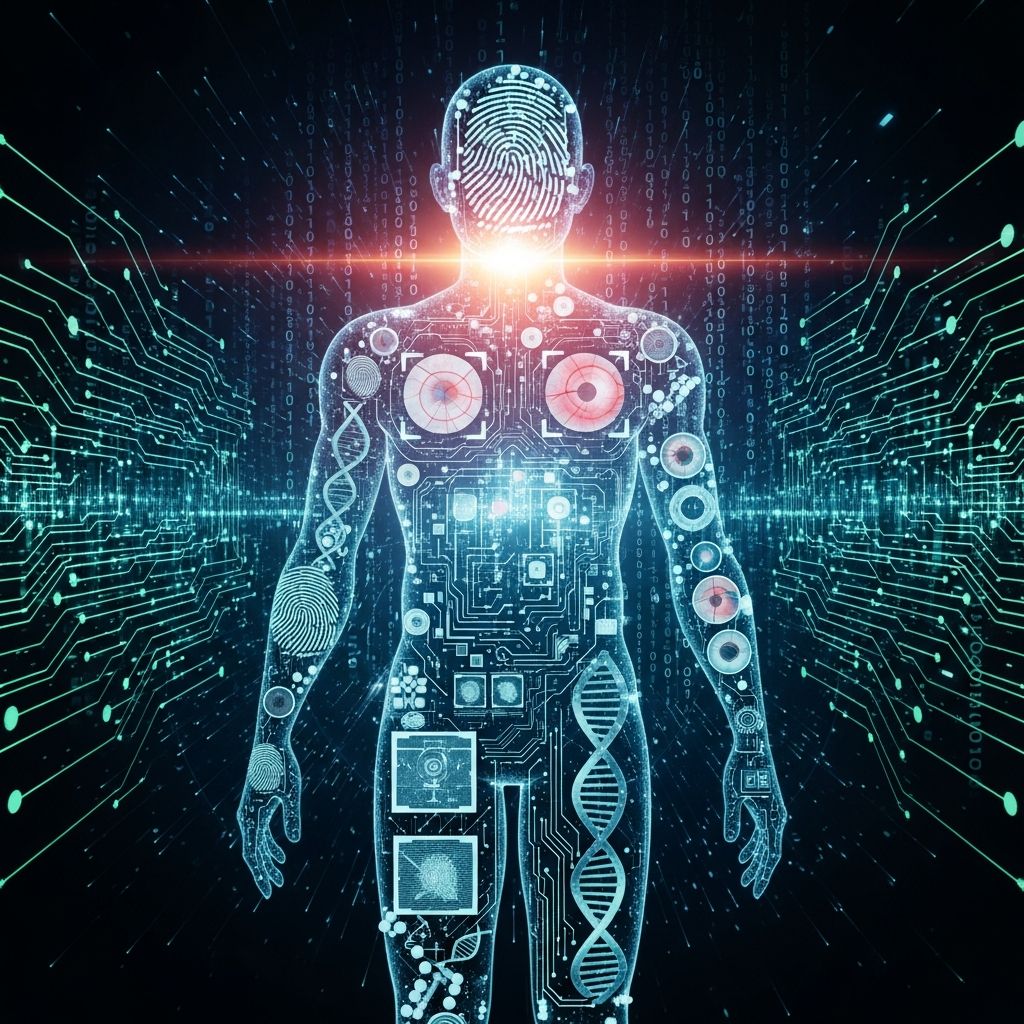
Traditional passwords are increasingly obsolete in our hyper-connected world. Weak choices like ‘password123’ or complex strings forgotten instantly leave users vulnerable to breaches. Enter
body-based authentication
, where physiological traits become digital keys. This approach leverages unique bodily signals—ranging from fingerprint-generated waves to heartbeats—for secure, password-free access.Why Traditional Passwords Fail Spectacularly
Passwords dominate authentication yet fail spectacularly. Studies reveal most users select predictable patterns, easily cracked by dictionary attacks or brute-force tools. A PMC analysis of health record protections found standard passwords recoverable via commercial software in minutes, exposing sensitive data.
- Common pitfalls: Reuse across sites, phishing susceptibility, and keylogger threats.
- Stats highlight crisis: Over 80% of breaches stem from compromised credentials.
- Two-factor limits: Adds friction without eliminating risks from shared secrets.
Biometrics shift paradigm: ‘something you are’ trumps ‘something you know.’ No memorization, no typing—purely innate security.
Intra-Body Communication: Signals Through Skin
University of Washington engineers pioneered
on-body transmission
, repurposing fingerprint sensors and touchpads. These emit low-frequency signals (2-10 MHz) that propagate through human tissue but not air, evading wireless interception.How it works: Sensors normally detect finger patterns via capacitive coupling. Researchers inverted this—using scan sequences to encode bits (scan = 1, no scan = 0). Touch a phone, transmit code through body to nearby device like a smart lock. Tests on diverse subjects confirmed reliability, even in motion, at 25-50 bits/second—enough for PINs in seconds.
| Method | Bit Rate | Range | Security Edge |
|---|---|---|---|
| Fingerprint Sensor | 25 bps | Body-confined | No air propagation |
| Touchpad | 50 bps | Body-confined | Hack-proof wirelessly |
| Traditional WiFi | High | Airborne | Vulnerable to sniffing |
This suits wearables, medical implants—ensuring only authorized touch unlocks insulin pumps or glucose monitors.
Heartbeat Rhythms: The Cardiac Key
Beyond touch,
electrocardiogram (ECG) biometrics
use heart signals as unique identifiers. Toronto’s Bionym developed Nymi wristband, capturing ECG via skin electrodes. Heart morphology—size, orientation, pumping dynamics—creates irreplicable patterns, like a biological fingerprint.Unlike static fingerprints, ECG varies slightly but algorithms normalize for authentication. TEDMED demos showed seamless unlocks for phones, doors. Advantages: Liveness detection prevents spoofs; continuous monitoring enables passive verification.
- Uniqueness: No two hearts beat identically.
- Non-invasive: Wristband form factor blends into daily wear.
- Future-proof: Pairs with multi-biometrics for layered defense.
Other Bodily Signals Poised for Primacy
Innovation abounds. Swallowing ingestible chips turns the body into a walking token, authenticating via modulated bio-signals. Ear acoustics, lip prints, even gait analysis emerge as contenders. Imagine earbuds unlocking only to your ear’s unique sound emissions.
Gait biometrics track walking patterns via accelerometers—ideal for always-on phone security. Vein patterns in palms offer subsurface security, resistant to photos.
Technical Deep Dive: How Body Signals Encode Data
Intra-body channels exploit tissue conductivity. Low MHz waves couple capacitively, attenuating rapidly in air (under 30 MHz optimal). Encoding: Binary via touch events; modulation varies amplitude or frequency for higher throughput.
ECG extraction: Bandpass filters isolate QRS complexes; machine learning classifiers match templates. Error rates plummet with fusion—e.g., ECG + fingerprint.
Challenges: Signal noise from sweat, motion. Solutions include adaptive filtering, multi-point sensing. Bit error rates under 1% in lab tests.
Legal and Privacy Hurdles in Biometric Adoption
Body-auth shifts data protection landscapes. Biometrics are irrevocable—if compromised, no reset like passwords. Regulations like GDPR classify them as ‘special category’ data, demanding explicit consent.
U.S. states enact biometric privacy acts (e.g., Illinois BIPA), mandating disclosure, no-profit sales bans. Enterprises face lawsuits over unauthorized scans. Ethical imperative: Transparent enrollment, revocable templates (not raw data).
| Concern | Mitigation |
|---|---|
| Irreversibility | Hashing, cancelable biometrics |
| Surveillance | On-device processing, no cloud |
| Spoofing | Liveness tests (multi-modal) |
Real-World Deployments and Case Studies
Commercial traction grows. Nymi partners enterprises for access control; Samsung explores intra-body for wearables. Medical: Secure insulin pump comms prevent tampering—critical for diabetics.
Airport pilots test ECG gates; banks trial vein scanners. ROI: Reduced helpdesk calls (no forgets), breach cuts 90% via phishing immunity.
Overcoming Barriers to Mainstream Use
Scalability hurdles: Cost of sensors, standardization. User acceptance—hygiene fears for shared scanners. Advances: Ultrasound haptics for touchless; AI refines accuracy across demographics.
Interoperability key: FIDO Alliance pushes biometric APIs. By 2030, projections: 70% devices body-auth native.
Future Prospects: A Passwordless Era
Convergence looms: Hybrid systems (body + behavioral). Quantum threats? Post-quantum biometrics resilient. Global standards harmonize, accelerating adoption.
Ultimate vision: Seamless continuum—phone to car to home, authenticated by presence alone.
Frequently Asked Questions
What makes body signals more secure than passwords?
They can’t be guessed, phished, or shared; transmission stays within body or uses unique physiology.
Can biometrics be hacked or spoofed?
Advanced liveness detection (motion, heat) thwarts fakes; rates under 0.01% with multi-factor.
Are there privacy risks?
Yes—store hashes, not raw data; comply with laws like BIPA for consent.
How fast is body-based authentication?
Milliseconds for ECG; seconds for coded signals—faster than typing.
Will this replace all passwords soon?
Gradually; hybrids during transition. Experts predict dominance by 2030.
References
- Secure passwords can be sent through your body, instead of air — TechXplore/University of Washington. 2016-09-26. https://techxplore.com/news/2016-09-passwords-body-air.html
- Your Body is The Best Password — TIME Magazine. 2014-04-08. https://time.com/3393329/heartid-heart-rhythm-password/
- Secure Passwords Can Be Sent Through Your Body — In Compliance Magazine/University of Washington. 2016-10-01. https://incompliancemag.com/secure-passwords-can-be-sent-through-your-body/
- What If Your Physical Body Was Your Password? — Big Think. N/A. https://bigthink.com/surprising-science/what-if-your-physical-body-was-your-password/
- How Strong are Passwords Used to Protect Personal Health Information? — PMC/NCBI (Peer-reviewed). 2011-10-26. https://pmc.ncbi.nlm.nih.gov/articles/PMC3221339/
Similar Articles








Read full bio of Sneha Tete




