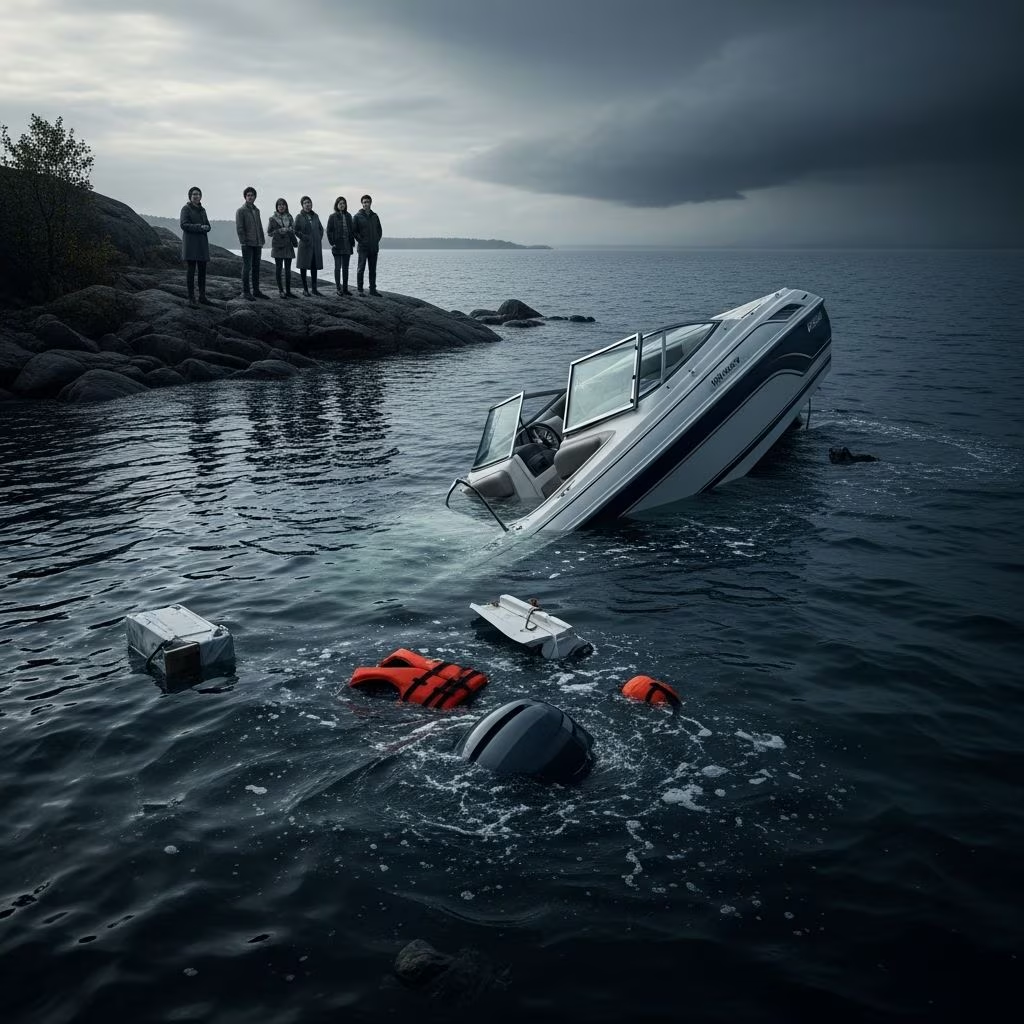
Understanding Fatal Boating Accidents and Legal Accountability
The loss of a loved one in a boating accident represents not only profound emotional devastation but also significant legal complexity. Unlike typical motor vehicle accidents, fatal boating incidents exist at the intersection of state law, federal maritime regulations, and specialized navigation statutes. Families confronted with such tragedy often find themselves navigating unfamiliar legal terrain while processing grief and managing immediate financial pressures. Understanding the framework for holding responsible parties accountable through wrongful death claims is essential for families seeking justice and financial recovery.
When a boating accident results in loss of life due to another party’s negligence or reckless conduct, surviving family members possess legal recourse through wrongful death litigation. However, establishing liability in these cases requires more than demonstrating that an accident occurred—it demands proving that the defendant failed to exercise reasonable care, and that this failure directly caused the fatal outcome. The complexity intensifies when multiple parties may bear responsibility, when federal maritime law applies instead of state law, or when vessel defects rather than operator error contributed to the tragedy.
Establishing Negligence as the Foundation for Liability
At the core of any successful wrongful death claim lies the legal concept of negligence. A boat operator, similar to a motor vehicle driver, owes a duty of care to passengers, other watercraft operators, and anyone else who might reasonably be affected by their actions. Negligence occurs when someone breaches this duty—meaning they fail to act as a reasonably prudent person would under similar circumstances—and this breach causes injury or death.
In boating contexts, establishing negligence typically involves demonstrating one or more of the following:
- Operating the vessel at excessive speeds given water conditions, visibility, or proximity to other boats and swimmers
- Navigating under the influence of alcohol or drugs, which impairs judgment and reaction time
- Failure to maintain proper lookout or awareness of surrounding vessels, obstacles, and hazards
- Violating established boating regulations, navigation rules, or safety protocols
- Operating without functioning safety equipment such as navigation lights, communication systems, or properly maintained engines
- Ignoring warnings about dangerous conditions, mechanical issues, or weather forecasts
- Allowing unqualified individuals to operate the vessel
Courts recognize that boating environments present unique challenges compared to land-based transportation. Wave action, currents, visibility changes, and weather can shift rapidly. However, these environmental factors do not automatically excuse negligent behavior. Instead, courts evaluate whether the operator made reasonable decisions given the conditions they either knew about or should have known about. If weather deteriorated, did the operator return to shore or seek shelter? If another vessel approached on a collision course, did they take evasive action? These factual inquiries determine whether negligence existed.
Identifying Parties Who May Bear Legal Responsibility
While the boat operator is often the primary defendant in wrongful death claims, liability can extend to multiple parties depending on the accident’s circumstances. Understanding who can be sued is crucial for comprehensive claim development and maximizing recovery.
The Vessel Operator: The person controlling the boat at the time of the accident bears primary responsibility for exercising reasonable care. This includes making safe operational decisions, maintaining awareness of surroundings, and adhering to boating laws.
The Vessel Owner: Boat owners may face liability even if they were not operating the vessel at the time of the accident. Owner liability theories include negligent entrustment—allowing someone known to be incompetent or intoxicated to operate the boat—or failure to maintain the vessel in safe condition. Owners also bear responsibility for ensuring that required safety equipment remains functional and accessible.
Manufacturers and Equipment Suppliers: If defective equipment contributed to the fatal outcome, manufacturers may be held liable. Defects could involve the engine, steering mechanisms, life jacket designs, or other critical safety systems. Product liability claims in this context operate under different legal standards than negligence claims.
Rental Companies and Charter Services: Businesses that rent boats or operate chartered excursions may face liability for accidents resulting from inadequate vessel maintenance, insufficient safety briefings, or placement of unqualified operators at the helm.
Marina Operators: In limited circumstances, marinas may bear responsibility if inadequate facilities, poor maintenance of docking areas, or negligent repair services contributed to an accident.
Who Possesses Legal Standing to File Wrongful Death Claims
Wrongful death statutes recognize that only specific individuals have the legal right to pursue these claims. Eligibility varies by jurisdiction, but most states follow a hierarchical structure based on familial relationships and financial dependency.
Spouses: A surviving spouse typically occupies the highest priority in wrongful death statutes. Spousal claims recognize both the economic loss from lost income and benefits, as well as the profound emotional harm from losing a life partner. The spouse’s claim encompasses lost companionship, consortium, and guidance that the deceased would have provided throughout their shared lifetime.
Adult and Minor Children: Surviving children, regardless of age, generally possess standing to pursue wrongful death claims. For minor children, claims specifically account for lost parental support, guidance, education support, and the loss of a relationship that would have continued throughout their developmental years and into adulthood. Adult children can claim loss of companionship and, in cases where the deceased provided financial support, lost economic contributions.
Parents of the Deceased: When the victim was unmarried with no children, or when spouses and children do not exist, parents typically become eligible claimants. Parental claims recognize the emotional devastation of losing a child and, when applicable, any financial dependency or support the deceased provided.
Personal Representatives or Estate Executors: In many jurisdictions, including New York and other states with specific statutory frameworks, only an officially designated personal representative of the deceased’s estate may file the wrongful death claim on behalf of the family unit. This individual, often a surviving spouse or adult child, acts in a fiduciary capacity representing all eligible family members’ interests.
It is important to recognize that distant relatives, friends, employers, or other individuals without direct familial or financial relationships typically lack legal standing to pursue wrongful death claims, even if they suffered emotional distress from the loss.
Gathering Evidence and Reconstructing the Accident
Successfully proving negligence and liability requires substantial evidentiary support. Boating accident scenes present particular investigative challenges because water environments quickly destroy or conceal evidence. Time is therefore critical in evidence preservation and investigation.
Official Reports and Records: Coast Guard incident reports, maritime police investigations, and navigation authority findings provide official documentation of the accident circumstances. These reports often contain witness statements, environmental conditions at the time, and preliminary liability assessments. Obtaining these documents should be a priority immediately following the fatal incident.
Witness Testimony: Statements from other boaters, passengers, shoreline observers, or rescue personnel provide crucial firsthand accounts of events leading to the accident. Witness recollection fades quickly, making prompt interviews essential. Multiple independent witnesses corroborating key facts significantly strengthen liability arguments.
Toxicology and Alcohol Testing: If operator impairment is suspected, toxicology reports and blood alcohol content testing become critical evidence. Maritime law enforcement conducts these tests following serious accidents. Results demonstrating intoxication directly support negligence claims.
Vessel Maintenance Records: Documentation of maintenance failures, deferred repairs, or known mechanical problems establishes whether the boat owner breached their duty to maintain the vessel in safe operating condition. Maintenance logs, service records, and communications about known issues become highly relevant.
Electronic Navigation Data: Modern vessels often contain GPS systems, electronic depth finders, and autopilot technology that record speed, heading, location, and timing information. This electronic evidence can reconstruct the vessel’s movements in the moments preceding the accident and may reveal whether the operator was operating at excessive speeds or in violation of navigation patterns.
Expert Reconstruction Analysis: Accident reconstruction specialists with maritime expertise can analyze wave conditions, visibility, lighting conditions, currents, and other environmental factors to recreate the accident sequence. These experts often provide testimony explaining how reasonable operators would have responded to the circumstances the defendant faced.
Photographs and Video: Images of the accident scene, vessel damage patterns, environmental conditions, and the victim’s physical condition document the accident’s severity and circumstances. Video footage from nearby vessels, drones, or shore-based cameras may capture the accident as it occurred.
Maritime Law Complexities in Federal Waters
A critical determination in boating accident cases involves whether state law or federal maritime law governs the claim. This distinction significantly impacts applicable statutes of limitations, available remedies, and procedural requirements.
The Jones Act: This federal statute protects seamen and their families, providing recovery rights for workplace injuries and fatalities occurring aboard vessels. The Jones Act allows injured seamen or their families to sue employers for negligence, even when workers’ compensation might otherwise limit recovery. A seaman is someone with duties aboard the vessel and whose employment has a substantial connection to pursuing the vessel’s business.
The Death on the High Seas Act (DOHSA): This federal law governs wrongful death claims for accidents occurring in international waters beyond three nautical miles from the Atlantic coast or nine nautical miles from the Gulf of Mexico coast of Florida. DOHSA significantly limits available damages compared to state wrongful death statutes, restricting recovery primarily to economic losses and excluding pain and suffering damages and punitive damages.
Determining which legal framework applies requires careful analysis of where the accident occurred, the parties’ relationship to the vessel, and whether federal maritime interests predominate. When federal maritime law applies, claims must often be brought in federal court and litigated under specialized maritime procedures.
Calculating Damages Available to Bereaved Families
Wrongful death compensation encompasses both economic damages—measurable financial losses—and non-economic damages reflecting intangible harm.
Economic Damages:
- Medical and emergency care expenses incurred before death, including hospitalization, surgery, and emergency response costs
- Funeral and burial expenses, including memorial service costs and related arrangements
- Lost wages and income the deceased would have earned during their remaining working years
- Lost employee benefits such as health insurance, retirement contributions, and other workplace benefits
- Ongoing household expenses the deceased would have contributed toward or managed
- Lost inheritance or financial contributions the deceased would have made to family assets
- Educational expenses for surviving children the deceased would have funded
Non-Economic Damages:
- Loss of companionship and consortium—the emotional bond and relationship between the deceased and survivors
- Loss of parental guidance, instruction, and mentorship for minor children
- Loss of spousal relationship, emotional support, and intimate partnership
- Conscious pain and suffering experienced by the victim before death
- Loss of filial relationship between adult children and deceased parent
- Emotional distress and grief experienced by survivors
Calculating these damages requires detailed economic analysis, including life expectancy calculations, earning capacity assessments based on the deceased’s career trajectory, and actuarial determinations of benefits. Non-economic damages depend on the specific relationships involved, the victim’s age, and the jurisdiction’s approach to valuing intangible losses.
Procedural Requirements and Timeline Considerations
Wrongful death claims must be filed within statutory timeframes that vary significantly by jurisdiction. Most states impose a two-year statute of limitations for wrongful death actions measured from the date of death. Maritime cases, particularly those involving federal law, may have different deadlines. Failure to file within the applicable statute of limitations results in permanent loss of the right to sue.
Additionally, maritime cases involving federal law often require different procedures than state court wrongful death actions. These cases may need to be filed in federal court, involve admiralty procedure rules, and require compliance with specific maritime notice requirements. Understanding these procedural distinctions is essential to preserving the claim.
Frequently Asked Questions
Q: Can I file a wrongful death claim if the boating accident occurred years ago?
A: No. Wrongful death claims must generally be filed within two years of the victim’s death, though maritime cases may have different timelines. If this deadline has passed, your right to sue has been permanently lost. Immediate consultation with an attorney is critical upon learning of the accident.
Q: What if multiple parties contributed to the accident?
A: You can pursue claims against all parties whose negligence contributed to the fatal outcome. This might include the operator, boat owner, manufacturer, and rental company. Most jurisdictions allow comparative negligence findings where each party bears liability proportionate to their degree of fault.
Q: Does a boating accident that occurred in federal waters require different legal procedures?
A: Yes. Accidents in federal navigable waters or beyond specific offshore distances may be governed by the Death on the High Seas Act or other federal maritime statutes. These federal frameworks often involve different courts, procedures, and available remedies than state wrongful death laws. An attorney experienced in maritime law is essential for these cases.
Q: If the deceased did not follow safety rules, does this eliminate our claim?
A: Not necessarily. While a victim’s failure to wear a life jacket or follow safety protocols might reduce damages through comparative negligence principles, it typically does not eliminate the defendant’s liability if their negligence directly caused the death. Courts weigh both parties’ conduct in determining fault and damages.
Q: How long does the wrongful death litigation process typically take?
A: Wrongful death cases vary significantly in duration. Simple cases with clear liability might resolve within 1-2 years, while complex maritime cases involving multiple defendants, extensive investigation, and expert testimony may require 3-5 years or longer. Settlement negotiations occur throughout this timeline.
Q: What if the boat operator died in the accident?
A: If the negligent operator also perished, claims may proceed against the boat owner’s estate, the manufacturer if equipment defects existed, rental companies, or other responsible parties. The negligent operator’s negligence does not disappear because they died; their estate may still bear liability.
Q: Can a surviving family member receive both insurance settlement and a wrongful death judgment?
A: Insurance proceeds and wrongful death judgments involve different sources of recovery. Insurance settlements may cover some losses, but if insufficient, wrongful death litigation can pursue additional recovery from the negligent party. However, double recovery for the same damages is generally prohibited, so payments already received may reduce judgment amounts.
References
- Who Can File a Wrongful Death Claim After a Boat? — Rafi Law Group. 2025-07-15. https://www.rafilawgroup.com/blog/2025/july/who-can-file-a-wrongful-death-claim-after-a-boat/
- Wrongful Death Claims in Fatal Boating Accidents — Horn Wright, LLP. https://www.hornwright.com/personal-injury/boating-accidents/wrongful-death-claims-in-fatal-boating-accidents/
- Legal Recourse for Families of Fatal Boat Crash Victims — 888BoatLaw. https://www.888boatlaw.com/legal-recourse-for-families-of-fatal-boat-crash-victims/
- Liability in a Wrongful Death Boating Accident — Knox Law Center. https://www.knoxlawcenter.com/liability-in-a-wrongful-death-boating-accident/
- Boating Accident Law | Personal Injury Law Center — Justia. https://www.justia.com/injury/motor-vehicle-accidents/boating-accidents/
- Understanding Your Rights After a Boating Accident — Naqvi Injury Law. https://naqvilaw.com/understanding-your-rights-after-a-boating-accident/
- Boating Accident Lawsuit — Bodewell Law. https://bodewell-law.com/boating-accidents-resource-guide/boating-accident-lawsuit/