
Blue HID Headlights: Legal Limits Explained
Uncover the truth about blue xenon HID headlights: factory vs. aftermarket rules, state variations, and safety risks involved.
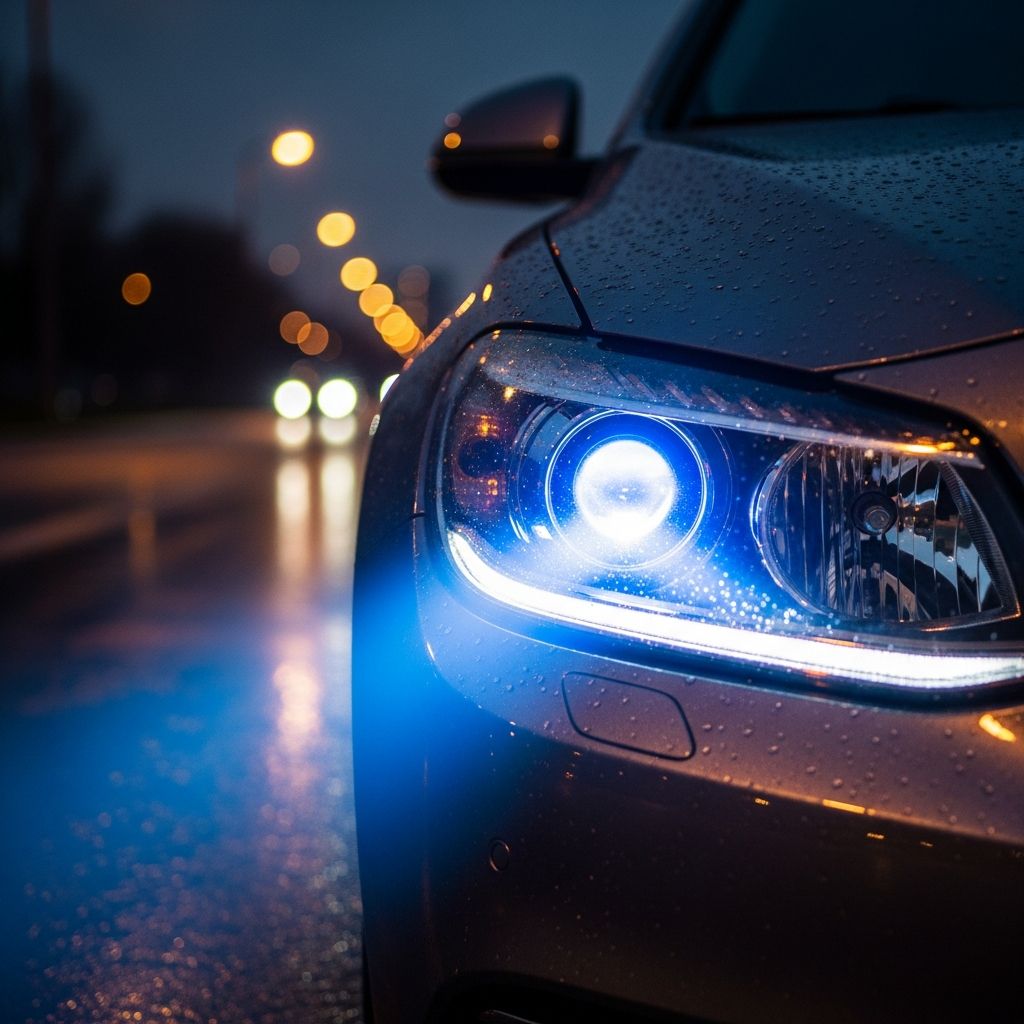
Vehicle lighting modifications, particularly those involving high-intensity discharge (HID) systems with a blue tint, have sparked widespread debate among drivers. While these lights offer superior brightness and a modern aesthetic, their legality hinges on federal standards and state regulations. Factory-installed HID headlights emitting a white light with a subtle blue hue are generally permitted, but aftermarket conversions often violate key safety rules.
Understanding HID Technology and Color Perception
High-intensity discharge (HID) headlights, also known as xenon lights, generate light through an electric arc between tungsten electrodes in a xenon gas-filled capsule. Unlike traditional halogen bulbs that heat a filament, HID systems require a ballast to regulate voltage, producing a brighter, longer-lasting beam.
The perceived blue color stems from the color temperature, measured in Kelvin (K). Standard halogens operate around 3200K (yellowish), while HID lights range from 4300K to 6000K, appearing crisp white with a blue tint against dimmer lights. Temperatures above 8000K shift to a pronounced blue, reducing visibility and mimicking emergency signals.
- 4300K-5000K: Pure white, optimal for road use.
- 6000K-8000K: Cool white with blue hue; borderline legal.
- Above 8000K: True blue; illegal in most areas due to glare and confusion risks.
This distinction is crucial, as what drivers call “blue headlights” are often legal OEM HID systems, not prohibited colored bulbs.
Federal Standards Governing Headlight Compliance
The cornerstone of US headlight regulation is Federal Motor Vehicle Safety Standard (FMVSS) 108, enforced by the National Highway Traffic Safety Administration (NHTSA). This standard mandates that headlights emit white or amber light and conform to original equipment specifications for replacement parts.
FMVSS 108 Section S7.7 specifies that replacement light sources must match the dimensions, electrical connectors, and filament placement of factory bulbs. HID kits fail this test because:
- They introduce a ballast absent in halogen systems.
- Light is produced via arc discharge, not filament incandescence.
- Beam patterns differ, often causing excessive glare—up to 800% over limits in NHTSA tests.
NHTSA explicitly states that no aftermarket HID conversion kit can comply, rendering “DOT-approved” claims on packaging unreliable. Factory HID systems, designed and certified by manufacturers, pass these tests seamlessly.
State-by-State Variations in Headlight Regulations
While FMVSS 108 sets the federal baseline, states enforce additional rules. All 50 states prohibit non-white/amber headlights, but enforcement varies.
| State | Key Rule on Blue HID | Penalties |
|---|---|---|
| California | Bans blue/green/red bulbs; OEM HID/LED ok if white-emitting. | Fine up to $250, fix-it ticket. |
| Washington | HID conversions illegal per FMVSS 108; no blue lights. | Infraction ticket, possible impound. |
| Connecticut | No blue lights on civilian vehicles; front lights must be white/yellow/amber. | $100+ fine. |
| General US | White/amber only; aftermarket HID often cited. | Varies: $50-$500. |
In Texas and Florida, officers prioritize glare over color, but blue-tinted halogens (coated for HID look) draw scrutiny. Always verify with your DMV—local priorities influence pull-overs.
Safety Concerns with Non-Compliant Headlights
Beyond legality, blue-tinted aftermarket lights compromise safety. High Kelvin ratings scatter light, reducing forward throw while dazzling oncoming drivers. NHTSA investigations link HID conversions to glare complaints, impairing depth perception at night.
Improper installation exacerbates issues: misaligned beams create hotspots, and mismatched ballasts cause flickering. Studies show glare contributes to 20-30% of nighttime accidents, underscoring why regulations prioritize uniform white light.
- Reduced visibility for the driver due to blue light’s poorer penetration.
- Confusion with police/ambulance lights.
- Premature bulb failure from voltage mismatches.
Factory vs. Aftermarket: Key Differences
Recognizing legal from illegal setups prevents tickets:
| Aspect | Factory OEM HID | Aftermarket Conversion |
|---|---|---|
| Legality | Fully compliant with FMVSS 108. | Non-compliant; illegal on public roads. |
| Color | White (4300K-6000K, blue-ish tint ok). | Often >8000K true blue. |
| Installation | Integrated housing, auto-leveling. | Universal kits; beam scatter. |
| Warranty | Manufacturer-backed. | Voids vehicle warranty. |
Upgrade paths include DOT-compliant LED replacements matching OEM specs, avoiding HID pitfalls.
Penalties and Real-World Consequences
Violations range from fix-it tickets ($50-$200) to reckless driving charges if glare causes hazards. Repeat offenders face points, insurance hikes, or impoundment. In court, FMVSS non-compliance rarely holds up for factory lights but dooms aftermarket defenses.
Case example: Washington State Patrol routinely cites HID kits, with NHTSA backing enforcement. Drivers report $100-500 fines plus reinstall costs.
Alternatives for Brighter, Legal Lighting
Enhance visibility without risks:
- High-Quality Halogens: 55W upgrades under 4200K.
- OEM LED/HID Replacements: Exact-fit bulbs.
- Auxiliary Lights: Fog lamps in amber/white.
- Beam Alignment: Professional adjustment post-install.
Aim for 5000K max to balance brightness and compliance.
Frequently Asked Questions (FAQs)
Are all blue-tinted headlights illegal?
No, factory HID/LED systems emitting white light (with blue tint) are legal. True blue aftermarket bulbs are not.
Can I install HID kits if labeled ‘DOT approved’?
No, NHTSA deems them impossible to comply; labels are misleading.
What Kelvin rating is safe?
4300K-6000K for white light; over 8000K risks tickets.
Do blue coatings on halogens count as illegal?
Yes, they alter color and often exceed limits.
How to check local laws?
Consult your state DMV or vehicle code online.
Best Practices for Compliant Upgrades
Before modifying:
- Confirm OEM specs via VIN lookup.
- Select SAE/DOT-certified parts.
- Test beam pattern in a safe area.
- Get professional installation.
Regular maintenance—like cleaning lenses and aligning beams—maximizes safety and legality.
In summary, while blue xenon HID allure tempts customization, adherence to FMVSS 108 ensures safe, legal driving. Prioritize OEM-quality over aesthetics to avoid fines and hazards.
References
- Are Aftermarket Blue Xenon HID Headlights Legal? — Novsights. 2023. https://www.novsights.com/blogs/news/are-aftermarket-blue-xenon-hid-headlights-legal
- ‘Blue’ headlights — legal or not? — HeraldNet.com. 2015-02-27. https://www.heraldnet.com/2015/02/27/blue-headlights-legal-or-not/
- Which Vehicle Headlights Are Illegal In California? — CaseyGerry. N/A. https://caseygerry.com/blog/which-vehicle-headlights-are-illegal-in-california/
- Are 5000K Headlights Legal? Detailed Explanation. — Underground Lighting. N/A. https://undergroundlighting.com/blogs/news/are-5000k-headlights-legal
- What Are the Legal Headlight Colors? — CarParts.com. N/A. https://www.carparts.com/blog/what-are-the-legal-headlight-colors/
Similar Articles








Read full bio of Sneha Tete




