
Protecting Retail Staff: Black Friday Compliance Guide
Essential strategies for retailers to ensure legal compliance, worker safety, and smooth operations during the high-stakes Black Friday rush.
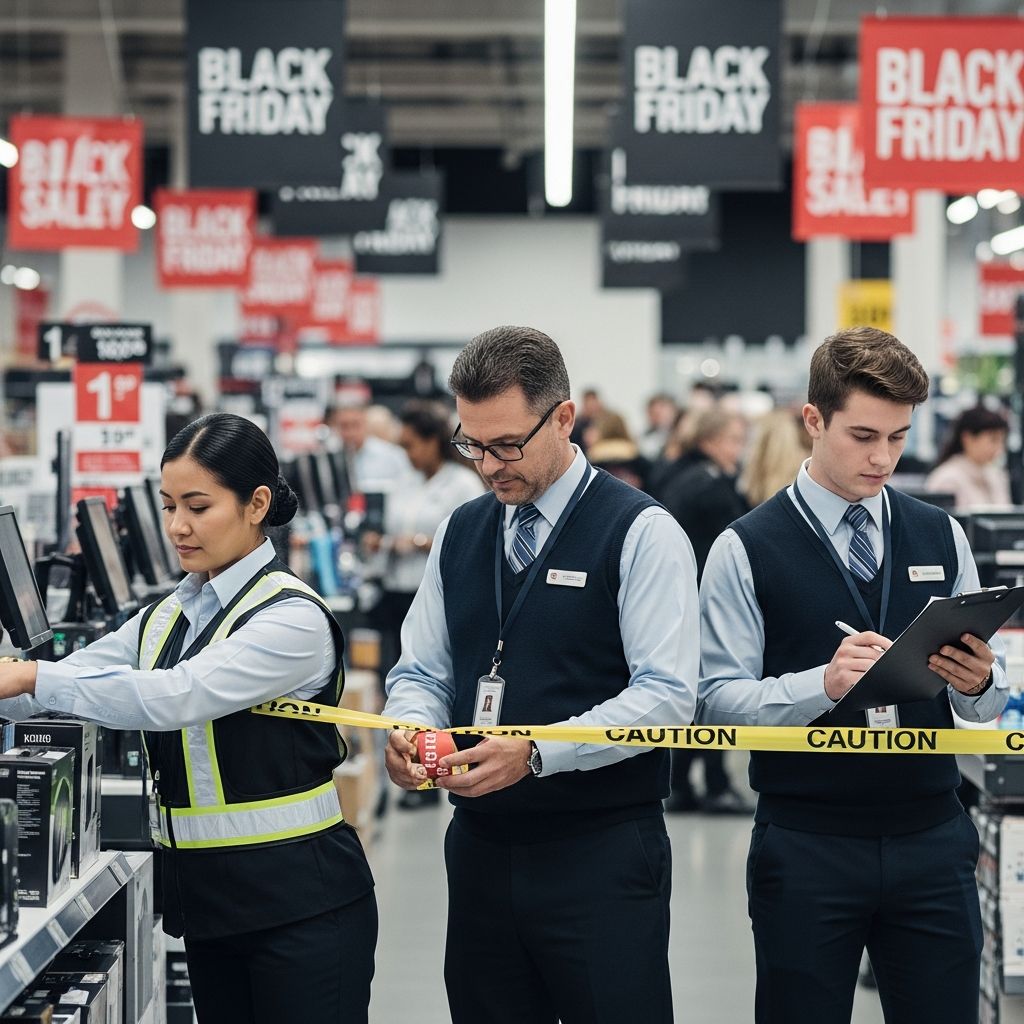
Black Friday represents a pinnacle of retail activity, drawing massive crowds and testing operational limits. Retailers must balance aggressive sales targets with strict adherence to employment regulations to prevent costly violations, injuries, and disruptions. This guide outlines proactive measures across staffing, safety, training, and policy enforcement to create a compliant and efficient environment.
Strategic Workforce Planning for Peak Demand
Effective staffing begins well before the event. Retailers should forecast customer influx using historical data and current trends to determine required headcount. Overstaffing prevents burnout, while understaffing risks overtime violations and fatigue-related errors.
- Assess baseline needs: Calculate regular staff capacity against projected foot traffic, factoring in 20-50% increases typical for Black Friday.
- Recruit seasonal hires early: Post openings 4-6 weeks in advance to allow thorough vetting and onboarding, avoiding rushed hires that lead to compliance gaps.
- Implement flexible scheduling: Use shift-swapping apps or software to cover absences without mandatory overtime exceeding legal limits, such as the Fair Labor Standards Act’s 40-hour weekly cap.
Transparency in scheduling fosters reliability. Share rosters two weeks ahead, specifying shifts, breaks, and overtime eligibility. This reduces no-shows and builds trust, as employees appreciate predictability during high-pressure periods.
Crowd Management and Physical Safety Protocols
Crowds pose the greatest risk, with historical incidents including tramplings and assaults. The Occupational Safety and Health Administration (OSHA) mandates comprehensive plans to mitigate these hazards.
Key elements include:
- Designated employee entrances: Staff separate access points monitored by security to avoid crowd surges upon opening.
- Occupancy limits: Monitor and enforce store capacity, turning away entrants when thresholds are met to prevent crushes.
- Barrier systems: Deploy rope lines, barricades, and signage directing pedestrian flow away from entrances and exits.
- Communication tools: Equip teams with public address systems or bullhorns for real-time updates on crowd status and safety instructions.
| Measure | Purpose | OSHA Alignment |
|---|---|---|
| Trained security personnel | Positioned at sides of entry paths | Prevents blocking flow |
| Unblocked exits | Emergency egress | Critical for life safety |
| Video surveillance | Monitor aggression/shoplifting | Deterrence and evidence |
| Multiple entry points | Disperse crowds | Reduces bottlenecks |
Conduct drills simulating crowd rushes or altercations. Train all staff, including seasonal workers, on de-escalation and evacuation procedures. OSHA emphasizes pre-planning to avoid tragedies like the 2008 employee death from a shopper stampede.
Comprehensive Training Programs for High-Risk Tasks
Inadequate preparation amplifies injury risks from lifting, ladders, and customer interactions. Mandatory training covers job-specific hazards, ensuring compliance with OSHA standards.
- Lifting techniques: Teach proper body mechanics for heavy merchandise to prevent back strains, a common Black Friday injury.
- Ladder safety: Cover setup, climbing, and stability checks, reducing fall risks during restocking.
- Customer service under pressure: Role-play handling aggressive shoppers, including when to summon security or police.
- Crowd control basics: Instruct on monitoring for unruly behavior and signaling for help.
For new hires, compress onboarding into 1-2 days with hands-on sessions. Certify completion via checklists, retaining records for potential inspections. Regular refreshers for veterans reinforce protocols amid holiday chaos.
Addressing Absenteeism and Policy Enforcement
Anticipated absences from illness or shopping tempt misuse of leave policies. Proactive communication deters this while upholding rights under laws like the Family and Medical Leave Act.
Steps to manage:
- Policy reminders: Distribute updated handbooks detailing absence reporting, sick leave verification, and disciplinary actions for no-shows.
- Personal outreach: Schedule one-on-one discussions two weeks prior, confirming commitment and offering shift trades.
- Internet use guidelines: Enforce limits on non-work browsing during shifts, with progressive discipline for violations.
Track patterns via HR software. If absences spike, investigate without assuming intent, documenting interactions to defend against discrimination claims.
Legal Compliance Framework for Wages and Breaks
Non-exempt employees qualify for overtime at 1.5 times regular pay beyond 40 hours weekly. States like California mandate daily overtime after 8 hours. Meal breaks (typically 30 minutes unpaid after 5 hours) and rest periods must be provided, even during rushes.
Violations invite Department of Labor scrutiny and backpay lawsuits. Implement time-tracking systems logging breaks automatically. Supervisors should enforce usage, prioritizing employee welfare over sales.
| Requirement | Federal Minimum | Common State Variations |
|---|---|---|
| Overtime Threshold | 40 hours/week | 8 hours/day (e.g., CA, NY) |
| Meal Break | None mandated | 30 min after 5 hours (many states) |
| Rest Break | None mandated | 10-15 min per 4 hours (e.g., CA) |
Offer voluntary overtime incentives like premium pay or time-off bonuses to fill gaps ethically.
Stress Management and Mental Health Support
Prolonged shifts and confrontations elevate anxiety. Foster open channels for reporting concerns, integrating Employee Assistance Programs (EAPs) for counseling.
- Manager check-ins: Daily huddles to gauge morale and address issues promptly.
- Post-event debriefs: Gather feedback to refine future preparations.
- Wellness resources: Provide access to stress-relief tools or on-site hydration stations.
Recognize top performers publicly to boost engagement, countering burnout.
Frequently Asked Questions (FAQs)
Can employees refuse overtime on Black Friday?
Generally yes, unless specified in contracts or collective bargaining agreements. Forcing overtime risks constructive discharge claims. Offer incentives instead.
What if a crowd injury occurs?
Activate emergency protocols: Secure the area, provide aid, document via incident reports, and notify OSHA if serious. Workers’ comp covers medical costs.
Is training required for seasonal hires?
Yes, OSHA mandates hazard-specific training before independent work. Document to prove due diligence.
How to handle suspected fake sick calls?
Follow policy: Request documentation for extended absences. Investigate patterns fairly to avoid retaliation accusations.
Are breaks waivable during busy periods?
No—federal and state laws prohibit waivers without premium pay in some jurisdictions. Schedule to ensure compliance.
Post-Black Friday Review and Continuous Improvement
Analyze metrics like injury rates, absenteeism, and sales per labor hour. Update plans annually, incorporating lessons and regulatory changes. Partner with HR consultants for compliance audits, minimizing long-term liabilities.
By prioritizing these measures, retailers transform Black Friday from a liability hotspot into a profitable, safe success. Proactive compliance not only avoids penalties but enhances reputation and employee retention.
References
- What Should Retailers Do to Protect Workers on Black Friday? — NJ Work Injuries. 2021-11-24. https://njworkinjuries.com/2021/11/24/retailers-protect-workers-black-friday/
- How to keep retail workers safe during Black Friday — ISHN.com. Accessed 2026. https://www.ishn.com/articles/97386-how-to-keep-retail-workers-safe-during-black-friday
- Black Friday 2022 – Dealing with Key HR & Employment Law Issues — Wirehouse ES. 2022. https://wirehouse-es.com/advice/employment-law/black-friday-2022-dealing-with-key-hr-employment-law-issues/
- How to Handle Black Friday From an HR Perspective — Resourcing Edge (OneDigital). Accessed 2026. https://resourcingedge.com/hr-services/how-to-handle-black-friday-from-an-hr-perspective/
- ‘Tis the (Retail) Season, Part I: OSHA’s Tips for a Safe Black Friday — Ogletree Deakins. 2014-11. https://ogletree.com/insights-resources/blog-posts/tis-the-retail-season-part-i-oshas-tips-for-a-safe-black-friday/
- US Labor Departments OSHA encourages major retailers to provide crowd management measures — U.S. Department of Labor. 2010-11-03. https://www.dol.gov/newsroom/releases/osha/osha20101103
Similar Articles








Read full bio of Sneha Tete




