Billing Bathroom Breaks: Legal Ethics and Time Tracking Realities
Unpacking the debate on whether lawyers should charge clients for personal breaks like bathroom visits in billable hour practices.
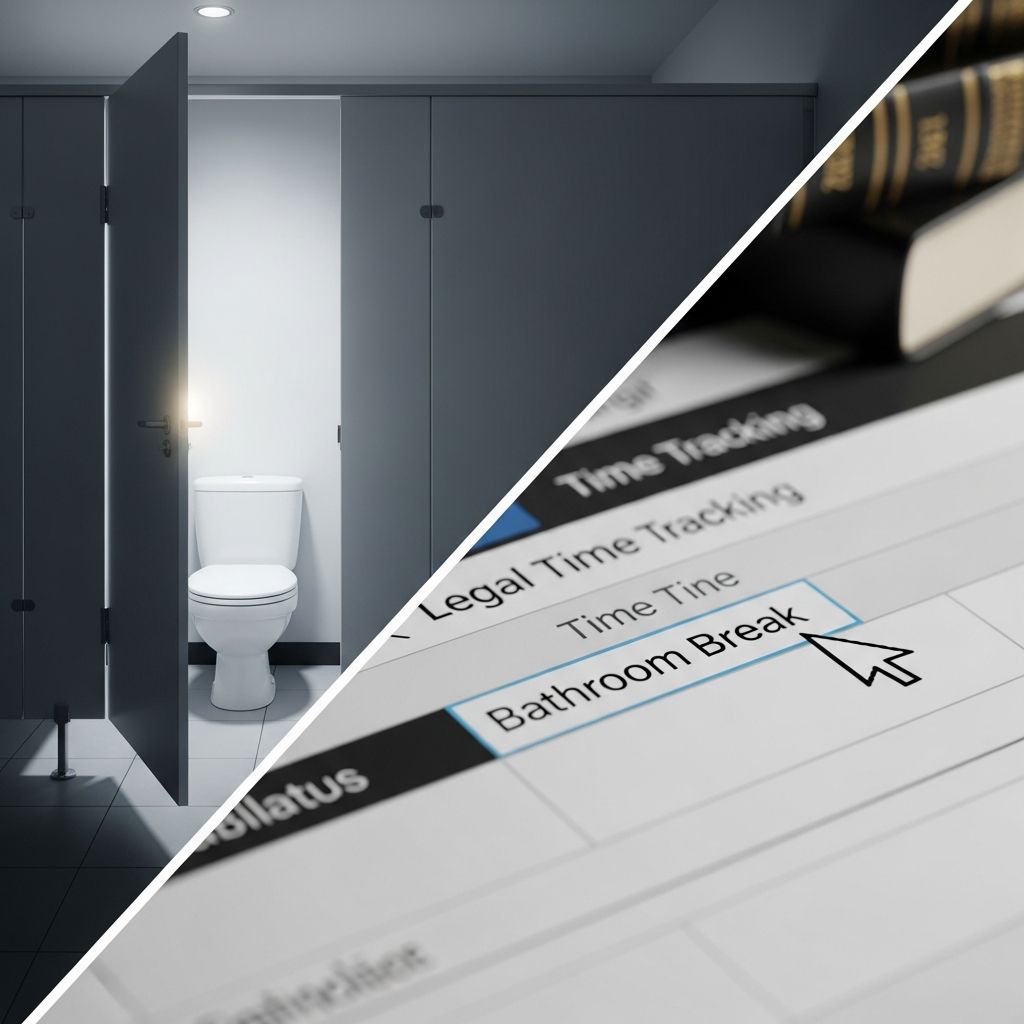
In the high-stakes world of legal practice, where billable hours form the backbone of revenue generation, every minute counts. But what happens when nature calls? Should lawyers include time spent in the restroom as part of their billable activities? This question sparks intense debate among attorneys, firm leaders, and clients alike, touching on issues of ethics, productivity, and transparency.
The Billable Hour Model: Foundations and Flaws
The billable hour has long been the standard metric in law firms, compensating lawyers based on time invested in client matters. Originating in the mid-20th century, this system incentivizes efficiency while tying income directly to hours logged. However, it raises questions about what constitutes ‘work time.’ Personal interruptions like bathroom visits, coffee breaks, or brief distractions challenge the purity of this model.
Proponents argue that constant mental engagement with client files justifies billing short pauses. After all, lawyers often mull over strategies during downtime. Critics, however, view it as padding bills, eroding trust and inviting scrutiny from clients and regulators.1
Firm Policies on Short Breaks: A Comparative View
Law firms vary widely in their approach to time recording. Some explicitly permit billing increments as small as six minutes for any activity related to a matter, including brief respites. Others enforce strict deductions for non-productive time to maintain ethical standards.
| Firm Approach | Policy on Breaks | Rationale |
|---|---|---|
| Permissive | Bill up to 6 minutes | Mental continuity with work |
| Strict | Deduct personal time | Transparency and ethics |
| Hybrid | Case-by-case | Balances productivity and fairness |
This table illustrates common strategies. Permissive policies, like those at certain UK firms, recognize that ideas often emerge during short breaks, integrating them into service costs.1



The Future of AI: Preventing a Big Tech Monopoly >

Ethical Guidelines from Professional Bodies
Bar associations provide frameworks for billing integrity. The American Bar Association (ABA) Model Rules of Professional Conduct, particularly Rule 1.5 on fees, mandate that charges be reasonable and communicated clearly. Billing for purely personal time risks violating this, as it could be seen as excessive.2
State bars echo this: for instance, the New York State Bar Association advises deducting non-legal tasks. Yet, no rule explicitly addresses bathroom breaks, leaving room for interpretation. Lawyers must weigh ‘reasonable’ against ‘verifiable’ time.
Client Perspectives: Trust and Transparency
Clients increasingly demand detailed billing breakdowns. A 2023 survey by Thomson Reuters found 68% of corporate counsel review invoices line-by-line, flagging unusual entries. Billing restroom time could trigger disputes, damaging relationships.
- Detailed logs build trust: Itemize tasks clearly.
- Avoid micro-entries: Aggregate short activities.
- Communicate norms: Disclose billing minimums upfront.
Transparent practices foster long-term partnerships, outweighing short-term gains from questionable billing.
Practical Timekeeping Strategies for Lawyers
Effective time tracking minimizes ethical gray areas. Modern tools like Clio or PracticePanther automate entries, reducing reconstruction errors. Best practices include:
- Record time contemporaneously, not retroactively.
- Use minimum increments judiciously (e.g., 0.1 hours).
- Subtract verifiable personal time daily.
- Review entries for accuracy before submission.
Reconstructing time weeks later invites inaccuracies, such as overlooking breaks or social chats.2
Psychological Impacts of Billable Pressure
The drive to bill 2,000+ hours annually creates stress, leading to blurred boundaries between work and personal time. Studies from the Journal of Occupational Health Psychology link this to burnout, with lawyers reporting higher anxiety levels. Short breaks are essential for cognitive recharge, but billing them may discourage necessary pauses.
Firms promoting wellness—through alternative fee arrangements like flat fees or value billing—alleviate this. Such models focus on outcomes, not minutes, revolutionizing the industry.
Global Variations in Billing Norms
Practices differ internationally. UK firms sometimes embrace inclusive short-break billing, viewing it as embedded overhead.1 In contrast, U.S. firms face stricter ABA oversight. Continental European models often prioritize fixed fees, sidestepping hourly debates.
Case Studies: Lessons from Controversies
High-profile scandals highlight risks. In one instance, a major firm faced backlash for aggressive billing, including minor tasks. Clients demanded refunds, prompting policy overhauls. These cases underscore the need for robust internal audits.
Technology’s Role in Ethical Billing
AI-driven software now flags anomalous patterns, like frequent micro-entries. Blockchain for time logs ensures immutability, enhancing credibility. Adopting these tools positions firms as leaders in ethical practice.
Frequently Asked Questions (FAQs)
What do bar associations say about billing breaks?
They require reasonableness; deduct personal time to comply.2
Can software help track billable time accurately?
Yes, tools like TimeSolv provide real-time logging and analytics.
Do clients accept billing for thinking time during breaks?
Many do not; transparency is key to acceptance.
How do top firms handle short interruptions?
Most aggregate or deduct to avoid disputes.1
Is value billing replacing hourly rates?
Increasingly yes, especially for repeat clients.
Navigating the Future of Legal Billing
As scrutiny intensifies, lawyers must prioritize ethics over maximization. Training programs, peer reviews, and tech integration pave the way. Ultimately, billing practices reflect a firm’s values—choose integrity to thrive.
References
- Biglaw Firm Tells Lawyers To Bill Clients For Time Spent On Toilet — Above the Law. 2016-10-26. https://abovethelaw.com/2016/10/biglaw-firm-tells-lawyers-to-bill-clients-for-time-spent-on-toilet/
- Do you deduct time from your billing sheet for bathroom breaks? — ABA Journal. 2013-01-17. https://www.abajournal.com/legalrebels/article/do_you_deduct_time_from_your_billing_sheet_for_bathroom_breaks
- Model Rules of Professional Conduct: Rule 1.5 Fees — American Bar Association. 2023-08-15. https://www.americanbar.org/groups/professional_responsibility/publications/model_rules_of_professional_conduct/rule_1_5_fees/
- 2013 State of the Legal Market Report — Thomson Reuters. 2013-01-01. https://www.thomsonreuters.com/en/reports/state-of-the-legal-market.html
Similar Articles








Read full bio of medha deb