
Autonomous Vehicles: Reshaping Personal Injury Litigation
How self-driving cars are transforming liability, claims, and the future of personal injury law for attorneys and victims alike.
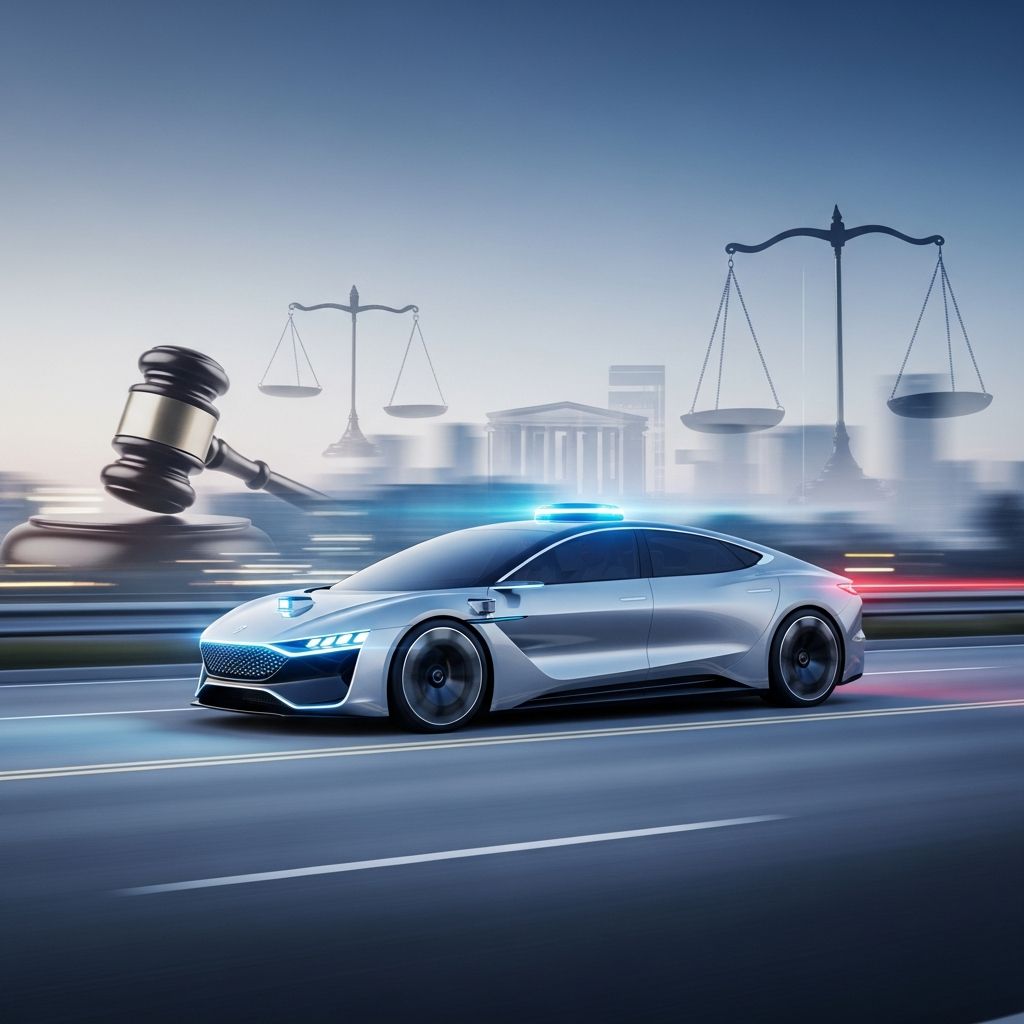
Self-driving cars, powered by advanced AI and sensors, are transitioning from experimental prototypes to everyday transportation. This shift promises fewer human-error accidents but introduces profound changes to personal injury law. Traditional claims centered on driver negligence now grapple with machine decision-making, manufacturer accountability, and evolving insurance frameworks. Legal professionals must adapt to these dynamics to represent clients effectively in an era where vehicles often operate without human input.
The Promise of Safer Roads and Fewer Crashes
Human error accounts for the vast majority of road incidents. According to the National Highway Traffic Safety Administration (NHTSA), over 32,000 fatalities occurred in U.S. motor vehicle crashes in a recent year, with more than 2.34 million injuries reported. Autonomous vehicles, equipped with cameras, radar, and real-time data processing, aim to mitigate these risks by reacting faster and more consistently than humans.
Studies indicate self-driving cars could reduce accidents by up to 90% by eliminating distractions, fatigue, and impairment. However, they are not infallible; software glitches, sensor failures, or unpredictable road conditions can still lead to collisions. As adoption grows—with companies like Tesla and Waymo leading—the overall volume of personal injury claims may decline, forcing lawyers to focus on higher-stakes, tech-centric cases.
Redefining Fault: From Drivers to Machines
In conventional accidents, liability hinges on proving negligence like speeding or failure to yield. With autonomous vehicles, the ‘driver’ may be absent or disengaged, complicating fault attribution. Courts now consider whether the human owner intervened appropriately, if the AI system malfunctioned, or if external factors prevailed.
Key challenges include:
- Human Oversight: In semi-autonomous modes (e.g., Tesla’s Full Self-Driving), owners must remain attentive. Failure to do so could shift blame back to them.
- System Failures: Crashes from erroneous AI decisions implicate software developers or manufacturers under product liability laws.
- Mixed Scenarios: When human-driven cars collide with autonomous ones, comparative fault rules—like Illinois’ 50% bar—demand dissecting both human and machine actions.
This evolution favors data-driven evidence. Black box recorders in self-driving cars capture telemetry, often clarifying fault and reducing insurer disputes.
New Liability Targets: Manufacturers and Tech Providers
Traditional defendants—drivers and their insurers—yield to corporations. Vehicle makers like Waymo face direct accountability for autopilot-mode crashes, as seen in regulatory updates allowing citations to companies rather than phantom drivers.
Product liability claims will surge, targeting defects in hardware (sensors) or software (algorithms). Nevada law, for instance, holds manufacturers liable for unreported defects or testing failures but exempts them from third-party modifications. Multiple parties—OEMs, software firms, sensor suppliers—create ‘lots of defendants,’ necessitating precise causation proof.
| Traditional Liability | Autonomous Liability |
|---|---|
| Driver negligence | AI decision errors |
| Owner’s insurance | Manufacturer warranties |
| Eye-witness testimony | Vehicle data logs |
| Single defendant | Multiple corporate entities |
This table illustrates the paradigm shift, demanding lawyers master technical expertise alongside tort law.
Insurance Overhaul: No-Fault to Corporate Coverage
Insurers face upheaval. Fewer accidents mean fewer claims, but those that occur may involve massive payouts against deep-pocketed manufacturers. Some predict a no-fault model expansion, where victims recover regardless of fault, funded by vehicle subscriptions or fleet policies.
Owners of autonomous cars still need insurance, but policies now cover ‘product defects’ alongside operation. Manufacturers may self-insure or mandate bundled coverage, streamlining payouts via onboard evidence that minimizes denial fights. Victims benefit from clearer liability trails, accelerating settlements.
Legal and Regulatory Evolution Across States
No uniform federal framework exists; states pioneer rules. California’s laws target companies for violations, while Illinois integrates autonomous faults into modified comparative negligence. Nevada mandates accident reporting to the DMV.
Philadelphia anticipates statutes redefining ‘operator’ liability under existing personal injury precedents. Nationally, 29 states regulate autonomous vehicles, signaling comprehensive reform. Lawyers must track these patchwork laws, as jurisdiction dictates claim viability.
Opportunities and Challenges for Injury Attorneys
While claim volume drops, complexity rises—creating niches for tech-savvy firms. Attorneys will analyze gigabytes of vehicle data, subpoena source code, and litigate novel defenses like ‘algorithmic inevitability.’ Collaboration with engineers and cybersecurity experts becomes essential.
High-profile incidents, like Waymo’s illegal maneuvers, highlight litigation potential against non-human actors. Firms adapting early—building autonomous expertise—stand to thrive amid reduced but lucrative caseloads.
Practical Steps for Victims of Autonomous Crashes
If injured by a self-driving vehicle:
- Document Immediately: Note vehicle details, location, and any alerts on dashboards.
- Preserve Evidence: Request data downloads from the car’s event recorder before it’s overwritten.
- Seek Medical Care: Establish injury records for damages like medical bills and lost wages.
- Contact Specialists: Engage lawyers versed in tech-liability hybrids to navigate multi-defendant suits.
- Report Promptly: Comply with state mandates to preserve claims.
These steps maximize recovery in a landscape where compensation covers pain, suffering, and economic losses.
Frequently Asked Questions (FAQs)
Who is liable in a fully driverless car accident?
Typically, the manufacturer or software provider, unless human intervention or external factors contributed. Vehicle data often resolves this quickly.
Will self-driving cars eliminate personal injury lawsuits?
No, though fewer in number, claims will persist due to tech failures, with higher stakes against corporations.
Do I need different insurance for an autonomous vehicle?
Standard policies evolve to include product liability; consult providers for AV-specific coverage.
How do courts handle mixed human-AV crashes?
Using comparative fault, apportioning blame via data and negligence standards.
Can I sue a self-driving car company?
Yes, under product liability if defects caused harm, supported by testing records and logs.
The Road Ahead: Adaptation is Key
Autonomous vehicles herald a safer, more accountable mobility era, but personal injury law must evolve apace. Reduced crashes benefit society, yet demand sophisticated advocacy for remaining victims. Attorneys embracing data forensics, regulatory shifts, and corporate defendants will lead this transformation, ensuring justice in a machine-driven world.
References
- How Will Self-Driving Cars Affect Personal Injury Law? — Bednarz Law. Accessed 2026. https://www.bednarzlaw.com/how-will-self-driving-cars-affect-personal-injury-law/
- The Impact of Autonomous Vehicles on Personal Injury Law — Harker Injury Law. Accessed 2026. https://www.harkerinjurylaw.com/legal-guidance/the-impact-of-autonomous-vehicles-on-personal-injury-law/
- The Impact of Autonomous Vehicles on Personal Injury Law — Costa Ivone. Accessed 2026. https://costaivone.com/the-impact-of-autonomous-vehicles-on-personal-injury-law/
- Injury Risks Posed by New Self-Driving Cars — McArthur Law Firm. Accessed 2026. https://mcarthurlawfirm.com/blog/injury-risks-posed-by-new-self-driving-cars/
- Liability And Legal Questions Regarding Autonomous Vehicles in Philadelphia — Gilman & Bedigian. Accessed 2026. https://www.gilmanbedigian.com/liability-and-legal-questions-regarding-autonomous-vehicles-in-philadelphia/
- How Do Self-Driving Car Incidents Affect Personal Injury Claims? — Mevorah Law. 2025-06-25. https://www.mevorahlaw.com/blog/how-do-self-driving-car-incidents-affect-personal-injury-claims
- Understanding Liability in Driverless Car Accidents — Van Law Firm. Accessed 2026. https://vanlawfirm.com/blog/understanding-liability-in-driverless-car-accidents/
- How AI and Autonomous Cars are Changing Personal Injury Law in Nevada — Nevada Lawyer (Nevada Bar Association). 2023-11. https://nvbar.org/wp-content/uploads/NevadaLawyer_Nov2023_Rise-of-Machines.pdf
Similar Articles








Read full bio of Sneha Tete




