
Autonomous Vehicles: Reshaping Liability and Insurance
How driverless cars are transforming legal responsibility and the auto insurance landscape forever.
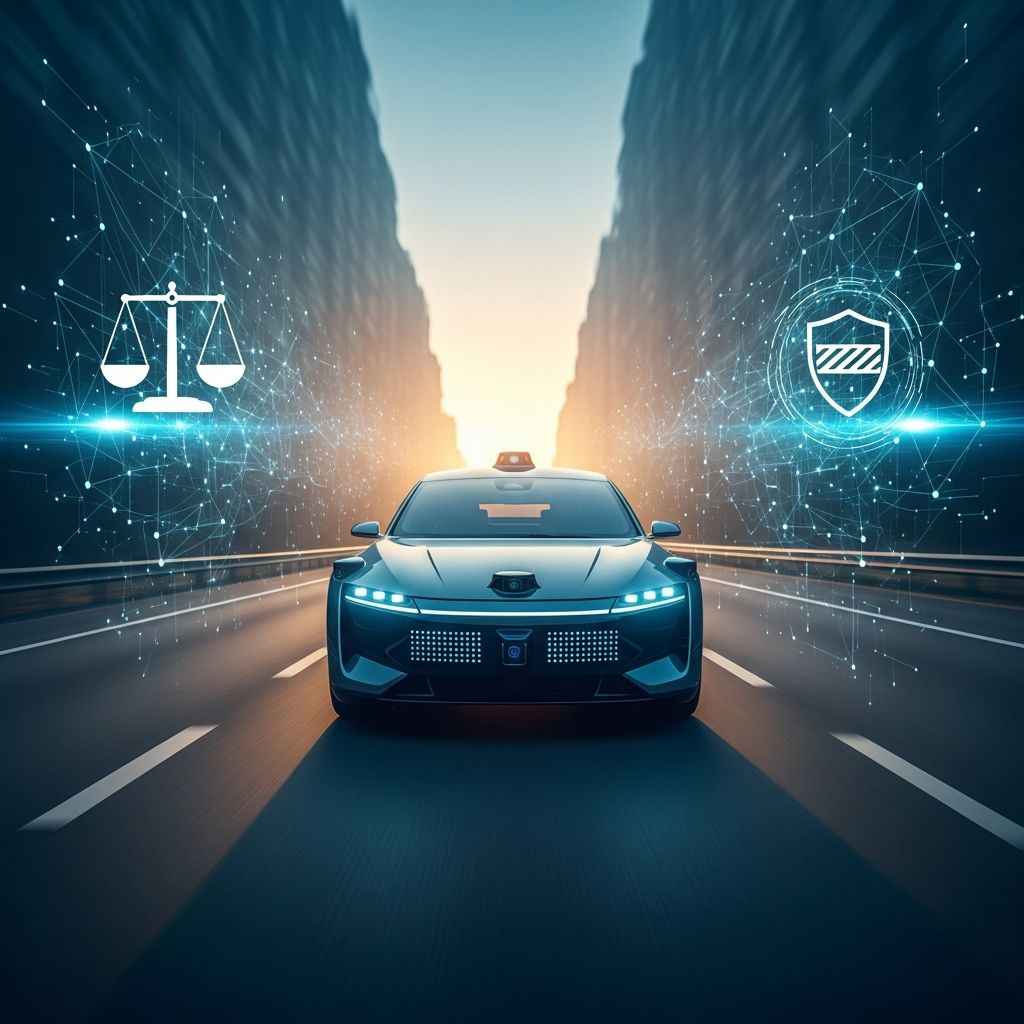
Self-driving cars promise safer roads by minimizing human error, which causes over 90% of accidents, but they demand a complete overhaul of liability assignment and insurance frameworks. As these vehicles transition from testing to widespread use, responsibility moves from individual drivers to manufacturers, software developers, and even vehicle operators, forcing lawmakers, courts, and insurers to adapt rapidly.
Understanding Automation Levels and Their Legal Implications
The Society of Automotive Engineers (SAE) defines six levels of vehicle automation, from Level 0 (no automation) to Level 5 (full autonomy under all conditions). This scale is crucial for determining fault in incidents. Levels 0-2 require constant human supervision, maintaining driver liability. Levels 3-5 shift control to the vehicle, redirecting blame to technology providers when systems fail.
For instance, Level 2 systems like Tesla’s Autopilot assist with steering and acceleration but demand immediate human intervention, blurring responsibility lines in crashes. Higher levels eliminate this ‘gray area,’ making manufacturers primary targets for claims.
Who Bears Fault in a Self-Driving Crash?
Traditional auto accidents hinge on driver negligence, but autonomous vehicles (AVs) introduce multiple potential culprits:
- Manufacturers: Liable for hardware defects, such as faulty sensors or brakes, under product liability laws.
- Software Providers: Accountable for algorithmic errors, like misinterpreting road signs or pedestrian signals.
- Vehicle Owners/Operators: Responsible if they fail to maintain the vehicle, override systems improperly, or deploy unapproved modifications.
- Infrastructure Owners: Potentially at fault for poor road conditions affecting sensors, like faded lane markings.
Courts apply existing product liability standards absent federal AV-specific rules, assessing if vehicles meet ‘reasonable consumer expectations.’ A notable case involved a Level 2 system crash where the manufacturer faced partial liability for system shortcomings.
State-Level Regulations Pioneering AV Accountability
Without uniform federal standards, states lead with diverse approaches. California’s Assembly Bill 1777, effective July 1, holds manufacturers or operators liable for traffic violations by AVs, issuing citations for infractions like illegal U-turns. It mandates remote communication tools, requiring operators to redirect vehicles from emergencies within two minutes.
Nevada defines the ‘driver’ as the owner or engager of the automated system. Texas considers owners as operators for compliance, even remotely. These laws ensure insurers pay claims first under strict obligations, then seek recovery—a model echoed in the UK’s Automated Vehicles Bill for Level 4-5 systems, transferring liability to the vehicle itself while requiring compliant policies.
| State | Key AV Liability Rule | Enforcement Mechanism |
|---|---|---|
| California | Manufacturer/operator liable for violations | Noncompliance notices; remote override tech |
| Nevada | Owner as ‘driver’ for fully AVs | Minimal risk condition requirement |
| Texas | Owner liable remotely | Traffic law compliance attribution |
| UK (AEV Bill) | Liability to vehicle at L4/L5 | Insurer first payout, then recovery |
Federal Oversight and Crash Reporting Mandates
The National Highway Traffic Safety Administration (NHTSA) wields broad authority via Standing General Order 2021-01 (periodically updated), compelling AV entities to report crashes involving advanced systems. This data informs investigations into safety defects, enabling recalls and enforcement. NHTSA guidelines promote safe testing but defer detailed liability to states, creating a regulatory patchwork.
As AVs proliferate, expect heightened scrutiny: high-value lawsuits and class actions loom, urging manufacturers to bolster safety protocols and insurance.
Insurance Industry Transformation Under AV Pressure
Auto insurance, a $300+ billion U.S. market, faces disruption. Premiums may decline with fewer accidents—projections suggest 80% reductions long-term—but rise for product liability coverage. Volvo’s pledge for full liability in autonomous mode signals manufacturer-absorbed risks, potentially ending personal policies.
New models emerge:
- Hybrid Policies: Split coverage between driver (manual mode) and manufacturer (AV mode).
- Manufacturer-Bundled Insurance: Embedded in vehicle purchase or subscription fees.
- Usage-Based Tracking: Leverages AV data for precise risk assessment, sidelining personal driving history.
Insurers must adapt to ‘black box’ data from sensors and AI, determining if failures stem from code, hardware, or external factors. Shared responsibility frameworks distribute fault proportionally.
Data Dilemmas: Privacy, Cybersecurity, and Evidence
AVs generate petabytes of data on routes, decisions, and interventions, vital for liability proof but fraught with risks. Insurers demand access for claims, sparking privacy debates. Cybersecurity threats—hacking sensors or AI—could spawn new claims for data breaches.
Regulations like data-sharing mandates balance transparency and protection. Carriers must insure against these, covering hacks that cause crashes or expose personal info.
Global Perspectives on AV Liability Frameworks
Beyond the U.S., the UK’s AEV Bill exemplifies proactive reform: insurers pay upfront regardless of fault, pursuing subrogation later. Europe’s focus includes ethical AI decision-making. These models influence U.S. policy as AV exports grow.
Volvo’s liability acceptance has inspired peers, hinting at industry-wide shifts. Yet challenges persist: Level 3 ‘shared control’ accidents complicate fault, as humans must intervene in edge cases.
Future Outlook: Premiums, Litigation, and Societal Shifts
By 2030, AVs could dominate fleets, slashing premiums 40-60% via reduced claims, per industry forecasts. Litigation surges toward OEMs, demanding robust defenses. Ride-sharing AVs (e.g., Waymo, Cruise) accelerate commercial insurance needs.
Societally, ‘driver error’ fades, prompting ethical questions: Should AVs prioritize passengers or pedestrians? Lawmakers grapple with these as tech advances.
Frequently Asked Questions (FAQs)
Will self-driving cars eliminate the need for personal auto insurance?
No, but they will transform it. Liability shifts to manufacturers for higher automation levels, potentially bundling coverage into vehicle costs, though hybrid models persist for partial autonomy.
Who gets the traffic ticket if an AV runs a red light?
In states like California, the manufacturer or operator receives the citation. Remote operators must comply with law enforcement directives swiftly.
How does NHTSA handle AV crash investigations?
Manufacturers report incidents under General Order 2021-01. NHTSA analyzes data to probe defects, issue recalls, or enforce safety standards.
Can AV data be used against owners in court?
Yes, black box data proves system status and decisions, but privacy laws limit access. Cybersecurity protections are increasingly required.
Are insurance premiums dropping due to AVs already?
Not yet widely, as adoption is early. Long-term reductions are expected with proven safety gains, offset by manufacturer liability hikes.
References
- Four Ways Autonomous Vehicles will Change Auto Insurance — The Digital Insurer. 2023-05-15. https://www.the-digital-insurer.com/blog/insurtech-impact-autonomous-vehicles-auto-insurance/
- Autonomous Vehicles: Driverless Does Not Mean Liability-Less — Anderson + Wanca. 2024-09-12. https://www.afslaw.com/perspectives/consumer-products-watch/autonomous-vehicles-driverless-does-not-mean-liability-less
- Navigating Liability in the Age of Autonomous Vehicles — Woodruff Sawyer. 2024-03-20. https://www.wshblaw.com/publication-navigating-liability-in-the-age-of-autonomous-vehicles
- Standing General Order 2021-01 on Crash Reporting — National Highway Traffic Safety Administration (NHTSA). 2024-11-01. https://www.nhtsa.gov/laws-regulations/standing-general-order-crash-reporting
- How Autonomous Vehicles Will Change the Future of Car Insurance — S&P Global. 2025-08-10. https://www.spglobal.com/automotive-insights/en/blogs/2025/08/autonomous-vehicles-future-of-car-insurance
Similar Articles








Read full bio of Sneha Tete




