Automated Service of Legal Documents: Tech Meets Procedure
Exploring how emerging technologies challenge traditional legal service methods and regulatory frameworks.
The Evolution of Legal Service in a Digital Age
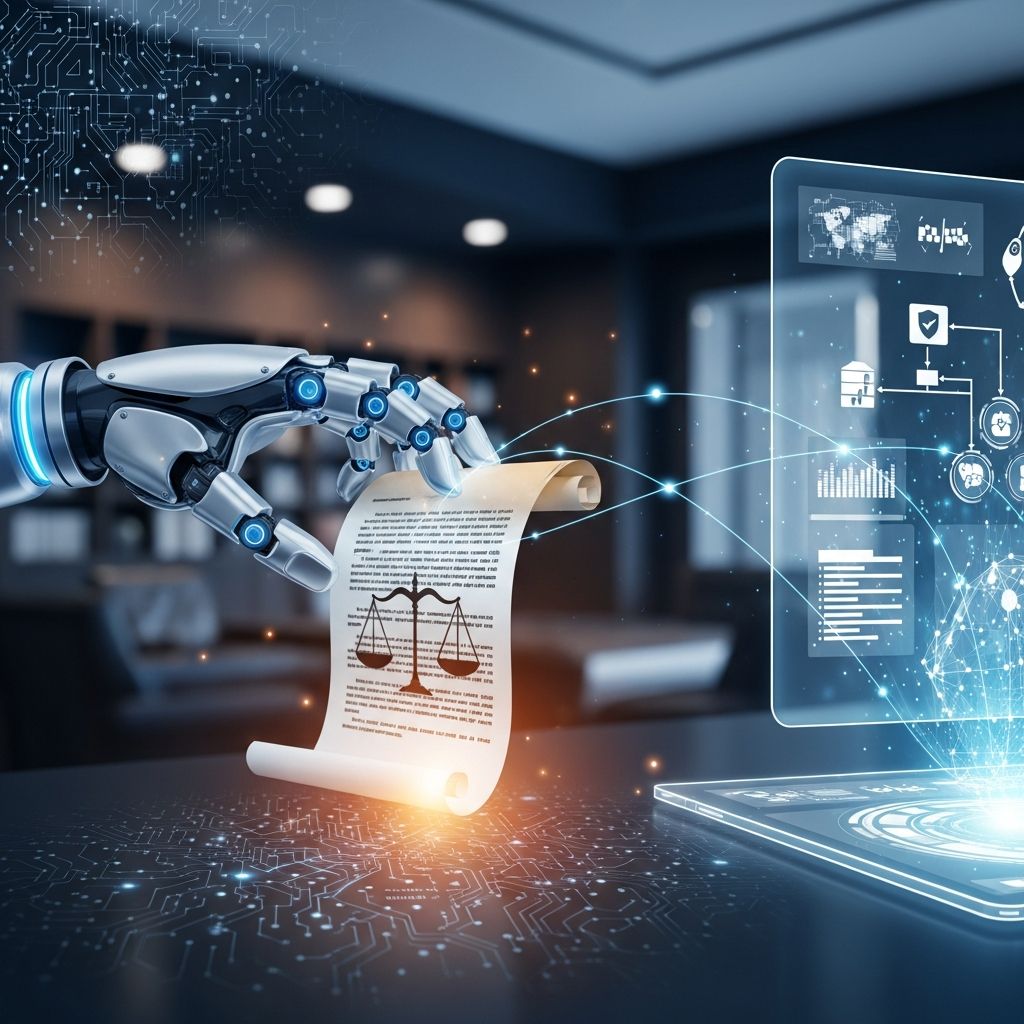
The legal profession has historically relied on established procedures for serving court documents, with process servers physically delivering summons and complaints to defendants. However, technological advances now prompt critical questions about whether these traditional methods remain necessary or whether emerging technologies can fulfill these essential functions. The intersection of robotics, artificial intelligence, and civil procedure creates complex legal and practical challenges that courts and legislators are only beginning to address.
Service of process represents one of the most fundamental requirements in civil litigation. It ensures that defendants receive adequate notice of legal actions against them, a right protected by constitutional due process principles. Yet the mechanisms for accomplishing this notification have remained largely unchanged for decades, relying on human process servers to locate and deliver documents. As technology companies develop sophisticated robots and automated systems, legal professionals must consider whether these innovations could replace or supplement traditional service methods.
Understanding the Legal Requirements for Service
Before examining whether automated systems can serve legal documents, it is essential to understand what service of process actually requires. Service is not merely about delivering papers; it involves complex procedural rules designed to protect defendants’ rights. Federal Rules of Civil Procedure, along with individual state regulations, establish specific requirements for valid service.
Valid service must accomplish several critical objectives. First, it must provide the defendant with actual or constructive notice of the pending litigation. Second, the service must comply with specific procedural requirements established by law. Third, it must be documented properly to demonstrate to the court that service was effected. These requirements exist to prevent abuse of the legal system and to ensure fairness to all parties involved.

The Future of AI: Preventing a Big Tech Monopoly >

Traditional service methods include personal delivery to the defendant, delivery to an authorized agent, certified mail to the defendant’s last known address, or other methods approved by the court. Some jurisdictions permit service by email or other electronic means in specific circumstances. Each method must satisfy the twin aims of the service rules: achieving the purpose of notice and providing a reliable mechanism for proof of service.
The Technological Capabilities and Limitations of Robotic Systems
Modern robotic systems, particularly quadrupedal robots like those developed by Boston Dynamics, possess sophisticated capabilities that might theoretically enable them to deliver legal documents. These robots can navigate complex terrain, climb stairs, and operate in hazardous environments. They incorporate advanced sensors, cameras, and autonomous navigation systems. Some models can identify and interact with objects in their environment. These technological features have led some legal observers to speculate about potential applications in service of process.
However, significant limitations exist that complicate any straightforward application of these systems to legal service. Robots currently cannot reliably determine whether they have successfully served an individual in compliance with procedural rules. They cannot verify the identity of the person receiving documents with the certainty required for legal service. They cannot conduct conversations to confirm that the recipient understands the significance of the documents being served. Most importantly, they cannot make the judgment calls that human process servers make regularly, such as determining the appropriate recipient if the named defendant is unavailable or whether service can be effected at a particular location.
Regulatory Obstacles and Legal Uncertainty
Beyond technological limitations, substantial regulatory barriers prevent the deployment of robots for service of process. Existing civil procedure rules were drafted with human servers in mind. They specify requirements that presume human judgment, discretion, and accountability. A human process server can testify about their actions, explain circumstances that arose during service, and potentially be held liable for improper service. A robot cannot provide testimony or bear legal responsibility for its actions.
Law enforcement and government agencies have begun experimenting with police robots, raising related but distinct concerns about accountability and transparency. These experiments have sparked criticism from civil liberties organizations due to the lack of clear legal restrictions governing robotic deployment. If law enforcement deployment of robots remains inadequately regulated, the situation regarding robotic service of legal documents would be even more legally ambiguous.
Courts would face significant questions if presented with affidavits attempting to demonstrate service accomplished by robots. How would a judge verify that the robot actually located and served the correct individual? What recourse exists if the robot malfunctions or fails to deliver documents? Who bears responsibility if service is improper? These unanswered questions reflect broader regulatory gaps in how the legal system addresses technological innovation.
Authentication and Verification Challenges
Service of process requires reliable verification that service actually occurred. When a human process server serves documents, they typically obtain a signature or acknowledgment from the recipient. They prepare an affidavit describing their actions, the time and place of service, and identifying the person served. This affidavit becomes evidence in the litigation file, and the process server may be required to testify about their actions.
A robot cannot accomplish this verification in the same manner. While robots can capture video or photographic evidence of their activities, this evidence might not reliably prove that the correct individual received documents or understood their significance. Video evidence could be challenged regarding its authenticity, clarity, or interpretation. Questions would inevitably arise about whether the person visible in the recording was actually the defendant or an authorized agent.
The Federal Rules of Civil Procedure require that service must be proven through specific methods. Affidavits from process servers constitute the standard proof. It remains unclear what form of robotic certification or documentation could satisfy these evidentiary requirements or whether courts would accept such evidence as meeting the proof of service standards.
Artificial Intelligence and Legal Services: Lessons from Recent Enforcement
Recent enforcement actions against companies claiming to provide AI-powered legal services offer instructive lessons about regulatory scrutiny of technological applications in law. The Federal Trade Commission has taken action against providers making exaggerated or false claims about artificial intelligence capabilities in legal contexts. One notable case involved a company claiming to offer the “world’s first robot lawyer,” which promised to generate legally valid documents and represent clients in court through real-time AI assistance delivered via wireless earbuds. Upon investigation, the FTC found that the service produced incomplete, inaccurate, and otherwise flawed documents that did not perform as advertised.
This enforcement action demonstrates that regulators scrutinize claims about AI and robotic systems performing legal functions. The FTC complaint emphasized that the company failed to test whether its AI output was equivalent to human attorney work and did not employ attorneys to evaluate the service’s quality and accuracy. These findings suggest that regulators would apply similarly rigorous standards to any claims about robots serving legal documents. Providers would face pressure to demonstrate that robotic service methods comply with procedural rules and reliably accomplish service’s purposes.
Privacy and Data Protection Implications
Deploying robots for service of process would raise significant privacy concerns. Robots equipped with cameras and sensors to navigate and locate individuals would necessarily collect substantial personal data. They would operate in neighborhoods, workplaces, and public spaces, potentially recording video and audio of many individuals unrelated to the legal matter at hand.
Privacy laws, particularly those addressing biometric information, could restrict robotic service. Illinois law provides an instructive example: the state’s Biometric Information Privacy Act restricts collection of facial recognition data and other biometric information without informed written consent. A robot equipped with facial recognition technology to identify defendants would potentially violate such laws by collecting biometric data from individuals encountered during its operations. Multiple jurisdictions have enacted similar privacy protections, and additional regulations addressing robotic data collection are likely to emerge.
Constitutional and Due Process Considerations
The Fourteenth Amendment guarantees due process of law, which fundamentally requires that defendants receive actual or adequate constructive notice of litigation. Service of process rules exist to fulfill this constitutional mandate. Any method of service must provide sufficient assurance that the defendant will receive notice of the legal action.
Courts reviewing robotic service would necessarily examine whether this method provides adequate notice under due process principles. The current law does not clearly establish that robotic service meets constitutional standards. Questions would arise about whether a defendant served by robot without understanding that they were being served would have received adequate notice. If a defendant did not comprehend that legal documents were being delivered, they might argue that service was constitutionally deficient.
These constitutional considerations mean that even if technology could accomplish robotic service practically, significant legal obstacles would prevent courts from accepting such service as valid.
Current Judicial Perspectives and Case Law Gaps
Courts have not yet ruled definitively on robotic service of process because this scenario has not presented itself in litigation. The absence of case law creates uncertainty about how courts would respond to such service methods. Some courts have begun addressing electronic service methods more broadly, permitting email service or social media service in specific circumstances and with judicial authorization.
However, the shift toward electronic service occurred gradually, with procedural rules being amended after experience demonstrated that electronic methods could reliably accomplish service’s objectives. Electronic service still requires addressing the recipient’s identity and compliance with specific procedures. A similar gradual process might eventually accommodate robotic service, but only after extensive legal and practical development establishing that robots could reliably serve documents while protecting defendants’ due process rights.
Practical Scenarios and Implementation Challenges
Even if legal barriers could somehow be overcome, practical implementation of robotic service would present substantial challenges:
- Location identification: Robots would need to reliably locate the correct defendant at a specific address, yet many people move frequently, and process servers struggle regularly with locating defendants
- Identification verification: Robots must distinguish the correct individual among multiple occupants of a residence or workplace
- Refusal of service: When defendants refuse to accept service, process servers use judgment about alternative methods; robots lack this discretion
- Hazardous situations: Some service situations involve potential safety risks; robots might malfunction in such circumstances or escalate tensions
- Maintenance and liability: Malfunction, damage, or loss of expensive robot hardware raises liability questions
- Geographic coverage: Deploying robots in rural areas or locations with difficult terrain would face practical limitations
Comparing Service Methods and Technological Readiness
| Service Method | Reliability | Legal Status | Cost-Effectiveness | Technological Feasibility |
|---|---|---|---|---|
| Personal service by process server | High | Fully established | Moderate | N/A (human-based) |
| Certified mail | Moderate | Established with limitations | Low cost | N/A (mail-based) |
| Electronic service (email/portal) | Moderate-High | Emerging but accepted | Low cost | Currently viable |
| Robotic service (hypothetical) | Uncertain | Unresolved legally | High initial investment | In development, significant limitations |
Future Regulatory Development Possibilities
If technological capabilities advance substantially and legal obstacles are addressed, potential regulatory paths forward might emerge. Legislatures could enact specific procedures for robotic service, establishing requirements that robots must satisfy. Federal Rules of Civil Procedure could be amended to accommodate robotic methods explicitly. However, these developments would likely require years of legal development, pilot programs, and extensive debate about whether robotic service actually improves access to justice or creates new problems.
Any regulatory framework for robotic service would need to establish clear standards for robot operation, verification procedures, liability allocations, and appeals processes if service is challenged. Regulators would need to ensure that robotic service provides defendants adequate notice and does not violate privacy or constitutional rights. The complexity of these requirements suggests that widespread adoption of robotic service remains distant.
Frequently Asked Questions
Q: Could a robot legally serve a complaint today?
A: No. Current civil procedure rules require service methods established by law, and robotic service is not an authorized method. Courts would likely reject robotic service as invalid.
Q: What privacy laws might restrict robotic service?
A: Laws restricting facial recognition and biometric data collection could prevent robots from identifying and serving defendants. Illinois’s Biometric Information Privacy Act exemplifies such restrictions.
Q: How would robotic service be proven to a court?
A: Current rules require affidavits from process servers. It remains unclear what form of robotic certification or video evidence could satisfy these evidentiary requirements.
Q: Might electronic service develop into robotic service?
A: Possibly, but only after extensive legal development. Electronic service emerged gradually through rule amendments as methods proved reliable. Similar processes would precede any robotic service authorization.
Q: Why would robotic service be better than current methods?
A: Potential benefits might include reduced costs in specific scenarios and 24/7 availability. However, current methods remain more reliable and legally established, limiting practical advantages.
Conclusion: Technology and Legal Tradition
The question of whether robots can serve legal complaints reflects broader tensions between technological innovation and established legal procedures. While robotic systems possess impressive capabilities, substantial barriers prevent their deployment in service of process. Legal rules, constitutional requirements, privacy laws, and practical limitations all restrict this application.
The legal system does eventually adapt to technological change, as demonstrated by the gradual acceptance of electronic service methods. However, this adaptation occurs deliberately, with careful consideration of due process implications and practical reliability. Service of process represents too fundamental a function for rapid technological replacement without careful legal development. Any future robotic service would require legislative authorization, clear procedural standards, and extensive validation that the method reliably accomplishes service’s constitutional purposes.
References
- Want This Cute Robot Dog? Tough − Illinois Law Keeps Sony From Selling it Here — Faegre Drinker Biddle & Reath LLP. 2018-11-16. https://www.faegredrinker.com/en/insights/publications/2018/11/want-this-cute-robot-dog-tough
- Robot Lawyers? FTC Targets AI Legal Services — Foster Swift Collins & Smith PC. 2024. https://www.michiganitlaw.com/robot-lawyers-ftc-targets-ai-legal-services
- Robot Police Dogs Spark Civil Rights Questions — Mind Matters. 2019-11. https://mindmatters.ai/2019/11/robot-police-dogs-spark-civil-rights-questions/
- Robot Police Dogs are Here. Should We be Worried? — American Civil Liberties Union. https://www.aclu.org/news/privacy-technology/robot-police-dogs-are-here-should-we-be-worried
- The World’s First ‘Robot Lawyer’ Short-Circuited by Prosecutors Now Faces Class Action Lawsuit — New Hampshire Bar Association. 2023-01. https://www.nhbar.org/the-worlds-first-robot-lawyer-short-circuited-by-prosecutors-now-faces-class-action-lawsuit/
Similar Articles







Read full bio of medha deb