
Augmented Reality Transforming Courtrooms
Discover how AR and VR are revolutionizing evidence presentation, juror engagement, and judicial outcomes in modern litigation.
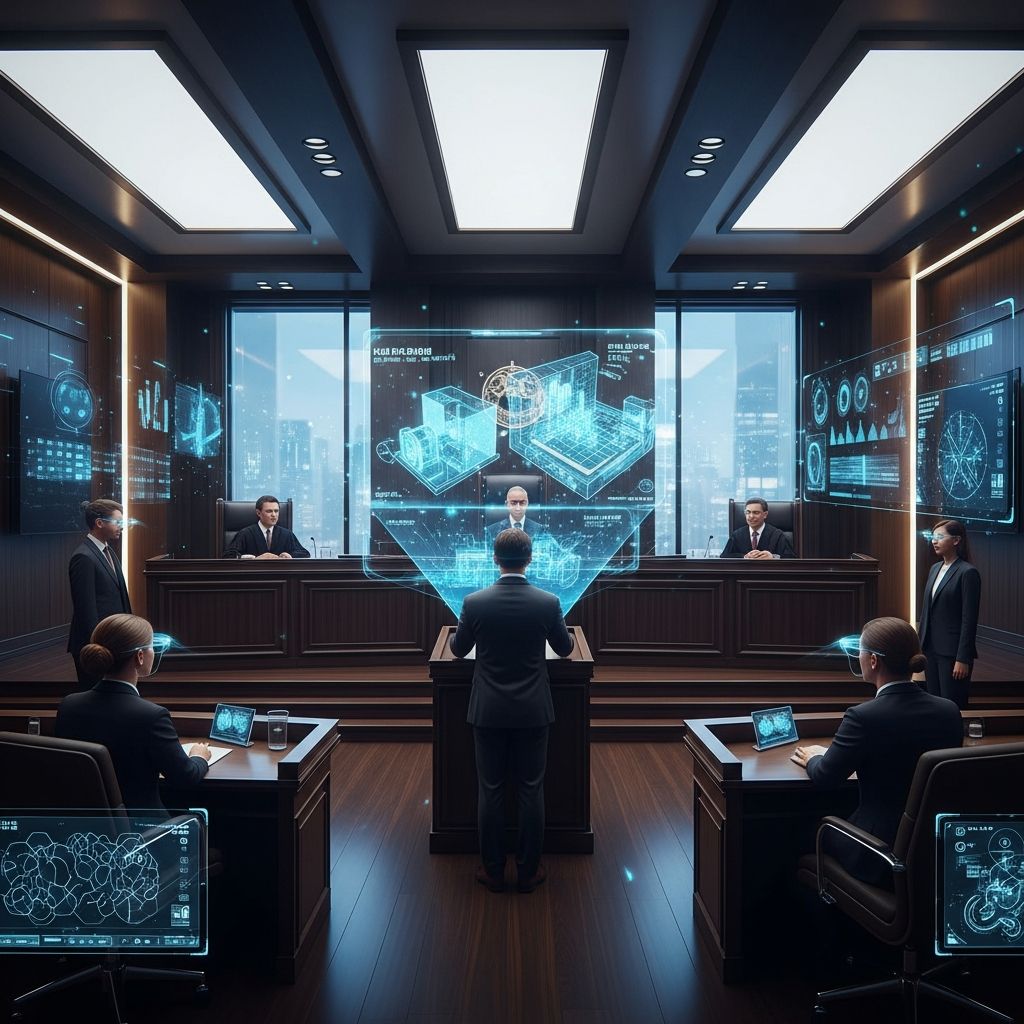
Augmented reality (AR) and virtual reality (VR) are emerging as game-changers in the legal field, offering innovative ways to present evidence and engage participants in trials. These immersive technologies allow for dynamic visualizations that surpass traditional methods, enabling jurors, judges, and attorneys to interact with case details in unprecedented depth.
Understanding Immersive Technologies in Justice
AR overlays digital elements onto the real world, while VR creates fully simulated environments. In courtrooms, AR can project annotations on physical exhibits, and VR can transport users to reconstructed scenes. This fusion of digital and physical enhances comprehension of complex data, such as accident trajectories or injury mechanics.
Historically, evidence presentation relied on static photos, diagrams, or verbal descriptions, often leading to misinterpretations. Immersive tech addresses this by providing interactive, multi-sensory experiences that align with how humans process spatial information.
Key Applications of AR and VR in Trials
These technologies find diverse uses across litigation stages, from pretrial preparation to final arguments.
- Crime and Accident Scene Recreation: VR builds 3D models of incidents, letting jurors ‘walk through’ events to grasp spatial dynamics and sequences.
- Evidence Annotation and Interaction: AR highlights key details on objects, like overlaying trajectories on vehicle photos or timelines on documents.
- Remote Proceedings and Reviews: VR courts enable virtual attendance, with AR aiding document analysis by projecting insights onto files.
- Expert Testimony Enhancement: Specialists demonstrate findings interactively, bridging technical gaps for lay audiences.
In personal injury cases, AR visualizes wounds or impacts, making abstract damages tangible. For intellectual property disputes, VR simulates product designs in context.
Real-World Case Studies and Success Stories
Courts have already embraced these tools with notable results. In Broward County, Florida, Judge Andrew Siegel allowed VR in a venue dispute, where a 3D model let the court explore the site immersively, clarifying layout issues.
China’s Jiaxing Intermediate Court used 3D imaging for ceramic fragments in a murder trial, avoiding physical transport and enabling detailed online examination. Such innovations streamline processes and bolster accuracy.
| Case | Technology Used | Outcome Benefit |
|---|---|---|
| Broward County Venue Dispute | VR Recreation | Improved spatial understanding |
| Jiaxing Murder Trial | 3D AR Imaging | Efficient evidence sharing |
| General Injury Cases | AR Overlays | Enhanced juror empathy |
These examples illustrate how AR/VR influences verdicts by fostering informed decisions.
Advantages for Jurors, Judges, and Attorneys
Immersive tech boosts engagement and retention. Studies indicate jurors retain more from visual, interactive presentations than lectures.
- Increased Comprehension: Complex forensics become intuitive through simulations.
- Higher Engagement: Interactive elements combat fatigue, maintaining focus.
- Objective Analysis: Multi-perspective views reduce bias from 2D limits.
- Efficiency Gains: Remote access cuts logistics for distant evidence.
For attorneys, these tools strengthen arguments; judges gain clearer oversight.
Overcoming Obstacles: Technical and Legal Hurdles
Despite promise, integration faces barriers.
Admissibility Concerns: Courts scrutinize authenticity, requiring validation of models against real data. Guidelines must ensure no manipulation.
Technical Demands: High-quality renders need expertise; accessibility for all jurors is essential, including those with disabilities.
Ethical Issues: Privacy in data handling and potential for sensory overload demand protocols. Cybersecurity protects sensitive reconstructions.
Big data and AI underpin accurate modeling, but biases in algorithms must be audited.
Future Directions in Immersive Legal Tech
Advancements like AI-driven simulations and haptic feedback will deepen immersion. Hybrid AR/VR systems could standardize in smart courtrooms.
Global adoption grows: U.S. courts pioneer trials, while Asia integrates for efficiency. Standards from bodies like UNESCO emphasize equitable access.
Training for legal professionals is key; firms adopting early gain edges.
Frequently Asked Questions (FAQs)
Can AR evidence be admitted in all courts?
Admissibility varies; it must prove reliable under rules like U.S. Federal Rule of Evidence 901. Validation affidavits help.
How does VR improve juror decisions?
By enabling spatial exploration, it clarifies relationships, leading to accurate verdicts per studies.
What are costs of implementing AR/VR in trials?
Initial setups range from $5,000-$50,000, but cloud services lower barriers for smaller firms.
Is AR safe for juror privacy?
Yes, with encryption and anonymization; courts mandate secure handling.
Will AR replace traditional evidence?
No, it complements; physical items remain core, augmented for clarity.
Conclusion: A New Era for Justice
AR and VR herald a fairer, more precise legal system. As tech matures, widespread use promises transformed litigation.
References
- Augmented Reality and Virtual Reality in the Courtroom: Enhancing Juror Understanding — NYC Injury Attorneys, P.C. 2023. https://nyc-injury-attorneys.com/blog/augmented-reality-and-virtual-reality-in-the-courtroom-enhancing-juror-understanding-and-presentation-of-evidence/
- Virtual Reality Reshaping Justice: Applications and Challenges — Cyberjustice.ca. 2025-02-12. https://www.cyberjustice.ca/2025/02/12/virtual-reality-reshaping-justice-applications-and-challenges-of-vr-ar-technology-in-modern-courtrooms/
- Exploring the Impact of Virtual and Augmented Reality in Courts — UNESCO. 2024. https://www.unesco.org/en/articles/exploring-impact-virtual-and-augmented-reality-courts
- VR, AR, and AI in a Real Law Firm — Iowa State Bar Association. 2024. https://www.iowabar.org/?pg=WP_AIinaRealLawFirm
- Augmented Reality and Law — Filevine. 2023. https://www.filevine.com/legal-encyclopedia/augmented-reality-and-law/
Similar Articles








Read full bio of medha deb




