
Do You Have To Carry ID When Stopped By Police? State Guide Now
Understand when police can demand ID, state laws on identification, and how to protect yourself during stops without risking arrest.
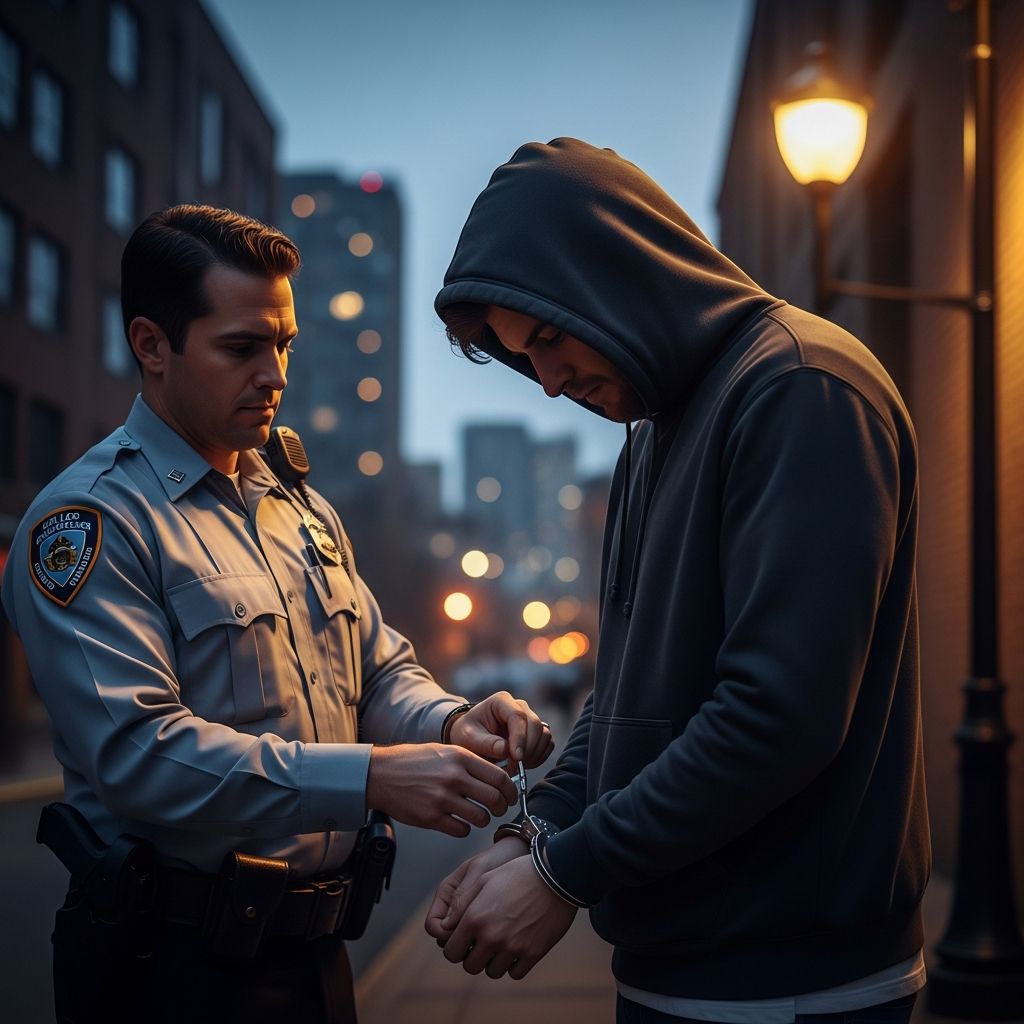
Encountering law enforcement without identification raises critical questions about personal freedoms and legal obligations. Across the United States, rules on providing ID during police interactions vary significantly by state, influenced by federal precedents and local statutes. While no nationwide law mandates carrying ID at all times, certain situations may require verbal identification or physical proof, potentially leading to detention or arrest if refused. This article examines these laws, landmark decisions, state-by-state differences, and strategies to navigate such encounters effectively.
Understanding Police Stops and Identification Demands
Police interactions often begin with a casual encounter, escalate to an investigative detention known as a Terry stop, or result in a full arrest. A Terry stop, established by the 1968 Supreme Court case Terry v. Ohio, allows officers to briefly detain someone based on reasonable suspicion of criminal activity without probable cause for arrest. During these stops, officers may ask for identification to confirm identity, check for warrants, or assess safety risks.
However, the obligation to comply depends on jurisdiction-specific stop-and-identify statutes. These laws determine if refusing to identify oneself constitutes a crime. The U.S. Supreme Court in Hiibel v. Sixth Judicial District Court of Nevada (2004) upheld Nevada’s law requiring suspects to state their name during a valid Terry stop, ruling it did not violate the Fourth or Fifth Amendments, as it minimally intrudes on privacy while aiding investigations.
In practice, officers must articulate reasonable suspicion before demanding ID. Mere presence in a high-crime area or furtive behavior might justify a stop, but demanding ID without basis could render the detention unlawful, making any arrest for non-compliance challengeable in court.
Federal vs. State Authority on ID Requirements
No federal statute compels civilians to identify themselves to local police or even federal agents like ICE during routine stops. Immigrants should note that while state laws apply to local encounters, federal immigration enforcement follows separate protocols without a general ID mandate.
State laws fill this gap, categorizing jurisdictions into “stop and identify” states (where verbal ID is required) and “must ID” states (demanding physical proof). Refusal in the former might lead to misdemeanor charges, while the latter could escalate to arrest for non-production of documents.
State Variations in Identification Laws
Laws differ widely, creating a patchwork of requirements. Below is a comparative table of select states based on current statutes and court interpretations:
| State | ID Requirement | Consequence of Refusal | Key Notes |
|---|---|---|---|
| Nevada | State name during Terry stop | Arrest possible (Hiibel upheld) | “Identify” means name only; no further answers required. |
| Alabama | Physical ID if verbal unsatisfactory | Arrest authorized | 2024 Supreme Court: Officers can demand physical ID on private property if suspicion exists. |
| California | No stop-and-identify statute | No arrest for refusal alone | Detention until ID verified; release if no probable cause. |
| New York | No carry ID requirement | Detention if summons/arrest issued | Protected to refuse unless under arrest. |
| Illinois | Officers may demand name | No crime; protected speech | Refusal is not obstruction. |
| Wisconsin | Demand allowed, no penalty | No arrest | Statute permits questioning but not enforcement. |
This table highlights how some states like Nevada and Alabama enforce stricter rules, while others like California prioritize release absent other crimes. Always check local laws, as interpretations evolve through court rulings.
Landmark Cases Shaping ID Obligations
- Hiibel v. Nevada (2004): Larry Hiibel was arrested for refusing to identify during a domestic dispute investigation. The Court ruled 5-4 that states can criminalize silence in Terry stops if suspicion exists, balancing public safety against self-incrimination rights.
- Alabama Pastor Case (2024): A minister watering flowers was arrested for not showing physical ID. The state Supreme Court clarified that officers can demand tangible proof if verbal responses seem incomplete, expanding “identify” to include documents.
- California Precedents: No statute requires ID production; refusal during lawful detention leads to verification attempts, not automatic arrest.
These cases underscore that context matters: reasonable suspicion triggers demands, and refusal alone isn’t always criminal.
When Can Refusal Lead to Arrest?
Arrest for non-identification occurs under specific conditions:
- Valid Terry stop with articulated suspicion.
- State law explicitly criminalizes refusal (e.g., Nevada NRS 171.123).
- Physical ID mandated and unmet (e.g., Alabama).
- Refusal obstructs an ongoing investigation, like fleeing or lying.
In non-mandate states, officers might detain until identity is confirmed via databases or witnesses, but prolonged holds risk Fourth Amendment violations. For instance, LASD policy allows options like database checks before release if no probable cause exists.
Practical Steps During a Police Encounter
To minimize risks:
- Stay calm and assess: Ask, “Am I free to go?” If yes, comply politely and leave.
- During detention: Provide name if in a stop-and-identify state; politely decline further questions invoking Miranda rights if applicable.
- No physical ID? Offer verbal details for lookup; suggest calling a contact for verification.
- Record safely: Film interactions if not interfering, as First Amendment protects this in public.
- Seek legal help: Post-encounter, consult an attorney if arrested unlawfully.
Carrying ID (driver’s license, state ID) prevents escalation, though not legally required everywhere except driving.
Special Considerations for Drivers, Pedestrians, and Immigrants
Drivers: All states require license production during traffic stops; refusal often justifies arrest for obstruction.
Pedestrians: Higher protection; no universal carry mandate.
Immigrants: Local stops follow state law; ICE encounters differ, with no ID duty unless probable cause.
Challenging Unlawful Demands in Court
If arrested solely for lacking ID, motions to suppress evidence can dismiss charges. Courts scrutinize if suspicion was reasonable and ID demand lawful. Successful challenges, like in Illinois, affirm refusal as protected speech.
Frequently Asked Questions (FAQs)
Can I be arrested just for not having ID on me?
No, in most states; only where statutes mandate it during valid stops, like Nevada or Alabama. Elsewhere, detention is temporary.
What counts as ‘reasonable suspicion’ for an ID demand?
Articulable facts suggesting crime, e.g., matching suspect description or evasive behavior—not hunches.
Do I need physical ID or just my name?
Varie: Name suffices in Nevada; physical in Alabama if verbal inadequate.
What if I’m on private property?
Officers need justification to demand ID; Alabama allows if suspicion persists.
Is refusing ID ever protected speech?
Yes, in states like Illinois and New York, absent other crimes.
Conclusion: Empowerment Through Knowledge
Knowing your state’s ID laws empowers confident interactions with police. While carrying ID avoids hassle, constitutional protections limit arbitrary demands. Consult local statutes and attorneys for personalized advice, as laws change.
References
- Stop and identify statutes – Wikipedia — Wikipedia. 2023-10-15. https://en.wikipedia.org/wiki/Stop_and_identify_statutes
- State Sup. Ct: Police CAN Demand ID If They Deem It Necessary — YouTube (Associated Press reporting). 2024-05-20. https://www.youtube.com/watch?v=1plUFv6LK3U
- STOP AND IDENTIFY STATUTES IN THE UNITED STATES — Immigrant Legal Resource Center (ILRC). 2018-02-01. https://www.ilrc.org/sites/default/files/resources/stop_identify_statutes_in_us-lg-20180201v3.pdf
- WHAT TO DO IF YOU’RE STOPPED BY THE POLICE — New York Civil Liberties Union (NYCLU). 2017-02-01. https://www.nyclu.org/uploads/2017/02/kyroverhaul-nyclu-stoppedbypolice-onepager-v01.pdf
- 14-22 – Legal Detention: Refusal to Provide Identification — Los Angeles County Sheriff’s Department (LASD). 2023-01-01. https://pars.lasd.org/Viewer/Manuals/15183/Content/17730
Similar Articles








Read full bio of medha deb




