
Unmarked Police Cars: Your Rights And 5 Safety Tips Explained
Learn when unmarked police vehicles can stop drivers, how rules vary by state, and what you can safely do if you’re unsure a car is really law enforcement.
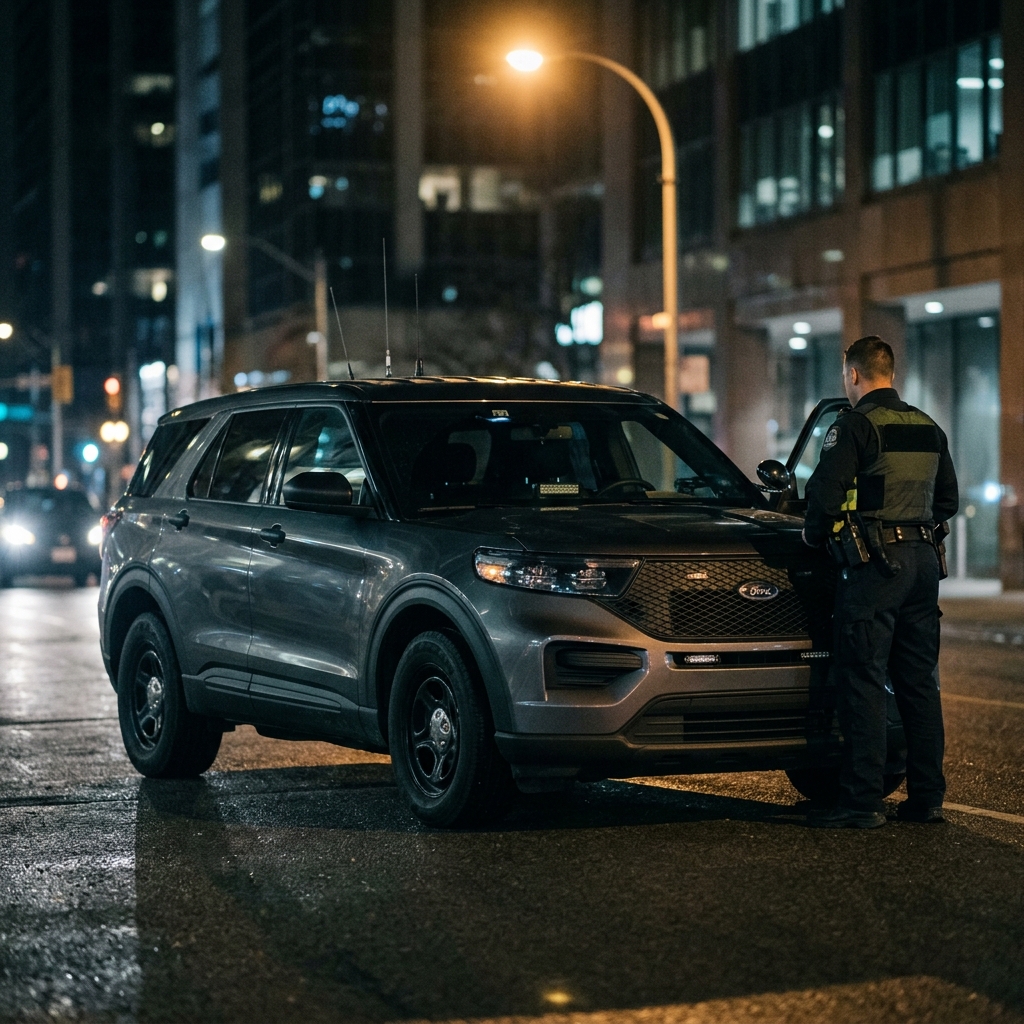
Drivers are often surprised to see red and blue lights suddenly flash from a plain sedan or SUV with no obvious police markings. Many people immediately wonder whether that vehicle is allowed to stop them, or if it might be a fake officer trying to pull them over. The legality of unmarked police cars is not the same everywhere, and the rules governing how they can be used depend heavily on state law and local policy.
This article explains what counts as an unmarked police vehicle, how different states regulate them, when officers may lawfully use them for traffic enforcement, and practical steps you can take if you feel unsafe during a stop. It is general information, not legal advice. For specific concerns about your situation, you should consult a licensed attorney in your state.
What Is Considered an Unmarked Police Car?
There is no single nationwide definition of an unmarked police vehicle, but state statutes and proposals tend to focus on the lack of visible identifiers that ordinary drivers associate with law enforcement.
- No standard police paint scheme (for example, no distinct color pattern commonly used by that agency).
- No permanent graphics or insignia identifying the vehicle as belonging to a police department.
- Hidden or removable lights, such as dash or visor lights instead of roof-mounted light bars.
- A standard license plate or civilian-looking registration, depending on local practice.
Some laws refer to vehicles that lack “standard colors, insignia, and other markings” that characterize regular patrol vehicles. Others describe a vehicle as unmarked unless it both displays authorized emergency lights, has an audible signal device like a siren or horn, and bears an identifying insignia.
It is also common to distinguish between:
- Unmarked patrol cars operated by uniformed officers for regular policing.
- Undercover vehicles used primarily for investigative work, where both the car and the officer’s appearance are intended to blend in.
Are Unmarked Police Cars Legal at All?
Unmarked police vehicles themselves are generally legal for law enforcement agencies to own and operate. The key questions are how they may be used and for what purposes. States take different approaches to those questions.
Broadly, states fall into three patterns:
- States that allow unmarked cars for most traffic enforcement.
- States that allow them only in limited circumstances.
- States that largely prohibit unmarked cars from routine traffic stops.
How States Regulate Unmarked Police Traffic Stops
Because traffic enforcement is largely a state responsibility, the rules about whether unmarked vehicles can make traffic stops vary widely. A comparative snapshot of common approaches is shown below.
| Regulatory Approach | Typical Features | Example States (illustrative) |
|---|---|---|
| Broad use permitted | Unmarked cars may patrol and stop drivers for traffic violations; officers must still identify themselves and use lights or sirens. | Some jurisdictions in Texas, Virginia, New Hampshire, and others allow this in various forms. |
| Limited use / safety-exception model | Unmarked cars cannot be used for routine traffic stops but may be used when there is a substantial threat to public safety (for example, suspected dangerous crime or reckless driving). | New Jersey law prohibits routine traffic enforcement by unmarked vehicles but allows them in serious public-safety situations. |
| Routine traffic enforcement discouraged | Unmarked vehicles may monitor traffic or begin a stop but are expected to yield to marked cars, especially in pursuits, or they may focus largely on non-traffic investigations. | Some states restrict unmarked cars to limited enforcement or require marked units to take the lead in chases. |
Some legislatures have considered or adopted statutes that expressly forbid the routine use of unmarked cars to stop motorists, except when public safety demands immediate intervention. These laws often stress that officers should use clearly marked vehicles for ordinary speeding or equipment violations, reserving unmarked cars for serious threats like violent felonies or extreme reckless driving.
Examples of State-Level Rules
The details of the law are different in each state, but a few examples help illustrate how varied the rules can be:
- New Jersey: A bill and subsequent law prohibit unmarked state and local police vehicles from being used for routine motor vehicle law enforcement. However, the same law allows unmarked vehicles to stop motorists when there is a substantial threat to public safety or when otherwise permitted by law.
- New York (proposals): Legislative proposals have sought to restrict the use of unmarked or concealed-identity police vehicles for routine traffic enforcement. Under such measures, unmarked cars could only stop drivers in exceptional situations presenting a substantial threat to public safety, and the vehicle would need visible lights, an audible signal, and an identifying insignia to avoid being considered unmarked.
- Other states: Surveys of state laws show that many jurisdictions permit unmarked vehicles to participate in traffic enforcement, sometimes requiring that officers be in uniform or display a badge and that a marked vehicle handle any high-speed pursuit when possible.
Because of this variation, your rights and an officer’s authority during a stop by an unmarked vehicle depend on the laws where the stop takes place.
Why Police Use Unmarked Vehicles
Law enforcement agencies use unmarked cars for several reasons, some controversial and some widely accepted.
- Traffic enforcement where drivers tend to slow only for marked vehicles: Officers in unmarked cars can observe genuine driving behavior rather than the temporary caution often triggered by a visible patrol unit.
- Investigations and surveillance: Undercover officers use unmarked vehicles to avoid detection while monitoring suspected criminal activity or following a suspect.
- Serious or violent crime response: In rare situations, non-uniformed officers in unmarked cars may intervene in an apparent violent crime or clear threat to public safety if they are the closest units to the scene.
- Officer safety and tactical advantages: Unmarked vehicles may reduce the risk that an officer becomes a targeted symbol of law enforcement in certain operations.
Departments must balance these operational needs against transparency, public trust, and the risk that citizens may feel unsafe stopping for a vehicle that does not obviously appear to be official.
Public Safety Concerns: Fake Officers and Confusion
One of the main reasons states regulate unmarked vehicles is the risk that criminals will impersonate officers. There have been documented cases of individuals equipping personal cars with flashing lights or other pseudo-police equipment to stop drivers illegally, sometimes to commit assaults, robberies, or other crimes.
As a result, many states criminalize the unauthorized use of emergency lights and police insignia, and drivers are encouraged to be cautious but law-abiding if they are unsure whether a vehicle is genuinely law enforcement. Some jurisdictions explicitly remind the public that officers in unmarked vehicles should be prepared to show identification and that drivers can request confirmation from dispatch.
Your Options If an Unmarked Car Tries to Stop You
If a vehicle that does not look like an ordinary patrol car activates lights or signals for you to pull over, you may feel unsettled. You still have a duty to comply with lawful orders, but you can take reasonable steps to protect yourself and verify the officer’s identity. Official guidance from police agencies and state transportation authorities often includes advice similar to the following:
1. Slow Down and Signal Acknowledgement
First, reduce your speed and activate your turn signal or hazard lights to show that you see the vehicle behind you. This both enhances safety and indicates you are not attempting to flee.
2. Choose a Well-Lit, Public Location
When possible, continue at a safe, reduced speed until you can stop in a location that is well-lit and populated, such as:
- A gas station forecourt
- A busy parking lot
- An area with streetlights and pedestrian traffic
Many agencies explicitly acknowledge that drivers—especially those traveling alone at night—may wish to find a safer place to pull over as long as they indicate compliance.
3. Call 911 to Verify
If you are in doubt about whether the vehicle is legitimate, you can call 911 (or the appropriate emergency number) and explain:
- Your location and direction of travel
- The description of the vehicle behind you
- That you are slowing down and looking for a safe place to stop
Dispatch can typically confirm whether a law enforcement officer is attempting to stop your vehicle in that area and can communicate with the officer during the stop.
4. Request Identification Once Stopped
Once you have stopped, you can calmly ask the person approaching your car to present official identification. Legitimate officers should be able to display:
- A badge
- Official photo identification
- Identification of their agency
Keep your hands visible, preferably on the steering wheel, and follow lawful instructions while you verify identity. If anything still feels wrong, keep talking with 911 dispatch if you initiated a call, or ask for a marked unit to come to the scene.
What Happens If You Refuse to Stop?
Failing to stop for police can itself be a crime. However, some states treat fleeing from unmarked vehicles differently from fleeing from clearly marked police cars. In certain jurisdictions, case law or statutes address when a driver may be charged with more serious offenses like aggravated fleeing if the pursuing vehicle is unmarked or the officer is not clearly identifiable.
Separately, some states require that an officer be in uniform or display a badge and that the vehicle bear law enforcement insignia in order for a driver’s refusal to stop to qualify for particular criminal charges. For example, state transportation codes may describe how an officer must signal a driver to stop, such as by using hand signals, lights, or sirens, while in a vehicle bearing police insignia.
Even where the law recognizes that drivers may reasonably be confused by unmarked vehicles, deliberately fleeing at high speed or driving dangerously is likely to lead to criminal charges. If you face charges arising from a stop that began with an unmarked car, it is important to seek legal counsel to evaluate how your state’s laws apply to your situation.
Key Differences Between Marked and Unmarked Traffic Stops
Although both marked and unmarked police vehicles can be involved in traffic stops, the experience and legal framework can differ.
| Feature | Marked Patrol Car | Unmarked Police Vehicle |
|---|---|---|
| Appearance | Distinctive colors, decals, agency name, visible light bar. | Looks similar to a civilian vehicle; may have hidden lights only. |
| Common Uses | Routine patrol and traffic enforcement. | Investigations, surveillance, selective traffic enforcement, and special operations. |
| Driver Perception | Immediate recognition as law enforcement. | May raise concerns about impersonation or safety. |
| Legal Restrictions | Usually allowed for all types of traffic stops. | Authority to make routine stops depends heavily on state law; some states limit or prohibit such use. |
How Unmarked Car Laws Affect Criminal Defense
When a traffic stop leads to criminal charges—for example, for impaired driving, drug possession, or illegal firearms—defense attorneys often examine the circumstances of the stop. The involvement of an unmarked vehicle can be legally important in several ways:
- Compliance with state statutes: If state law restricts unmarked vehicles from making routine traffic stops, a defense lawyer may argue that the officer lacked authority to initiate the stop, or that evidence obtained afterward should be suppressed.
- Reasonableness of the driver’s behavior: In states recognizing confusion about unmarked vehicles, a driver’s delay in pulling over or decision to move to a safer, well-lit location may be relevant to whether they were actually “fleeing.”
- Officer identification and signals: Courts may examine whether the officer activated proper lights and sirens, wore a recognizable uniform, or otherwise made it clear that they were law enforcement before the driver was accused of failing to stop.
Because these issues are highly dependent on state statutes and case law, a local criminal defense attorney is best positioned to evaluate whether the involvement of an unmarked vehicle affects the legality of a particular stop or subsequent arrest.
Practical Tips for Drivers
Regardless of where you live, a few practical guidelines can help you navigate encounters with unmarked police vehicles:
- Know the basics of your state’s law: Some state transportation departments or highway patrols publish explanations of how unmarked cars are used and what drivers should expect.
- Stay calm and signal: Use your indicators or hazard lights to show that you recognize the stop and are cooperating.
- Prioritize safety: Choose a well-lit, populated location when feasible, especially at night or in isolated areas.
- Use 911 if you are uncertain: Ask dispatch to confirm the legitimacy of the stop and stay on the line if you feel uneasy.
- Document the interaction when appropriate: If allowed by local law, recording audio or video of the stop from your phone or dashcam can help provide an accurate record of what happened.
Frequently Asked Questions
Can an unmarked police car legally pull me over?
In many states, yes. Uniformed officers in unmarked cars often have authority to stop drivers for traffic violations, although some states restrict or prohibit their use for routine enforcement and reserve them for serious public-safety concerns. You should check the law in your state.
How can I tell if a car is really an unmarked police vehicle?
Real unmarked police vehicles typically have hidden emergency lights, sirens, and radio equipment, and the officer will be able to present a badge and official identification. If you are uncertain, you can slow down, call 911, and ask dispatch to verify the stop while you proceed to a safe location.
Is it a crime to ignore an unmarked car that tries to stop me?
Refusing to stop when an officer lawfully signals you to do so can be a crime. However, some states treat fleeing from an unmarked car differently from fleeing from a clearly marked patrol vehicle, and courts may consider whether a reasonable person would have recognized the vehicle as police. Avoid high-speed flight—signal, slow down, and move to a safe place while verifying the officer’s identity.
Do officers in unmarked cars have to be in uniform?
Many states require that officers be in uniform or prominently display a badge when using an unmarked car for traffic enforcement, but the specifics vary by jurisdiction. Some states also require that the car itself bear certain insignia before particular offenses, such as felony evading, can be charged.
What should I do if I believe I was stopped illegally by an unmarked car?
Do not argue about legality on the roadside. Comply with lawful orders as safely as possible, then consult a criminal defense attorney afterward. Your lawyer can review state statutes, case law, and departmental policies to determine whether the stop violated local limits on unmarked vehicle use and whether that affects any charges against you.
References
- Are Unmarked Police Cars Legal? — FindLaw Editorial Team. 2023-10-04. https://www.findlaw.com/legalblogs/criminal-defense/are-unmarked-police-cars-legal/
- New Jersey Assembly Bill A343 (Prohibits use of unmarked police vehicles for routine traffic stops) — New Jersey Legislature. 1998-01-14. https://pub.njleg.gov/bills/9899/A0500/343_I1.HTM
- New York Senate Bill S289 (Use of unmarked police vehicles prohibited, with exceptions) — New York State Senate. 2009-01-07. https://www.nysenate.gov/legislation/bills/2009/s289
- Unmarked Police Car Laws by State — World Population Review. 2026-01-15. https://worldpopulationreview.com/state-rankings/unmarked-police-car-laws-by-state
- Understanding Unmarked & Undercover Police Vehicles — Prescott Valley Police Department. 2022-10-12. https://www.prescottvalley-az.gov/police_news_detail_T127_R399.php
Similar Articles








Read full bio of medha deb




