
Amish Buggy Dispute: Jail for Rejecting Safety Signs
Kentucky Amish men imprisoned over religious refusal to use orange buggy triangles, sparking debate on faith versus public safety laws.
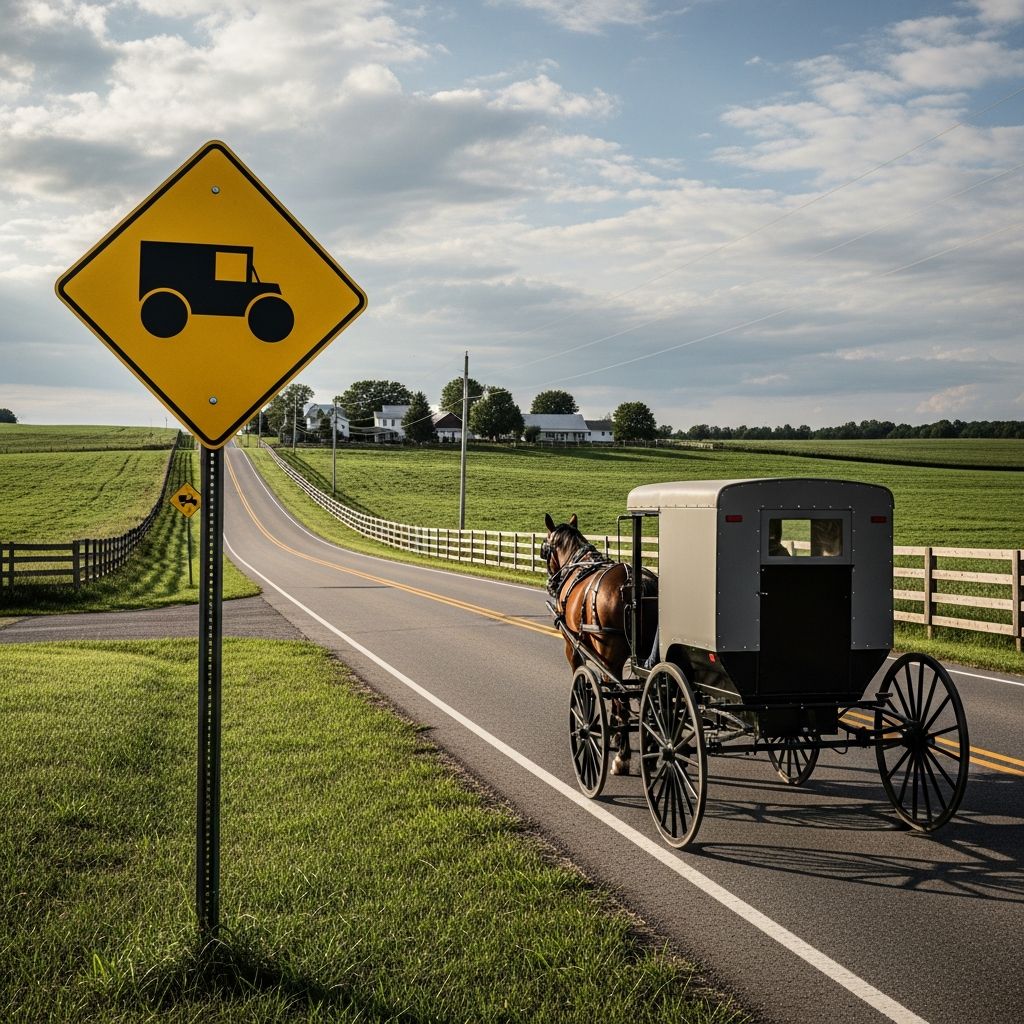
In a striking confrontation between religious convictions and state-mandated road safety, ten members of Kentucky’s Swartzentruber Amish community faced imprisonment in 2012 for refusing to display bright orange reflective triangles on their horse-drawn buggies. This incident highlighted deep tensions between individual faith practices and public safety regulations, drawing national attention to the limits of religious exemptions in modern law.
Background on the Swartzentruber Amish Community
The Swartzentruber Amish represent one of the most conservative branches of Amish society, residing primarily in rural areas of states like Kentucky, Ohio, and New York. Known for their strict adherence to traditional lifestyles, they shun most modern technologies, including electricity, automobiles, and even certain colors deemed too flashy. In Graves County, Kentucky, this community relies heavily on horse-drawn buggies for transportation, sharing roads with faster motor vehicles.
These buggies, traveling at speeds under 25 mph, pose unique safety challenges on public highways. To address visibility issues, Kentucky enacted a law in 1992 requiring slow-moving vehicles (SMVs) to display a fluorescent orange-red reflective triangle. This standard, adopted nationwide, aims to prevent rear-end collisions by alerting drivers to slower traffic ahead.
- Key Amish Beliefs: Emphasis on humility, simplicity, and reliance on divine protection over man-made symbols.
- Population Context: Graves County recorded 57 of Kentucky’s 89 SMV violations since 2007, mostly involving Amish buggies.
- Daily Impact: Buggies are essential for farming, shopping, and church travel, making compliance a daily moral dilemma.
The Spark: Violations and Initial Fines
Trouble began in 2007 and 2008 when local police issued citations to Swartzentruber Amish men for operating buggies without the required triangles. Fines ranged from $148 to over $600, including court costs, depending on prior offenses and specifics. The men viewed the bright orange sign as a violation of their religious vow to live modestly and avoid ostentation, believing safety comes from God, not symbols.
Instead of paying, they challenged the tickets in Graves County District Court, arguing the law infringed on their First Amendment rights to free exercise of religion. Initial convictions stood as misdemeanors, but appeals followed through the Graves Circuit Court and Kentucky Court of Appeals, which denied relief in June 2011.
| Defendant Example | Fine Amount | Sentence (Days) |
|---|---|---|
| Ananias Byler | $489 | 10 |
| Jacob Gingerich | $627 | 13 |
| Eli Zook | Undisclosed | 4 |
This table illustrates the variation in penalties, tied directly to unpaid fine amounts.
Courtroom Showdown: Judge Crooks’ Rulings
Presiding was District Judge Deborah Hawkins Crooks, who in early 2012 held hearings for the ten men. Ananias Byler, the first to appear on a Thursday, flatly refused his $489 fine. Judge Crooks acknowledged his religious stance, stating, “I totally understand your objection,” yet found him in contempt for nonpayment, sentencing him to 10 days in jail.
Jacob Gingerich, a father of 12 owing $627, echoed the defiance: “We’re just not going to pay.” He received 13 days. Eli Zook, needing to arrange family care and livestock tending, got four days but saw his fine paid by a sympathetic outsider, John Via, to care for Zook’s son with cerebral palsy.
The jailings were not for the original violations but for contempt via unpaid fines, a procedural escalation. Sentences lasted up to 13 days, disrupting farm lives during critical seasons.
Religious Freedom vs. Public Safety: Core Legal Debate
At heart, the case pitted Amish theology against highway safety imperatives. The Swartzentruber sect interprets biblical humility (e.g., Matthew 6:28-29 on lilies not spinning) as prohibiting bright colors and “worldly” markers. They proposed alternatives like silver reflectors or lanterns, but Kentucky law mandated the specific triangle for uniformity.
Legally, this invoked the Free Exercise Clause. Post-1990 Supreme Court ruling in Employment Division v. Smith, neutral laws of general applicability (like traffic rules) need not accommodate religion unless they target faith groups. Kentucky courts applied this, upholding convictions.
- Pro-Safety Argument: Triangles reduce accidents; data shows SMV emblems cut rear-end crashes by 70% in farm states.
- Pro-Religion Argument: State could allow gray reflectors, as later legislated, without compromising safety.
- Broader Implications: Echoes cases like Wisconsin v. Yoder (1972) on schooling, where Amish won exemptions.
Appeals Process and Supreme Court Intervention
Undeterred, the men appealed to the Kentucky Supreme Court. While jailed, they gained two wins: the high court agreed to review in 2012, and the legislature amended the law post-conviction, permitting alternatives like lantern lights or white reflective tape. However, the change didn’t retroactively apply.
In a divided 2012 ruling, the Kentucky Supreme Court upheld the convictions 4-3, ruling the state constitution doesn’t exempt religious objectors from general traffic laws. The dissent argued for stricter scrutiny, citing the law’s burden on sincere beliefs.
Life Impacts: Family Strains and Community Response
Jail terms meant uprooting from communal routines. Gingerich’s large family relied on his farming; Zook arranged milking for his cow and care for seven children, one disabled. Friends and non-Amish supporters rallied, with Via’s payment exemplifying external sympathy.
The Amish principle of Gelassenheit (yieldedness to God’s will) sustained them, but practical disruptions were real. Nationally, media coverage from CBS, Fox, and ACLU amplified their plight, pressuring lawmakers.
Legislative Aftermath and Policy Shifts
The uproar prompted Kentucky House Bill 451 in 2012, allowing buggies to use white reflective tape, gray panels, or battery-powered lanterns instead of orange triangles. This compromise respected Amish preferences while maintaining visibility, influencing similar laws elsewhere.
Today, such accommodations highlight evolving balances. No further mass jailings have occurred, but isolated violations persist in conservative sects.
Similar Conflicts Across the U.S.
This wasn’t isolated. In Ohio (2006), Amish rejected triangles, settling on lanterns after court battles. Pennsylvania and Indiana permit alternatives. Federally, the 1972 Yoder decision protects Amish education exemptions, setting precedent for lifestyle carve-outs.
| State | Accommodation | Year |
|---|---|---|
| Kentucky | Lanterns, white tape | 2012 |
| Ohio | Red lanterns | 2006 |
| Indiana | Gray reflectors | Ongoing |
Modern Perspectives on Religious Exemptions
By 2026, debates continue amid rising religious diversity. RFRA (Religious Freedom Restoration Act) offers federal protections, but states vary. Traffic laws remain strict, prioritizing uniformity. Amish population growth (doubling every 20 years) ensures ongoing friction.
Experts advocate site-specific solutions: education, slower zones near buggy routes. Yet, core tension endures—when does accommodation undermine public welfare?
Frequently Asked Questions (FAQs)
What was the main reason the Amish men refused the triangles?
They believed the bright orange color violated religious rules against flashy displays and reliance on man-made safety over God.
Did the men serve their full sentences?
Most did, though one had his fine paid externally; sentences ranged 4-13 days for contempt.
How did the law change after the case?
Kentucky allowed alternatives like lanterns, enacted weeks after initial jailings but not retroactive.
Was the Kentucky Supreme Court unanimous?
No, it was 4-3, upholding convictions under neutral law principles.
Are similar disputes still happening?
Occasionally in conservative Amish areas, but accommodations have reduced escalations.
References
- Amish men jailed for refusing to pay buggy fines — CBS News. 2012-01-12. https://www.cbsnews.com/news/amish-men-jailed-for-refusing-to-pay-buggy-fines/
- Kentucky Supreme Court Upholds Convictions in Amish Buggy Dispute — ACLU. 2012-07- (approx.). https://www.aclu.org/press-releases/kentucky-supreme-court-upholds-convictions-amish-buggy-dispute
- Ky. Amish men jailed for refusing safety triangles — Police1. 2012-01 (approx.). https://www.police1.com/bizarre/articles/ky-amish-men-jailed-for-refusing-safety-triangles-5ZMm0LXUyasZCuH6/
- Jailed Kentucky Amish men say reflective traffic triangles conflict with life pledge — Fox News. 2012-01 (approx.). https://www.foxnews.com/us/jailed-kentucky-amish-men-say-reflective-traffic-triangles-conflict-with-life-pledge
- Amish men jailed after horse-buggy safety dispute — HeraldNet. 2012-01-12. https://www.heraldnet.com/2012/01/12/amish-men-jailed-after-horse-buggy-safety-dispute/
Similar Articles








Read full bio of Sneha Tete




