
AI in Recruitment: Smart Tool or Legal Trap?
Discover the efficiency gains and hidden legal pitfalls of AI in hiring for modern businesses.
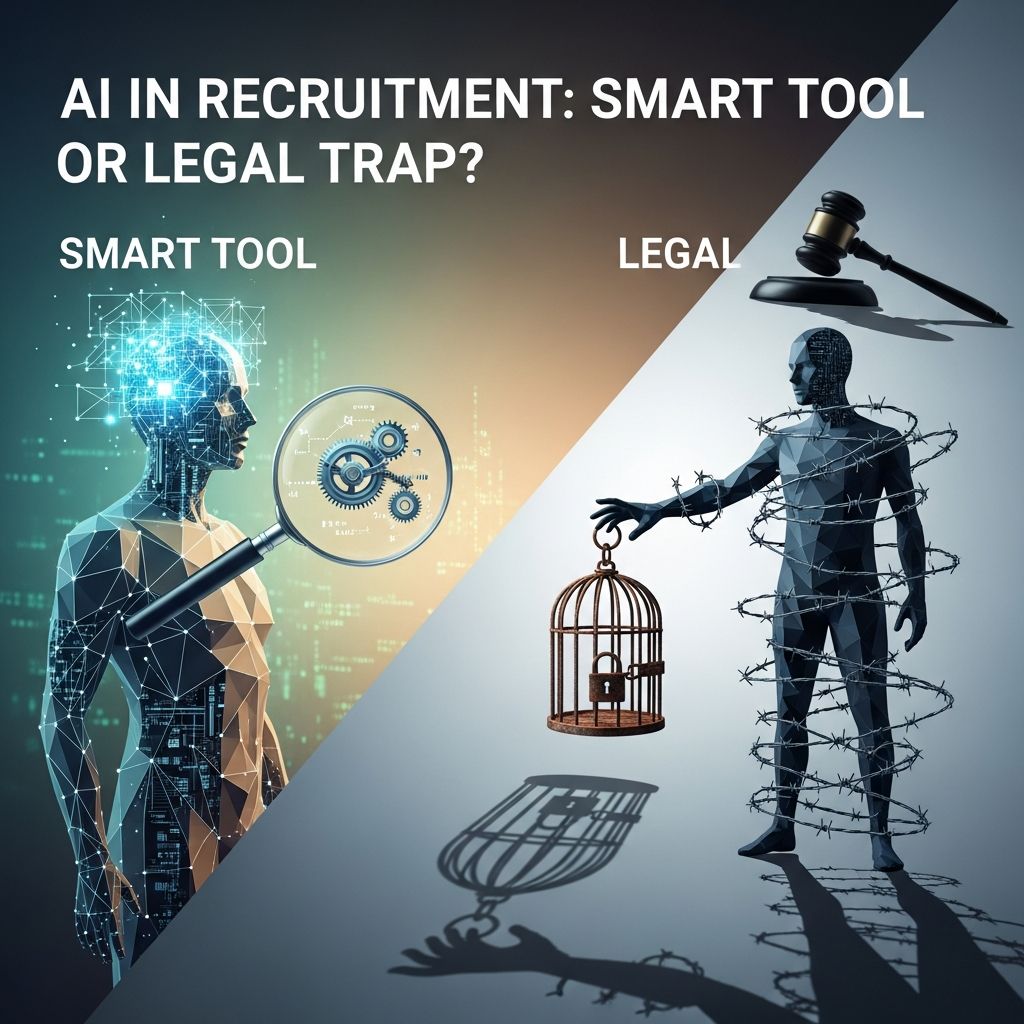
Artificial intelligence is reshaping how companies attract and select talent, promising faster processes and data-driven choices. Yet, beneath the surface of these innovations lie substantial legal and ethical challenges that demand careful management. This exploration delves into AI’s transformative power in hiring while highlighting the pitfalls that could undermine business goals.
Streamlining the Talent Acquisition Pipeline
AI tools excel at handling the high-volume, repetitive aspects of recruitment. By automating resume parsing, initial screenings, and even preliminary interviews, these systems drastically cut down on manual labor. For instance, algorithms can sift through hundreds of applications in minutes, identifying top matches based on predefined criteria like skills and experience.
This efficiency extends to predictive analytics, where AI examines historical data to forecast candidate success. Recruiters gain insights into patterns, such as optimal posting times or platforms that yield the best hires, allowing for more targeted outreach. In competitive markets, where speed is crucial, such capabilities enable businesses to secure talent before rivals.
- Automated Screening: Removes unqualified applicants early, focusing human effort on promising leads.
- Chatbot Interactions: Answers candidate queries around the clock, enhancing responsiveness.
- Video Analysis: Evaluates non-verbal cues consistently across interviews, minimizing subjective judgments.
Organizations report significant time savings; one study notes up to 23 hours per hire freed from routine tasks, redirecting HR toward strategic initiatives.
Cost Reductions and Resource Optimization
Beyond time, AI delivers measurable financial benefits. Traditional hiring often involves hefty costs for job boards, agency fees, and prolonged vacancies. AI mitigates these by optimizing every stage—from crafting job descriptions to matching candidates precisely.
Small businesses, in particular, stand to gain. With 65% already adopting AI for HR functions like recruiting, they leverage tools that scale without proportional expense increases. Predictive matching reduces mismatched hires, lowering turnover costs that can exceed 50% of an employee’s annual salary.
| Traditional Hiring | AI-Enhanced Hiring |
|---|---|
| Manual resume review: 10-20 hours per role | Automated: Under 1 hour |
| High agency fees: $5,000+ per hire | Internal AI tools: Minimal ongoing costs |
| Subjective bias risk | Data-focused objectivity (when managed) |
These shifts not only trim budgets but also improve candidate experiences through personalized communications, boosting employer branding.
The Double-Edged Sword of Bias Mitigation
Proponents argue AI promotes fairness by stripping away personal details like names or photos from resumes, enforcing evaluations on merit alone. Objective criteria replace gut feelings, potentially leveling the playing field.
However, this promise falters when systems inherit flaws from training data. If past hires skewed toward certain demographics, AI perpetuates those patterns, filtering out diverse talent. A ‘black box’ effect—where decision logic remains opaque—complicates accountability, inviting discrimination claims under laws like Title VII.
Real-world examples abound: tools favoring male-coded language or penalizing resume gaps from caregiving. Employers must audit regularly, yet many overlook this, assuming tech neutrality.
Navigating Privacy and Data Security Hurdles
AI thrives on vast datasets, raising alarms over candidate information handling. Regulations like GDPR and CCPA mandate consent, transparency, and secure storage—obligations intensified by AI’s processing scale.
Candidates worry about surveillance in video interviews or perpetual data retention. Breaches erode trust, while non-compliance triggers fines up to 4% of global revenue. Clear policies, notifying applicants of AI use, are non-negotiable.
Impact on Current Workforce Dynamics
AI’s reach extends beyond newcomers, influencing performance tracking for incumbents. While useful for spotting skill gaps or productivity trends, it risks demoralizing staff through perceived monitoring.[10]
Employees may fear job displacement, fostering resentment. Transparent rollout, paired with upskilling programs, preserves morale and leverages AI for internal mobility rather than replacement.
Evolving Regulatory Landscape
Lawmakers are responding swiftly. States like New York, Colorado, Illinois, and Utah enforce AI hiring rules, requiring bias impact assessments and disclosures. Federally, EEOC guidance stresses adverse impact analysis, treating AI like any selection tool.
Global variations add complexity for multinationals. Proactive compliance—audits, human oversight, documentation—shields against litigation.
Best Strategies for Responsible AI Deployment
To harness benefits while dodging risks:
- Diverse Training Data: Curate inclusive datasets reflecting varied backgrounds.
- Human-in-the-Loop: Reserve final decisions for people, especially subjective traits like leadership.
- Ongoing Audits: Test outputs quarterly for disparities across protected classes.
- Candidate Transparency: Disclose AI involvement upfront.
- Vendor Vetting: Demand proof of compliance from tool providers.
Hybrid models—AI for volume, humans for nuance—yield optimal results.
Future Horizons: AI’s Maturing Role
Advancements like explainable AI promise demystified decisions, easing regulatory hurdles. Integration with skills ontologies will prioritize potential over pedigree, diversifying pipelines.
Yet, ethical frameworks must evolve alongside. Businesses leading with responsibility will not only comply but pioneer inclusive practices, gaining competitive edges in talent wars.
Frequently Asked Questions
Can AI completely eliminate bias in hiring?
No, AI can amplify existing biases from flawed data. Regular audits and human oversight are crucial to mitigate risks.
What legal laws govern AI in U.S. hiring?
Federal laws like Title VII apply, plus state rules in NY, CO, IL, UT requiring disclosures and assessments.
Should I inform candidates about AI use?
Yes, transparency builds trust and meets privacy regs like CCPA.
Is AI suitable for small businesses?
Absolutely; 65% use it for efficiency, but start simple with audits.
How does AI affect employee morale?
It can cause anxiety over monitoring; communicate benefits and limits.
References
- AI in hiring: Practical risks employers need to keep in mind — BDB Law. 2024. https://bdblaw.com/ai-in-hiring-practical-risks-employers-need-to-keep-in-mind/
- The benefits (and the downsides) of AI for the recruitment sector — Sonovate. 2024. https://www.sonovate.com/blog/the-benefits-and-the-downsides-of-ai-for-the-recruitment-sector/
- AI transforms HR hiring with speed and legal concerns — Rochester Business Journal. 2025-04-24. https://rbj.net/2025/04/24/ai-in-hr-hiring-legal-risks-and-benefits/
- The Pros and Cons of Using AI in Recruitment — USEH International. 2024-05-23. https://www.useh.org/2024/05/23/the-pros-and-cons-of-using-ai-in-recruitment/
- AI in hiring: the pros and cons — Robert Walters USA. 2024. https://www.robertwalters.us/insights/hiring-advice/blog/ai-in-hiring-the-pros-and-cons.html
- AI in hiring. Benefits, risks, and how to use AI responsibly — Devstark. 2024. https://www.devstark.com/blog/pros-and-cobs-of-ai-in-hr/
Similar Articles








Read full bio of medha deb




