
Affidavit for Child Custody in California: A Practical Guide
Learn how California child custody affidavits work, why courts require them, and how to complete and use them effectively in your case.
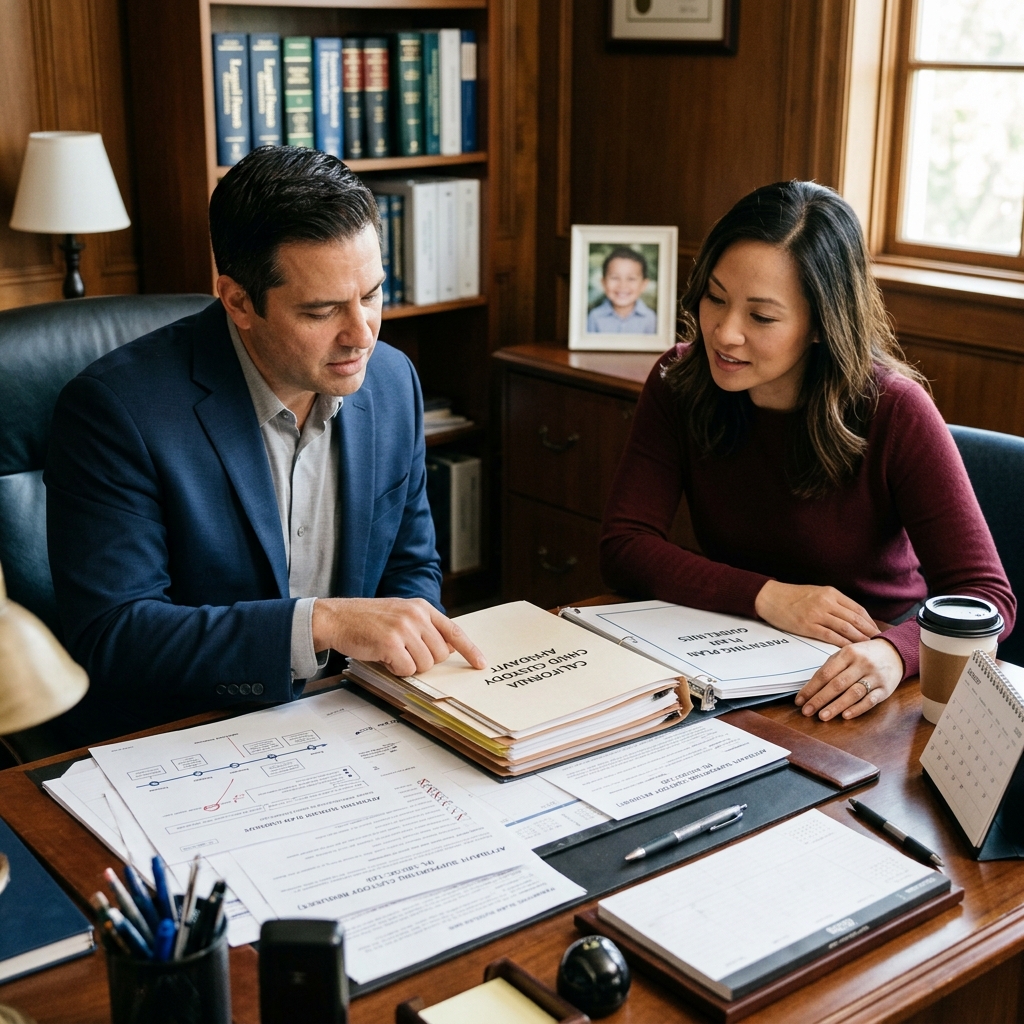
When a child custody case begins in California, parents are required to file a sworn statement about the child’s residence and prior custody history. This document, commonly referred to as an affidavit for child custody, is essential for the court to determine whether it has authority to make custody orders and to protect the child from conflicting decisions issued in different states.
This guide explains what the affidavit is, why California courts require it, how it fits into the larger custody process, and practical steps to complete the form accurately and effectively.
Understanding the California Child Custody Affidavit
In California, the affidavit for child custody is formally known as the Declaration Under the Uniform Child Custody Jurisdiction and Enforcement Act (UCCJEA), filed on Judicial Council form FL-105/GC-120.
The UCCJEA is a uniform law adopted by most states to prevent conflicting custody orders when a child has lived in multiple states. California has incorporated the UCCJEA into its Family Code, primarily in sections 3400–3465, which govern how courts determine jurisdiction for custody and visitation matters.
Core Purpose of the Affidavit
- Establish court jurisdiction: The affidavit helps the judge decide whether California is the child’s “home state” or has another basis for jurisdiction, such as significant connections or emergency grounds.
- Prevent competing custody orders: By disclosing prior or pending cases, the court can avoid issuing orders that conflict with orders from another state.
- Provide background information: The declaration summarizes the child’s residence history, who the child lived with, and any known claims to custody or visitation, supporting best‑interest decisions.
Because of its jurisdictional function, the affidavit is not optional. California courts require it to be filed at the outset of any case that involves custody or visitation for minor children.
When the Affidavit Is Required
Any time you ask a California court to issue custody or visitation orders, you will almost always need to submit a UCCJEA declaration. This includes:
- Starting a petition for custody and support of minor children (form FL-260).
- Bringing custody issues into a divorce, legal separation, or parentage case.
- Filing a Request for Order (form FL-300) seeking new custody orders or a change to existing orders.
California’s self-help resources specifically list the UCCJEA declaration (FL-105/GC-120) among the required forms when beginning a custody and support case. Even if both parents fully agree on custody arrangements, the court still needs the affidavit to confirm jurisdiction and ensure compliance with the UCCJEA framework.
Key Information You Must Disclose
The affidavit is highly detailed. Expect to provide specific, chronological information about the child’s living arrangements and prior cases. Typical categories include:
Residence History
- Addresses where the child has lived for the past five years (or since birth if younger).
- Dates the child lived at each address, including month and year.
- Names of adults who lived with the child at each location and their relationship to the child.
This information helps the court determine which state is the child’s home state under the UCCJEA—generally, where the child has lived for at least six consecutive months immediately before the case was filed.
Prior and Pending Custody Proceedings
- Any past custody, visitation, or guardianship cases involving the child in any state or country.
- Case numbers, locations, and dates of those proceedings, if known.
- Details of any current or pending cases concerning custody, visitation, or child protection issues.
Complete disclosure is critical. If you omit information about other proceedings, the court may question your credibility or later modify orders once the missing information is discovered.
Other Persons With Custody or Visitation Claims
- Names and addresses of anyone who claims, or may claim, rights to custody or visitation, including parents, grandparents, or other relatives.
- Explanation of their relationship to the child and the nature of the claim (for example, primary caretaker, legal guardian, or seeking visitation).
This disclosure allows all potentially interested parties to be notified and heard before the court issues custody orders.
How the Affidavit Fits Into the Custody Process
The affidavit is one piece of a broader set of court forms and procedures required in California custody matters. Understanding its role in context helps you approach your case strategically.
| Step in Process | Typical California Form | Role of the Affidavit |
|---|---|---|
| Starting a custody/support case | FL-260 (Petition), FL-210 (Summons) | FL-105/GC-120 affidavit filed with petition to establish jurisdiction. |
| Requesting custody orders | FL-300 (Request for Order) | Affidavit provides background so court can hear custody issues. |
| Detailing your parenting plan | FL-311 and related attachments (optional). | Affidavit confirms which court should enforce your plan. |
| After the hearing | FL-340 (Findings and Order After Hearing). | Final orders reflect jurisdiction established via affidavit. |
California’s official self-help materials emphasize that the UCCJEA declaration is one of the core forms you must complete, sign, and file along with your petition in custody/support cases.
Completing the Affidavit: Practical Tips
Because the affidavit is a sworn statement, accuracy and thoroughness are crucial. The following practical guidance can help you complete the form properly.
Gather Information Before You Start
- List every address where your child has lived over the last five years.
- Identify approximate move‑in and move‑out dates for each address.
- Confirm the full legal names of all adults who lived with the child.
- Collect case information for any prior custody, guardianship, or child protection proceedings.
Having this information ready will make the form easier to complete and help you avoid omissions.
Follow Official Form Instructions
Use the current Judicial Council version of FL-105/GC-120 and read all instructions printed on the form. California courts and Self-Help Centers provide guidance on how to fill out required fields, sign the declaration, and attach additional pages if needed.
Generally, you should:
- Type or print clearly in black or blue ink.
- Complete all required sections and mark “not applicable” only where appropriate.
- Attach additional sheets if the residence history or case history does not fit in the provided space.
- Sign and date the affidavit under penalty of perjury.
Common Mistakes to Avoid
- Leaving gaps in the residence history: Courts need a continuous timeline; do not skip months or years.
- Failing to mention out-of-state proceedings: All prior custody-related cases must be disclosed, even if they resulted in no orders.
- Using nicknames or incomplete names: Always use full legal names for adults and children.
- Assuming agreements replace the affidavit: Parent agreement about custody does not remove the UCCJEA requirements.
Jurisdiction and the Child’s Home State
The affidavit is critical because California courts cannot simply take jurisdiction over custody matters based on convenience or preference. They must follow the UCCJEA rules set out in the Family Code.
Home State Jurisdiction
Under the UCCJEA, a child’s “home state” is generally the state where the child has lived with a parent (or a person acting as a parent) for at least six consecutive months immediately before the case begins. For infants younger than six months, the home state is where the child has lived since birth.
The residence history in the affidavit allows the court to determine whether California qualifies as the home state, or whether another state has priority.
Other Bases for Jurisdiction
Even if California is not the home state, the court may still be able to act in limited circumstances, such as:
- Significant connection jurisdiction: The child and at least one parent have substantial ties to California, and important evidence about the child’s care, protection, or relationships is located in the state.
- Emergency jurisdiction: The child is present in California and requires immediate protection because of mistreatment, abandonment, or threats to safety.
Information disclosed in the affidavit helps the judge decide whether these alternative jurisdiction grounds apply.
Interaction With Other Affidavits and Authorizations
California uses several types of affidavits related to children. It is helpful to understand how the UCCJEA declaration differs from other forms, such as caregiver authorization documents.
Caregiver’s Authorization Affidavit
A Caregiver’s Authorization Affidavit is a separate form that allows a non-parent caregiver to make certain education and, in some cases, medical decisions for a child who lives with them, without establishing full legal guardianship.
- It can be signed by any adult who qualifies as a caregiver under California law, including non-relatives.
- Qualified relatives may also use it to consent to medical care.
- Schools and medical providers must accept a properly completed caregiver affidavit under California statutes.
- The parents do not need to sign, and the form does not need to be notarized.
Unlike the UCCJEA declaration, a caregiver’s affidavit does not give the caregiver custody rights or ask the court to issue custody orders. It merely authorizes certain decisions while the child lives with the caregiver.
Filing and Serving the Affidavit
Filing With the Court
Once you complete and sign the affidavit, you must file it with the other initial documents in your case at the appropriate California Superior Court. Official guidance emphasizes the importance of filing in the county where the child lives or can be found, and where family law cases are heard.
- File the original signed affidavit along with your petition and summons.
- Make at least two copies—one for your records and one to serve on the other parent or party.
- Pay the required filing fee or submit a fee waiver request if you qualify.
Service on the Other Party
The affidavit, along with the petition and other forms, must be properly served on the other parent or party according to California rules of service. Courts often require personal service or allow service by mail with a signed proof of service form, depending on the specific procedure in your case.
It is important to:
- Use an adult over 18 who is not a party to the case to complete service.
- Ensure that all filed forms, including the affidavit, are listed on the proof of service.
- File the proof of service with the court ahead of the hearing whenever possible.
Best‑Interest Standard and the Affidavit
Although the affidavit primarily addresses jurisdiction, the information it contains can also indirectly influence substantive decisions about custody. California courts use a “best interest of the child” standard when deciding how to allocate legal and physical custody.
By outlining the child’s residence history and relationships with caregivers, the affidavit helps the court understand:
- Stability and continuity in the child’s living arrangements.
- The presence or absence of involved parents and other caregivers.
- Potential risks associated with particular environments or moves.
You should always ensure that the information in the affidavit is consistent with arguments you present in other declarations or attachments about why your proposed orders serve the child’s best interests.
Frequently Asked Questions
Is the child custody affidavit required even if both parents agree?
Yes. Agreement between parents does not remove the requirement to file the UCCJEA declaration. The court still must determine jurisdiction and confirm that issuing orders in California complies with the UCCJEA and California Family Code.
What happens if I forget to list a prior out-of-state case?
If a prior case is discovered later, the court may revisit jurisdiction, potentially alter orders, or require coordination with the other state. Omitting information can damage your credibility and complicate enforcement, so it is essential to disclose all known proceedings from the outset.
Do I need to have the affidavit notarized?
The UCCJEA declaration is typically signed under penalty of perjury rather than notarized, using the signature spaces provided on the Judicial Council form. Always follow the specific instructions printed on the form and any local court rules.
Can a caregiver’s authorization affidavit replace a custody order?
No. The caregiver’s authorization affidavit allows caregivers to make education and certain medical decisions, but it does not create court-ordered custody rights or modify existing custody orders. For formal changes to custody or visitation, you must proceed through the court and file the required custody forms, including the UCCJEA affidavit.
Where can I get help filling out the affidavit?
California Superior Courts often have Self-Help Centers or Family Law Facilitators who can explain how to complete court forms, including the UCCJEA declaration. Official court websites and self-help portals provide instructions and downloadable forms for custody and support cases.
References
- Affidavit for Child Custody in California — LegalMatch. 2024-01-10. https://www.legalmatch.com/law-library/article/affidavit-for-child-custody-in-california.html
- Start a Petition for Child Custody and Support — Judicial Council of California, Self-Help Guide. 2024-05-01. https://selfhelp.courts.ca.gov/petition-custody-support/fill-forms
- Child Custody — Superior Court of California, County of Orange, Self-Help Family Law. 2023-08-15. https://www.occourts.org/self-help/self-help-family-law/child-custody
- FL-260 Petition for Custody and Support of Minor Children — Judicial Council of California. 2024-11-01. https://courts.ca.gov/sites/default/files/courts/default/2024-11/fl260.pdf
- Caring for Another’s Child: Caregiver’s Authorization Affidavit — Sacramento County Public Law Library. 2022-09-30. https://saclaw.org/resource_library/caring-for-anothers-child-caregivers-authorization-affidavit/
- Child Support and Custody Form Packets — Superior Court of California, County of San Joaquin. 2023-06-01. https://www.sjcourts.org/forms-and-filing/form-packets/child-support-and-custody
- How To File For Custody In California — Los Angeles County Bar Association Family Law Resource. 2023-04-10. https://www.lafamilylaw.org/resources/child-custody/
Similar Articles








Read full bio of medha deb


