
When Police Take Your Property: Rights, Seizure & Forfeiture
Understand when police can take your possessions, how seizure and forfeiture work, and the practical steps to protect and reclaim your property.
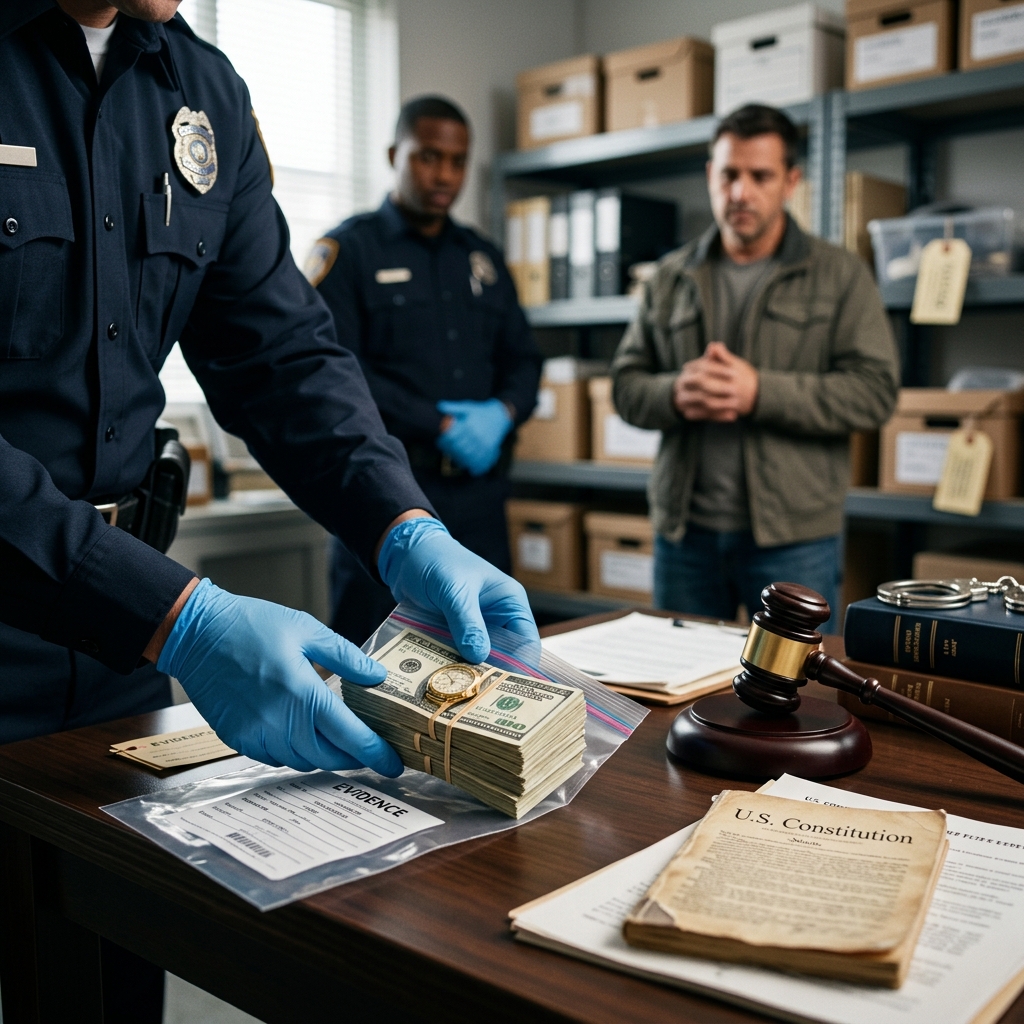
Police in the United States have broad authority to take property in certain situations, but that power is limited by the Constitution, federal and state statutes, and court decisions. Understanding when a seizure is lawful, when it crosses the line, and how asset forfeiture works is critical if you want to protect your rights and recover what was taken.
Why Police Can Take Property at All
Law enforcement is permitted to seize property primarily for two reasons: to preserve evidence connected to a crime, and to remove assets believed to be linked to criminal activity. These powers are rooted in criminal procedure and forfeiture laws that aim to disrupt criminal enterprises and support investigations.
However, the same laws that give police these powers also impose safeguards. The Fourth Amendment prohibits unreasonable searches and seizures, requiring either warrants or well-defined exceptions, and due process principles require fair procedures when the government attempts to permanently keep property.
Key Legal Concepts: Seizure, Confiscation, and Forfeiture
| Term | What It Means | Typical Consequences |
|---|---|---|
| Seizure | Temporary taking of property by police, often during an arrest, search, or investigation. | Property is held as evidence or for safekeeping; may be returned when the case ends or by court order. |
| Confiscation | Informal term for taking and keeping property; usually refers to government control with intent not to return. | May occur through forfeiture or as a penalty; legal basis must exist, or the taking may be unconstitutional. |
| Forfeiture | Legal process where ownership of property is transferred from the owner to the government because the property is connected to crime. | Permanent loss of property unless the owner successfully contests the forfeiture. |
When Police May Lawfully Seize Your Property
Police cannot simply take property at will. A lawful seizure generally requires a legal basis such as a warrant, an arrest, or specific exceptions recognized by law. While details vary by state, several common scenarios appear nationwide.
Seizure Incident to Arrest or Search
Many state laws allow police to seize personal property without prior court process when it is taken during a lawful arrest or a lawful search under a valid warrant. This includes items that:
- Are themselves contraband, such as illegal drugs or unlicensed weapons.
- May be evidence of a crime, such as phones, computers, financial records, or cash.
- Are needed to ensure safety, like temporarily securing firearms at a crime scene.
Seizure Under Asset Forfeiture Laws
Asset forfeiture laws permit police to seize property believed to be used in, or derived from, certain criminal offenses, particularly drug crimes and financial crimes. Under many statutes, property may be taken:
- When officers have probable cause to believe the property is connected to an offense subject to forfeiture.
- During investigations targeting criminal organizations, fraud, money laundering, and drug trafficking.
Some model acts and state laws require that the government file a forfeiture charge within a short period after seizure, describing what was taken, when, and why, and identifying potential claimants. These requirements are meant to prevent indefinite, unexplained possession of property.
Emergency or Exigent Circumstances
Police may seize property without a warrant when urgent conditions exist, such as the risk that evidence will be destroyed or public safety is threatened. Even in those situations, subsequent judicial review is usually required to justify the seizure and any continued retention of the property.
Civil vs. Criminal Forfeiture
Once property has been seized, the government may pursue either criminal forfeiture or civil forfeiture, or both. The procedures and burdens of proof differ significantly.
Criminal Forfeiture
Criminal forfeiture is tied to a criminal case against a person. The government seeks to forfeit property as part of the defendant’s sentence after a conviction. Key features include:
- The owner is a criminal defendant facing charges.
- Forfeiture is usually authorized by specific criminal statutes (for example, drug laws covering property used to commit drug crimes).
- The prosecution must prove the underlying offense and the connection between the property and the crime, typically beyond a reasonable doubt in federal criminal cases.
Civil Forfeiture
Civil forfeiture is different: the case is technically against the property itself, not necessarily the owner. In many jurisdictions, the owner does not need to be arrested or convicted for the government to try to keep the property.
- Police may seize cash, vehicles, real estate, and other assets based on an allegation of involvement with crime.
- The government must prove in court that the property is connected to illegal activity, often by a standard such as preponderance of the evidence or clear and convincing evidence, depending on the jurisdiction.
- Owners may have to affirmatively contest the forfeiture and show that the property was lawfully obtained and not used for crime.
Some reforms in certain states have increased the government’s burden of proof and directed forfeiture proceeds away from law enforcement budgets to reduce incentives for overuse.
Common Types of Property Subject to Seizure
In practice, a wide range of items may be taken by law enforcement, including:
- Cash and bank accounts suspected of being drug proceeds, fraud gains, or laundered funds.
- Vehicles allegedly used to transport drugs or commit offenses.
- Homes and real estate connected to criminal enterprises, such as properties used for illegal drug manufacturing.
- Electronics and digital devices used to plan or execute crimes or containing evidence.
- Weapons tied to violent offenses or illegally possessed guns.
Warning Signs of an Unlawful or Abusive Seizure
Although police have legal authority to take property, abuses and illegal seizures do occur. Recognizing potential violations helps you respond quickly. According to civil rights and criminal defense practitioners, seizures may be unlawful when:
- There is no warrant, no arrest, and no clear legal basis for the seizure.
- Officers refuse to provide any documentation or receipt for the property.
- Items unrelated to any suspected crime are taken without explanation.
- Property is not recorded in official logs or evidence systems.
- The owner is never charged, yet the property is held indefinitely with no forfeiture case filed.
The ACLU has highlighted instances where civil forfeiture allowed police to keep or sell property even though owners were never arrested or convicted, raising serious due process concerns.
What Should Happen After Police Take Your Property
When property is seized, several procedural steps are supposed to occur to protect both the integrity of the investigation and your rights.
Documentation and Receipts
Agencies typically must document seized property with detailed records describing the item, the date and place of seizure, the agency involved, and the legal basis for taking it. Property vouchers or receipts should be provided to the person from whom items are taken, allowing them to track and later claim their property.
Filing of Forfeiture Charges
Model forfeiture policies and many state laws require the government to file formal forfeiture charges within a set time, sometimes 30 days, after a seizure or upon filing related criminal charges. These filings usually must include:
- A description of the property seized.
- The date and location of the seizure.
- The name and address of the seizing law enforcement agency.
- The statutory grounds for forfeiture and factual allegations.
- Identification of persons believed to have an interest in the property.
Owner Rights to Hearings
Defendants and third parties often have a right to a pretrial hearing to challenge the validity of a seizure or restraining order on property. At this stage, courts may examine whether probable cause existed and whether continued holding of the property is justified pending trial.
How to Protect Yourself When Police Take Your Possessions
If your property has been seized, acting promptly and methodically can make a critical difference in whether you recover it.
Immediate Practical Steps
- Record details right away. Write down the date, time, location, officers’ names and badge numbers, and a list of everything taken.
- Request documentation. Ask for a property receipt, voucher, or inventory of seized items.
- Preserve communications. Keep copies of any notices of seizure, letters about forfeiture, or court papers.
- Consult a criminal defense or civil rights attorney quickly. Deadlines for challenging forfeiture can be short and strict.
Legal Options to Seek Return of Property
Depending on the situation, an attorney may use several tools to pursue the return of your possessions or compensation:
- Motion for return of property if items are held as evidence but charges are dismissed or no longer pending.
- Challenging the search or seizure through motions to suppress evidence in the criminal case, which may also support later recovery of seized items.
- Contesting civil forfeiture by filing claims and answers in the forfeiture proceeding, forcing the government to prove its case.
- Civil rights lawsuits under statutes like 42 U.S.C. § 1983 for unconstitutional seizures and due process violations.
Risks and Obstacles in Getting Property Back
Even when owners have strong arguments, practical challenges can arise:
- Burden of proof on the owner. In some states, owners must prove their property is not connected to crime after a seizure has occurred.
- Complex procedures. Forfeiture cases often involve specialized rules, short filing deadlines, and technical requirements.
- Resource imbalance. Prosecutors and law enforcement may have institutional support and incentives to defend forfeitures.
- Default judgments. If owners do not respond or cannot navigate the process, property may be permanently forfeited by default.
Policy Debates and Reform Efforts
Civil forfeiture has generated significant debate. Advocacy organizations argue that allowing police to seize and keep property without a conviction encourages overuse and undermines due process. In response, some legislatures have adopted reforms such as:
- Requiring a criminal conviction before certain forfeitures, especially of primary residences or vehicles.
- Raising the government’s burden of proof to clear and convincing evidence.
- Redirecting forfeiture proceeds to general state funds instead of police budgets to reduce profit motives.
- Mandating detailed reporting on forfeiture practices to improve transparency.
Frequently Asked Questions (FAQs)
Can police take my property if I am never charged with a crime?
Yes, in many jurisdictions police may seize property under civil forfeiture laws even if you are not charged or convicted, as long as the government alleges the property is involved in crime and pursues a forfeiture case.
Is a warrant always required for police to seize my belongings?
No. Police may seize property without a warrant in specific circumstances, such as seizures incident to a lawful arrest or during a lawful search under an existing warrant, and in some cases under forfeiture statutes when statutory conditions are met.
How long can police hold my property?
The duration depends on whether the property is held as evidence, for safekeeping, or under forfeiture proceedings. Laws in some states require the government to file forfeiture charges within set time frames and provide opportunities for hearings to challenge continued retention.
What if I receive a notice of intended forfeiture?
A notice of intended forfeiture signals that the government aims to permanently keep your property. It typically includes information about deadlines and procedures for contesting the forfeiture. You should contact an attorney immediately because failing to respond may result in automatic loss of the property.
Can I get compensation if my property was illegally seized or lost?
In some cases, owners may seek monetary compensation through civil rights lawsuits, tort claims, or statutory remedies if the property was unlawfully taken, damaged, or not properly returned. Success depends on demonstrating a violation of constitutional or statutory protections.
References
- Asset Forfeiture — Federal Bureau of Investigation. 2024-01-01. https://www.fbi.gov/investigate/white-collar-crime/asset-forfeiture
- Asset Forfeiture Process and Private Property Protection Act — American Legislative Exchange Council. 2016-01-01. https://alec.org/model-policy/asset-forfeiture-process-and-private-property-protection-act/
- RCW 19.290.230 – Seizure and forfeiture — Washington State Legislature. 2010-07-01. https://app.leg.wa.gov/rcw/default.aspx?cite=19.290.230
- When Police Confiscate Your Property Illegally — Horn Wright, LLP. 2023-05-01. https://www.hornwright.com/civil-rights-law/when-police-confiscate-your-property-illegally-y/
- Civil forfeiture in the United States — Overview based on primary legal sources. 2022-01-01. https://en.wikipedia.org/wiki/Civil_forfeiture_in_the_United_States
- Asset Forfeiture Abuse — American Civil Liberties Union. 2020-09-01. https://www.aclu.org/issues/criminal-law-reform/reforming-police/asset-forfeiture-abuse
- Forfeiture Cases and Money Seizures — John Deckers Law. 2021-03-01. https://www.johndeckerslaw.com/forfeiture-cases-and-money-seizures
Similar Articles








Read full bio of medha deb




