
Miranda v. Arizona and the Rights of the Accused
How a landmark ruling reshaped police questioning, custody, and constitutional rights.
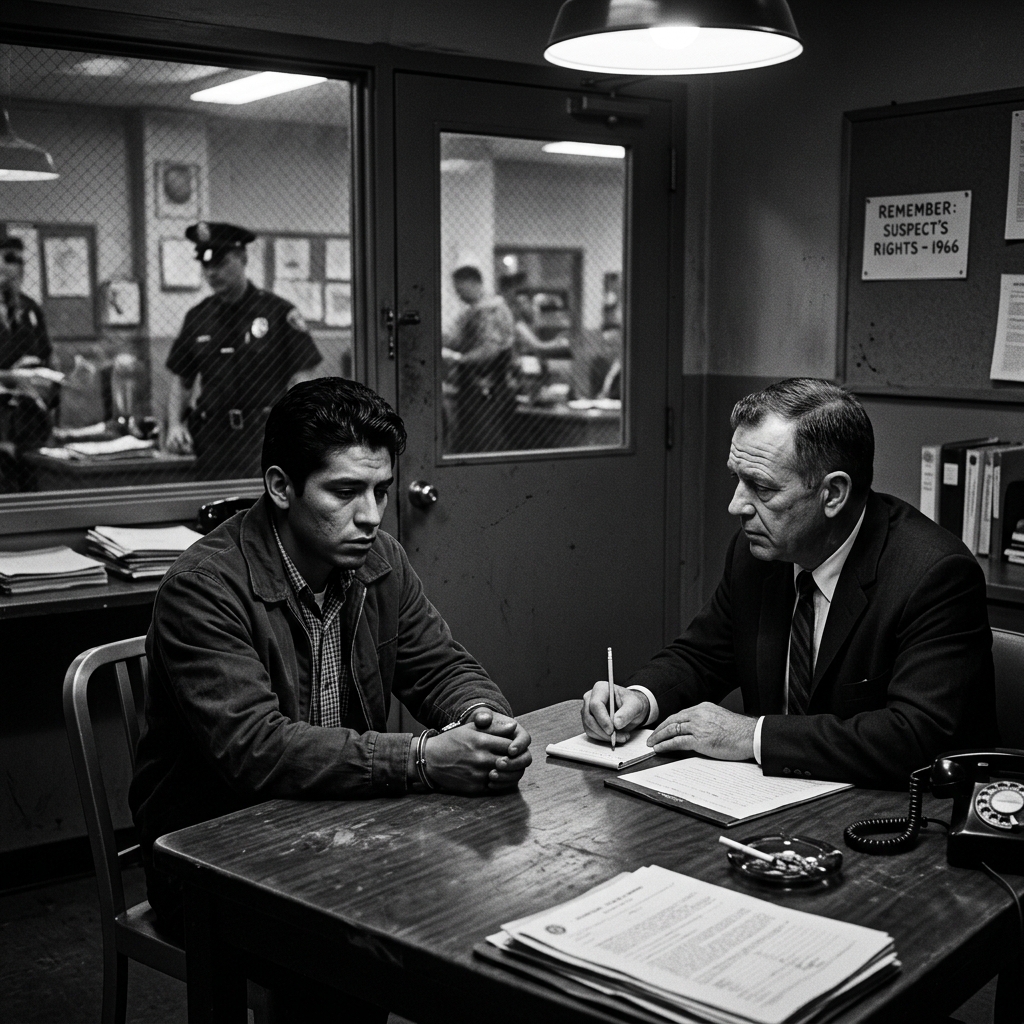
Few Supreme Court decisions are as widely recognized as Miranda v. Arizona, a case that changed the way police question suspects and the way Americans understand constitutional rights. The ruling did not create a new privilege out of thin air; instead, it translated long-standing protections in the Fifth and Sixth Amendments into a practical rule for custodial interrogation. Under the decision, law enforcement must warn a suspect before questioning begins that silence is allowed, statements can be used in court, and counsel may be present.
The case remains important because it sits at the crossroads of individual liberty and criminal investigation. It reflects the Supreme Court’s concern that questioning in police custody can pressure people to speak even when silence would better protect them. For that reason, Miranda is not only a criminal procedure landmark but also a continuing reference point in debates over fairness, coercion, and the administration of justice.
Why the case became a constitutional landmark
The legal issue in Miranda v. Arizona was whether statements made during a police interrogation could be used in court when the suspect had not been clearly informed of constitutional protections. The Court concluded that custodial questioning creates pressures strong enough to threaten the privilege against self-incrimination unless procedural safeguards are in place. That holding turned a general constitutional principle into a concrete and memorable warning that law enforcement must deliver before interrogation.
The significance of the ruling extends beyond a single defendant. It established a national standard for police warnings and tied that standard to the reality of custodial interrogation, where a person’s freedom is limited and the setting itself can be intimidating. In practical terms, the case helped define the boundary between legitimate investigation and unconstitutional compulsion.
The story behind Ernesto Miranda’s case
Ernesto Miranda was arrested in Phoenix after police connected him by circumstantial evidence to a kidnapping and rape investigation. After a lengthy interrogation, he signed a confession that stated it was made knowingly and voluntarily. That confession became the central evidence in the prosecution, and Miranda was convicted and sentenced to prison.
On review, the legal question was not simply whether Miranda had spoken, but whether the circumstances of the interrogation respected the Constitution. The Supreme Court of Arizona had upheld the conviction, but the U.S. Supreme Court took a broader view of the rights at stake. The Court focused on the nature of in-custody questioning itself and whether a suspect can truly exercise free choice without being informed of basic protections.
What the Supreme Court required
The Court held that, before custodial questioning, a suspect must be warned of several core rights: the right to remain silent, the fact that statements can be used against the suspect in court, the right to have a lawyer present, and the right to appointed counsel if the suspect cannot afford one. These warnings are now known collectively as the Miranda warnings.
The ruling also made clear that warnings are not the end of the inquiry. If a person chooses to waive those rights, the waiver must be made knowingly and intelligently. If the person asks for a lawyer, questioning must stop until counsel is present. If the person indicates a desire to remain silent, the interrogation must cease. In this way, the decision transformed rights that might otherwise have been abstract into active protections during police questioning.
Why custody and interrogation matter
Miranda does not apply to every encounter between police and the public. The rule is triggered when a person is both in custody and subject to interrogation. That distinction matters because a casual conversation with an officer is different from a controlled, police-dominated setting in which the suspect cannot realistically leave.
Courts have treated this threshold carefully because the constitutional concern is coercion. In custody, a person may feel isolated, vulnerable, and unable to resist sustained questioning. The warning requirement is meant to offset those pressures by ensuring the suspect knows that silence is permitted and that legal help is available before answering questions.
What rights the warning is designed to protect
The Miranda framework protects several interconnected constitutional interests. The most direct is the Fifth Amendment privilege against self-incrimination, which prevents the government from using compelled statements against a person in a criminal case. The decision also reflects the importance of the Sixth Amendment right to counsel, especially during a stage of criminal investigation where legal guidance can affect everything that follows.
In simple terms, the warning is designed to help a person make an informed choice. A suspect who understands the consequences of speaking, and the availability of a lawyer, is better positioned to decide whether to answer questions or remain silent. That informed choice is the constitutional center of the ruling.
How the decision changed policing and courtroom practice
After Miranda, police departments across the United States adjusted their procedures so that warnings would be given before custodial questioning. The decision encouraged a more standardized approach to interrogations and created a visible checkpoint between arrest and questioning. Over time, the familiar script of rights became one of the most recognizable phrases in American criminal justice.
In court, the decision also gave defense lawyers a clear basis for challenging statements obtained without proper warnings or without a valid waiver. That does not mean every unwarned statement is automatically excluded in every setting, but it does mean that prosecutors must account for how the evidence was obtained. The result is a system that places greater pressure on lawful procedure at the moment of questioning.
Common misunderstandings about Miranda
One common misconception is that the police must read Miranda warnings the moment they speak to a person. In reality, the warning requirement applies only when the person is in custody and being interrogated. Another frequent misunderstanding is that the right to counsel can be invoked only at the start. In fact, a person can ask for a lawyer before or during questioning, and once that request is made, interrogation must stop.
Another point of confusion involves what happens if warnings are not given. The issue is not simply whether the police asked questions, but whether the resulting statement can be used in court under constitutional standards. That distinction helps explain why Miranda is so often discussed in both police training and criminal litigation.
A concise comparison of the core protections
| Right or rule | What it means | Why it matters |
|---|---|---|
| Right to remain silent | A suspect may choose not to answer questions. | Protects against compelled self-incrimination. |
| Right to counsel | A suspect may have a lawyer present during questioning. | Provides legal guidance in a coercive setting. |
| Appointed counsel if needed | If a suspect cannot afford a lawyer, one must be provided. | Makes the protection meaningful regardless of wealth. |
| Waiver of rights | Rights can be waived only knowingly and intelligently. | Prevents casual or uninformed surrender of constitutional safeguards. |
Why the case still matters today
Miranda remains relevant because modern criminal justice still depends heavily on statements made during questioning. When police and prosecutors rely on confessions or admissions, courts continue to examine whether the encounter met constitutional standards. The case therefore remains a living part of everyday criminal procedure rather than a historical footnote.
The decision also continues to shape public understanding of constitutional rights. Even people with no legal training often recognize the basic language of the warning and associate it with the idea that a person under arrest has a choice about speaking. That public recognition is unusual for a Supreme Court case and shows how deeply the ruling entered civic culture.
How the ruling fits into broader criminal procedure
Miranda is often discussed alongside other landmark decisions that strengthened protections for criminal defendants. Its deeper importance lies in the Court’s recognition that constitutional rights must be usable in real-world settings, not merely stated in principle. If a suspect is isolated, pressured, and unaware of the right to remain silent, the constitutional privilege loses much of its force.
By requiring warnings before custodial questioning, the Court tried to make the system more transparent and more fair. That objective still resonates in modern discussions about policing, interrogation techniques, and access to counsel. The case shows that constitutional law often becomes most meaningful when it answers a practical question: what must officials do before they ask someone to speak?
Frequently asked questions
Does Miranda apply every time police ask a question?
No. The warning requirement applies when a person is in custody and being interrogated.
Can a suspect waive Miranda rights?
Yes. A suspect can choose to speak after receiving the warning, but the waiver must be knowing and intelligent.
What happens if someone asks for a lawyer?
Interrogation must stop until an attorney is present.
Why does the warning mention appointed counsel?
The Court required that suspects be told they may have a lawyer even if they cannot afford one, so the right is meaningful for everyone.
Is Miranda only about the Fifth Amendment?
No. The decision is closely tied to the Fifth Amendment privilege against self-incrimination and also reflects the importance of the right to counsel.
Key takeaways in plain language
- Miranda v. Arizona requires warnings before custodial interrogation begins.
- The core purpose is to protect against compelled self-incrimination.
- Police must stop questioning if a suspect requests a lawyer.
- The rights can be waived, but only if the waiver is informed and voluntary.
- The decision remains one of the most recognizable examples of constitutional rights in daily life.
References
- Miranda v. Arizona | Oyez — Oyez. n.d. https://www.oyez.org/cases/1965/759
- Facts and Case Summary – Miranda v. Arizona — United States Courts. n.d. https://www.uscourts.gov/about-federal-courts/educational-resources/educational-activities/fifth-amendment-activities/miranda-v-arizona/facts-and-case-summary-miranda-v-arizona
- Miranda v. Arizona | 384 U.S. 436 (1966) — Justia Supreme Court. n.d. https://supreme.justia.com/cases/federal/us/384/436/
- Miranda v. Arizona – Case Summary — National Constitution Center. n.d. https://constitutioncenter.org/the-constitution/supreme-court-case-library/miranda-v-arizona
- Miranda v. Arizona (1966) — Library of Congress. n.d. https://guides.loc.gov/latinx-civil-rights/miranda-v-arizona
- Miranda v Arizona (1966) — Florida Supreme Court Historical Documents & Rare Books. n.d. https://supremecourt.flcourts.gov/Library-Archives/Historical-Documents-Rare-Books/Miranda-v-Arizona-1966
- Miranda v. Arizona: The Supreme Court Decision and the Right to Remain Silent — U.S. National Archives / YouTube documentary clip. n.d. https://www.youtube.com/watch?v=KH4bmY6qDUY
Similar Articles








Read full bio of Sneha Tete




