
Can Police Search Your Phone: A Clear Guide To Your Rights Now
A clear guide to when officers need a warrant, what exceptions exist, and how to protect your privacy.
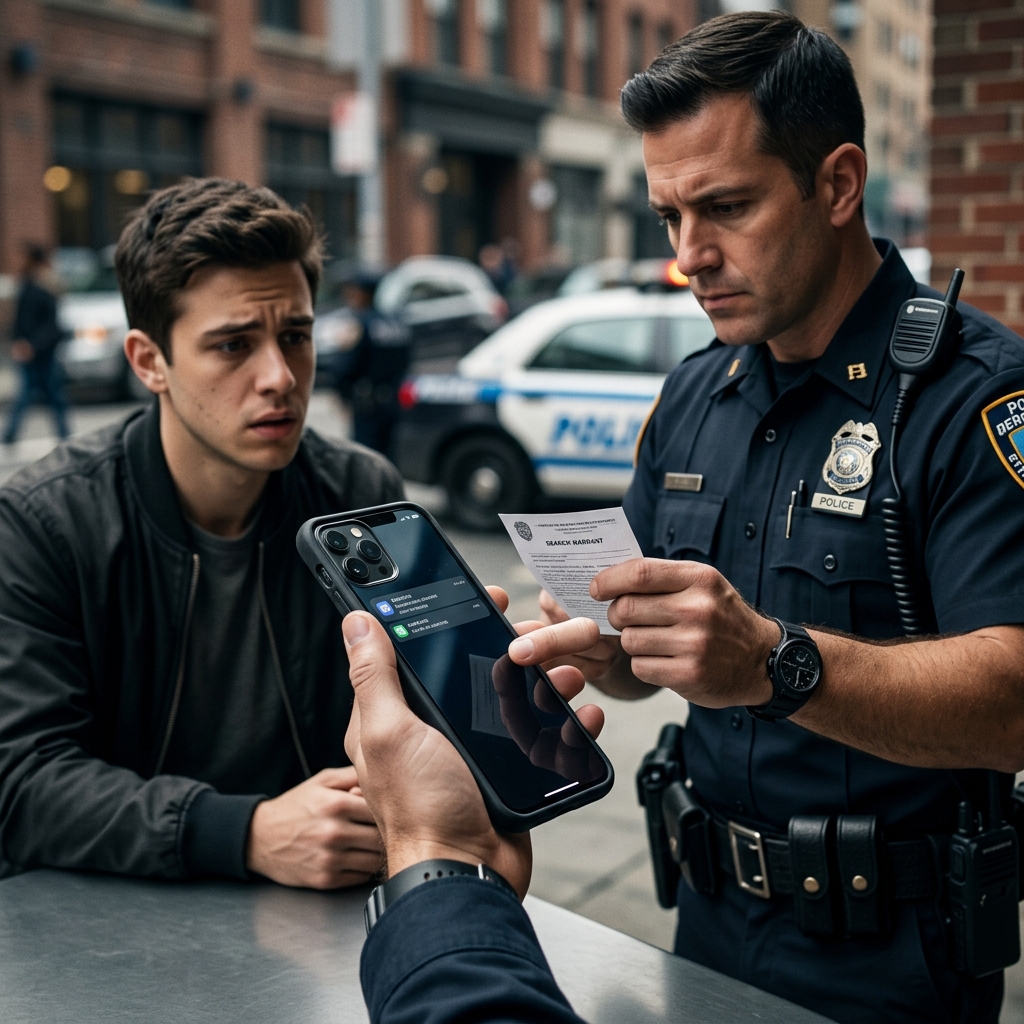
Modern phones hold far more private information than a wallet, notebook, or even a home filing cabinet. Because of that, the law generally treats cell phone searches differently from ordinary searches, and officers usually need a warrant before looking through the digital contents of a phone seized during an arrest.
That general rule is not absolute. Police may still access a phone in limited situations, especially when a person gives permission, when there is an urgent risk to safety or evidence, or when a separate legal rule applies at the border or under probation and parole conditions.
The basic rule: a warrant is usually required
The strongest protection comes from the Fourth Amendment, which bars unreasonable searches and seizures. In Riley v. California, the U.S. Supreme Court held that police generally must get a warrant before searching the contents of a cell phone, even if the phone was lawfully taken during an arrest.
This matters because a smartphone stores a detailed record of daily life. Text messages, call logs, photos, location data, app activity, and saved files can reveal much more than physical items found in a pocket. The Court recognized that privacy interest and rejected the idea that an arrest automatically gives officers free access to the data on a device.
Why phone searches are treated differently
A phone search is not the same as searching a purse or a glove compartment. Digital devices can contain years of information, can connect to cloud accounts, and can expose communications with many different people. That depth of information is one reason courts insist on a warrant in most cases.
Police may still seize the device during an arrest or investigation, but seizure and search are not the same thing. Holding the phone temporarily does not automatically authorize officers to browse its files, open apps, or review messages. In many situations, they must first go to a judge and show probable cause.
Situations where officers may search without a warrant
There are several recognized exceptions to the warrant requirement. These exceptions are narrow, and police still need a legally valid reason to rely on them.
- Consent: If you voluntarily allow officers to search your phone, they do not need a warrant.
- Exigent circumstances: If there is an immediate need to prevent harm, stop a suspect from escaping, or preserve evidence from being destroyed, officers may argue that a warrantless search was justified.
- Border searches: At airports and international border crossings, government agents have broader authority to inspect electronic devices, although courts continue to scrutinize the limits of that power.
- Probation or parole conditions: Some supervision terms reduce privacy rights and may allow searches that would otherwise require a warrant.
Consent can change the analysis
Consent is one of the most common ways a phone search becomes lawful without a warrant. If a person says yes, officers can usually proceed without first asking a court for permission.
For consent to count, it should be voluntary. Courts look at whether the person understood the request, whether pressure was used, and whether the consent was truly free of coercion. A person can also refuse consent, and refusal alone does not give police a reason to punish or detain someone more harshly.
What counts as exigent circumstances
Exigent circumstances are emergency conditions that make it impractical to wait for a warrant. In the phone-search context, officers may point to fears that evidence will be deleted, that an accomplice could be warned, or that a suspect could use the device to coordinate a threat or escape.
These situations are judged case by case. A court later asks whether the urgency was real or whether officers could have safely obtained a warrant first. If the emergency was not genuine, the search may be challenged and the evidence may be excluded.
Border searches have their own rules
The border is one of the clearest exceptions to ordinary search rules. Customs and Border Protection officers may inspect electronic devices at international crossings with more leeway than police would have on a city street.
That does not mean border searches are unlimited. Privacy groups and courts have pressed for more safeguards, especially when officers seek advanced or forensic access to the data on a device. Even so, travelers should know that the border context gives the government a stronger position than it would have in a routine criminal investigation.
Probation and parole can reduce privacy rights
People on probation or parole often accept conditions that allow supervision officers or law enforcement to search property under certain circumstances. Depending on the exact terms, a phone search may be permitted without a standard warrant requirement.
The key issue is the language of the supervision order. Some conditions are broad, while others are narrow and tied to suspected violations. If someone is under supervision, the legal analysis depends heavily on the documents they signed and the facts officers relied on when making the search.
What police may do even if they do not search right away
Officers may take possession of a phone during an arrest or investigation and hold it while they pursue a warrant. That can delay access to the device even though the contents are not immediately examined.
This distinction matters. The government can sometimes keep the phone while it asks a judge for authority to search, but it cannot treat temporary possession as a blank check to review every file, message, or account on the device.
How people should respond when asked to unlock a phone
If an officer asks to search a phone, a calm, brief response is usually the safest approach. The law generally allows you to refuse consent, and you are usually not required to volunteer passwords or assist with a search unless a valid legal exception applies.
- Say you do not consent: A clear refusal preserves the issue for later review.
- Do not argue at length: Long explanations can create confusion or unnecessary risk.
- Ask for a lawyer: If the encounter could become formal or accusatory, legal counsel may help protect your rights.
- Keep your device locked when possible: A passcode or other access control may help preserve privacy, though the law around compelled unlocking can vary.
What happens if police search a phone unlawfully
If police search a phone without a warrant and without a valid exception, the defense may ask the court to suppress the evidence. Suppression means the evidence may not be used at trial.
That remedy can be powerful because phone evidence often includes text messages, photos, location records, and search histories that prosecutors use to build a timeline or show intent. If the evidence is excluded, the rest of the case may become weaker or, in some situations, may not move forward at all.
Common misunderstandings about phone searches
| Misunderstanding | What the law generally says |
|---|---|
| “If police have my phone, they can look through it.” | Possession of the phone does not automatically permit a search of its contents. |
| “I have to give my password if they ask.” | Not necessarily; the answer depends on the circumstances and applicable law, but consent is not automatic. |
| “Refusing consent makes me look guilty.” | Refusing a search request is a lawful way to protect privacy and does not itself create probable cause. |
| “Every phone search is illegal without a warrant.” | No. Consent, emergencies, border authority, and supervision conditions can change the result. |
Why these rules matter in real cases
Phone evidence can be central in criminal cases ranging from theft and drug investigations to assault, fraud, and conspiracy allegations. Because the device may hold messages, photos, contacts, internet activity, and location traces, a search can quickly reshape the direction of an investigation.
That is why courts are careful about how officers obtain access. The law tries to balance public safety and evidence preservation against the reality that a modern phone often reveals far more personal information than a search of physical items would ever expose.
Practical steps to protect your rights
People involved in a police encounter should focus on staying calm and preserving the issue for later review. The goal is not to win the argument on the street; it is to avoid creating consent where none should exist and to make sure any disputed search can be challenged later.
- State clearly that you do not consent to a search of your phone.
- Do not volunteer your passcode unless you have legal advice and understand the consequences.
- Ask whether the officer has a warrant and, if so, request to see it.
- Write down or remember the details of the encounter as soon as possible.
- Contact a criminal defense lawyer quickly if officers searched your device or threatened to do so.
Frequently asked questions
Can police search my phone after an arrest?
Usually not without a warrant. The Supreme Court’s Riley decision made clear that arrest alone does not let police inspect the digital contents of a phone.
Can I refuse to give my phone password?
In many situations, yes. Refusing consent is generally allowed, though specific laws and court orders can affect the analysis in some cases.
Can police keep my phone while they wait for a warrant?
Yes, they may be able to seize the device and hold it temporarily while seeking judicial approval, but that is different from searching through the contents immediately.
What if I already said yes under pressure?
Consent obtained under pressure may be challenged, and in some situations a person may be able to revoke consent once given. The facts matter, so legal advice is important.
Are border searches different from ordinary police searches?
Yes. Border officials have broader authority to inspect devices at international entry points, although the scope of that authority is still debated and limited by evolving legal rules.
What should I do if my phone was searched without permission?
Speak with a criminal defense attorney as soon as possible. A lawyer can review whether the search was supported by a warrant or a valid exception and can seek suppression if the search was unlawful.
References
- Riley v. California — Supreme Court of the United States. 2014-06-25. https://supreme.justia.com/cases/federal/us/573/373/
- Can Police Search Your Phone Without a Warrant? — Ejirofor Law. 2025-01-01. https://www.ejioforlaw.com/blog/can-police-search-your-phone-without-a-warrant/
- Can Police Search Your Phone? | Stein Defense — Stein Defense. 2025-01-01. https://www.steindefense.com/can-police-search-your-phone-california/
- Can Police Search Your Phone Without a Warrant in Indiana? — Indy Justice. 2025-01-01. https://www.indyjustice.com/blog/search-phone-without-warrant-indiana/
- Can Law Enforcement Search Your Cell Phone Without Consent? — Dailey & Ridge, PLLC. 2025-01-01. https://daileylawyers.com/blog/can-law-enforcement-search-your-cell-phone-without-consent/
- Do Police Need a Warrant to Search Your Phone in Florida? — Bonderud Law. 2025-01-01. https://www.bonderudlaw.com/blog/do-police-need-a-warrant-to-search-your-phone-in-florida/
- Can Border Agents Search Your Electronic Devices? It’s Complicated. — American Civil Liberties Union. 2024-01-01. https://www.aclu.org/news/privacy-technology/can-border-agents-search-your-electronic
Similar Articles








Read full bio of Sneha Tete




