
DNA Evidence: How It Misleads Courts And Protects The Innocent
A deep look at how forensic DNA can both clear the innocent and mistakenly link people to crimes they did not commit.
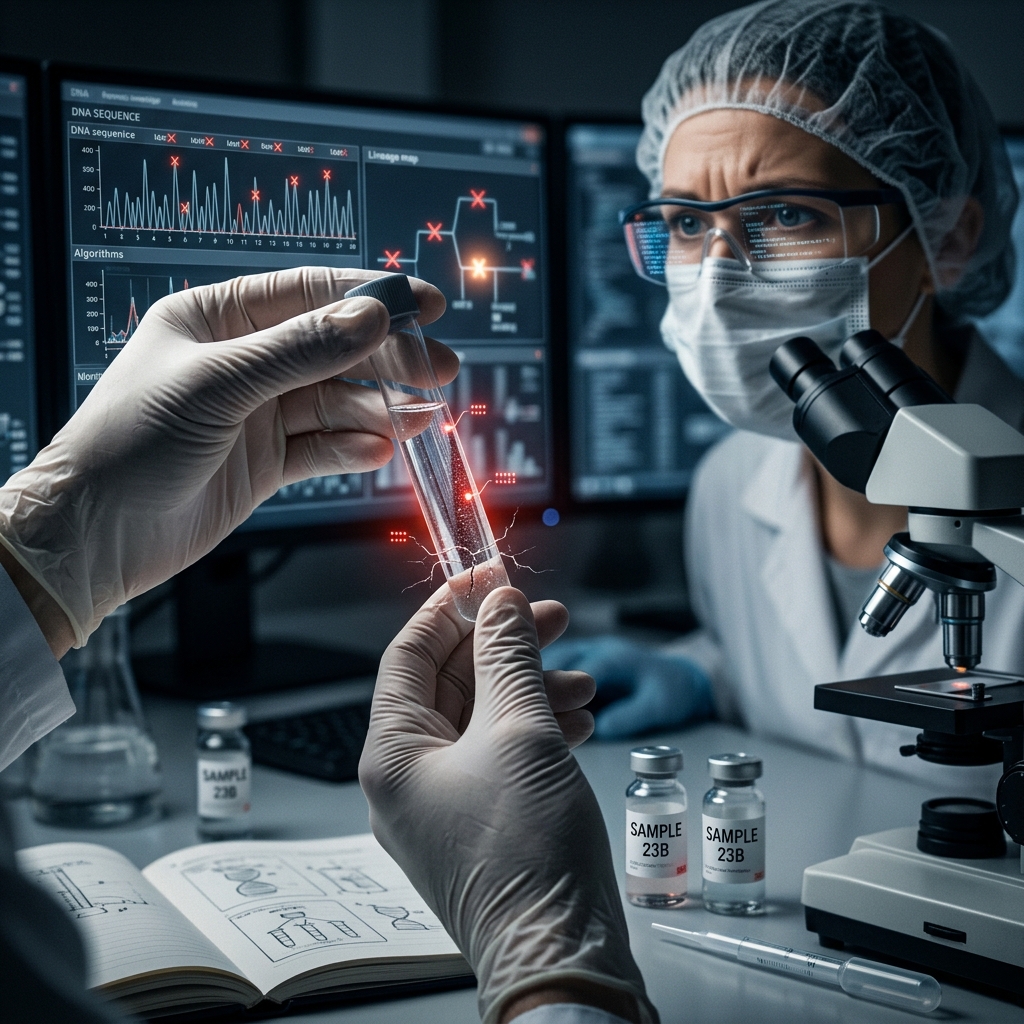
DNA has transformed modern criminal investigations, helping solve cold cases and freeing innocent people from prison. Yet the same powerful technology can also wrongly tie someone to a crime they never committed. Understanding both the strengths and limits of DNA evidence is critical for defendants, families, attorneys, and anyone concerned about fair trials.
This article explains how forensic DNA works, why it can mislead, and what legal safeguards and defense strategies can help prevent miscarriages of justice.
DNA Evidence: A Powerful but Imperfect Tool
DNA, the genetic material in our cells, is often described as a unique biological fingerprint. Except for identical twins, each person’s DNA profile is highly individual, which makes it extremely valuable in criminal cases for identifying or excluding suspects. However, that does not mean DNA answers every question about a crime, nor does it always point to the right person.
Since the late 1980s, DNA testing has helped overturn wrongful convictions across the United States. The Innocence Project reports hundreds of DNA-based exonerations, showing how genetic evidence can expose past errors in eyewitness testimony, forensic analysis, and police investigations.
- Confirming identity: DNA can strongly support that a person was present at a crime scene or had contact with a victim.
- Excluding suspects: A non-match between crime scene DNA and a defendant’s DNA can be powerful evidence of innocence.
- Revealing system failures: DNA exonerations have highlighted problems such as misidentification, misleading forensic methods, and coerced confessions.
Yet, the same scientific authority that makes DNA compelling can also cause courts and juries to give it more weight than it deserves, especially when the evidence is partial, contaminated, or poorly interpreted.
How Innocent People Get Linked to Crimes by DNA
It is easy to assume that any match between DNA from a crime scene and a person’s profile proves guilt. In reality, there are several pathways by which an innocent person can be linked to a crime:
- Secondary transfer: DNA can move from one surface or person to another without direct contact with the crime. For example, shaking hands and then touching an object can transfer trace DNA.
- Contamination: Laboratory errors, careless sample handling, or mixing multiple samples can create false matches.
- Partial profiles: When only parts of a DNA profile are obtained, the chance of coincidental matches increases.
- Database searches: Large DNA databases raise the odds that someone unrelated to the crime will appear to match a partial profile.
- Misinterpretation: Complex DNA mixtures and statistical analyses can be misunderstood by investigators, experts, judges, or juries.
In all these scenarios, the DNA evidence may be real, but its connection to the crime or to the defendant’s actions may be far weaker than it first appears.
Wrongful Convictions and DNA: What the Data Shows
Research on wrongful convictions and DNA exonerations offers important insight into how often the system gets it wrong and why.
A study supported by the Urban Institute reviewing post-conviction DNA testing in serious cases found that in about five percent of homicide and sexual assault convictions, DNA testing eliminated the convicted person as the source of key physical evidence. In sexual assault cases alone, DNA testing excluded between 8 and 15 percent of those convicted, supporting exonerations.
Analyses of U.S. DNA exonerations show consistent patterns:
- Eyewitness misidentification: One study of 194 DNA exonerations found misidentification in roughly three-quarters of cases.
- Flawed forensic evidence: Wrongful convictions are often associated with unreliable or overstated forensic methods and testimony.
- Limited availability of DNA: In many crimes, no biological evidence is collected or preserved, making DNA exonerations only a fraction of total innocence cases.
The role of DNA is therefore double-edged: it can expose wrongful convictions, but forensic DNA practices and interpretations can also contribute to injustice when used carelessly or without proper oversight.
Key Statistics on DNA and Innocence
| Aspect | Findings | Source |
|---|---|---|
| Post-conviction testing in homicide & sexual assault | About 5% of convictions had DNA that excluded the offender | Urban Institute study |
| Sexual assault convictions reviewed | DNA eliminated 8–15% of convicted offenders | Urban Institute study |
| Common factor in DNA exonerations | Misidentification present in approximately 75% of cases | Genetics of innocence analysis |
| DNA exonerations in death penalty cases | Relatively rare, representing a minority of exonerations | Death Penalty Information Center |
When DNA Evidence Misleads Courts
DNA evidence is often presented at trial with charts, statistics, and expert testimony. When done properly, this can help jurors understand complex scientific concepts. When done poorly, it can create a false impression of certainty.
Research funded by the National Institute of Justice and other bodies highlights several ways forensic evidence, including DNA, can mislead courts:
- Overstating certainty: Experts may present probability figures without explaining limitations, encouraging jurors to assume a match equals guilt.
- Poor validation: Some supporting forensic techniques (such as blood typing, hair comparison, or bite mark analysis) have historically lacked rigorous scientific validation.
- Complex mixtures: DNA from multiple people can be difficult to interpret, and honest disagreements among experts can arise over which profiles are present.
- Selective reporting: Investigators or prosecutors may emphasize DNA results that support their theory while downplaying or ignoring conflicting evidence.
Because DNA carries strong persuasive power, even small mistakes in analysis or presentation may have outsized effects on verdicts. This is why rigorous lab procedures, transparency, and independent review are vital safeguards.
Legal Safeguards: Post-Conviction DNA Testing
Recognizing the potential of DNA to correct wrongful convictions, legislatures and courts have established mechanisms for post-conviction DNA testing. Federal law and statutes in all fifty states now provide some level of access to testing for prisoners who claim innocence.
These laws typically require defendants to meet conditions such as:
- Showing that DNA evidence relevant to the crime still exists and can be tested.
- Demonstrating that the evidence was properly preserved and meets chain-of-custody standards.
- Using scientifically sound methods consistent with accepted forensic practices.
- Establishing that the proposed testing could produce new material evidence supporting actual innocence.
In many cases, DNA testing not only clears the wrongfully convicted person but can also identify the actual perpetrator, especially when investigators compare new profiles with national DNA databases.
Defense Strategies When DNA Points to Your Client
For criminal defense attorneys, DNA evidence can look daunting. However, an effective defense does not accept DNA results at face value. Instead, it examines every link in the chain: collection, preservation, testing, interpretation, and presentation.
Key Questions for Defense Lawyers
- Collection: Who collected the samples, and under what conditions? Were proper protocols followed to prevent contamination?
- Preservation: How long was the evidence stored, and in what environment? Could degradation affect the reliability of the results?
- Testing methods: Which DNA technology was used (e.g., STR, Y-STR, mitochondrial DNA), and was it appropriate for the sample?
- Interpretation: Did the lab fully explain the statistical meaning of the findings, including the possibility of secondary transfer or partial profiles?
- Alternative explanations: Is there a plausible innocent reason for the defendant’s DNA to be present (e.g., consensual contact, shared spaces, indirect transfer)?
Defense teams often work with independent forensic experts to review laboratory records, reanalyze data, and, when appropriate, perform new testing. They may also challenge expert testimony, highlight limitations of the evidence, and stress that DNA is just one piece of a broader factual puzzle.
Balancing DNA Evidence with Other Proof
One critical lesson from innocence research is that no single type of evidence should dominate a case to the exclusion of other facts. DNA needs to be considered alongside eyewitness accounts, alibi evidence, digital records, and physical evidence at the scene.
In wrongful conviction cases, DNA often reveals that earlier evidence was unreliable or misinterpreted. For example, a defendant might have been identified by a victim under stressful conditions, or an early forensic test might have used outdated methods. When DNA testing later contradicts this evidence, it can cast doubt on the entire case.
Courts and juries therefore need to ask not only whether there is a DNA match, but also:
- What does the DNA specifically prove about the defendant’s actions?
- Could the DNA have arrived through innocent contact or secondary transfer?
- Are other pieces of evidence consistent or inconsistent with the DNA findings?
- How strong are the statistical probabilities, and what assumptions underlie them?
When these questions are taken seriously, DNA becomes a tool for careful reasoning, not a shortcut to guilt.
Practical Tips for Defendants and Families
Facing a criminal charge that involves DNA evidence can be frightening. The following practical steps can help defendants and their families navigate the process more effectively:
- Seek experienced counsel: Work with an attorney familiar with forensic DNA issues and willing to consult independent experts when needed.
- Request full disclosure: Obtain complete laboratory reports, notes, and chain-of-custody documents to allow a thorough review.
- Ask about alternative explanations: Discuss with your lawyer whether there are non-criminal reasons your DNA could be present.
- Consider additional testing: In some cases, new or more advanced testing methods can clarify ambiguous results.
- Preserve your rights post-conviction: If convicted, explore statutory avenues for post-conviction DNA testing, especially if biological evidence remains in storage.
FAQs About DNA and Wrongful Accusations
Can my DNA alone convict me of a crime?
DNA evidence can be highly persuasive, but courts generally consider it together with other evidence. A DNA match often shows contact or presence, not necessarily intent or specific actions. In some cases, DNA has been a central factor in convictions, but it should not be viewed as infallible proof of guilt.
How common are wrongful convictions identified by DNA?
Post-conviction DNA testing has revealed significant numbers of wrongful convictions, particularly in sexual assault and homicide cases. However, DNA is available in a minority of crimes, and many innocence cases involve other forms of evidence. The known DNA exonerations likely represent only a portion of total wrongful convictions.
Can old evidence still be tested for DNA?
Often, yes. Many jurisdictions allow post-conviction DNA testing when evidence has been properly preserved and meets chain-of-custody standards. However, aging, poor storage conditions, or past testing may degrade samples, limiting what new tests can reveal.
What if the lab made a mistake?
Laboratories can and do make errors. Contamination, mislabeling, and incorrect interpretation are documented risks. Defense lawyers can examine lab records, request reanalysis, and present expert testimony to challenge flawed results.
Does DNA always help innocent defendants?
DNA can be a powerful ally for the innocent, especially when it excludes them as the source of incriminating evidence. Yet it can also be misused or misunderstood. For that reason, both defense and prosecution should treat DNA as a tool that demands careful, transparent analysis rather than automatic trust.
Looking Forward: Improving the Use of DNA in Criminal Justice
As DNA technologies grow more sensitive, the justice system faces a key challenge: how to harness their benefits without increasing the risk of wrongful accusations. Policy makers, researchers, and practitioners have suggested several reforms:
- Stronger lab accreditation and oversight: Ensuring labs follow standardized protocols and undergo regular audits can reduce errors.
- Clearer expert testimony standards: Courts can require experts to explain limitations, probabilities, and alternative hypotheses, rather than presenting DNA as absolute proof.
- Improved training: Judges, lawyers, and law enforcement need ongoing education on interpreting DNA and other forensic evidence.
- Accessible post-conviction remedies: Expanding and simplifying access to DNA testing for prisoners who claim innocence helps correct past mistakes.
- Continued research: Ongoing studies of wrongful convictions and forensic methods inform better practices and standards.
Ultimately, DNA is neither a guarantee of guilt nor a guarantee of innocence. It is a powerful form of evidence that must be used with caution, humility, and an awareness of its limits. When combined with robust procedural safeguards and careful legal advocacy, DNA can help move the criminal justice system closer to its goal: punishing the guilty while protecting the innocent.
References
- The Role of DNA Evidence in Wrongful Conviction Cases — High Rise Legal Funding. 2023-08-15. https://www.highriselegalfunding.com/blog/the-role-of-dna-evidence-in-wrongful-conviction-cases/
- Post-Conviction DNA Testing and Wrongful Conviction — Urban Institute. 2010-06-01. https://www.urban.org/research/publication/post-conviction-dna-testing-and-wrongful-conviction
- The Genetics of Innocence: Analysis of 194 U.S. DNA Exonerations — Garrett & Neufeld, Journal of Forensic Sciences. 2012-01-01. https://pubmed.ncbi.nlm.nih.gov/21721941/
- Wrongful Convictions and DNA Exonerations: Understanding the Role of Forensic Science — National Institute of Justice. 2017-01-01. https://nij.ojp.gov/topics/articles/wrongful-convictions-and-dna-exonerations-understanding-role-forensic-science
- Remedying Wrongful Convictions Through DNA Testing: Expanding Post-Conviction Access — Boston College Law Review. 2016-01-01. https://bclawreview.bc.edu/articles/287/files/63a5385d45502.pdf
- How Forensic DNA Evidence Can Lead to Wrongful Convictions — JSTOR Daily. 2021-07-26. https://daily.jstor.org/forensic-dna-evidence-can-lead-wrongful-convictions/
- The Limitations of DNA Evidence in Innocence Cases — Death Penalty Information Center. 2023-05-01. https://deathpenaltyinfo.org/the-limitations-of-dna-evidence-in-innocence-cases
- The Impact of False or Misleading Forensic Evidence on Wrongful Convictions — National Institute of Justice. 2017-01-01. https://nij.ojp.gov/topics/articles/impact-false-or-misleading-forensic-evidence-wrongful-convictions
Similar Articles








Read full bio of Sneha Tete




