
What Happens If Police Don’t Read Your Miranda Rights?
Understand when Miranda warnings are required, what a violation really means, and how it can affect the evidence and your criminal case.
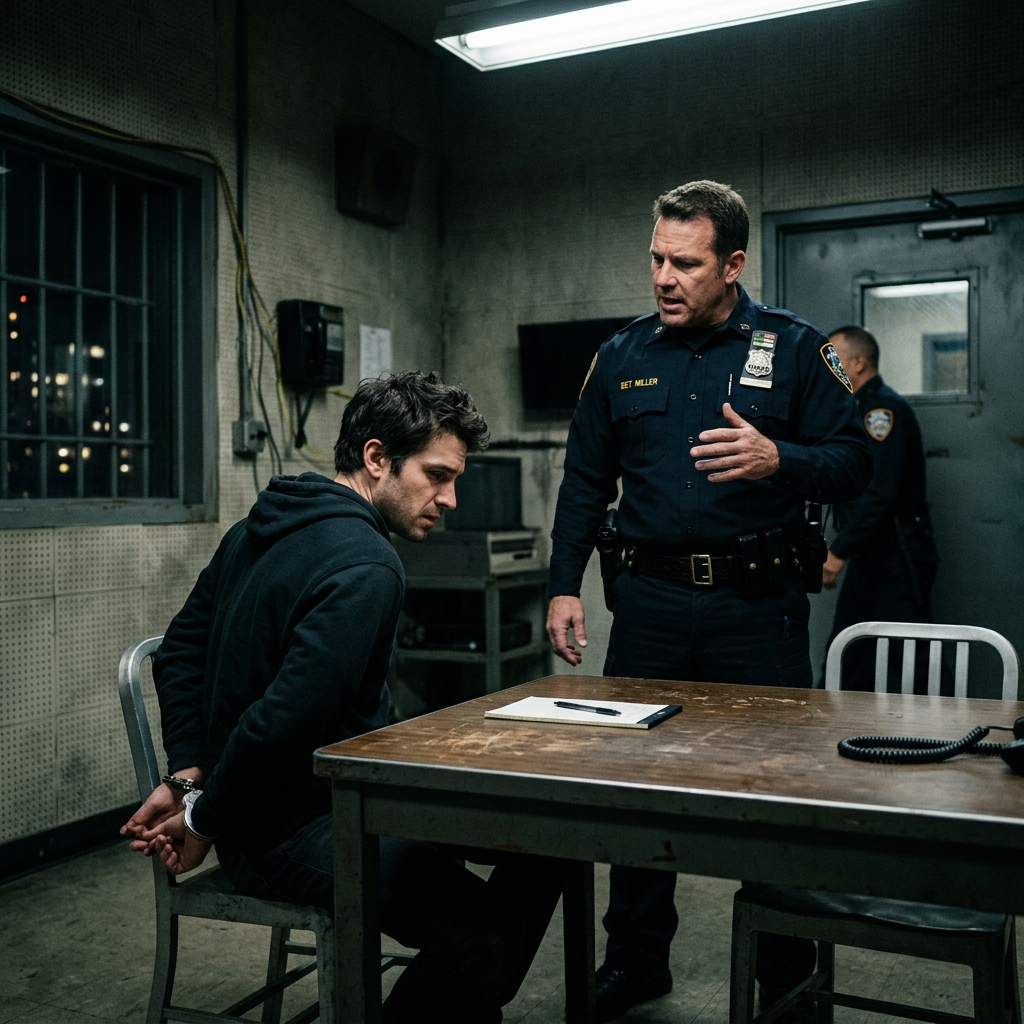
Many people believe that if the police do not read them their Miranda rights, their case will automatically be dismissed. In reality, the law is far more nuanced. Whether a Miranda warning is required, and what happens if it is missing or defective, depends on the type of police encounter and how prosecutors intend to use any statements you made.
This guide explains when law enforcement must advise you of your rights, what counts as a Miranda violation, the usual remedy in court, and practical steps to protect yourself during any criminal investigation.
Foundations of Miranda: Where These Rights Come From
Miranda rights stem from the Fifth Amendment privilege against self-incrimination and the Supreme Court decision in Miranda v. Arizona (1966). The Court recognized that in-custody police questioning creates powerful pressures that can overwhelm a person’s will, so specific warnings and safeguards are required before interrogation.
- Fifth Amendment basis: Protects individuals from being compelled to incriminate themselves.
- Scope beyond courtrooms: The privilege applies wherever a person’s freedom is significantly curtailed, not just at trial.
- Goal of Miranda: Ensure any statement used by prosecutors is truly voluntary and made with awareness of key rights.
To achieve this, the Court required police to provide certain warnings before asking questions in a custodial setting.
What Your Miranda Rights Actually Include
Miranda warnings do not have to follow a single rigid script, but they must communicate the substance of several core protections. Courts evaluate whether the warnings reasonably conveyed these ideas, not whether a particular phrase was used.
| Core Right | What It Means |
|---|---|
| Right to remain silent | You do not have to answer questions or make statements to the police. |
| Warning about use of statements | Anything you say can be used as evidence against you in court. |
| Right to an attorney | You have the right to consult a lawyer and to have that lawyer present during questioning. |
| Right to appointed counsel | If you cannot afford an attorney, the government must provide one for you. |
Once you clearly invoke your right to silence or your right to counsel, interrogation must stop and cannot resume until the law’s requirements are met.
When Police Must Read You Your Miranda Rights
Contrary to popular belief, Miranda warnings are not required in every interaction with law enforcement. They are required only when two conditions are both present: custody and interrogation.
Custody: Are You Free to Leave?
Custody exists when a reasonable person in your position would not feel free to end the encounter and walk away. This often includes formal arrest, but it can also apply to other situations where your movement is significantly restricted.
- Typically custodial:
- Being handcuffed and placed in a patrol car
- Held in an interview room at a police station and told you cannot leave
- Detained for a prolonged period with clear restrictions on your movement
- Typically not custodial:
- Brief roadside questioning during a traffic stop
- Casual encounters where officers say you are free to go
- Voluntary visits to the station where you can leave at any time
Courts look at the total circumstances, including location, duration, presence of physical restraints, and what officers tell you about your ability to leave.
Interrogation: Are They Trying to Elicit Incriminating Answers?
Interrogation is more than simple conversation. It refers to questioning or conduct designed to draw out a response that could be used as evidence of a crime.
- Direct questions about your involvement in a crime
- Statements intended to provoke you into confessing or admitting key facts
- Use of strategies clearly aimed at obtaining incriminating information
Routine identification questions (such as your name and address) or casual, non-accusatory conversations usually do not qualify as interrogation for Miranda purposes.
Putting It Together
Miranda warnings are required only when you are in custody and subject to interrogation. If either element is missing, police generally do not have to read you your rights, and any statements you make may still be admissible.
What If You’re Arrested but Not Questioned?
Police are not obligated to read you Miranda rights at the moment of arrest if they do not intend to interrogate you right away. The warning is tied to custodial interrogation, not the arrest itself.
- If you are arrested and transported to jail without questioning, the absence of a Miranda warning is usually irrelevant.
- Miranda rights become critical as soon as officers begin asking questions designed to obtain incriminating information while you are in custody.
This is why your case is not automatically dismissed simply because no one recited your rights during the arrest process.
Consequences of a Miranda Violation
When police fail to give required warnings, or continue questioning after you invoke your rights, the typical consequence is exclusion of your statements from the prosecution’s case.
Suppression of Statements
Under Miranda, the prosecution may not use statements obtained through custodial interrogation unless they can show procedural safeguards were properly applied. The primary remedy is suppression, meaning the judge rules that certain statements cannot be presented as evidence at trial.
- Statements taken without required warnings may be excluded.
- Statements made after you clearly asserted your right to remain silent or to an attorney, if questioning continued, may also be excluded.
- Suppression generally applies to the prosecution’s case-in-chief (the main evidence used to prove guilt).
Importantly, suppression of statements does not automatically terminate the prosecution. The government may still proceed if it has other evidence, such as physical evidence or witness testimony.
Not Automatic Dismissal
Courts consistently explain that a Miranda violation does not equal dismissal of charges. Instead, the focus is on whether specific statements can be used against you and whether excluding them substantially weakens the case.
In some matters, a confession or damaging statement is central to the prosecution. Suppressing that statement may lead to dropped charges or a more favorable plea. In others, there may be sufficient independent evidence to continue.
Situations Where Statements May Still Be Used Without Miranda
There are important exceptions and limitations to Miranda’s exclusionary rule. In some circumstances, your statements can be admitted even if no warning was given.
Voluntary, Unprompted Statements
If you spontaneously speak without any interrogation—such as blurting out an admission while being walked to a patrol car—those statements are generally admissible because they were not the product of custodial interrogation.
- No question or prompting from police
- Statements made on your own initiative
- Still potentially usable as evidence despite lack of warnings
Public Safety Exception
In limited circumstances, courts allow police to ask questions without prior Miranda warnings if there is an immediate threat to public safety, such as locating a weapon that could harm others. Statements obtained under this exception may be admissible because protecting life and safety takes priority.
Use for Impeachment
Even when a statement is suppressed for the prosecution’s main case, some courts permit its use to impeach (challenge) a defendant’s credibility if they testify at trial in a way that contradicts the earlier statement. The rules here are technical and fact specific, which is why legal advice from counsel is critical.
Understanding Waiver of Miranda Rights
Police may use statements from custodial interrogation if they show you knowingly and intelligently waived your rights after receiving adequate warnings. Waiver can be explicit (for example, signing a form) or implied by your words and conduct.
- Officers must first provide proper warnings.
- You must understand the rights and choose to talk anyway.
- Waiver must be voluntary, not the product of coercion or threats.
If there is dispute about whether you truly understood your rights, whether warnings were sufficient, or whether waiver was voluntary, the court may hold a hearing and decide whether your statements should be admitted.
How to Protect Yourself During Police Encounters
Regardless of whether you have been formally advised of your rights, you retain the underlying constitutional protections at all times. You can actively invoke them to safeguard yourself.
Key Protective Steps
- Clearly assert your right to remain silent. You can say, “I am exercising my right to remain silent.”
- Ask for an attorney. Use clear language such as, “I want to speak to a lawyer before answering any questions.”
- Stop volunteering information. Once you invoke your rights, refrain from further discussion until you have legal counsel.
- Do not assume everything will be dismissed. Treat the situation seriously even if officers did not read you Miranda rights, because other evidence may still be used.
The Supreme Court has emphasized that once a suspect indicates they wish to remain silent or want an attorney, questioning must cease until that right is honored. If officers ignore your invocation and continue, your lawyer may later seek suppression of any resulting statements.
Working With a Criminal Defense Attorney
Because Miranda law involves detailed constitutional doctrine and case-specific analysis, a criminal defense attorney plays a crucial role in evaluating whether a violation occurred and what remedies are available.
What an Attorney Typically Reviews
- Timeline of your encounter with law enforcement
- Whether you were in custody under the legal standard
- Exact content and timing of any warnings given
- Whether questioning constituted interrogation
- How and when you invoked your rights, if at all
- Other evidence the prosecution may rely on aside from your statements
Based on these facts, counsel can file motions to suppress, challenge the admissibility of statements, or leverage Miranda issues during plea negotiations. They can also advise you on how best to exercise your rights in any future interactions.
Common Misconceptions About Miranda Rights
Understanding what Miranda warnings do—and do not—guarantee can help you avoid dangerous assumptions about your case.
- Misconception: Failure to read Miranda rights automatically voids the arrest.
Reality: A violation usually affects the use of statements, not the validity of the arrest itself. - Misconception: Police must always read Miranda rights during traffic stops.
Reality: Brief stops and non-custodial questioning usually do not require warnings. - Misconception: You have no rights unless Miranda is read.
Reality: Your constitutional rights exist regardless of whether officers recite them; Miranda focuses on admissibility of statements. - Misconception: Remaining silent makes you look guilty.
Reality: The right to remain silent is a core constitutional protection designed specifically for criminal investigations.
FAQs About Not Being Read Your Miranda Rights
1. If the police never read me my rights, is my case automatically dismissed?
No. The usual consequence is that certain statements may be excluded, not that charges are automatically dropped. The impact depends on how important those statements are to the prosecution’s case.
2. Do officers have to read Miranda rights during an arrest?
They are required to advise you of your rights before custodial interrogation, not necessarily at the moment of arrest. If they do not question you, Miranda may not come into play.
3. What if I spoke to police before they gave any warning?
If you were in custody and questioned without proper warnings, your attorney may ask the court to suppress those statements. If you were not in custody, Miranda may not apply.
4. Can my voluntary comments still be used against me?
Yes. Unprompted, voluntary statements that are not the result of interrogation are typically admissible, even without Miranda warnings.
5. How do I properly invoke my right to remain silent or to a lawyer?
Use clear, direct language such as “I am exercising my right to remain silent” or “I want to speak to an attorney before answering questions.” Once you do, officers must stop interrogation.
References
- Miranda Requirements — Constitution Annotated, Library of Congress. 2021-08-26. https://constitution.congress.gov/browse/essay/amdt5-4-7-5/
- Miranda Rights Supreme Court Cases — Justia U.S. Supreme Court Center. 2023-05-01. https://supreme.justia.com/cases-by-topic/miranda-rights/
- Facts and Case Summary: Miranda v. Arizona — United States Courts. 2017-06-01. https://www.uscourts.gov/about-federal-courts/educational-resources/educational-activities/fifth-amendment-activities/miranda-v-arizona/facts-and-case-summary-miranda-v-arizona
- Understanding Miranda Rights: When Police Must Read Them and What Happens if They Don’t — Carolina Attorneys. 2024-02-15. https://www.carolinaattorneys.com/blog/understanding-miranda-rights-when-police-must-read-you-your-rights/
- Miranda Rights — McDaniel Law Group. 2023-07-10. https://www.mcdanieljustice.com/blog/2023/july/miranda-rights/
- Understanding Your Miranda Rights: What Police Can and Can’t Do — Vincent Hughes Law. 2023-11-02. https://www.vincenthugheslaw.com/blog/understanding-your-miranda-rights/
- What Are Miranda Rights? — Millar Law. 2022-09-30. https://www.chrismillarlaw.com/criminal-defense-blog/miranda-rights
Similar Articles








Read full bio of Sneha Tete




