
Vaccines, Seizures, and the Law: Understanding Epilepsy Claims
How courts assess parental claims that vaccines cause epilepsy, and what science and the Vaccine Injury Compensation Program say about seizure-related cases.
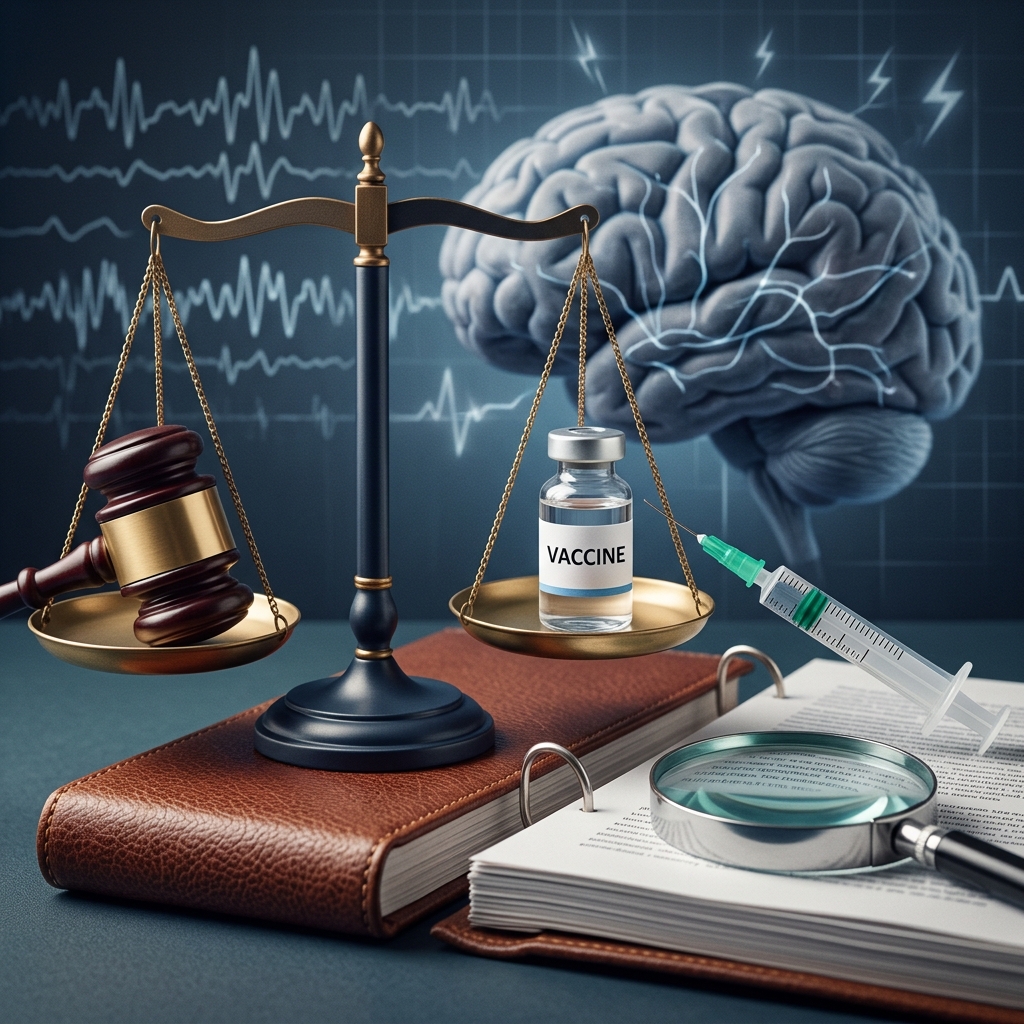
When a child develops epilepsy or a serious seizure disorder, parents often search for answers and may focus on recent vaccinations as a possible cause. In the United States, such claims are heard in a specialized forum often called the “vaccine court,” where judges and special masters weigh medical evidence, expert testimony, and legal standards to decide whether vaccines more likely than not contributed to the child’s condition. At the same time, neurologists and epidemiologists have spent decades studying whether routine childhood vaccines cause epilepsy, with most modern data finding no robust evidence of a causal link.
This article explains how vaccine-related epilepsy claims are evaluated, what current scientific research says about vaccines and seizures, and how parents can navigate both the medical and legal systems in complex cases.
Epilepsy and Seizure Disorders: Key Medical Background
To understand legal claims, it helps to start with the medical basics. Epilepsy is a brain disorder characterized by recurrent, unprovoked seizures. A single seizure after fever or illness does not automatically mean a child has epilepsy; the diagnosis depends on repeated events and additional clinical criteria.
Seizure disorders in children can take many forms, including:
- Febrile seizures – convulsions triggered by fever, often in toddlers, which usually do not lead to chronic epilepsy.
- Genetic epilepsies – conditions such as Dravet syndrome where an underlying gene mutation predisposes to severe, recurrent seizures.
- Structural epilepsies – seizures caused by brain malformations, injuries, or other identifiable anatomical problems.
- Epileptic encephalopathies – severe epilepsies associated with developmental impairment and frequent, difficult-to-control seizures.
These underlying causes are important in vaccine-related claims because many children who seize around the time of a vaccination turn out to have a preexisting or genetic vulnerability that was present before any shot was given.
Can Vaccines Cause Epilepsy? What the Research Shows
Parents sometimes assume a temporal connection—seizures occurring days or weeks after vaccination—means vaccines caused the epilepsy. Modern studies, however, draw a more nuanced picture.
Large-Scale Review of Epilepsy Claims
A major review of cases filed in the U.S. National Vaccine Injury Compensation Program (NVICP) examined hundreds of petitions alleging that vaccines caused or worsened epilepsy. Researchers identified more than 500 unique cases, including infants with specific epilepsy syndromes and older children with chronic seizure disorders.
Despite the longstanding litigation history, the authors concluded that there is no epidemiological or mechanistic evidence that the childhood vaccines covered by the NVICP directly cause or aggravate epilepsy. In other words, large population-level data and biological research do not support a general causal relationship between routine vaccination and epilepsy development.
Vaccines as Triggers in Vulnerable Children
The absence of a broad causal link does not mean vaccines never play a role in individual seizure cases. Some studies show that vaccinations can trigger seizures in children who already have an underlying epilepsy syndrome or structural brain problem.
- A study of new-onset epilepsy related to vaccination found that about 65% of affected children had identifiable genetic or structural brain abnormalities that predisposed them to epilepsy.
- In over half of those children, vaccination appeared to trigger an epileptic encephalopathy, but in 83% of such cases, a genetic or structural cause could still be identified, such as Dravet syndrome or chromosomal microdeletions.
These findings suggest that, in many legal disputes, vaccination may be better understood as an environmental trigger for seizures in a child who already had an underlying vulnerability, rather than as the root cause of the epilepsy.
Seizures, Epilepsy, and Vaccine Safety Studies
Researchers studying vaccine safety have also examined how seizures occur after vaccination in broader populations. Some self-controlled case series in children with preexisting epilepsy have reported modest increases in seizure-related hospitalizations after certain vaccines, but the absolute risk is small and must be weighed against the risks of the infections the vaccines prevent.
Similarly, work with patients who have severe genetic epilepsies like Dravet syndrome shows that fever and vaccination can trigger seizures, yet vaccinations are still recommended because the risk of infection-associated complications outweighs the risk of vaccination.
| Question | Current Evidence |
|---|---|
| Do routine vaccines commonly cause epilepsy? | Large reviews find no epidemiological or mechanistic evidence of a general causal link. |
| Can vaccines trigger seizures in predisposed children? | Yes. Vaccination and fever can precipitate seizures in children with genetic or structural epilepsies. |
| Are vaccine-triggered seizures the same as vaccine-caused brain injury? | No. A trigger acts on an existing vulnerability; causation implies the vaccine created the underlying disorder. |
Inside the “Vaccine Court”: How Epilepsy Claims Are Decided
Parents who believe a vaccine contributed to their child’s epilepsy do not typically sue manufacturers in ordinary civil courts first. Under U.S. federal law, most claims must go through the National Vaccine Injury Compensation Program (NVICP), administered by the U.S. Court of Federal Claims.
What Is the NVICP?
The NVICP was created in the 1980s to provide a no-fault alternative to traditional lawsuits for vaccine injuries, stabilize vaccine supply, and ensure fair compensation without requiring parents to prove negligence on the part of manufacturers or healthcare providers.
Key features include:
- No-fault system – claimants do not need to show malpractice, only that a covered vaccine more likely than not caused the injury.
- Special masters – legally trained officials who specialize in vaccine cases review evidence, hear expert testimony, and issue decisions.
- Vaccine Injury Table – listing certain injuries that are presumed to be vaccine-related if they occur within specified time frames and no other cause is identified.
- Compensation framework – awards may cover medical expenses, lost earnings, pain and suffering, and in some cases, a capped death benefit.
Through 2011, the program had awarded billions of dollars across thousands of claims, including cases involving seizures and death. Attorney fees can be covered even for unsuccessful petitions, as long as the claim was filed in good faith and had a reasonable basis.
The Legal Standard of Proof
In vaccine court, parents must show that it is “more likely than not” that the vaccine caused or significantly aggravated the child’s condition. This is a civil standard of proof, lower than “beyond a reasonable doubt.” Negligence is not at issue; the focus is on causation.
To meet this standard in epilepsy cases, a petitioner typically needs:
- Detailed medical records documenting the child’s health before and after vaccination.
- Neurological evaluation and imaging results (such as EEG and MRI).
- Expert testimony explaining a plausible medical theory connecting the vaccination to seizure onset or aggravation.
- Evidence ruling out other likely causes, such as known genetic mutations or preexisting structural brain abnormalities.
Special masters compare competing theories offered by experts, weigh the scientific literature, and evaluate whether the evidence supports causation or merely temporal association.
Why Some Epilepsy Claims Are Denied
Even when parents sincerely believe a vaccine harmed their child, not all claims succeed. Cases involving epilepsy can be especially complex because seizures are relatively common in childhood and often have multifactorial causes.
Evidence Gaps and Brain Injury
In some disputes, petitioners argue that an acute post-vaccination seizure caused lasting brain damage that then led to epilepsy. Courts may look for objective evidence of contemporaneous brain injury—such as imaging abnormalities or neurological deficits—in the period immediately after the initial seizure.
When such objective markers are absent, special masters and judges may find it difficult to conclude that a short-lived febrile or vaccine-associated seizure directly caused later epilepsy. In certain decisions, courts have noted that without corroborating evidence of brain injury, it is not credible to attribute chronic epilepsy to a single post-vaccination seizure.
Underlying Genetic and Developmental Factors
Many children who develop epilepsy after vaccination are later found to have:
- Preexisting developmental delays that indicate neurological issues predating the vaccine.
- Genetic mutations associated with epilepsy syndromes like Dravet syndrome.
- Structural brain problems detectable on imaging.
In such situations, courts often view the vaccine as a potential trigger for the first observed seizure rather than the root cause of the child’s epilepsy. Some decisions have rejected claims that vaccination significantly aggravated preexisting developmental problems where expert testimony could not overcome contrary medical records.
When Vaccine-Related Seizure Claims Succeed
Not all seizure-related claims are denied. The NVICP has compensated children whose seizure disorders were found, on the evidence presented, to be more likely than not related to vaccination.
Factors that can support successful claims include:
- Clear temporal proximity between vaccination and onset of seizures.
- Consistent clinical history supporting a vaccine-triggered pathological process.
- Strong expert testimony aligning with available scientific research and the child’s medical records.
- Lack of alternative explanations despite thorough evaluation.
In one reported case, the Court of Federal Claims accepted that a specific vaccine more likely than not contributed to a child’s seizure disorder, emphasizing the importance of a coherent medical theory and supporting records. In such decisions, compensation is awarded even though the overall scientific consensus still considers serious vaccine-induced epilepsy rare.
Balancing Individual Cases with Public Health Evidence
Epilepsy claims in vaccine court highlight a tension between population-level data and individual experiences. Broad epidemiological studies show that vaccines do not generally cause epilepsy, while some children undeniably experience seizures close in time to vaccination.
Public health authorities and neurologists typically emphasize the following points:
- Routine vaccines prevent serious infections that themselves can cause brain injury and seizures.
- Children with epilepsy or genetic epilepsy syndromes still benefit from vaccination, although they may require tailored monitoring around the time of shots.
- Risk communication should acknowledge that seizures can occasionally occur after vaccination, especially in predisposed children, but are usually manageable and do not change the favorable risk–benefit profile of vaccines.
For families who have experienced both vaccination and severe epilepsy in close succession, this population-level reassurance may feel insufficient. Legal proceedings in vaccine court exist partly to provide an individualized assessment that goes beyond statistics, while still being grounded in the best available science.
Practical Guidance for Parents Facing Seizure After Vaccination
Parents who suspect a link between vaccination and their child’s seizures face both emotional and practical challenges. The following steps can help them navigate the situation:
- Seek immediate medical care for any seizure, especially a first seizure or prolonged convulsion.
- Request thorough neurological evaluation, which may include EEG, MRI, blood tests, and genetic testing to identify underlying causes.
- Obtain and organize medical records documenting vaccination dates, onset of symptoms, and all clinical findings.
- Discuss risk–benefit of future vaccinations with a pediatric neurologist and primary care clinician, especially if the child has a confirmed epilepsy syndrome or other brain disorder.
- Learn about the NVICP process if they believe a covered vaccine contributed to the child’s condition, including filing deadlines and evidentiary requirements.
Parents should also be cautious about relying solely on anecdotal reports or low-quality online information, since these may overstate causal links that have not been supported by rigorous studies.
Frequently Asked Questions (FAQs)
1. If my child has a seizure after vaccination, does that mean they have epilepsy?
No. A single seizure, even if it occurs after vaccination, does not automatically mean the child has epilepsy. Epilepsy is diagnosed when there are recurrent, unprovoked seizures or other established criteria. Many post-vaccination seizures are febrile or acute reactions that do not lead to chronic epilepsy.
2. Do courts recognize any connection between vaccines and epilepsy?
Courts recognize that, in specific individual cases, vaccines may play a role in seizure disorders, especially as triggers in predisposed children. Some petitions have been successful when the evidence supports causation. However, the overall scientific consensus presented to courts is that routine vaccines do not generally cause epilepsy.
3. What does “more likely than not” mean in vaccine court?
“More likely than not” is a civil standard used in the NVICP. It means the petitioner must show that, on balance, the evidence supports their theory of causation more than the competing explanations. It does not require absolute certainty or proof beyond a reasonable doubt.
4. Can my child with epilepsy still receive vaccines safely?
In many cases, yes. For conditions like Dravet syndrome, studies indicate that while seizures can be triggered by fever and vaccination, the overall risk associated with vaccines is low compared to the risks posed by infections. Expert clinicians typically continue to recommend vaccination with appropriate precautions and counseling.
5. How do I start a claim in the National Vaccine Injury Compensation Program?
To begin an NVICP claim, you must file a petition with the U.S. Court of Federal Claims within the statutory time limits, usually within three years of the first symptoms of the alleged injury. It is advisable to work with an attorney familiar with vaccine law, gather complete medical records, and be prepared to present expert opinions supporting your theory of causation.
References
- Do vaccines cause epilepsy? Review of cases in the National Vaccine Injury Compensation Program — Gaillat J, et al., Epilepsia. 2023-11-06. https://pubmed.ncbi.nlm.nih.gov/37914395/
- Do vaccines cause epilepsy? Review of cases in the National Vaccine Injury Compensation Program — Epilepsia (full text). 2023-11-06. https://onlinelibrary.wiley.com/doi/full/10.1111/epi.17794
- Majority of vaccine-induced seizures linked to underlying epilepsy syndromes — Qureshi A, 2 Minute Medicine summary of peer-reviewed study. 2014-08-18. https://www.2minutemedicine.com/majority-of-vaccine-induced-seizures-linked-to-underlying-epilepsy-syndromes/
- COVID-19 Vaccination and Dravet Syndrome — Epilepsy Foundation. 2022-02-10. https://www.epilepsy.com/stories/covid-19-vaccination-dravet-syndrome
- Vaccine Injury Compensation Programs — History of Vaccines (College of Physicians of Philadelphia). 2018-01-05. https://historyofvaccines.org/vaccines-101/ethical-issues-and-vaccines/vaccine-injury-compensation-programs/
- Vaccine court: Where Americans who suffer rare injury after vaccination take their claims — CBS News, 60 Minutes transcript. 2014-03-09. https://www.cbsnews.com/news/vaccine-court-americans-who-suffer-rare-injury-after-vaccination-take-claims-60-minutes-transcript/
- In the United States Court of Federal Claims: Weaver v. Secretary of Health and Human Services — U.S. Court of Appeals for the Federal Circuit (public decision). 2022-04-29. https://ecf.cofc.uscourts.gov/cgi-bin/show_public_doc?2016vv1494-94-0
Similar Articles








Read full bio of medha deb


