
Nevada Misdemeanor Drug Paraphernalia: Law & Defense
Understand how Nevada treats possession and use of drug paraphernalia, the penalties you face, and the defenses that can protect your record.
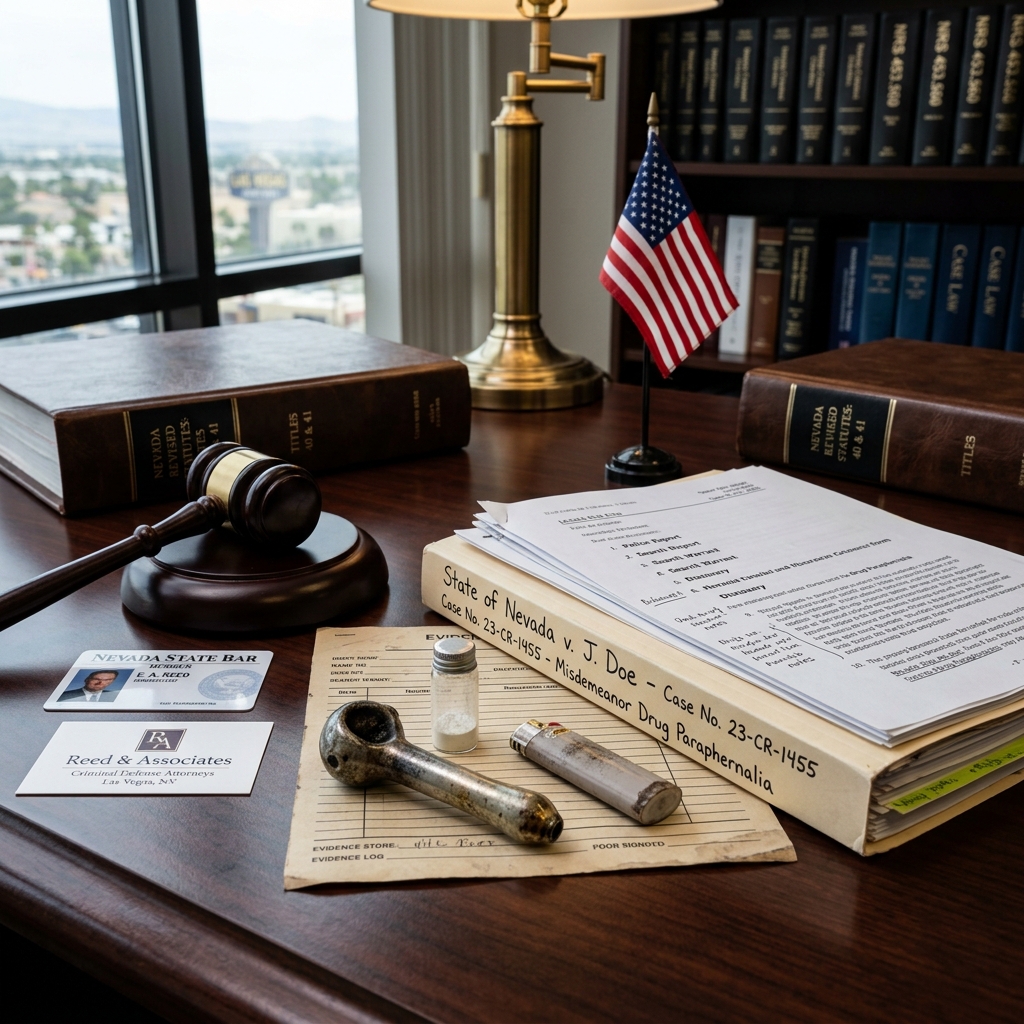
Drug cases in Nevada do not always involve actual controlled substances. A person can be prosecuted solely for possessing or using items associated with drug consumption or manufacture, even if no drugs are found. Nevada treats these items as drug paraphernalia, and simple possession or use is generally charged as a misdemeanor under state law.
This guide explains how Nevada law defines drug paraphernalia, when a misdemeanor charge arises, the penalties you may face, and what defense options and practical steps are available if you are arrested.
Overview of Nevada Drug Paraphernalia Laws
Nevada’s controlled substances laws are primarily contained in NRS Chapter 453, which includes specific provisions addressing drug paraphernalia. These statutes regulate:
- What qualifies as drug paraphernalia
- Misdemeanor offenses for use or possession with intent to use
- Felony offenses for sale, delivery, manufacture, or advertising
- Enhanced penalties when minors are involved
The core misdemeanor provision is found in NRS 453.560, which makes it a crime to use drug paraphernalia or possess paraphernalia with intent to use it to handle or consume controlled substances.
What Counts as Drug Paraphernalia in Nevada?
Nevada’s statutory definition of drug paraphernalia is broad. Under NRS 453.554, it includes “all equipment, products and materials of any kind” used, intended for use, or designed for use in connection with illegal controlled substances. The law covers nearly every stage of drug activity, from cultivation to consumption.
Key Functional Categories
Under Nevada law, items may be considered drug paraphernalia if they are associated with:
- Cultivation and production – tools and kits used to plant, grow, harvest, or manufacture controlled substances.
- Processing and preparation – scales, blenders, mixing bowls, testing devices, and similar equipment used to convert, analyze, or prepare drugs.
- Storage and concealment – containers, bags, or other objects used to store or hide controlled substances.
- Consumption – pipes, bongs, roach clips, spoons, chillums, and similar devices used to ingest, inhale, or otherwise introduce drugs into the body.
Common Examples in Nevada Cases
Law enforcement and courts frequently treat the following as drug paraphernalia when linked to illegal drug activity:
- Glass, metal, wooden, or ceramic pipes (with or without screens)
- Water pipes and bongs
- Roach clips and similar devices for holding smoking materials
- Miniature spoons used for drugs such as cocaine
- Plastic bags or other container systems used to package small quantities
- Scales, grinders, and testing kits associated with illegal substances
Many of these items can have legal uses (for example, tobacco pipes or kitchen spoons). The critical question under Nevada law is whether they are used, intended for use, or designed for use with controlled substances in violation of Chapter 453.
Elements of a Misdemeanor Drug Paraphernalia Charge
To secure a conviction for misdemeanor paraphernalia use or possession, the prosecution typically must prove several key elements based on NRS 453.560 and related case law:
- Possession – The defendant had actual or constructive control over the paraphernalia (for example, in a pocket, vehicle, or home).
- Use or intent to use – The paraphernalia was used or possessed with the intent to plant, process, store, conceal, ingest, inhale, or otherwise introduce a controlled substance into the body.
- Connection to controlled substances – The items are associated with illegal drug activity rather than solely lawful purposes.
- Knowledge – The defendant knew of the presence of the items and their nature as drug-related equipment, though ignorance of the law itself is not a defense.
Intent is often inferred from surrounding circumstances, such as residue on the items, proximity to drugs, statements by the accused, or expert testimony regarding typical uses of certain equipment.
Penalties for Misdemeanor Possession or Use
Simple use or possession of drug paraphernalia with intent to use is treated as a misdemeanor in Nevada. Although less serious than a felony, these charges can still have significant consequences.
| Offense Type | Classification | Potential Penalties |
|---|---|---|
| Use or possession with intent to use drug paraphernalia | Misdemeanor | Up to 6 months in county jail and/or up to $1,000 in fines. |
| Advertising drug paraphernalia in print | Misdemeanor | Up to 6 months in jail and/or up to $1,000 in fines. |
| Sale, delivery, or manufacture of paraphernalia | Category E felony | Probation with suspended sentence; if conditions apply, 1–4 years in prison and fines up to $5,000. |
| Delivery or sale of paraphernalia to a minor | Category C felony | 1–5 years in prison, higher fines, and potential restitution to the minor. |
For first-time misdemeanor offenders, judges often consider alternatives such as suspended sentences, probation, or participation in treatment programs, depending on the facts of the case and the defendant’s history.
Collateral Consequences of a Misdemeanor Conviction
Beyond court-imposed penalties, a drug paraphernalia conviction can create lasting collateral effects:
- Criminal record – A misdemeanor drug conviction appears on background checks and can affect employment or housing opportunities.
- Professional licensing – Certain regulated professions may require disclosure of drug-related convictions and can impose discipline based on criminal records.
- Immigration consequences – Non-citizens may face immigration scrutiny or consequences for drug-related offenses, even at the misdemeanor level, depending on federal interpretations.
- Future sentencing – Prior convictions can be considered if the defendant is charged with new drug or paraphernalia offenses later.
Because of these long-term impacts, many defendants seek negotiated resolutions that minimize or avoid a permanent conviction when possible.
Felony Paraphernalia Offenses: When Charges Escalate
Although this guide emphasizes misdemeanor possession and use, it is important to understand when paraphernalia-related conduct becomes a felony under Nevada law.
- Category E felony – Knowingly delivering, selling, manufacturing, or possessing paraphernalia with intent to deliver or sell can be charged as a category E felony. Courts typically impose probation and a suspended sentence, but defendants with prior felonies may face 1–4 years in state prison and fines up to $5,000.
- Category C felony – Delivering drug paraphernalia to a minor (typically under age 18, with enhanced concern around younger minors) can escalate the charge to category C, with a sentencing range of 1–5 years and higher fines, plus possible restitution.
In practice, prosecutors may file multiple counts in a single case, including both misdemeanor use/possession and felony sale or delivery, depending on the alleged conduct.
Factors Courts Consider in Determining Paraphernalia Status
Because many everyday objects can be used for both lawful and unlawful purposes, Nevada law and courts look at contextual factors to decide whether something is drug paraphernalia.
Common factors include:
- Statements of the owner or user describing the purpose of the item.
- Presence of drug residue or odor on the object.
- Proximity to controlled substances or other drug-related materials.
- Expert testimony explaining typical uses of certain equipment in illegal drug activity.
- Instructions or marketing accompanying the item, especially where it is advertised for drug use.
These factors help distinguish, for example, a decorative glass pipe sold for tobacco from a device primarily marketed and used for consuming illegal drugs.
Defense Strategies in Paraphernalia Cases
Effective defense in a Nevada paraphernalia case depends on the specific facts, but several recurring arguments appear across cases:
1. Challenging Possession
- Lack of control – The defendant did not have actual or constructive possession (for example, the item was in a shared space without clear ownership).
- No knowledge of presence – The defendant was unaware that the paraphernalia was present, particularly when items are found in another person’s bag or vehicle.
2. Contesting Intent to Use with Controlled Substances
- Lawful purpose – The item is primarily used for legal activity (such as tobacco use or standard household functions).
- Insufficient evidence of drug connection – No drugs or residue were found; no statements or conduct show illicit intent.
3. Illegal Search and Seizure
- Fourth Amendment violations – If police lacked a valid warrant, probable cause, or consent, a defense attorney may argue that the paraphernalia was seized unlawfully and should be excluded from evidence.
- Vehicle and home searches – Scrutiny of traffic stops, pat-downs, and home entries often reveals procedural errors that can undermine the prosecution’s case.
4. Evidentiary Challenges
- Expert testimony disputes – Defense counsel can cross-examine state experts or present independent experts to challenge conclusions about the item’s typical use.
- Chain of custody issues – Errors in documenting or preserving the paraphernalia can raise questions about reliability.
In many cases, defense strategies focus on negotiating outcomes that reduce charges, avoid jail, or allow for dismissal after successful completion of programs or probation.
Practical Steps After a Paraphernalia Arrest
Anyone arrested or cited for drug paraphernalia in Nevada can take immediate steps to protect their rights:
- Exercise the right to remain silent – Avoid making statements to law enforcement about ownership, use, or purpose of the items until speaking with counsel.
- Request legal representation – Ask for an attorney as soon as possible; if you cannot afford one, the court may appoint counsel.
- Document the incident – Write down details about the stop, search, and seizure while they are fresh, including names of officers and any witnesses.
- Preserve evidence – Keep any receipts, packaging, or documentation showing lawful use of the items.
Early involvement of a criminal defense lawyer familiar with Nevada drug laws can significantly affect how the case is charged and resolved.
Frequently Asked Questions (FAQ)
Is it always illegal to own items like pipes or bongs in Nevada?
No. Nevada law focuses on whether items are used or intended to be used with illegal controlled substances. A pipe or bong marketed and used solely for lawful tobacco may not be treated as paraphernalia, but the presence of drugs, residue, or drug-specific marketing can change that analysis.
Can I be charged with paraphernalia possession if no drugs are found?
Yes. Nevada’s paraphernalia statutes allow prosecution based solely on the items themselves and their connection to drug activity, even without seized drugs. The prosecution must still prove use or intent to use with controlled substances.
What is the maximum jail time for a misdemeanor paraphernalia conviction?
The maximum jail sentence is up to six months, and courts may also impose fines of up to $1,000. In many cases, especially for first-time offenders, judges consider alternatives such as probation or suspended sentences.
How do felony paraphernalia charges differ from misdemeanors?
Misdemeanor charges usually involve personal use or possession with intent to use. Felony charges arise when a person delivers, sells, manufactures, or possesses paraphernalia with intent to deliver or sell, or when paraphernalia is provided to a minor. Felony penalties include potential prison terms and higher fines.
Can a paraphernalia charge affect my immigration status?
Drug-related offenses, even misdemeanors, can carry immigration consequences for non-citizens under federal law. It is important for non-citizen defendants to consult both criminal defense and immigration counsel to understand potential risks before entering any plea.
When to Seek Legal Help
Because paraphernalia prosecutions often hinge on subtle issues of intent, possession, and search legality, experienced legal representation is strongly recommended. Nevada criminal defense attorneys familiar with NRS 453.554–453.560 can:
- Evaluate whether the seized items legally qualify as drug paraphernalia
- Assess the strength of evidence concerning intent and knowledge
- Challenge unlawful searches and seizures under state and federal constitutional standards
- Negotiate with prosecutors to reduce charges or pursue alternative sentencing
- Advise on record-sealing options after a favorable resolution
For many defendants, the goal is to avoid a lasting drug-related conviction while addressing any underlying substance use concerns through treatment or counseling, where appropriate.
References
- NRS 453.554 – “Drug paraphernalia” defined — Nevada Legislature. 2025-01-01. https://law.justia.com/codes/nevada/chapter-453/statute-453-554/
- NRS Chapter 453 – Controlled Substances — Nevada Legislature. 2025-01-01. https://www.leg.state.nv.us/nrs/nrs-453.html
- Drug Paraphernalia – Laws & Penalties in Nevada (NRS 453.560) — Las Vegas Defense Group. 2023-05-10. https://702defense.com/laws/drug-paraphernalia/
- Las Vegas Drug Paraphernalia Possession Defense Attorney — Legalmann Law Firm. 2023-03-20. https://www.legalmann.com/drug-charges/possession-of-drug-paraphernalia/
- Drug Paraphernalia Fast Facts — U.S. Department of Justice, National Drug Intelligence Center. 2003-08-01. https://www.justice.gov/archive/ndic/pubs6/6445/6445p.pdf
- Drug Paraphernalia Crimes – NRS 453.560 — Hofland & Tomsheck. 2022-11-15. https://www.lvnvlawfirm.com/nevada-crimes-by-name/drug-paraphernalia-crimes-nrs-453-560/
- Possession Of Drug Paraphernalia — Michael I. Gowdey Law Offices. 2021-09-30. https://gowdeylaw.com/possession-of-drug-paraphernalia/
Similar Articles








Read full bio of medha deb




