
Nevada Drugged Driving and OTC Medications
Understand how over-the-counter and prescribed drugs can lead to DUI charges in Nevada and what legal options drivers have.
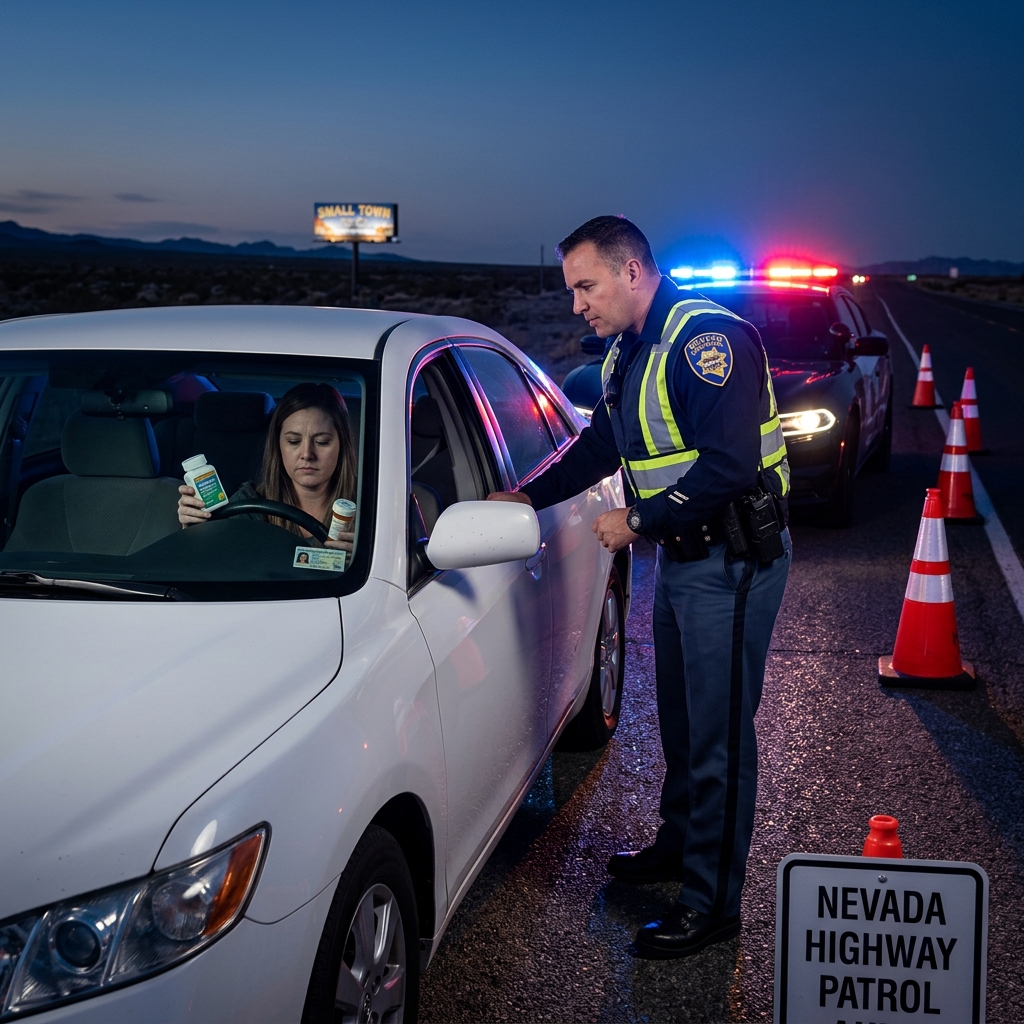
Many drivers assume that over-the-counter (OTC) medications and prescribed drugs are safe to use before getting behind the wheel because they are legal products. In Nevada, that assumption can be dangerous. State law treats drug-impaired driving very seriously and allows prosecutors to pursue DUI (Driving Under the Influence) charges even when the substance is a common cold medicine or a lawfully prescribed medication, if it impairs your ability to drive safely.
This article explains how Nevada approaches drugged driving involving OTC and prescription medications, when legal drugs can still lead to DUI charges, the specific limits for certain controlled substances, potential penalties, and key issues to discuss with a defense attorney.
1. How Nevada Defines Drugged Driving
Nevada’s DUI framework does not focus only on alcohol. Instead, the law prohibits driving under the influence of any substance that impairs your ability to operate a vehicle safely.
Under Nevada Revised Statutes (NRS) 484C.110, it is unlawful to drive or be in actual physical control of a vehicle if:
- You are under the influence of a controlled substance;
- You are under the combined influence of alcohol and a controlled substance; or
- You are under the influence of any drug (legal or illegal) to a degree that makes you incapable of driving safely.
Importantly, the law applies to illegal drugs, prescription medications, and many OTC medications whenever their effects impair driving.
2. Legal Medications That Can Still Trigger a DUI
Nevada law treats impairment as the core issue. That means a driver can be charged with DUI even if the medication was:
- Purchased legally at a pharmacy or store;
- Taken as directed on the package or by a physician;
- Prescribed for a legitimate medical condition.
The statute specifically states that having a lawful prescription or being entitled to use a drug is not a defense to a DUI charge. This rule covers:
- Common OTC remedies that cause drowsiness, slowed reaction time, or blurred vision (e.g., certain allergy or cold medications);
- Prescription painkillers (opioids), sedatives, antidepressants, and anti-anxiety medications when they impair alertness and coordination;
- Legal cannabis products, where applicable, under Nevada’s impairment and per se standards.
Federal safety guidance also warns that many legally obtained drugs—both prescription and OTC—can significantly affect driving performance and should be used with caution when driving.
3. Per Se Drug Limits Versus Impairment-Based DUI
Nevada uses two different approaches to drugged driving enforcement:
3.1 Impairment-Based Standard
For most medications, including many prescriptions and OTC drugs, prosecutors must prove that the driver was actually impaired—that is, unable to drive safely—due to the substance.
Evidence of impairment can include:
- Erratic driving behavior (weaving, speeding, failing to maintain lane);
- Physical symptoms (slurred speech, confusion, extreme drowsiness);
- Poor performance on field sobriety tests;
- Drug Recognition Expert (DRE) evaluations;
- Blood or urine test results confirming presence of drugs.
3.2 Per Se Concentration Limits
For certain controlled substances, Nevada adopts a per se rule: simply having a specified amount of the drug or its metabolite in your system while driving is a criminal offense, regardless of whether you appear impaired.
Examples of substances with per se limits (measured in nanograms per milliliter, ng/mL) in blood or urine include:
- Cocaine and cocaine metabolite;
- Methamphetamine (“meth”);
- Heroin and certain heroin metabolites;
- Morphine and other opiates;
- Amphetamines (including some stimulants);
- LSD (lysergic acid diethylamide);
- Phencyclidine (PCP).
In addition, for third or subsequent DUI offenses within seven years, Nevada applies per se limits for cannabis: at least 2 ng/mL of delta-9 THC or 5 ng/mL of the main active marijuana metabolite in blood can independently establish a violation.
Because these thresholds are written directly into Nevada law and related state guidance, reaching or exceeding them can result in a drugged DUI charge even if the driver believes they feel normal.
4. OTC Medications and Real-World Impairment Risks
OTC products are often marketed as safe and widely used, but many contain ingredients that can interfere with driving. According to federal traffic safety authorities, legally obtained OTC medicines can cause:
- Drowsiness or sedation;
- Blurred vision and slower eye focus;
- Delayed reaction time;
- Dizziness or confusion;
These effects are particularly common with:
- Certain antihistamines and allergy medications;
- Cough and cold medicines containing sedating compounds;
- Sleep aids and anti-nausea medications.
Even when these products are taken as directed, Nevada law allows a DUI charge if their impact on your nervous system or coordination leaves you unable to drive safely.
Practical Safety Tips
- Read the label and any warnings about driving, operating machinery, or drowsiness before using a new OTC drug.
- Consider trying a first dose when you do not need to drive to understand your personal reaction.
- Ask a pharmacist or doctor how a new medication may affect driving ability, especially if you take multiple drugs.
- Avoid mixing medications with alcohol, which can magnify impairing effects.
5. Penalties for Drugged DUI Involving Medications
Nevada imposes penalties for medication-related DUI that are generally similar to those for alcohol-based DUI. Sentences escalate with each additional conviction within a seven-year period.
| Offense Level | Typical Penalties (Approximate) |
|---|---|
| First DUI in 7 years | Fine of about $400–$1,000; 2 days to 6 months in jail or 48–96 hours of community service; mandatory education or treatment in some cases; approximately 90-day driver’s license revocation. |
| Second DUI in 7 years | Increased fines and mandatory jail time; longer license suspension; required treatment or intensive education programs. |
| Third DUI in 7 years (Felony) | Category B felony; 1–6 years in prison; $2,000–$5,000 fine; 3-year license revocation; stricter supervision and treatment conditions. |
| DUI causing serious injury or death | Category B felony; potential 2–15 years in prison and substantial fines, regardless of whether the impairment came from alcohol, illegal drugs, or legal medications. |
Beyond criminal penalties, a DUI involving medications can produce long-term consequences, such as higher insurance premiums, employment difficulties, and potential issues with professional licensing.
6. Testing, Evidence Collection, and Your Rights
Because roadside breath testing devices cannot measure the presence of drugs, Nevada relies on a combination of officer observations and chemical testing for suspected medication-related DUI.
6.1 Chemical Testing
After an arrest, officers may request blood or urine tests to determine whether controlled substances or other prohibited substances are present.
- Blood tests are commonly used for drugs, including prescription and OTC medications, and for per se cannabis limits.
- Urine tests may be used for certain drugs with statutory concentration limits.
Nevada law allows a person arrested for DUI to request, at their own expense, an additional chemical test by a qualified person of their choosing to verify or challenge the state’s results.
6.2 Observational Evidence
In addition to lab tests, officers typically collect evidence such as:
- Video of roadside interactions and driving behavior;
- Statements from the driver or witnesses about medication use;
- Field sobriety test performance;
- DRE evaluations that assess signs of drug influence.
All of this material may be used by prosecutors to show that medication use rendered the driver incapable of driving safely.
7. Common Defense Issues in Medication-Related DUI Cases
Defending a drugged DUI involving OTC or prescription medications can be complex, because the case often hinges on scientific analysis and expert testimony. Typical defense strategies may address:
7.1 Challenging Impairment
For impairment-based DUI charges, defense counsel may argue that:
- The driver’s behavior was not actually unsafe or was caused by factors other than drugs (e.g., medical conditions, fatigue, road hazards).
- Field sobriety tests were improperly administered or interpreted.
- The driver’s performance on tests did not reliably indicate impairment by drugs.
7.2 Questioning Chemical Test Reliability
Where per se limits or lab results are central to the case, possible challenges include:
- Errors in blood or urine sample collection, storage, or labeling.
- Problems with testing equipment calibration or laboratory procedures.
- Disputes over whether measured concentrations accurately reflect impairment at the time of driving.
7.3 Exploring Medical Necessity and Dosage
Although Nevada law states that lawful entitlement to use a drug is not itself a defense, the details of how a medication was used can still matter. Defense counsel may examine:
- Whether the driver followed medical advice or label directions.
- Whether dosage was within a normal therapeutic range.
- Whether the drug’s known side effects match the symptoms observed by police.
These factors can be important in negotiating charges, contesting the level of impairment, or presenting expert testimony regarding the real-world impact of the medication.
8. Preventive Steps for Drivers Using OTC or Prescription Drugs
Because the law focuses on safe driving, the best way to avoid a medication-related DUI is to combine medical guidance with practical caution.
- Consult healthcare professionals: Ask your doctor or pharmacist about driving risks associated with any new medication, and particularly about combinations of drugs.
- Monitor your reactions: Pay attention to how you feel after taking a medication—if you notice drowsiness, confusion, or slowed reactions, do not drive.
- Plan transportation: When starting a new prescription or using strong OTC remedies, arrange for a ride, public transportation, or delay driving until you understand the effects.
- Avoid mixing substances: Combining medications with alcohol or other drugs often amplifies impairment and can make DUI charges more likely.
- Retain documentation: Keep prescription information and dosing instructions; these records may be useful if your medication use becomes a contested issue in court.
9. FAQs About Nevada DUI and Medications
Q1: Can I be charged with DUI in Nevada if I only took over-the-counter medicine?
Yes. If an OTC medication impairs your ability to drive safely, Nevada law permits DUI charges even though the product is legal and available without a prescription.
Q2: Does having a valid prescription protect me from a drugged DUI?
No. Nevada statutes explicitly state that being entitled to use a drug under state law (including prescribed medications) is not a defense to DUI if the drug impairs your driving.
Q3: Are there specific legal limits for all prescription drugs?
No. Per se limits apply only to certain controlled substances and cannabis-related compounds. For most prescriptions and OTC drugs, prosecutors must prove actual impairment.
Q4: How do police test for drugged driving if there is no breathalyzer for drugs?
Officers rely on observations, field sobriety tests, DRE evaluations, and chemical testing of blood or urine. Lab results may show the presence and concentration of drugs.
Q5: What should I do if I’m arrested for DUI involving medications?
Seek legal counsel promptly. A defense attorney can analyze the traffic stop, testing procedures, lab accuracy, and your medical history to determine whether the charges and evidence can be challenged or reduced.
References
- Driving Under the Influence in Nevada — Nevada Legislative Counsel Bureau. 2020-01-01. https://www.leg.state.nv.us/Division/Research/Documents/Driving-Under-the-Influence-2020.pdf
- DUI in Nevada: Alcohol vs. Marijuana vs. Drugs — Sam & Ash Injury Law. 2026-01-01. https://samandashlaw.com/resources/dui-in-nevada-alcohol-vs-marijuana-vs-drugs-what-drivers-need-to-know-in-2026/
- Can You Get a DUI for Prescription Medications in Nevada? — Las Vegas DUI Attorney Blog. 2024-05-01. https://www.lasvegasduiattorneyblog.com/133-2/
- DUI Prescription Drugs — Hofland & Tomsheck. 2023-09-01. https://www.lvnvdui.com/DUI_Prescription_Drugs.html
- Nevada DUI Laws — National College for DUI Defense. 2022-01-01. https://www.ncdd.com/nevada-dui-laws
- Prescription and Over-the-Counter Medicines — National Highway Traffic Safety Administration (NHTSA). 2021-06-01. https://www.nhtsa.gov/campaign/prescription-and-over-counter-medicines
Similar Articles








Read full bio of medha deb




