
Nevada Felony Malicious Destruction of Property
Understand Nevada’s laws on malicious destruction of property, felony thresholds, penalties, defenses, and what to expect in a criminal case.
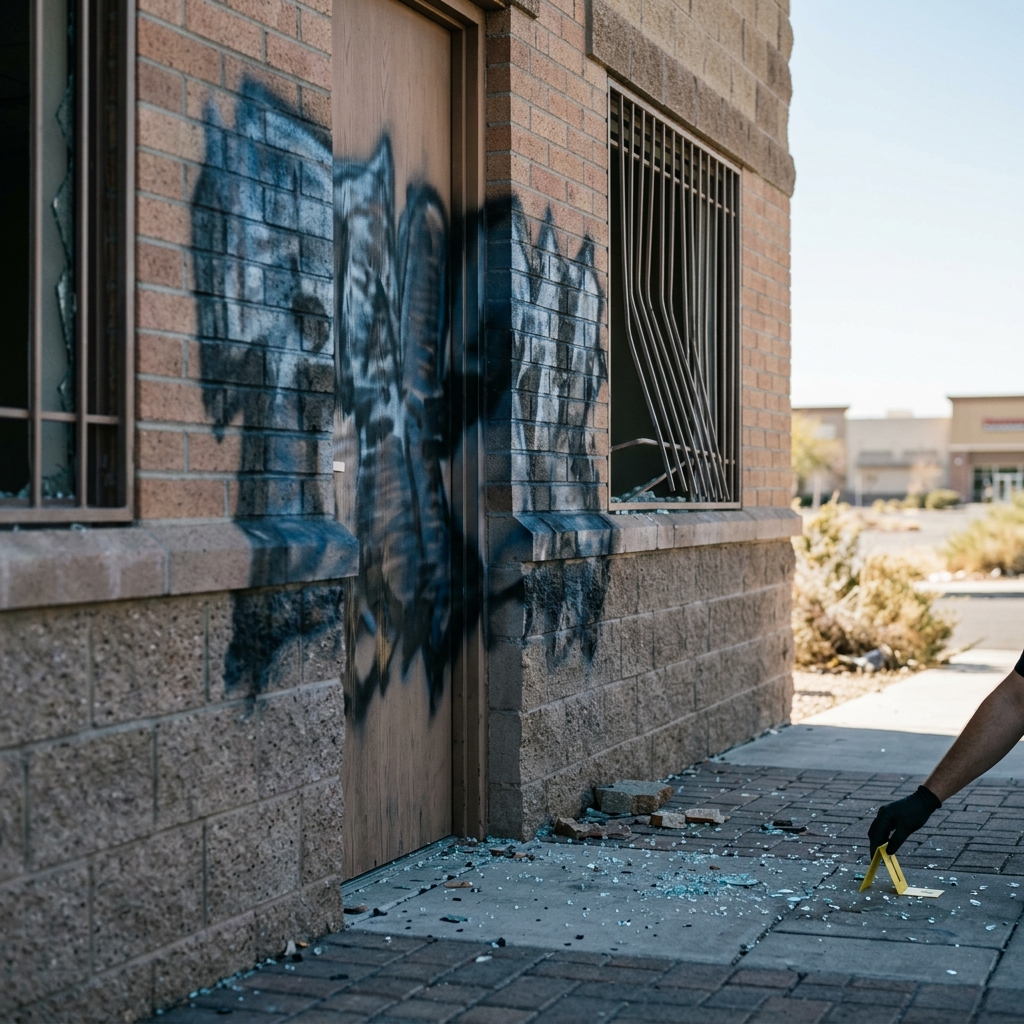
Nevada treats malicious destruction of property—often referred to as vandalism or malicious mischief—as a serious crime that can lead to felony charges, lengthy prison terms, and substantial fines when the damage is significant. Understanding how these laws work is critical for anyone accused of the offense, anyone whose property has been damaged, or anyone trying to assess the risks of certain conduct.
This guide explains Nevada’s legal definition of malicious destruction of property, how cases escalate from minor infractions to felonies, the penalties involved, common defenses, and how an attorney can help you navigate the criminal justice process.
1. How Nevada Defines Malicious Destruction of Property
Nevada’s general vandalism statute is found in NRS 206.310, a broad provision covering most forms of destruction or damage to another person’s property. The law applies to both public and private property and covers real estate (like buildings or land) as well as personal property (like vehicles or personal belongings).
1.1 Core Legal Elements the State Must Prove
To secure a conviction for malicious destruction of property, prosecutors generally must prove the following elements beyond a reasonable doubt:
- Damage or destruction: The defendant damaged, defaced, destroyed, or otherwise injured property.
- Ownership: The property belonged to someone else (a person, business, or public agency).
- Willful and malicious conduct: The defendant acted deliberately and with an improper purpose, not by mistake or accident.
- Intentional harm: The damage was the result of intentional behavior, not a mere mishap or negligence.
Acts that may fall under the statute include, for example:
- Scratching or “keying” a vehicle
- Breaking windows or doors
- Spray-painting or writing graffiti on walls
- Damaging fences, signs, or landscaping
- Breaking personal items like electronics, tools, or furniture
1.2 No Distinction Between Real and Personal Property
Under Nevada law, the offense can involve real property (land and attached structures) or personal property (movable items such as cars, phones, or equipment). The same statute covers both, and the main factor influencing the severity of the offense is the monetary value of the damage and, in some cases, the impact on public services.
2. When Malicious Destruction Becomes a Felony in Nevada
Not all property damage results in felony charges. Nevada uses a value-based ladder to determine whether malicious destruction of property is treated as a civil offense, misdemeanor, gross misdemeanor, or felony. The general punishment framework is derived from NRS 206.310 and related penalty statutes.
2.1 Damage Thresholds and Offense Levels
| Value of Damage / Impact | Typical Offense Level | Illustrative Penalties (Approximate) |
|---|---|---|
| Less than $25 | Civil infraction | Civil fine up to about $500, no jail time in many cases |
| $25 to under $250 | Misdemeanor | Up to 6 months in jail and/or fine up to roughly $1,000 |
| $250 to under $5,000 | Gross misdemeanor | Up to about 364 days in jail and/or fine up to about $2,000 |
| $5,000 or more in damage or damage that impairs public communication, transportation, or police/fire protection | Felony (Category C or related category depending on statute) | 1–5 years in state prison and up to $10,000 in fines, plus restitution in many cases |
The precise category (such as Category C or Category E felony) and available sentencing range can depend on the specific statute invoked, prior record, and whether other specialized vandalism laws apply.
2.2 Felony Factors Beyond Damage Amount
Even when the dollar amount of damage is not extremely high, certain circumstances can elevate a case to felony-level seriousness, including:
- Impairment of public infrastructure, such as damaging property in a way that disrupts transportation, communication systems, or emergency services.
- Repeat offending, especially when combined with high-value damage or prior vandalism convictions.
- Use of dangerous methods that put people at risk (e.g., starting a fire that damages property and endangers occupants).
When these factors are present in addition to significant monetary loss, prosecutors are more likely to pursue a felony case and seek state prison time.
3. Criminal Penalties and Collateral Consequences
Once malicious destruction of property reaches felony status, the possible consequences expand far beyond simple fines. Nevada’s felony vandalism penalties typically include a mix of incarceration, financial sanctions, and long-term record impacts.
3.1 Potential Criminal Sentences
Depending on the specifics of the charge and statutory category, felony-level malicious destruction of property may carry:
- State prison time – Often in the range of 1 to 5 years for higher-value vandalism or impairment of public services.
- Substantial fines – Fines for felony vandalism can reach up to about $10,000, sometimes in addition to restitution.
- Probation with strict conditions – In some cases, courts may suspend part of the prison sentence in favor of supervised probation, typically conditioned on law-abiding behavior, payment of restitution, and compliance with court orders.
- Restitution – Courts frequently order defendants to repay victims for repair or replacement costs, which can be substantial when the damaged property is a vehicle, business, or structure.
3.2 Additional Court-Imposed Sanctions
Certain types of vandalism—especially graffiti—can carry extra penalties under specific Nevada statutes, which may include:
- Mandatory community service, often including graffiti clean-up or property repair work.
- Special fines tied to repeat offenses or specific graffiti laws.
- Driver’s license suspension for adult defendants, potentially lasting several months or more.
- Liability for parents or guardians when the offender is under 18, including responsibility for fines or community service obligations.
3.3 Long-Term Impact of a Felony Conviction
Beyond the immediate sentence, a felony malicious destruction of property conviction can affect many aspects of life:
- Criminal record: A felony record may appear in background checks by employers, landlords, and licensing boards.
- Employment: Certain jobs, particularly those involving trust, security, or handling property, may be harder to obtain.
- Professional licensing: Felony convictions can complicate or prevent licensing in regulated professions.
- Civil rights implications: Depending on circumstances, a felony record can affect voting rights, firearm possession, and other civil rights until restored under state law.
4. Common Defenses to Malicious Destruction of Property Charges
Every case is fact-specific, but defendants are not automatically guilty just because damage occurred. Several legal defenses may be available, depending on the evidence and circumstances.
4.1 Lack of Intent or Accident
Because the crime requires willful and malicious conduct, an accidental act that damages property does not meet the required mental state. Examples include:
- Accidentally backing a vehicle into a mailbox
- Dropping an item that causes damage without intending harm
In such situations, the incident may create civil liability, but it is typically not criminal vandalism if there is no intentional or malicious element.
4.2 Mistaken Identity and Insufficient Evidence
Vandalism often occurs at night or out of public view, and cases may rely heavily on circumstantial evidence, surveillance footage, or witness accounts. Defenses may focus on:
- Challenging witness credibility or reliability.
- Questioning video or photo evidence, including the clarity of images or whether they actually depict the defendant.
- Highlighting gaps in the chain of custody for physical evidence, such as tools or spray paint found near the scene.
If the prosecution cannot prove that the defendant is the person who caused the damage, a not-guilty verdict or dismissal may be appropriate.
4.3 Ownership and Consent Issues
The law applies to property belonging to another. If the accused owned the property, or had valid permission from the owner to alter it, criminal liability may not attach. Potential scenarios include:
- Disputes between co-owners where property rights are unclear.
- Cases where the accused reasonably believed they had permission to paint, remove, or modify an item.
In some disputes, the issue is better suited for civil court than criminal prosecution.
4.4 Overstated Damage Value
The value of the damage is crucial because it determines whether the charge is a misdemeanor, gross misdemeanor, or felony. Defense counsel may challenge:
- Inflated repair estimates
- Use of new replacement costs when repair or partial replacement is possible
- Inclusion of unrelated pre-existing damage
If the proven value of damage falls below a statutory threshold, charges may be reduced to a lower level with less severe penalties.
5. How Nevada Prosecutors Build and Classify These Cases
The way a malicious destruction of property case is investigated and charged can strongly influence the outcome. Prosecutors consider the nature of the property, community impact, and the defendant’s history when choosing charges and negotiating pleas.
5.1 Typical Evidence in Vandalism Investigations
Law enforcement may rely on a variety of evidence types, such as:
- Surveillance videos from homes, businesses, or public cameras
- Photos of the damage and the scene
- Witness statements from neighbors, passersby, or co-workers
- Physical items like tools, spray paint, or clothing found near the scene
- Social media posts or messages that appear to brag about or admit the act
Prosecutors use this information to estimate the value of loss and decide whether felony charges are warranted.
5.2 Charging Decisions and Plea Negotiations
When the evidence is strong, prosecutors may initially file charges at the highest level available under the statutes, especially if the alleged damage is above $5,000 or affects public services. However, plea bargaining is common in property crime cases. Depending on the facts, negotiations may lead to:
- Reducing a felony charge to a gross misdemeanor or misdemeanor
- Securing an agreement for restitution and community service in exchange for a lower sentence
- Resolving the case with a suspended jail or prison term conditioned on compliance with probation
Defense attorneys often focus on lowering the damage calculation, challenging elements of the offense, and documenting the client’s lack of prior record to argue for reduced charges.
6. Practical Steps if You Are Accused of Felony Property Destruction
Facing a felony malicious destruction of property allegation in Nevada is a serious matter. The steps taken in the early stages can significantly affect the outcome.
6.1 Avoid Self-Incrimination
Anything you say to police or others can be used as evidence. While you must comply with basic identification requirements and lawful orders, you generally have the right to:
- Politely decline to answer detailed questions without an attorney present.
- Request a lawyer and wait to speak until you have legal advice.
Spontaneous conversations with alleged victims, neighbors, or on social media can also harm your defense if they suggest guilt or malicious intent.
6.2 Document Your Side of the Story
Working with counsel, it can be helpful to collect and preserve:
- Receipts, photos, or records showing your location at the time of the incident.
- Messages or agreements that support a claim of permission or misunderstanding.
- Names and contact information of witnesses who can testify in your favor.
Organized documentation helps your attorney evaluate defenses, negotiate with prosecutors, and challenge inflated damage estimates.
6.3 Seek Experienced Legal Representation
Because Nevada’s vandalism and malicious destruction statutes intersect with other criminal laws and involve complex valuation issues, legal representation is highly important. A defense lawyer can:
- Review the charging documents and evidence for weaknesses.
- Consult with repair or appraisal experts to dispute the amount of damage.
- Advise you on whether to pursue a trial, plea deal, or pretrial diversion (where available).
- Represent you in court hearings, negotiations, and sentencing.
7. Frequently Asked Questions About Nevada Malicious Destruction of Property
7.1 Is every act of vandalism in Nevada a felony?
No. Most lower-value incidents are charged as misdemeanors or gross misdemeanors. Felony charges typically arise when the value of damage is $5,000 or more or when the damage impairs public communications, transportation, or police/fire services.
7.2 Can I be charged if I damaged my own property?
Generally, the statute targets damage to the property of another person. If you are the sole owner, criminal charges are unlikely under this law, though disputes over shared ownership or marital property can complicate this analysis.
7.3 Will I have to pay for the damage?
In many cases, courts order restitution to compensate the victim for repair or replacement costs, in addition to any criminal fines or community service requirements. Failure to pay restitution as ordered can lead to further sanctions.
7.4 Can a felony vandalism conviction be reduced or cleared later?
Depending on the outcome, Nevada law may allow for certain forms of record relief after a waiting period and completion of all sentencing terms. The specific options (such as record sealing) and timelines depend on the type of conviction and your overall record. Legal advice is essential to evaluate eligibility under current Nevada statutes.
7.5 Does graffiti have different penalties than other property damage?
Yes. Nevada has separate graffiti laws that mirror many of the same value thresholds but add specific fines, community service hours, and potential driver’s license consequences, particularly for repeated offenses. These provisions can apply in addition to the general vandalism statute.
8. Key Takeaways
- Nevada’s malicious destruction of property laws apply broadly to both real and personal property belonging to another person or entity.
- The severity of the charge primarily depends on the value of the damage and whether critical public services are affected.
- Felony charges typically involve large losses or damage that disrupts communications, transportation, or emergency services and can lead to years in state prison and significant fines.
- Defenses often focus on intent, identity, ownership, and accurate valuation of damage, and may lead to reduced charges or dismissal.
- Experienced legal counsel is crucial to protect your rights, challenge the prosecution’s case, and pursue the most favorable resolution possible.
References
- NRS § 206.310 – Vandalism – Nevada Laws & Penalties — Shouse Law Group summary of NRS 206.310. 2024. https://702defense.com/nrs/206-310-vandalism/
- NRS 205.320 Vandalism / Malicious Destruction of Property — Thomas & Boley law overview of Nevada vandalism elements and penalties. 2023. https://www.thomasboley.com/nv-criminal-laws/nrs-205-320-vandalism
- Chapter 206 — Malicious Mischief — Nevada Revised Statutes, official codification of vandalism and related offenses. Nevada Legislature. 2023-06-01 (last updated). https://law.justia.com/codes/nevada/2005/NRS-206.html
- Vandalism in Nevada — The Defenders Law Firm explanation of Nevada vandalism penalties and value thresholds. 2022. https://thedefenders.net/las-vegas/vandalism-in-nevada/
- Vandalism Lawyer in Las Vegas, NV — Adras & Altig, Attorneys at Law, overview of Nevada vandalism definitions and sentencing ranges. 2022. https://www.adrasandaltiglaw.com/misdemeanor-lawyer/vandalism-lawyer/
Similar Articles








Read full bio of Sneha Tete




