
Nevada Commercial DUI With Injury or Death
Understanding Nevada’s strict rules and penalties when a commercial DUI leads to serious injury or loss of life.
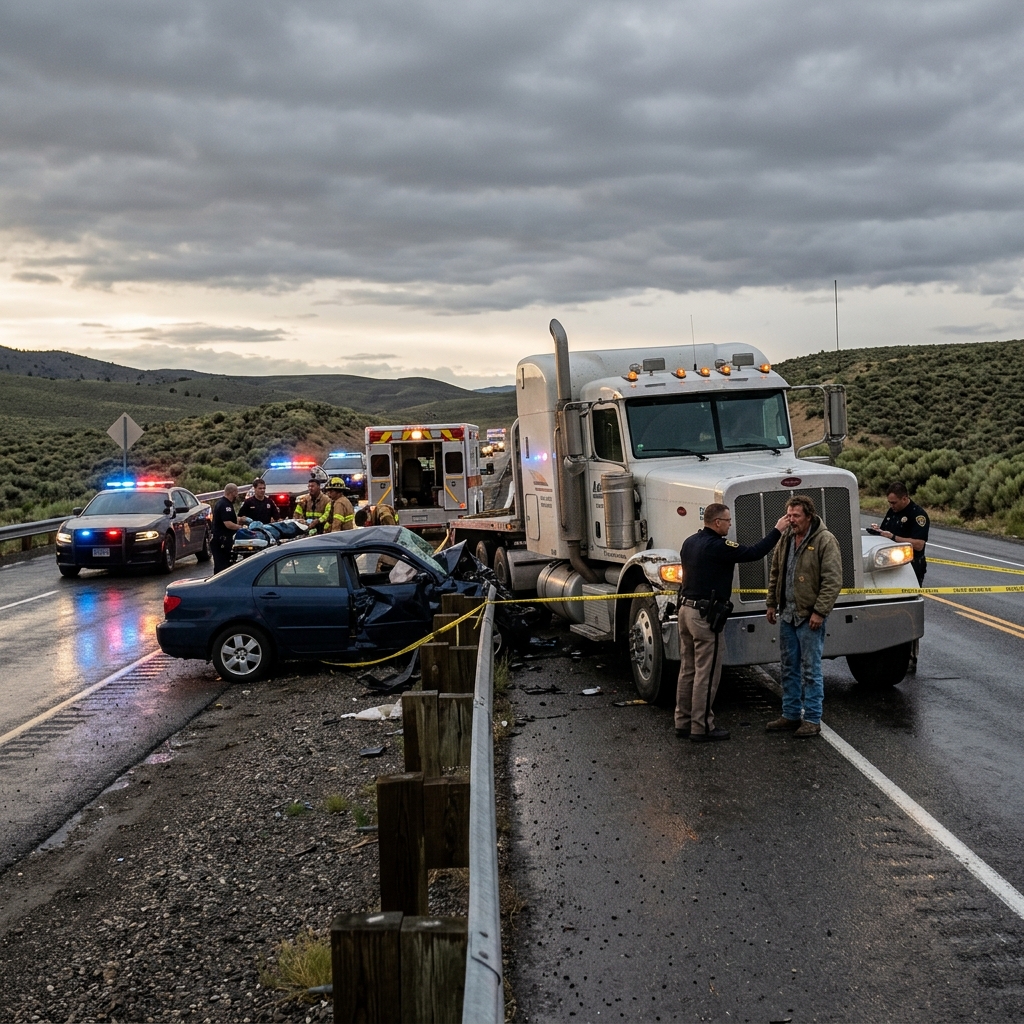
Commercial drivers in Nevada operate large, heavy vehicles that can cause devastating damage in a collision. When alcohol or drugs are involved and a crash leads to serious injury or death, the state treats the case as one of the most serious forms of driving under the influence. This article explains how Nevada law approaches commercial DUIs that result in injury or death, what penalties drivers may face, and key legal issues that often arise in these complex cases.
Overview: How Nevada Defines Commercial DUI
Nevada uses stricter rules for commercial drivers than for non-commercial motorists. A person is considered a commercial driver when they are operating a vehicle that requires a commercial driver’s license (CDL), such as a tractor-trailer, bus, or certain heavy trucks.
For DUI purposes, Nevada relies on an “illegal per se” standard. This means that driving at or above a specified blood alcohol concentration (BAC) is itself an offense, regardless of whether there are visible signs of impairment.
- Commercial BAC limit: 0.04% or higher can constitute DUI for a commercial driver.
- Non-commercial BAC limit: 0.08% or higher for most adult drivers.
- Controlled substances: Driving under the influence of drugs, or a combination of alcohol and drugs, can also lead to a commercial DUI charge.
Importantly, Nevada law allows prosecution if the driver’s BAC is at or above the commercial limit within two hours of operating the commercial vehicle, which can become a key evidentiary issue in contested cases.
Special Responsibilities of Commercial Drivers
Because commercial drivers carry passengers, hazardous materials, or heavy loads, the law assumes a higher duty of care. Several practical realities explain why Nevada’s rules are stricter:
- Commercial vehicles have longer stopping distances and can cause more severe collisions.
- Crashes may involve multiple vehicles, increasing the risk of serious bodily harm.
- Drivers may be on the road for long shifts, increasing fatigue and compounding the effects of alcohol or drugs.
This heightened risk is reflected not only in the lower BAC threshold but also in more severe administrative consequences for a DUI conviction, such as extended CDL suspensions or lifetime revocations in repeat cases.
When a Commercial DUI Becomes a Category B Felony
A standard commercial DUI in Nevada is typically charged as a misdemeanor for a first offense. However, the case escalates dramatically if the DUI is alleged to have caused death or substantial bodily harm.
Under Nevada law, a DUI that results in death or substantial bodily harm is classified as a Category B felony. This felony classification applies whether the driver was operating a commercial vehicle or a private passenger vehicle, but the involvement of a commercial vehicle often leads to more complex investigations and more serious collateral consequences.
| Type of DUI | Vehicle | Typical Classification |
|---|---|---|
| Standard DUI (no injury) | Commercial vehicle | Misdemeanor (first offense) |
| DUI with substantial bodily harm | Commercial or non-commercial | Category B felony |
| DUI with death | Commercial or non-commercial | Category B felony |
Substantial bodily harm includes serious, long-term injuries such as permanent disfigurement, long-term loss of bodily function, or injuries that pose a substantial risk of death. These legal definitions are often central issues at trial in determining whether a case meets the threshold for felony treatment.
Criminal Penalties for Injury or Death Cases
Felony commercial DUI cases involving injury or death carry significant prison terms and fines. While the exact outcome depends on prior DUI history and case-specific factors, Nevada statutes and practice give a general range of punishment.
Prison Sentences
- For DUI causing substantial bodily harm: typically 2 to 20 years in Nevada state prison.
- For DUI causing death: similar ranges apply, often 2 to 20 years, and in certain circumstances up to 25 years, especially when prior DUIs are involved.
Conviction for a Category B felony also carries long-term consequences beyond the sentence itself, including loss of civil rights such as voting and serving on a jury, and a permanent felony record.
Fines and Financial Impact
- Typical felony DUI fines range from approximately $2,000 to $5,000.
- Additional court costs, fees for counseling, and restitution to injured parties may apply.
In addition, the driver often faces civil lawsuits seeking damages for medical costs, lost earnings, pain and suffering, and other losses. Nevada does not have a broad “dram shop” law that allows victims to sue alcohol vendors for over-serving in most situations, so liability typically falls primarily on the driver and possibly the employer, depending on the circumstances.
CDL Consequences: Suspensions and Lifetime Revocations
For commercial drivers, the loss of a CDL can be as devastating as the criminal sentence, because it often means losing the ability to continue in their chosen profession.
Administrative Penalties for Commercial DUI
- First commercial DUI: generally a 1-year CDL suspension, along with suspension of the regular driver’s license.
- Hazardous materials involved: if the driver was transporting hazardous materials, the suspension may extend to 3 years for a first offense.
- Second commercial DUI: can lead to lifetime CDL revocation with no reinstatement.
These consequences apply whether the DUI occurred in a commercial vehicle or, in many situations, in a private vehicle. Nevada and federal regulations treat DUI convictions very seriously for CDL holders, even when the incident did not occur on the job.
Key Elements the State Must Prove
To convict a commercial driver of felony DUI causing injury or death, prosecutors must establish several elements beyond a reasonable doubt. These typically include:
- The driver was operating or in actual physical control of a motor vehicle.
- The vehicle involved required a commercial driver’s license, or the driver held a CDL and was operating such a vehicle.
- The driver was under the influence of alcohol, drugs, or a combination, or had a BAC at or above the legal limit (0.04% for commercial drivers).
- The DUI conduct was a proximate cause of the victim’s death or substantial bodily harm.
In many cases, the dispute at trial focuses on causation and the degree of injury. For example, the defense may argue that the collision would have occurred regardless of the driver’s intoxication, or that the injuries do not meet the statutory threshold for substantial bodily harm.
Evidence Commonly Used in Commercial DUI Injury or Death Cases
Because felony DUI cases involving commercial vehicles are serious, investigations are often thorough and involve multiple types of evidence:
- Chemical tests: Breath, blood, or urine tests conducted by law enforcement or medical staff.
- Accident reconstruction: Expert analysis of crash scene data, vehicle damage, skid marks, and electronic logging devices.
- Witness statements: Testimony from passengers, other drivers, and bystanders.
- Video evidence: Dash cameras, surveillance footage, and body-worn camera recordings from police.
- Medical records: Documentation confirming the extent of injuries or medical cause of death.
Commercial drivers may also have logs and records required by federal and state regulations that can become evidence, such as hours-of-service records and cargo manifests.
Potential Defenses and Mitigating Factors
Each case is unique, and the viability of any defense depends on the specific facts. Common defense strategies include:
- Challenging the BAC result: Questioning whether testing equipment was calibrated, whether blood samples were properly stored, or whether the two-hour window was correctly applied.
- Disputing causation: Arguing that another driver, a mechanical failure, or road conditions caused the crash rather than the alleged impairment.
- Questioning injury severity: Contesting whether injuries qualify as “substantial bodily harm” under Nevada law.
- Procedural violations: Highlighting unlawful stops, searches, or violations of the defendant’s rights that could lead to suppression of evidence.
Even when the evidence is strong, mitigating factors—such as a clean prior record, prompt cooperation, or efforts to assist victims—may influence sentencing or plea negotiations. However, Nevada law significantly restricts plea bargaining in DUI cases involving death or substantial bodily harm, limiting the ability to reduce charges.
Impact on Employment and Future Opportunities
Beyond criminal penalties and license consequences, a commercial DUI involving injury or death can reshape a driver’s life.
- Loss of career: Lifetime CDL revocation or long-term suspension often ends a professional driving career.
- Background checks: Felony DUI convictions appear on criminal records and can affect hiring in many industries, housing applications, and professional licensing.
- Insurance costs: Motor vehicle and commercial liability insurance premiums typically increase dramatically, and some insurers may refuse coverage.
Because of these broad consequences, many commercial drivers seek legal advice as early as possible after an arrest, even before formal charges are filed.
Frequently Asked Questions (FAQs)
1. What BAC level triggers a commercial DUI in Nevada?
For commercial drivers in Nevada, a BAC of 0.04% or higher is sufficient to support a DUI charge, significantly lower than the 0.08% limit for non-commercial drivers.
2. Does a commercial DUI in a personal vehicle affect my CDL?
Yes. Under Nevada law and federal regulations, many DUI convictions in a private vehicle still lead to CDL suspensions or revocations, especially for first and second offenses.
3. When does a commercial DUI become a felony?
A commercial DUI becomes a felony when it involves death or substantial bodily harm, or when it is a third DUI within seven years, subject to statutory criteria. Injury or death cases are typically charged as Category B felonies.
4. How long can I go to prison for DUI causing injury or death?
Felony DUI causing injury or death in Nevada generally carries a potential prison term of 2 to 20 years, with some circumstances allowing for sentences up to 25 years, particularly when prior DUI convictions are present.
5. Can the court suspend my sentence or grant probation?
Nevada law substantially limits the ability of courts to grant probation or suspend sentences in DUI cases involving death or substantial bodily harm. Statutory restrictions are designed to ensure that serious DUI offenses result in incarceration.
6. Are businesses serving alcohol liable for a commercial DUI crash?
Nevada is one of the states that generally lacks a broad “dram shop” law. As a result, people injured by a DUI crash typically cannot sue the bar or restaurant simply for serving the driver, and liability is more often focused on the driver and, in some cases, the employer.
Practical Steps for Commercial Drivers After a Serious DUI Crash
Facing allegations of DUI causing injury or death is overwhelming, especially for drivers who depend on their CDL for income. While specific legal advice must come from a qualified attorney, several practical steps are often advisable:
- Cooperate safely at the scene: Provide necessary information to law enforcement and emergency personnel without volunteering extra statements that could be used against you later.
- Document what you can: If possible, note weather conditions, road hazards, and other factors that may have contributed to the crash.
- Seek legal counsel promptly: Early legal representation can help protect your rights, advise on interactions with investigators, and begin assessing potential defenses.
- Preserve employment records: Keep logs, maintenance records, and other documents related to the trip, as they may become important evidence.
Because felony commercial DUI cases are complex, drivers should expect detailed investigations and lengthy legal proceedings. Understanding the law and the stakes is an important first step in navigating what follows.
References
- DUI Laws — Nevada Department of Motor Vehicles. 2023-01-01. https://dmv.nv.gov/pdfforms/qtdui.pdf
- NRS Chapter 484C: Driving Under the Influence of Alcohol or a Prohibited Substance — Nevada Legislature. 2023-01-01. https://www.leg.state.nv.us/nrs/nrs-484c.html
- Nevada Commercial DUI Involving Injury or Death Laws — LegalMatch. 2024-01-01. https://www.legalmatch.com/law-library/article/nevada-commercial-dui-involving-injury-or-death-lawyers.html
- What if I get a Nevada DUI and I have a commercial license? — 702 Defense. 2023-06-01. https://702defense.com/dui/nrs/484c-120-commercial-license-dui/
- Felony DUI – Serious Bodily Harm or Death — Hofland & Tomsheck. 2022-05-01. https://www.lvnvdui.com/felony-dui-serious-bodily-harm-or-death
- Commercial Driver DUI Defense Lawyer — The Vegas Lawyers. 2022-09-01. https://thevegaslawyers.com/practice-areas/criminal-defense/dui/commercial-driver-dui-defense-lawyers/
- DUI Commercial Drivers — Troiano & Houle, Criminal Defense Attorney Las Vegas. 2021-08-01. https://troianovegaslaw.com/driving-under-the-influence-dui-lawyer/dui-commercial-drivers/
Similar Articles








Read full bio of medha deb




