
Nevada Law on Evading Police and Causing Endangerment
Learn how Nevada treats police evasion, endangerment, and property damage, including penalties, defenses, and what to expect in court.
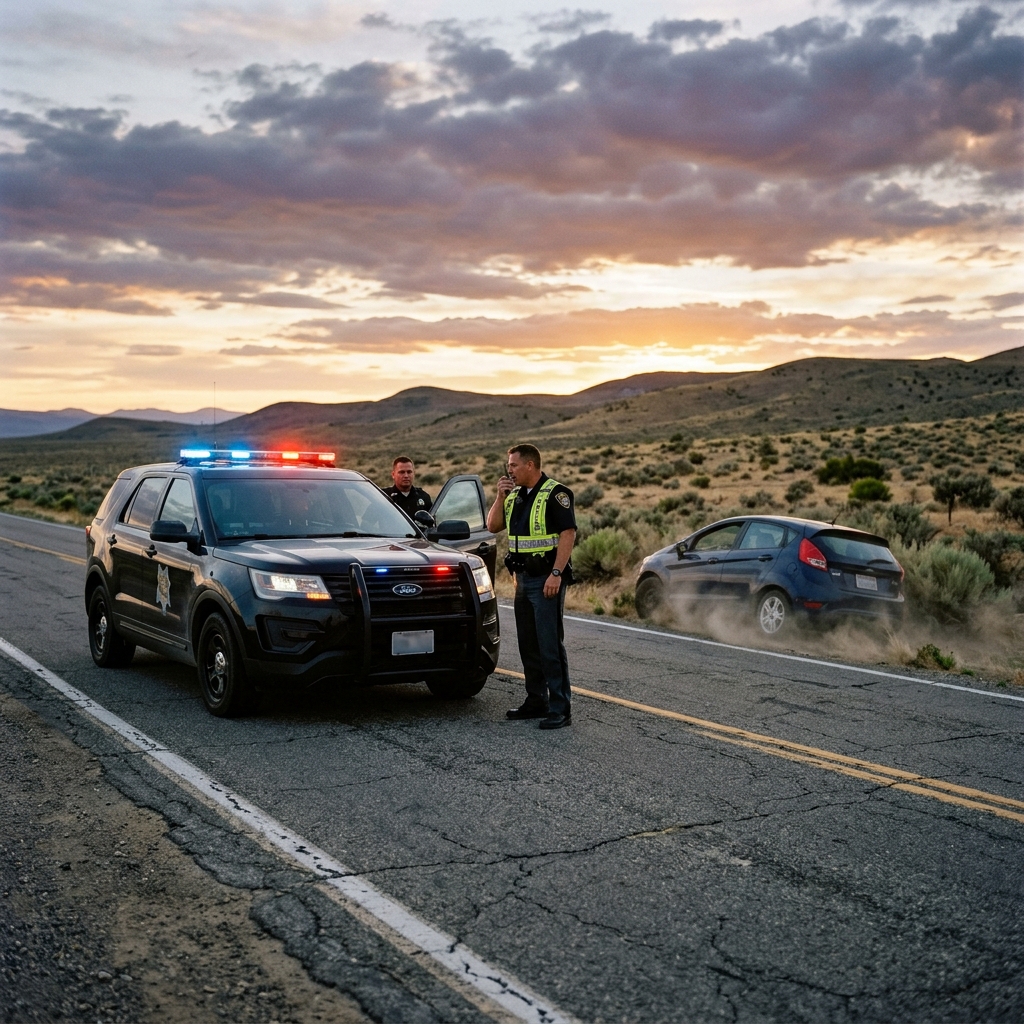
Failing to stop for a police officer in Nevada is not simply a traffic ticket; it is a criminal offense that can quickly escalate into a serious felony when people or property are harmed. Under NRS 484B.550, intentionally evading a police signal to stop can lead to jail or prison, thousands of dollars in fines, and a lasting criminal record. When the attempt to flee causes danger to others, property damage, or injury or death, the consequences become far more severe.
This article explains how Nevada law treats evading police, what counts as endangerment or property damage, how penalties are structured, and what defenses may be available if you or someone you know is charged.
Core Legal Framework: NRS 484B.550
Nevada’s primary statute governing evasion of law enforcement during vehicle stops is NRS 484B.550. The law applies when a driver:
- Is operating a motor vehicle on a public road.
- Receives a signal to stop from a peace officer in a readily identifiable vehicle.
- Willfully fails or refuses to stop, or otherwise flees or attempts to elude the officer.
The statute distinguishes between a basic failure to stop (treated as a misdemeanor) and more serious scenarios involving danger to people, property damage, or injury or death, which are charged as felonies.
What Counts as a Police Signal to Stop?
For NRS 484B.550 to apply, the officer’s vehicle must be readily identifiable and must signal the driver to stop by both a flashing red lamp and a siren. When these conditions are met, continuing to drive instead of pulling over can constitute evading police.
Intent and Willfulness
The law focuses on whether the driver willfully failed to stop. A mere delay in finding a safe place to pull over may be treated differently than deliberately speeding away to avoid contact. Whether conduct is intentional is often a central issue in contested cases.
Misdemeanor Evading Police: Baseline Offense
Most first-time evading cases that do not involve collisions, injuries, or clear endangerment are charged as a misdemeanor. The baseline offense occurs when a driver:
- Willfully fails or refuses to bring the vehicle to a stop after a valid police signal.
- Does not cause property damage, bodily harm, or clear endangerment to others.
Misdemeanor penalties typically include:
- Up to 6 months in jail.
- Fines up to $1,000.
- Possible driver’s license consequences, such as suspension or points.
- A permanent misdemeanor criminal record, subject to later record sealing under Nevada law.
Although a misdemeanor is less serious than a felony, any criminal conviction can affect employment, professional licensing, immigration consequences, and insurance rates.
Felony Evading: Endangerment and Property Damage
Nevada law sharply increases penalties when evasion puts others at risk or causes damage. Under NRS 484B.550, if a driver fleeing an officer:
- Is the proximate cause of damage to another person’s property, or
- Operates the vehicle in a manner that endangers or is likely to endanger any person or property,
the offense becomes a category B felony. This enhancement does not require actual injury; creating serious risk or causing property damage can be enough.
Felony Penalties for Endangerment or Property Damage
When the prosecution proves endangerment or property damage in connection with evading police, NRS 484B.550 authorizes significant punishment:
- Imprisonment: Minimum of 1 year and up to 6 years in Nevada state prison.
- Fine: Up to $5,000.
- The court can impose both prison and a fine.
Defense attorneys often focus on whether the driver’s actions truly “endangered” others or caused property damage. For example, mere speeding may not be enough if the prosecution cannot show a substantial risk to specific persons or property.
Understanding “Endangerment” in this Context
Endangerment generally refers to driving in a way that creates a likelihood of harm, even if no actual injury occurs. Examples can include:
- Running red lights or stop signs during a pursuit.
- Driving at very high speeds in congested areas.
- Weaving through traffic or driving on sidewalks or shoulders.
A separate Nevada offense, often called “reckless endangerment,” covers dangerous conduct that may cause injury or property damage more broadly, not only during a police chase. In evading cases, prosecutors may use both NRS 484B.550 and reckless endangerment statutes to charge risky driving behavior.
Felony Evading Causing Injury or Death
The most serious form of evading occurs when flight from police results in biodily injury or death. NRS 484B.550 states that if, during an evasion, the driver is the proximate cause of bodily harm or death to any person, the offense is a category B felony with much harsher penalties.
| Scenario | Offense Level | Prison Range | Maximum Fine |
|---|---|---|---|
| Evading with no endangerment or damage | Misdemeanor | Up to 6 months jail | $1,000 |
| Evading with endangerment or property damage | Category B felony | 1–6 years prison | $5,000 |
| Evading causing bodily injury or death | Category B felony | 2–20 years prison | $50,000 |
In practice, Nevada courts often treat injury or death cases with particular seriousness. The driver may also face separate charges such as vehicular homicide, DUI causing death, or hit-and-run, depending on the facts and other applicable statutes.
Related Offenses: Hit-and-Run and Property Damage
Evading police frequently overlaps with other traffic crimes. One common related offense is leaving the scene of an accident. Under Nevada’s hit-and-run laws, a driver involved in an accident must remain at the scene, exchange information, and comply with legal obligations; intentionally leaving is a criminal offense in itself.
- Hit-and-run with only property damage is typically a misdemeanor with up to 6 months in jail and fines up to $1,000.
- Hit-and-run causing injury or death is a category B felony, often punished by 2–20 years in prison and substantial fines.
A driver who flees both the police and an accident scene may face charges under NRS 484B.550 and separate hit-and-run provisions, leading to multiple counts and higher exposure to incarceration and fines.
Record Sealing and Long-Term Consequences
Beyond immediate penalties, evading police convictions can have long-term effects. Nevada law allows some felony and misdemeanor convictions to be sealed after a waiting period, but the timing depends on whether the offense is classified as a “crime of violence” and the specific statutory provisions.
For certain category B felonies, if they are not designated as crimes of violence, record sealing may become available several years after completion of the sentence. Until sealed, the conviction can affect:
- Employment and professional licensing opportunities.
- Housing and rental applications.
- Gun ownership rights and other civil rights, depending on the conviction.
- Immigration status for non-citizens.
Common Legal Defenses
Every case turns on specific facts, but several recurring defense strategies appear in Nevada evading and endangerment prosecutions. Defense attorneys may challenge:
1. Validity of the Police Signal
- Whether the officer’s vehicle was “readily identifiable” as law enforcement.
- Whether a flashing red lamp and siren were actually used, as required by NRS 484B.550.
- Whether the driver reasonably believed the signal was meant for them.
If the statutory requirements for a valid signal were not satisfied, the foundational element of evading may be missing.
2. Lack of Willful Evasion
Defendants may argue that they did not intentionally flee or refuse to stop. Possible scenarios include:
- A misunderstanding about whether the driver was being pulled over.
- Searching for a safe, well-lit place to stop rather than ignoring the signal.
- Medical or mental health emergencies that interfered with judgment.
3. No Endangerment or Property Damage
For felony charges based on endangerment or property damage, defense attorneys often focus on whether the prosecution can prove:
- That specific property damage occurred and was caused by the defendant’s driving.
- That the driving truly created a significant risk of harm, rather than a minor traffic violation.
- That the purported “victim” or property owner can be clearly identified.
If endangerment and damage elements are successfully challenged, the charge may be reduced to a misdemeanor.
4. Causation in Injury or Death Cases
In serious cases, the prosecution must show that the defendant’s actions were a proximate cause of the injury or death. Defense arguments may include:
- Intervening causes, such as another driver’s unexpected behavior.
- Unavoidable accidents not directly linked to evasion.
- Disputes about reconstruction of the collision and expert testimony.
Practical Steps If You Are Accused
Being charged with evading police, especially with allegations of endangerment or property damage, can be overwhelming. Practical steps typically recommended by defense counsel include:
- Do not discuss the incident with police or others without legal advice.
- Contact a criminal defense attorney experienced with Nevada traffic-related felonies.
- Preserve any evidence, such as dashcam footage, GPS data, and phone records.
- Compile information about medical conditions or emergencies that may have affected your actions.
- Follow all court dates and bond conditions to avoid additional charges.
Frequently Asked Questions (FAQs)
Is evading police in Nevada always a felony?
No. Basic evading without endangerment, property damage, injury, or death is generally a misdemeanor under NRS 484B.550. It becomes a felony only when endangerment, damage, or harm to people is proven.
What is considered “property damage” in an evading case?
Property damage typically means physical harm to someone else’s property, such as another vehicle, roadside structures, or buildings, caused by the driver’s actions while evading. The prosecution must show that the defendant’s conduct was the proximate cause of that damage.
Can I be charged both with evading police and hit-and-run?
Yes. If you flee an accident scene and also ignore a police signal to stop, you may face separate charges for evading under NRS 484B.550 and for leaving the scene of an accident under Nevada’s hit-and-run laws. Each offense carries its own penalties.
What are the maximum penalties for evading police causing death?
When evading police results in death or bodily harm, NRS 484B.550 classifies the conduct as a category B felony punishable by 2 to 20 years in prison and fines up to $50,000, plus potential additional sanctions.
Does DUI affect evading charges?
If a driver is under the influence while evading, separate DUI statutes may apply. In some circumstances, DUI combined with evasion can lead to enhanced felony penalties, including longer prison terms and mandatory license revocation, especially where injury or death occurs.
Can an evading conviction be removed from my record?
Nevada permits record sealing for many offenses after specified waiting periods. Whether and when an evading conviction can be sealed depends on the offense level, whether it is treated as a crime of violence, and other statutory conditions. Legal counsel can advise on eligibility and timing.
References
- NRS 484B.550 Stop required upon signal of peace officer; manner of signal; penalties — Nevada Legislature. 2010-01-01. https://law.justia.com/codes/nevada/2010/title43/chapter484b/nrs484b-550.html
- Felony Eluding Police Resulting in Death or Injury – Nevada Law — 702 Defense. 2023-06-01. https://702defense.com/nrs/484b-550-evading-police/felony-evading/
- Evading Police Charges in Las Vegas | Penalties & Defense — Thomas Boley Law. 2023-05-01. https://www.thomasboley.com/blog/evading-police-charges-las-vegas
- Evading Police – NRS 484B.550 — LVNV Law Firm. 2022-04-15. https://www.lvnvlawfirm.com/nevada-crimes-by-name/evading-police-nrs-484b-550/
- Leaving the Scene of an Accident — Weiner Law Group. 2021-11-01. https://weinerlawnevada.com/leaving-scene-accident/
- Duty to Stop at Scene of Accident Involving Damage to Vehicle or Property (NRS 484E.020) — Gallo Law Office. 2022-02-10. https://www.gallolawnv.com/criminal-defense/traffic-offense/nrs-484e.020
- Reckless Endangerment Laws in Nevada — Vegas Defense Group (Video). 2020-08-01. https://www.youtube.com/watch?v=qnSjyvl0VI4
Similar Articles








Read full bio of Sneha Tete




