
Nevada Assault on Protected Classes with Deadly Weapons
A detailed guide to Nevada’s laws on assault involving deadly weapons and protected victims, including penalties, examples, and defense options.
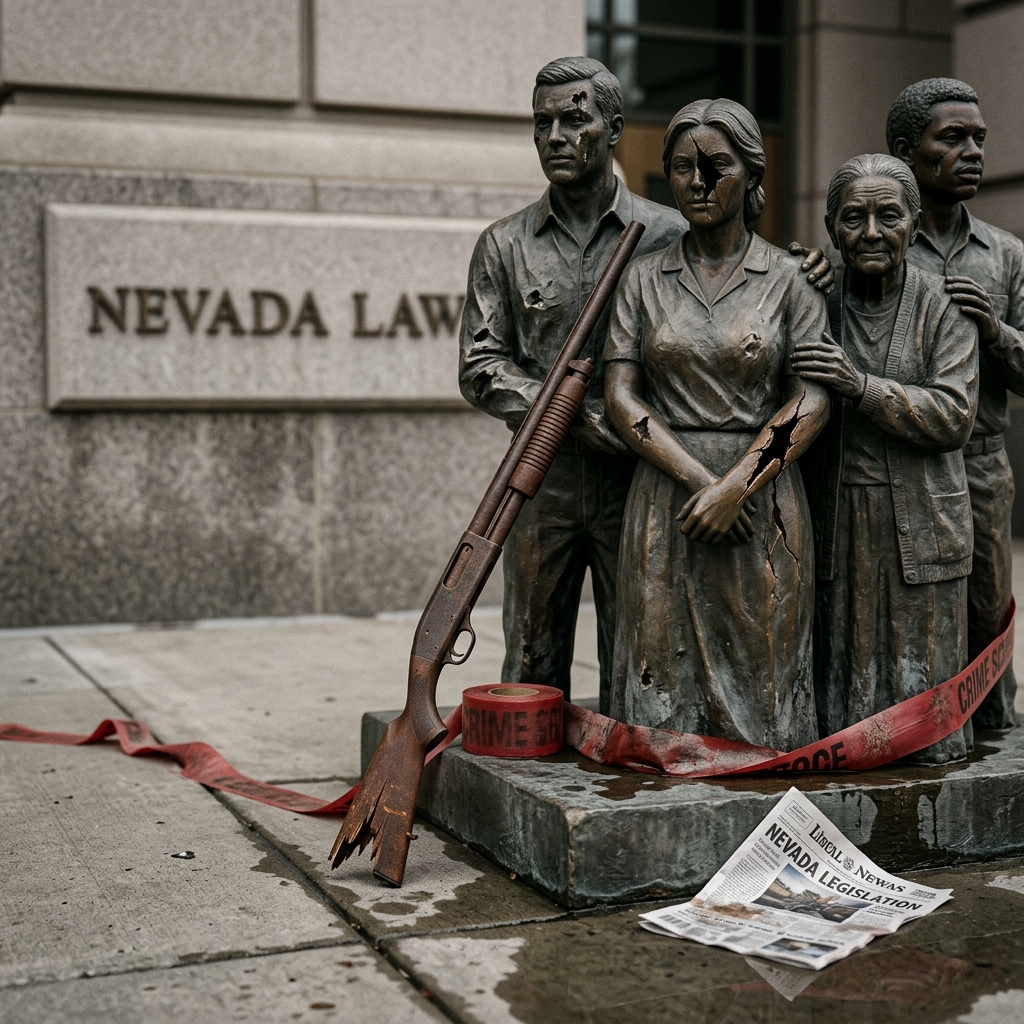
Nevada law treats assaultprotected classdeadly weapon
Core Legal Framework: How Nevada Defines Assault
Nevada’s general assault law is found in the state’s criminal code and sets out what conduct qualifies as assault and how penalties change based on circumstances. The law emphasizes attempts and fear of harm rather than actual physical contact.
Under Nevada law, assault
- Unlawfully attempting to use physical force against another person; or
- Intentionally placing another person in reasonable fear (apprehension) of immediate bodily harm.
This means someone may be guilty of assault even if no one is physically touched or injured. What matters is the unlawful attempt or the intentional creation of reasonable fear of imminent harm.
Protected Classes Under Nevada Assault Law
Nevada law provides heightened protection for certain categories of people due to the nature of their work or vulnerability. Assaulting these individuals, even without a weapon, can result in more serious charges and penalties.
Common Types of Protected Victims
While the exact list is defined by statute and interpreted by courts, typical examples of protected classes
- Law enforcement officers (police, sheriffs, correctional officers)
- School employees, including teachers and administrators
- Sports officials acting in an official capacity during events
- Health care providers such as doctors, nurses, and emergency medical staff
- Transit operators and taxicab drivers while working
Assault against these classes is treated differently from basic assault largely because they are often exposed to heightened risk while performing public or safety-related functions.
Basic Assault vs. Assault on a Protected Class
Nevada distinguishes between simple assault and assault against a protected victim, and the penalties increase accordingly. This distinction is crucial when assessing potential exposure to jail time and fines.
| Type of Assault | Victim | Classification | Typical Penalties |
|---|---|---|---|
| Simple assault | Any person (non-protected class) | Misdemeanor | Up to 6 months in jail; up to $1,000 fine |
| Assault against protected class (no deadly weapon) | Officer, school employee, health care provider, etc. | Gross misdemeanor | Up to 364 days in jail; up to $2,000 fine |
| Assault against protected class by inmate, probationer, or parolee (no deadly weapon) | Protected class victim | Category D felony | 1–4 years in prison; up to $5,000 fine |
As the table shows, merely targeting a protected victim significantly increases the severity of the charge compared with simple assault.
What Counts as a Deadly Weapon in Nevada?
The presence or use of a deadly weapon
Generally, a deadly weapon includes any item that is inherently dangerous or used in a manner capable of causing substantial bodily harm or death. Examples include:
- Firearms (handguns, rifles, shotguns)
- Knives, blades, or other sharp instruments
- Blunt objects used as weapons (clubs, bats, heavy tools)
- Chemical agents or devices capable of serious injury
- Any instrument that, when used in a particular way, can reasonably cause serious harm or death
Importantly, Nevada law also considers the present ability
Assault with a Deadly Weapon: Category B Felony
When an assault involves the use of a deadly weapon, or the offender has the present ability to use one, the offense is elevated to a Category B felony
Elements of Assault with a Deadly Weapon
For prosecutors to secure a conviction for assault with a deadly weapon, they generally must prove beyond a reasonable doubt:
- That an assault occurred (either an unlawful attempt to use force or intentional creation of fear of immediate bodily harm); and
- That the assault was carried out with a deadly weapon or while having the present ability to use a deadly weapon.
Physical injury is not required. The law focuses on the threat and ability to cause harm.
Penalties for Assault with a Deadly Weapon
Assault with a deadly weapon is punished as a Category B felony, and typical sentencing range includes:
- Between 1 and 6 years in Nevada State Prison
- Potential fine of up to $5,000
- Court costs
- Possible probation, where allowed by the court
- Orders restricting contact with the victim
- Restitution to compensate the victim for losses
- Participation in rehabilitative or counseling programs
If the victim suffers substantial bodily harm
Combining Protected Classes and Deadly Weapons
When an assault targets a protected class and
Felony Status and Enhanced Penalties
In Nevada, assault against a protected class without a weapon is typically a gross misdemeanor. However, when a deadly weapon is used, the offense escalates into felony territory, aligning with the general approach to assault with weapons and protected victims.
Courts may impose enhanced penalties in situations where:
- The assault is directed at a first responder or law enforcement officer.
- The assault occurs on school property.
- The crime is committed as a hate crime or due to bias against a protected characteristic.
- The victim is particularly vulnerable due to age or disability.
- The offense is committed for the benefit of a criminal gang.
These enhancements often require that the added punishment run consecutively
Illustrative Scenarios
The interaction of deadly weapons and protected classes can be easier to understand through practical examples. The scenarios below are for explanation only and do not reflect specific cases.
- Scenario 1: A person points a loaded firearm at a police officer during a traffic stop and threatens to shoot. This could be charged as assault with a deadly weapon against a protected class, likely treated as a Category B felony with possible enhancements.
- Scenario 2: An irate patient swings a metal tool at a nurse in a hospital without making contact. The nurse is a protected victim, and the presence of a weapon may elevate the crime to a felony assault with a deadly weapon.
- Scenario 3: A parent aggressively raises a fist and verbally threatens a teacher in a classroom without a weapon. This would typically be a gross misdemeanor assault against a protected class, not a felony, because no deadly weapon is involved.
Collateral Consequences of a Felony Assault Conviction
Beyond immediate imprisonment and fines, a felony conviction for assault with a deadly weapon, particularly against a protected class, carries long-term consequences.
- Loss of certain civil rights, including firearm possession, for many individuals.
- Challenges obtaining employment, housing, or professional licenses.
- Possible immigration implications for non-citizens.
- Enhanced sentencing in any future criminal cases due to prior felony record.
These collateral effects make it critical to understand the charges and seek prompt legal assistance when facing allegations of assault involving weapons or protected victims.
Defenses to Assault Charges Involving Deadly Weapons and Protected Victims
Although assault with a deadly weapon against a protected class is serious, several defenses may be available depending on the facts of the case.
- Self-defense: Nevada recognizes the right to defend oneself against immediate bodily harm, provided the force used is proportionate to the threat. If a defendant reasonably believed they were in imminent danger and used only necessary force, self-defense may be raised.
- Lack of intent: Assault requires intentional conduct. If the prosecution cannot show that the defendant intended to cause fear of immediate harm or attempt unlawful force, the charge may fail.
- No reasonable fear: If the alleged victim did not reasonably believe they were in immediate danger—for example, due to distance or circumstances—the element of reasonable apprehension may be disputed.
- Identity or mistaken accusation: In chaotic situations, particularly those involving crowds or protests, misidentification can occur. Establishing that the defendant was not the person responsible may be a central defense.
- Weapon not deadly or no present ability: In some cases, the object may not qualify as a deadly weapon or the defendant may not have had the present ability to use it, which can affect whether the felony enhancement applies.
The viability of any defense depends on detailed factual analysis, available evidence such as video footage, witness statements, and expert testimony regarding threats and use of force.
Plea Bargaining and Sentencing Considerations
Many assault cases in Nevada do not go to trial but are resolved through negotiation. Depending on the circumstances, the defense and prosecution may reach agreements that reduce the severity of charges or limit penalties.
- Negotiating a felony assault with a deadly weapon down to a lesser offense where evidence of intent or weapon use is weak.
- Securing probation in appropriate cases, sometimes conditioned on counseling, community service, or restitution.
- Arguing against the application of aggravating factors such as hate crime or gang enhancements when not fully supported by the evidence.
Sentencing decisions often consider the defendant’s criminal history, the degree of harm or risk posed, the vulnerability of the victim, and whether the defendant shows remorse or takes steps toward rehabilitation.
Frequently Asked Questions (FAQs)
Is physical injury required for an assault conviction in Nevada?
No. Nevada’s definition of assault focuses on attempts to use unlawful force or intentionally causing reasonable fear of immediate bodily harm. No actual contact or injury is required to sustain an assault charge.
What is the difference between assault and battery under Nevada law?
Assault involves attempts or threats and the creation of fear of harm, while battery
How serious is simple assault compared to assault with a deadly weapon?
Simple assault is generally a misdemeanor, punishable by up to six months in jail and up to $1,000 in fines. Assault with a deadly weapon is a Category B felony, with potential prison time of 1 to 6 years and fines up to $5,000. The felony status significantly increases both legal exposure and long-term consequences.
Does assault on a protected class always result in a felony?
Not always. Assault on a protected class without a deadly weapon is commonly treated as a gross misdemeanor. It can become a felony in certain circumstances, such as when the offender is an inmate, probationer, or parolee, or when a deadly weapon is involved.
Can an unloaded or inoperable weapon still lead to an assault with a deadly weapon charge?
Yes. If the victim reasonably believes the weapon is capable of causing harm and fears immediate bodily injury, the weapon’s actual operability is often less important than the perceived threat and the defendant’s present ability to use it.
What should someone do if charged with assault involving a deadly weapon or a protected class victim?
Anyone facing these charges should seek experienced criminal defense counsel as early as possible. A lawyer can evaluate the evidence, identify defenses, negotiate with prosecutors, and advise on the risks of trial versus plea agreements.
References
- NRS 200.471 Assault: Definitions; penalties — Nevada Legislature. 2010-07-01. https://law.justia.com/codes/nevada/2010/title15/chapter200/nrs200-471.html
- NRS: Chapter 200 – Crimes Against the Person — Nevada Legislature. Last updated 2010. https://www.leg.state.nv.us/nrs/nrs-200.html
- Nevada Revised Statutes 200.471 – Assault — Adam S. Kutner. 2019-05-01. https://www.askadamskutner.com/nevada-law-resources/nrs-200-471-assault/
- Nevada Assault Laws and Penalties — CriminalDefenseLawyer.com (Nolo). 2021-09-20. https://www.criminaldefenselawyer.com/resources/criminal-defense/criminal-offense/nevada-aggravated-assault-laws
- Assault With a Deadly Weapon – Las Vegas Nevada Law – NRS 200.471(2)(b) — 702 Defense. 2020-03-10. https://702defense.com/nrs/200-471-2-b-assault-with-a-deadly-weapon/
- Assault Attorney in Las Vegas, Nevada — Miley Law Firm. 2022-05-15. https://mileylaw.com/criminal-defense/assault/
- Assault with a Deadly Weapon in Nevada — The Gersten Law Firm. 2022-07-22. https://www.thegerstenlawfirm.com/nevada-criminal-defense/2022/07/22/what-constitutes-assault-with-a-deadly-weapon-in-nevada/
Similar Articles








Read full bio of Sneha Tete




