
Utah DUI: 3 Ways You Can Be Charged And What Penalties Apply
Utah DUI law can apply even when a driver does not feel intoxicated at all.
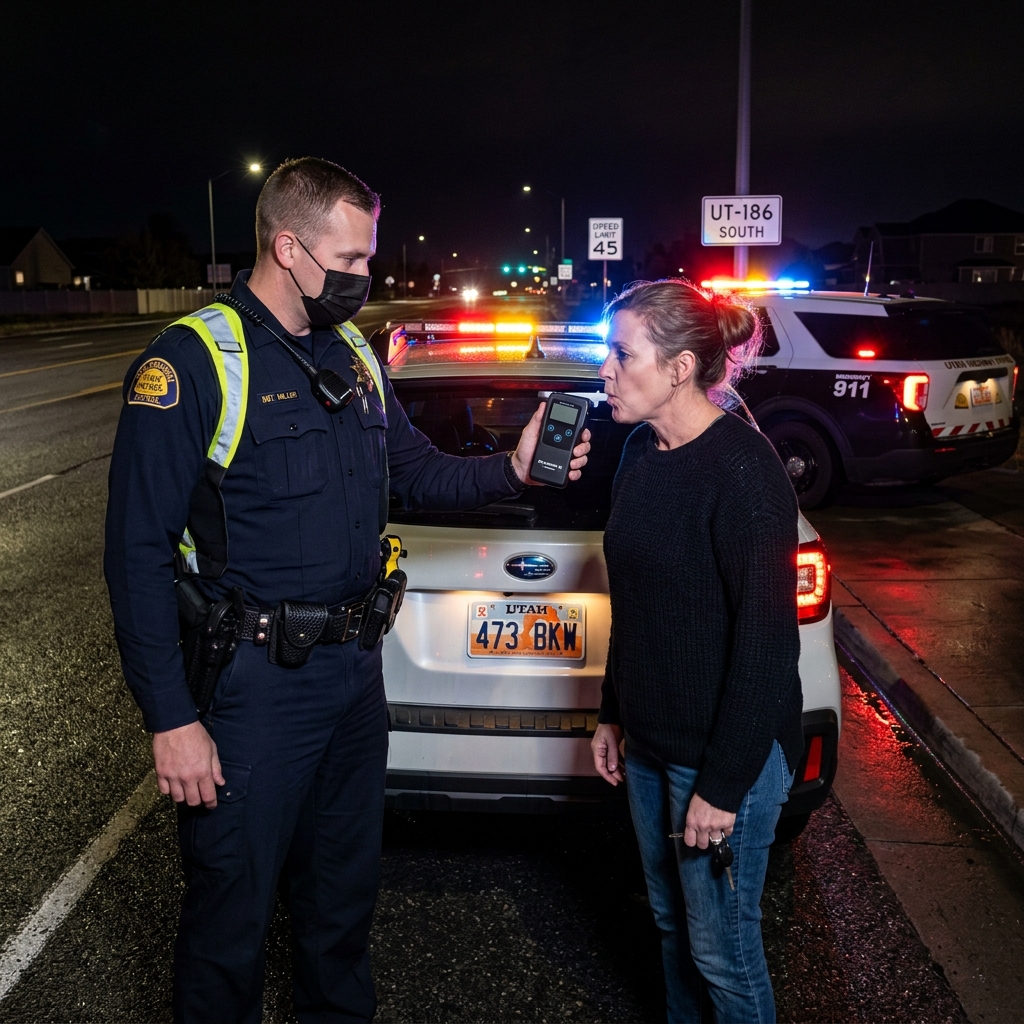
Many drivers assume a DUI only happens when someone is obviously drunk. In Utah, that assumption can be wrong. A person may face a DUI charge even if they do not feel intoxicated, because the law focuses on measurable alcohol concentration, drug impairment, and a driver’s ability to safely operate a vehicle.
That means a driver can be arrested after only a small amount of alcohol, after taking certain medications, or even while sitting in a parked car if the facts show actual physical control. Utah’s DUI rules are stricter than the standard in many other states, so understanding the legal thresholds matters.
Why Utah’s DUI law reaches beyond obvious intoxication
Utah law does not require a person to look drunk before an arrest can happen. The statute covers both alcohol concentration and impairment, so a driver can be charged if a chemical test shows a prohibited level or if alcohol, drugs, or both make the person unable to drive safely.
In practical terms, that means the law is aimed at risk, not just visible drunkenness. Slurred speech, stumbling, or obvious confusion are not the only signs prosecutors may rely on. A chemical test, police observations, field sobriety evidence, and the circumstances of the stop can all become part of the case.
The legal limit in Utah is lower than many drivers expect
Utah’s general DUI limit is 0.05% blood alcohol concentration, which is lower than the 0.08% limit used in many other states.
This lower threshold is one reason a driver may be charged without feeling buzzed. Some people can still function normally at or below that level, especially if they have eaten, have a high alcohol tolerance, or consumed alcohol over a longer period. Even so, the law can treat that BAC as enough for a DUI charge.
For commercial drivers operating commercial motor vehicles, the threshold is even lower at 0.04%.
Impairment can matter even below the numeric limit
Utah DUI law is not limited to a breath or blood number. A driver may also be charged if alcohol, drugs, or the combined influence of both renders the person incapable of safely operating a vehicle.
This matters because a person may test below 0.05% and still be exposed to prosecution if officers believe the person’s coordination, judgment, or reaction time was impaired. The law also recognizes impairment involving drugs, including prescription medications and other controlled substances.
- A driver can be charged based on a chemical test result.
- A driver can be charged based on observed impairment.
- A driver can be charged for alcohol, drugs, or a mixture of both.
“Actual physical control” can trigger a case even when the car is not moving
Utah law can apply when a person is in actual physical control of a vehicle, not just when the vehicle is actively moving on the road.
That concept is broad enough to cover situations where a person is found in a parked car, asleep in the driver’s seat, or otherwise able to operate the vehicle. Courts look at the surrounding facts rather than only whether the vehicle was in motion at the exact moment of contact with police.
Relevant facts may include the location of the keys, whether the engine was running, whether the person was awake or asleep, where the vehicle was parked, and whether the person had a practical ability to start and move the vehicle.
How Utah treats drivers under 21
Utah uses a strict underage drinking-and-driving rule. For drivers under 21, any detectable alcohol can create serious legal consequences, reflecting the state’s “not a drop” approach.
This means younger drivers face a much narrower margin for error than adult drivers. Even if the amount of alcohol seems small, it can still lead to arrest, administrative action, and a court case.
Common penalties for a first DUI
A first DUI offense in Utah is generally treated as a Class B misdemeanor, but the sentence can still be significant.
Courts must impose at least one of the following for a first misdemeanor DUI: 48 hours in jail, 48 hours of compensatory service, or home confinement with electronic monitoring.
Other consequences commonly include fines, alcohol screening, education, treatment, and installation of an ignition interlock device in qualifying cases.
| Issue | Typical first-offense consequence |
|---|---|
| Criminal classification | Class B misdemeanor |
| Minimum sanction | 48 hours jail, community service, or home confinement |
| License impact | Suspension or revocation may apply |
| Program requirements | Screening, education, or treatment may be ordered |
When a DUI becomes more serious
Some DUI cases in Utah move beyond a standard misdemeanor. A DUI may be charged as a Class A misdemeanor when aggravating facts are present, such as bodily injury or a child passenger.
More serious conduct can lead to a third-degree felony, including cases involving serious bodily injury or multiple prior DUI-qualifying convictions within a ten-year period.
These escalations matter because they increase exposure to jail or prison time, larger fines, and longer-term consequences for employment, licensing, and future driving privileges.
License consequences can be separate from the criminal case
One of the most overlooked parts of a Utah DUI is the administrative impact on driving privileges. A person may face license suspension or revocation even before the criminal case ends.
For some drivers, the length of the loss of driving privileges can be lengthy, especially for repeat offenses or cases involving additional aggravating facts.
That is why many DUI cases require immediate attention. Waiting too long can make it harder to challenge the administrative side of the case or protect the right to drive for work, school, or family obligations.
What prosecutors and police may use as evidence
Utah DUI cases often depend on a combination of evidence rather than a single test result. Police officers may point to driving behavior, roadside observations, field sobriety tests, and chemical testing.
A prosecutor may argue that a driver was impaired even if the person claimed to feel fine. In that setting, the legal question is not whether the person believed they were safe to drive, but whether the facts support a finding of prohibited alcohol concentration or unsafe impairment.
- Driving pattern before the stop
- Statements made to officers
- Physical appearance and coordination
- Breath or blood test results
- Presence of alcohol, drugs, or both
Possible defenses in a Utah DUI case
Every case depends on its facts, but common defense issues may involve the validity of the traffic stop, the reliability of testing, or whether the driver was truly in actual physical control of the vehicle.
In some cases, the defense may question whether the state can prove impairment beyond a reasonable doubt. In others, the key issue may be whether the chemical test was administered or interpreted correctly.
Because Utah’s DUI law covers multiple theories of liability, a defense strategy often needs to address both the legal standard and the evidence used to support it.
Why a person may feel sober and still be at risk
Alcohol affects different people in different ways, and subjective feeling is not a reliable legal test. A driver may still be within the range where the body and brain are affected even if the person does not feel intoxicated.
Timing also matters. Alcohol absorption changes over time, so a person who felt acceptable at the start of the evening may later test higher. In addition, medication interactions and fatigue can make a person unsafe even with a relatively modest alcohol level.
That is why Utah law focuses on objective measures and observed impairment rather than personal impressions alone.
Practical steps after a DUI arrest
After an arrest, the most important issue is usually to act quickly. Deadlines can affect administrative license rights, and early case review can identify problems with testing, the stop, or the officer’s observations.
It is also important to gather and preserve information as soon as possible, including where the stop occurred, what was said to law enforcement, what testing was performed, and whether any medications or medical conditions may be relevant.
- Write down the events leading to the stop.
- Save test paperwork and court notices.
- Note any prescription or over-the-counter medications.
- Track deadlines for license and court responses.
Frequently asked questions
Can I be charged if I only had a small amount of alcohol?
Yes. Utah’s limit is 0.05%, so a relatively small amount of alcohol can still lead to a DUI if the legal threshold is met.
Can I be charged if the car was parked?
Yes. If the facts show actual physical control, Utah law can still apply even when the vehicle is not moving.
Does feeling fine protect me?
No. The law looks at measured alcohol concentration and actual impairment, not just how a driver feels.
Can medications matter?
Yes. If drugs or a combination of substances make a person unsafe to drive, a DUI case may still be filed.
Is under 21 treated differently?
Yes. Utah has a very strict rule for drivers under 21, and any detectable alcohol can create serious consequences.
References
- Utah DUI Penalties Overview: Key Facts & Consequences — Zabriskie Law. 2026-07-10. https://www.zabrisk.com/post/an-overview-of-dui-penalties-in-utah
- DUI in Utah: What’s the Legal Limit and Consequences? — Provo Lawyers. 2026-07-10. https://provolawyers.com/dui-in-utah-whats-the-legal-limit-and-consequences/
- Road Trip, State Laws & DUI. Know Before You Go — American Liberty University Blog. 2026-07-10. https://alu.edu/alublog/road-trip-state-law-dui-know-before-you-go/
- Utah DUI Laws — NCDD. 2026-07-10. https://www.ncdd.com/utah-dui-laws
- Utah DUI Statutory Overview — Utah Courts. 2021-04-01. https://legacy.utcourts.gov/utc/judicial-council/wp-content/uploads/sites/48/2021/04/DUI-Statutory-Overview-FINAL-2.pdf
- Utah Code, Title 41, Chapter 6a, Part 5 — Utah Legislature. 2026-07-10. https://le.utah.gov/xcode/Title41/Chapter6A/41-6a-P5.html
Similar Articles








Read full bio of medha deb




