
Understanding Private Gun Sales Under U.S. Law
A practical legal guide to buying and selling firearms privately, with an emphasis on federal rules, state variations, and common pitfalls.
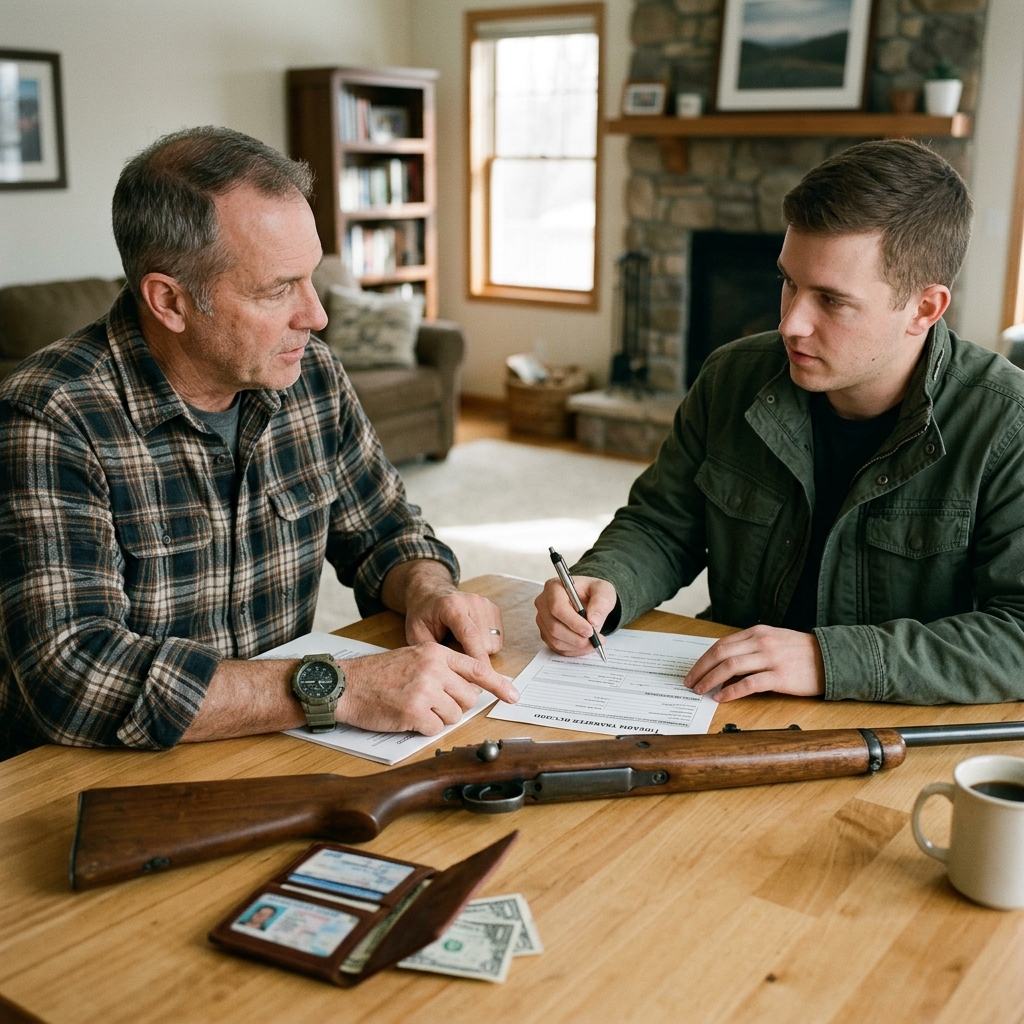
Private gun sales are a common way for people in the United States to buy or sell firearms without going through a traditional gun store. These transactions, often called private firearm transfers, can be lawful, but only when they follow both federal regulations and applicable state laws. Misunderstanding those rules can expose ordinary sellers and buyers to serious criminal charges.
This article explains how private gun sales work, what federal law allows and forbids, how state rules differ, and what steps individuals can take to reduce legal risk when transferring firearms.
What Counts as a Private Gun Sale?
A private gun sale generally refers to a firearm transfer between two people who are not federally licensed firearms dealers. These are sometimes called “person-to-person” or “unlicensed” transfers.
- Common examples include selling a hunting rifle to a neighbor, transferring a handgun to a friend, or passing firearms within a family.
- Because neither party holds a Federal Firearms License (FFL), many of the recordkeeping and background check duties that apply to gun stores may not directly apply.
However, private sales are not exempt from all gun laws. Federal rules restrict who can receive firearms, limit interstate transfers, and define when frequent sellers must obtain an FFL.
Federal Baseline Rules for Private Firearm Transfers
Federal firearms law creates a nationwide baseline. States can add additional restrictions but cannot weaken these core rules. Several provisions are especially important for private sellers.
Residency and Interstate Transfers
Under federal law, an unlicensed person may not transfer a firearm directly to a resident of another state. This rule applies to both handguns and long guns when the parties are unlicensed.
- If the buyer lives in a different state, the firearm generally must be shipped or delivered to an FFL in the buyer’s home state, and the buyer completes the transfer through that dealer.
- Direct face-to-face sales between private parties who live in different states are prohibited.
This residency rule effectively pushes most lawful interstate transfers through licensed dealers, where federal background checks and paperwork are required.
Age Restrictions for Private Sellers
Federal law also sets minimum age limits for receiving firearms, and those limits differ for licensed dealers and unlicensed individuals.
| Transferor Type | Handguns (Minimum Age) | Long Guns (Minimum Age) |
|---|---|---|
| Unlicensed private seller | 18 (cannot transfer to anyone under 18) | No federal minimum; long guns may be transferred regardless of age, subject to state law. |
| FFL dealer | 21 (cannot transfer to anyone under 21) | 18 (cannot transfer to anyone under 18) |
States can adopt stricter age requirements, so private sellers must also check their own state’s rules before transferring firearms to younger buyers.
Prohibited Persons
Federal law makes it illegal to sell or transfer firearms to certain categories of people, often called prohibited persons. These rules apply to both licensed dealers and private individuals.
Examples of prohibited categories include:
- People convicted of crimes punishable by more than one year in prison (most felonies).
- Individuals who are fugitives or fleeing from law enforcement.
- People who are unlawfully using or addicted to controlled substances.
- Those who have been adjudicated as mentally defective or committed to a mental institution.
- Persons in the United States without lawful immigration status.
- Individuals subject to certain domestic violence protective orders or convicted of qualifying domestic violence misdemeanors.
- Persons who are under the minimum age allowed to receive that type of firearm from the specific transferor.
Private sellers who know or have reasonable cause to believe that a buyer falls into one of these categories face potential federal criminal liability for the transfer.
Who Needs a Federal Firearms License?
Federal law requires individuals who are engaged in the business of selling firearms, primarily for profit, to obtain an FFL. Occasional sales from a personal collection do not usually require licensing, but frequent or profit-driven sales may cross the line into dealer activity.
- Someone who occasionally sells or trades firearms from a personal collection is generally treated as a private seller.
- Someone who repetitively buys and sells firearms with the principal objective of earning profit may be considered a dealer and must comply with licensing requirements.
Failing to obtain an FFL when required can result in federal charges for dealing firearms without a license.
How State Laws Shape Private Gun Sales
While federal law provides a foundation, states add their own rules to private firearm transfers. These state laws can affect whether background checks are required, what documentation must be kept, and which types of firearms or buyers are restricted.
Background Check Requirements
Federal law generally requires background checks only when firearms are sold through licensed dealers, or when interstate transfers go through an FFL. Whether a private, same-state sale must involve a background check depends on state law.
- States that require background checks for private sales: Some states mandate that all or most private transfers go through an FFL or state agency, ensuring a check is run before the firearm changes hands.
- States with limited or no private-sale requirements: Many states do not impose background checks on private same-state transfers, especially for long guns. In these jurisdictions, private sellers can often complete transactions without dealer involvement, as long as federal rules are followed.
Research has shown that in states without private-sale background check requirements, large numbers of guns are advertised and sold online between strangers with minimal oversight.
Examples of State Variations
State approaches to private sales differ widely.
- More restrictive states may require all private sales to be conducted through an FFL, apply waiting periods, or demand purchase permits and registration for certain firearms.
- Less restrictive states may allow same-state private transfers without background checks, without specific recordkeeping obligations, and without registration for most firearms.
Because these rules can change and vary significantly by state, private sellers should consult current state statutes or legal resources before completing a transfer.
Common Legal Risks in Private Gun Sales
Although private sales can be lawful, several recurring pitfalls can expose sellers and buyers to criminal liability.
Selling to a Prohibited Person
The most serious risk is transferring a firearm to someone who is legally barred from possession. Under federal law, a private seller may not provide a firearm to someone the seller knows or has reasonable cause to believe is prohibited.
Risk factors include:
- Ignoring obvious signs of drug addiction or intoxication.
- Overlooking statements about recent felony charges or restraining orders.
- Choosing not to ask basic eligibility questions, even when concerns arise.
Straw Purchases
A straw purchase occurs when someone buys a firearm on behalf of another person who either wants to avoid appearing in the transaction or is prohibited from owning guns. Straw purchases are illegal under federal law, regardless of whether the actual buyer is prohibited.
Indicators of a potential straw purchase include:
- Someone paying for the firearm while another person fills out paperwork at an FFL.
- A buyer explicitly stating that the gun is “for someone else” who is not present.
- Requests to misstate who is the true purchaser or owner.
Even in private sales, participating in or knowingly facilitating straw purchases can lead to federal charges.
Interstate Transfers Without an FFL
Another common error is transferring a firearm directly to a buyer who lives in a different state without involving a licensed dealer. As noted, federal law bars unlicensed persons from transferring firearms to out-of-state residents except through an FFL in the recipient’s home state.
- Shipping a gun directly to an out-of-state individual.
- Meeting an out-of-state buyer halfway for a cash sale without dealer involvement.
These practices can violate federal law and lead to serious penalties.
Best Practices for Safer Private Gun Sales
While the specifics vary by jurisdiction, private sellers can adopt practical steps to reduce legal risks and demonstrate responsible conduct.
Verify Residency and Basic Eligibility
- Ask the buyer to provide government-issued identification showing residency in your state.
- Confirm the buyer’s age meets federal and state minimums for the type of firearm being sold.
- Inquire whether the buyer is subject to any felony convictions, domestic violence orders, or other disqualifying factors, making clear that the sale cannot proceed if they are prohibited.
Consider Using an FFL Even When Not Required
In states where background checks are not mandatory for private sales, parties may still voluntarily route the transaction through an FFL.
- The dealer can run a background check and complete federal transfer forms.
- Proper documentation helps demonstrate that the seller took reasonable steps to avoid transferring to a prohibited person.
- Using an FFL also clarifies compliance with interstate transfer rules when residency questions arise.
Maintain Clear Records
While federal law often does not require recordkeeping for same-state private sales, keeping simple records can be beneficial.
- Note the date, firearm description (make, model, serial number), and buyer’s name.
- Consider creating a bill of sale signed by both parties acknowledging the transfer and confirming that the buyer is legally allowed to possess firearms.
- Store records securely in case questions later arise about ownership or criminal misuse.
Frequently Asked Questions About Private Gun Sales
Do federal laws require background checks for every private gun sale?
No. Federal law generally requires background checks when firearms are sold by licensed dealers or when interstate transfers go through an FFL. Whether a private same-state transfer must involve a background check depends on the state’s law.
Can I sell a firearm to someone in another state without using a dealer?
Under federal law, unlicensed individuals may not transfer firearms directly to out-of-state residents. To lawfully complete such a sale, the firearm must typically be shipped or delivered to an FFL in the buyer’s home state, where the buyer completes the transfer.
Is it legal to sell a handgun to someone between 18 and 21 years old?
Federal law allows an unlicensed person to transfer a handgun to someone at least 18 years old, as long as that person is not prohibited and state law does not impose a higher age threshold. FFL dealers, however, may not sell handguns to anyone under 21.
Do I need a license if I sell several guns from my collection?
Occasional sales of different second-hand firearms from a personal collection generally do not require an FFL. A license is typically required when someone is “engaged in the business” of dealing firearms—repetitively buying and selling with the principal objective of earning a profit.
What happens if I unknowingly sell to a prohibited person?
Federal law focuses on what the seller knows or has reasonable cause to believe about the buyer’s status. A seller who takes reasonable precautions, such as verifying identification and inquiring about eligibility, reduces the risk of being seen as knowingly aiding an unlawful transfer. However, each case is fact-specific, and legal advice may be necessary.
When to Seek Legal Advice
Because firearms law blends federal statutes, state regulations, and evolving enforcement policies, private sellers and buyers should seek legal advice in several situations:
- Questions about whether your selling activity requires an FFL license.
- Uncertainty about state-specific background check or waiting period requirements.
- Concerns that a buyer may be prohibited or that a sale could be characterized as a straw purchase.
- Complicated transfers involving estates, multi-state residency, or unusual firearms that may be subject to special registration rules under federal law.
Consulting a qualified attorney familiar with firearms law can help prevent inadvertent violations and clarify obligations in your particular jurisdiction.
References
- Private Gun Sales: Are They Legal? — Super Lawyers. 2024-02-15. https://www.superlawyers.com/resources/criminal-defense/private-gun-sales-are-they-legal/
- Private Gun Sale Laws by State — FindLaw. 2022-06-10. https://www.findlaw.com/consumer/consumer-transactions/private-gun-sale-laws-by-state.html
- Federal Private Firearm Transfer Laws — USCCA. 2023-09-01. https://www.usconcealedcarry.com/resources/federal-ccw-law/federal-private-firearm-transfer-laws/
- Minimum Age for Gun Sales and Transfers — Bureau of Alcohol, Tobacco, Firearms and Explosives (ATF). 2021-08-10. https://www.atf.gov/resource-center/infographics/minimum-age-gun-sales-and-transfers
- How can I sell my gun to another person? — Texas State Law Library. 2023-05-20. https://www.sll.texas.gov/faqs/private-gun-sales/
- What a Difference a Law Makes: Online Gun Sales in States With and Without Background Checks — Third Way. 2013-02-25. https://www.thirdway.org/report/what-a-difference-a-law-makes-online-gun-sales-in-states-with-and-without-background-checks
- Gun laws in the United States by state — Wikipedia (summary of primary legal sources). Accessed 2026-07-10. https://en.wikipedia.org/wiki/Gun_laws_in_the_United_States_by_state
Similar Articles








Read full bio of Sneha Tete




