
Understanding Options for Reporting Sexual Assault on PEI
A practical guide to legal, medical, and support options for adults and youth reporting sexual assault in Prince Edward Island.
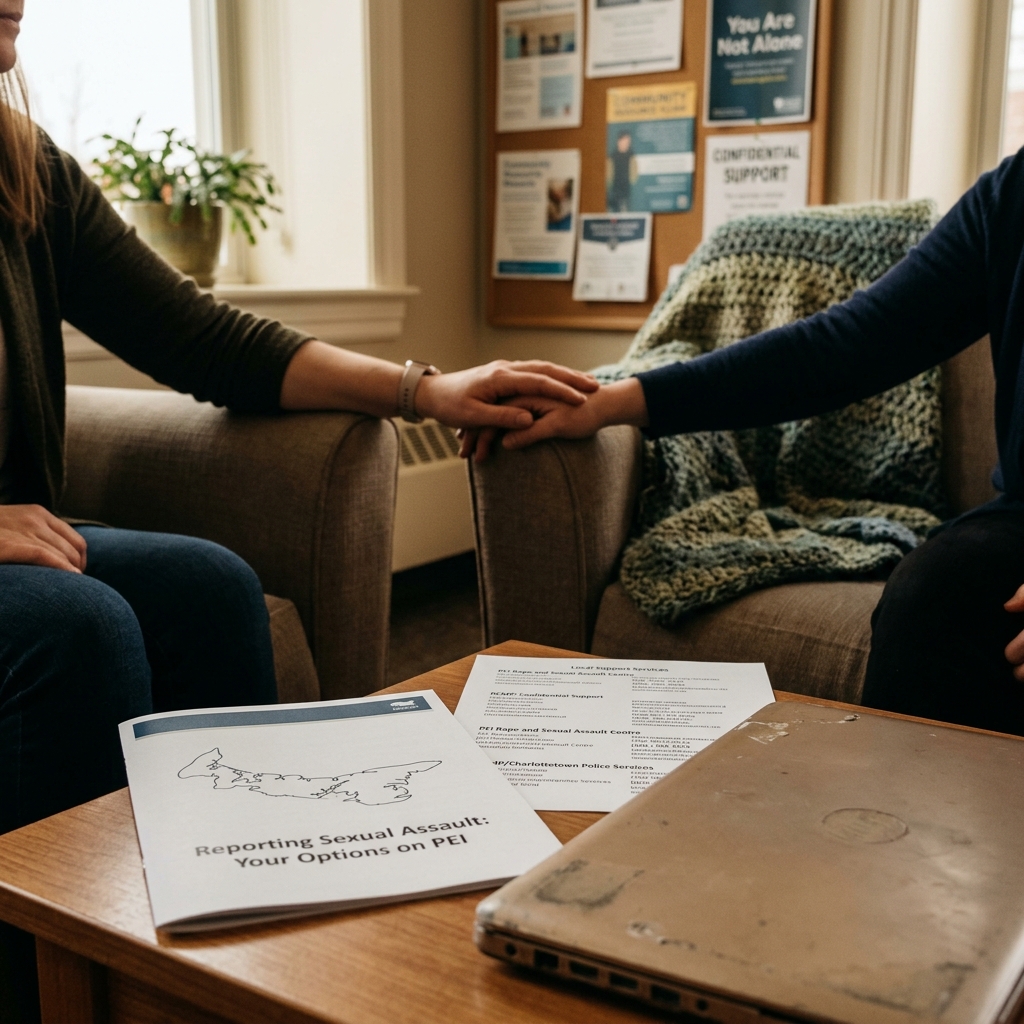
Experiencing sexual assault is traumatic, confusing, and often overwhelming. Deciding whether and how to report what happened can feel complicated, especially when you are trying to process your emotions at the same time. This guide is designed to offer clear, practical information about the choices available on Prince Edward Island (PEI), with a focus on safety, consent, and survivor control over the process.
Sexual assault is a crime. It includes any sexual activity that happens without your freely given agreement, regardless of the relationship between you and the person who caused harm, your gender, or where the incident occurred. Reporting is always your choice, and there is no single “right” way to respond. What matters most is that you have accurate information and know where to find support.
Immediate Safety and First Steps
In the hours or days after an assault, your first priority is your safety and medical well-being. Even if you are unsure about reporting to police, it can be important to consider emergency support, medical care, and crisis counselling.
When to Call 911
Call 911 if:
- You are in immediate danger or fear that the assault could continue.
- You have serious injuries that need urgent medical treatment.
- A child or another person is currently at risk of harm.
Police and emergency medical staff can respond at any time of day or night. If you are not in immediate danger but still want to talk to police, you can use the non-emergency lines for local police or RCMP detachments in PEI.
Medical Care After Sexual Assault
Seeking medical care is strongly recommended, even if you do not have visible injuries or do not plan to report to police. Health professionals can address physical injuries, provide emergency contraception, test for sexually transmitted infections (STIs), and offer vaccines where appropriate (including for hepatitis B).
On PEI, you can attend a hospital emergency department or contact a health clinic to:
- Receive a physical examination and treatment for injuries.
- Discuss pregnancy prevention and options.
- Access STI testing and preventive medication.
- Request documentation of injuries that might be relevant later if you choose to report.
In many regions of Canada, specially trained nurses or doctors perform forensic exams and collect evidence, often called a “sexual assault kit.” Evidence collection is usually time sensitive, often recommended within several days of the assault. Even if you are unsure about police involvement, you can ask hospital staff about what options exist for evidence preservation in your area.
Understanding Your Reporting Options
Survivors on PEI generally have multiple ways to respond to sexual assault. Each option comes with different levels of involvement with police, the legal system, and support services. You can use more than one option, and you can change your mind as your needs evolve.
| Option | Contact with Police | Legal Process | Key Features |
|---|---|---|---|
| Full police report | Direct | Possible investigation and charges | Formal complaint, interviews, potential court case |
| Medical-only response | None or indirect | Usually none | Focus on health, may collect evidence |
| Delayed or “third option” style reporting* | Limited initially | Decision can be made later | Evidence stored; survivor chooses later about police |
| No formal report | None | None | Support and counselling without legal action |
*Some regions in Canada use a “third option” model where evidence is collected and stored so survivors can decide about police involvement at a later time. Discussion about adopting such models has taken place on PEI.
Making a Police Report
Choosing to make a police report means telling police what happened and asking them to investigate. On PEI, you can report by:
- Calling 911 in an emergency.
- Contacting local municipal police services (Charlottetown, Summerside, Kensington) via non-emergency numbers.
- Calling RCMP detachments serving various areas of the province.
When you report, police will take a statement and may ask detailed questions about the assault, the person who harmed you, and any witnesses or communications (texts, social media, emails). You are allowed to:
- Request to speak with an officer of a particular gender if possible.
- Ask for a support person to be with you during the interview.
- Take breaks when you feel overwhelmed.
If police decide there is enough evidence, they may recommend charges. The decision to prosecute is made by Crown prosecutors based on the evidence and the public interest. Once charges are laid, the case belongs to the state; you are an important witness, but you are not responsible for proving the case alone.
Reporting When the Survivor Is a Child
Child sexual abuse and sexual assault involving people under the age of 18 raise special legal obligations. In PEI, there is a legal duty to report concerns about a child’s safety to Child Protection Services or the police.
If you know or suspect a child is being abused:
- Call 911 or contact Child Protection Services using designated phone numbers.
- Give as much detail as you can, even if you are not certain.
- Understand that you are not required to investigate before reporting; professionals will assess the situation.
Child protection workers and police may work together to interview the child in a sensitive manner and to ensure their immediate safety. Adults who fail to report suspected abuse can be in breach of provincial law, reflecting the importance of protecting minors from sexual harm.
Anonymous and Alternative Reporting Paths
Some survivors want authorities to know what happened but feel unsure about entering a full criminal process. In response, jurisdictions across Canada have developed alternative or anonymous reporting options designed to respect survivor control and privacy.
Delayed or “Third Option” Models
A cthird optione reporting model allows survivors to receive a forensic exam and have evidence collected and stored, without making an immediate decision about contacting police. Under such models, survivors can:
- Access medical care and evidence collection shortly after the assault.
- Delay the choice about police involvement for a specified period.
- Later decide whether to convert the record into a formal police report.
While discussions have occurred about implementing similar approaches on PEI, the details can vary. Survivors considering delayed reporting should ask hospital staff, victim services, or community centres whether evidence storage or anonymous reporting options exist in their area.
Workplace and Institutional Reporting
Sexual assault and harassment can occur in workplaces, schools, or training environments. On PEI:
- Universities and colleges provide sexual violence response offices and student support services that can help survivors navigate reporting, accommodations, and safety planning.
- Workplace programs, such as the SHIFT Project at the PEI Human Rights Commission, focus on addressing and preventing sexual harassment and may offer training and guidance for employers on responding appropriately to reports.
In these settings, survivors may have choices between:
- Making an internal complaint under institutional policies.
- Seeking changes to work or study arrangements without formal discipline.
- Filing a human rights complaint or contacting police in cases that amount to criminal sexual assault.
Legal Rights and Protections for Survivors
Survivors who report sexual assault—whether to police, child protection, or institutions—have legal rights designed to promote fairness and safety throughout the process.
Key Legal Rights
- Right to be treated with dignity and respect by police, prosecutors, and court officials.
- Right to information about the progress of the case, including whether charges are laid and upcoming court dates, subject to privacy laws.
- Right to protection of identity in many circumstances; for example, criminal courts regularly prohibit publication of the identity of sexual assault complainants.
- Right to support persons in many parts of the process, such as victim services workers or counsellors.
- Right to apply for financial assistance or restitution in some cases if you have suffered financial loss or injury due to the crime.
These rights may be supplemented by provincial victim services programs that help survivors understand the criminal process, attend court, and communicate with prosecutors in an informed way.
Time Limits for Reporting
In Canada, sexual assault is prosecuted as a criminal offence, and many such offences no longer have strict limitation periods. This means you may be able to report incidents that occurred years ago, although evidence can be harder to gather over time. However, civil lawsuits, human rights complaints, or workplace processes may have shorter deadlines. Survivors who are considering legal action outside the criminal system may benefit from early legal advice to avoid missing important timelines.
Support Services Available on PEI
Reporting sexual assault is not only a legal step; it is also an emotional journey. Survivors often need counselling, advocacy, and practical help alongside medical and legal responses. Several services on PEI provide specialized support to people who have experienced sexualized violence.
Community-Based Sexual Assault Support
The PEI Rape and Sexual Assault Centre (PEIRSAC) is a community organization that offers therapeutic support and education for survivors of sexual violence, including adults and youth. Its services typically include:
- Confidential trauma-informed counselling.
- Support for people of all genders who have experienced sexual assault or childhood sexual abuse.
- Information about options, including reporting pathways and external resources.
PEIRSAC does not operate a crisis line but collaborates with other time-sensitive services that provide accompaniment to hospital and immediate support.
Government and Crisis Supports
The Government of PEI maintains a list of supports for adult sexual violence, including contact information for police, crisis lines, shelters, and counselling services. Common resources include:
- 24/7 crisis numbers for mental health and addictions support.
- Emergency shelters for women needing a safe place to stay.
- Provincial victim services, which assist survivors involved in the criminal justice system.
Some services are available province-wide, while others are specific to certain communities. Calling a general information line, such as 211 or provincial victim services, can help you locate the right resource based on your needs and location.
Supports for Students
Students at colleges and universities on PEI can access dedicated supports:
- Sexual Violence Support Offices at institutions, such as UPEI’s Sexual Violence Prevention and Response Office, which provide confidential listening, safety planning, and help exploring reporting options.
- Student wellness programs offering counselling and mental health support, often available 24/7 by phone.
These services can explain campus-specific policies, help with academic or housing accommodations, and connect survivors with off-campus resources when needed.
Emotional Recovery and Self-Care After Reporting
Whether or not you choose to make a formal report, coping with sexual assault takes time. Many survivors describe a wide range of emotions: fear, anger, shame, numbness, confusion, or relief. All of these reactions are valid. Healing is not linear and may involve periods of progress and setbacks.
Common Emotional Responses
- Difficulty sleeping or nightmares.
- Changes in appetite or energy.
- Avoidance of places or people connected to the assault.
- Intrusive memories or flashbacks.
- Feeling detached from others or from your own emotions.
Trauma-informed counselling can help survivors understand these responses and develop coping strategies. Many PEI services emphasize that sexual assault is never the survivorfs fault and that guilt or self-blame are common but misplaced reactions.
Practical Self-Care Strategies
- Identify one or two trusted people you can talk to when you feel overwhelmed.
- Use grounding techniques, such as focusing on your breathing, noticing physical sensations, or naming objects around you.
- Establish routines for sleep, nutrition, and gentle physical activity, which can support your nervous system.
- Limit exposure to triggering media or social situations in the short term.
- Set realistic expectations about legal processes, which are often lengthy and emotionally demanding.
Frequently Asked Questions (FAQs)
Do I have to report to police immediately?
No. Many survivors take days, weeks, or longer before deciding whether to report to police. You can seek medical care, counselling, and legal advice first. In criminal cases, earlier reporting can sometimes make evidence collection easier, but there is often no strict deadline for police reports involving serious offences such as sexual assault.
Can I get help even if I never report the assault?
Yes. Community organizations, crisis lines, counselling services, and campus supports are available regardless of whether you choose to report to police or child protection. Their role is to support your safety and healing, not to force legal action.
Will my name be made public if I go to court?
Canadian criminal courts commonly issue orders that prohibit publication of the identity of complainants in sexual offence cases. This means news outlets and other media cannot legally publish your name or information that would identify you. You can ask prosecutors or victim services to explain how these orders work in your specific case.
What if the person who assaulted me is a partner, family member, or someone I know?
Sexual assault frequently involves people who are known to the survivor, including intimate partners and family members. The law does not require the assault to involve a stranger. You still have the right to report and to access medical and counselling support. Safety planning can be especially important in these situations, and local shelters or victim services can help you develop one.
What if I was drinking or using drugs?
Being intoxicated does not remove your rights. In law, consent must be freely given and informed. A person who is very intoxicated may not be able to legally consent to sexual activity. Police and courts may consider the role of substances, but the fact that you drank or used drugs does not make you responsible for the assault.
Can I bring a friend or support worker when I talk to police?
In many situations, yes. Survivors often find it helpful to bring a trusted person or a support worker from a sexual assault centre or victim services. They can provide emotional support and help you understand questions. However, this person may be asked to wait outside during part of the formal interview depending on police procedures. You can discuss these details in advance with the officer.
How to Decide What Is Right for You
Choosing among medical, legal, and support options is highly personal. There is no single correct path, and your needs may change over time. You might decide to seek medical care immediately but delay legal decisions. Or you may prioritize safety planning and counselling before considering whether to make a police report.
Consider asking yourself:
- What feels most urgent right now—physical safety, medical care, emotional support, or legal action?
- What information do I still need before deciding about reporting?
- Which services could help me feel more supported while I decide?
Talking with a counsellor, victim services worker, or trusted support person can help you weigh the pros and cons of different options in a non-judgmental environment. Whatever you choose, remember that the assault is not your fault and that support is available across PEI to help you move forward.
References
- Supports for Adult Sexual Violence — Government of Prince Edward Island, Justice and Public Safety. 2023-05-01. https://www.princeedwardisland.ca/en/information/justice-and-public-safety/supports-for-adult-sexual-violence
- PEI Rape and Sexual Assault Centre (PEIRSAC) — Canadian Human Trafficking Hotline. 2022-06-10. https://canadianhumantraffickinghotline.ca/account/pei-rape-and-sexual-assault-centre-peirsac/
- PEI Rape and Sexual Assault Centre | Support For Survivors — PEIRSAC. 2023-04-15. https://www.peirsac.org/
- Sexual Violence Support — Holland College Student Support Services. 2023-03-01. https://hollandcollege.com/student-experience/student-support-services/sexual-violence-support/
- Child Sexual Abuse — Government of Prince Edward Island, Social Development and Seniors. 2023-02-20. https://www.princeedwardisland.ca/en/information/social-development-and-seniors/child-sexual-abuse
- SHIFT Project: Workplace Sexual Harassment — PEI Human Rights Commission. 2022-11-30. http://www.peihumanrights.ca/education-and-resources/shift-project-workplace-sexual-harassment
- Sexual Violence Prevention and Response Office (SV-PRO) — University of Prince Edward Island. 2023-01-10. https://www.upei.ca/svpro
- P.E.I. should adopt ‘third option’ for reporting sexual assault cases — CBC News. 2017-12-01. https://www.cbc.ca/news/canada/prince-edward-island/pei-third-option-for-reporting-sexual-assault-1.4438698
Similar Articles








Read full bio of medha deb




