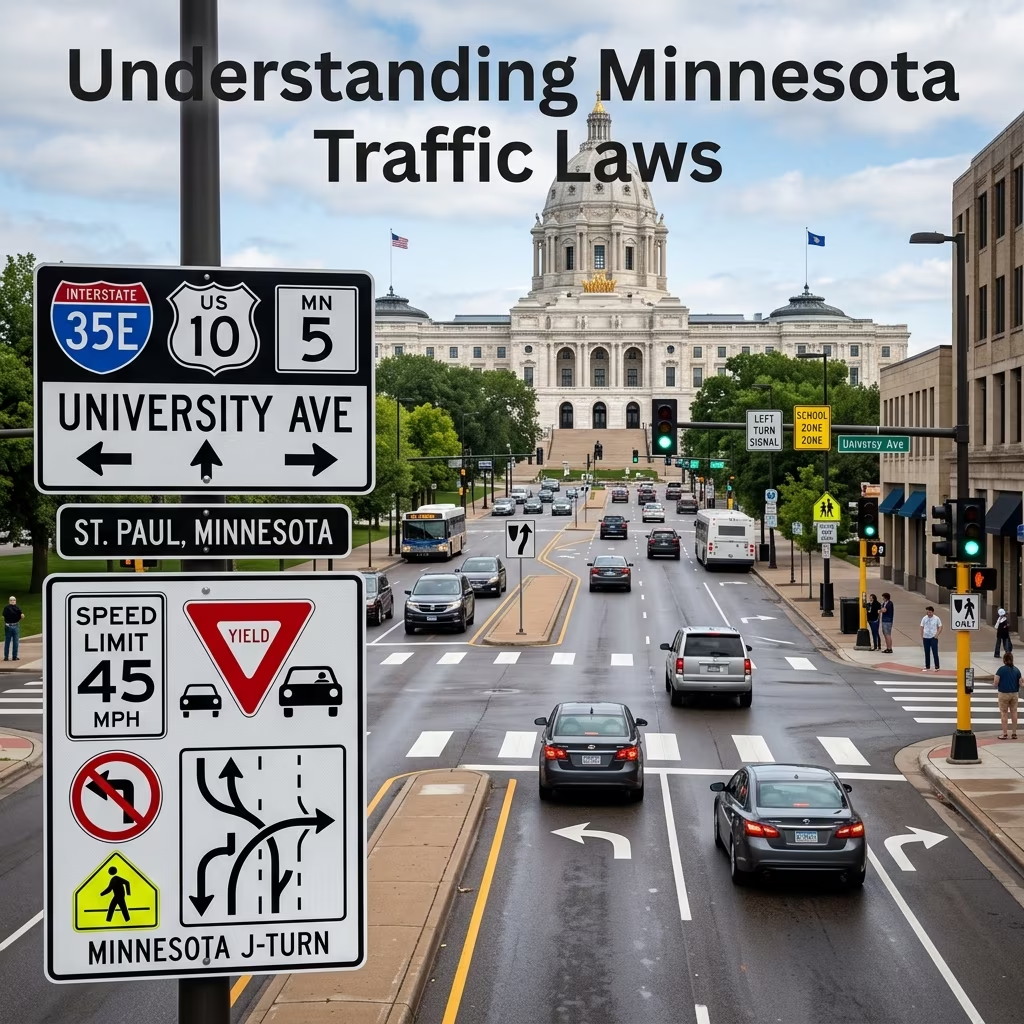
Minnesota traffic laws govern how drivers, cyclists, and pedestrians use public roads, and they determine when a driving mistake becomes a ticket, a crime, or grounds for losing your license. Knowing these rules is essential not only to avoid penalties, but also to keep yourself and others safe.
This guide explains how Minnesota classifies traffic offenses, highlights common violations and their consequences, and outlines core safety requirements that apply every time you drive. It is an informational overview and not a substitute for legal advice about a specific case.
1. How Minnesota Classifies Traffic Offenses
Minnesota statutes use several levels of offenses to describe traffic violations, generally based on the danger created and whether anyone is injured or property is damaged. While terminology can vary across specific statutes, four broad categories commonly appear in traffic regulation and enforcement.
1.1 Overview of Offense Levels
Traffic-related conduct in Minnesota may be treated as:
- Petty misdemeanor – a low-level offense, typically punishable by a fine but not by jail time.
- Misdemeanor – a criminal offense that can carry fines, probation, and up to 90 days in jail, depending on the statute.
- Gross misdemeanor – a more serious crime, often involving repeat offenses or high-risk behavior, with potential penalties up to one year in jail.
- Felony – the most serious category, generally reserved for conduct that causes significant injury, death, or major property damage, or involves extreme recklessness.
The same underlying action—such as speeding or impaired driving—may be charged at different levels depending on aggravating factors like prior convictions, speed, blood alcohol concentration, or whether someone was hurt.
1.2 Petty Traffic Violations
Many routine traffic tickets fall into the petty misdemeanor category. These can include minor speeding, failure to signal a lane change, or rolling through a stop sign where no crash occurs.
Petty misdemeanors typically lead to:
- A monetary fine and surcharges.
- Possible points or notations on your driving record that may affect insurance rates.
- No jail time, because state law does not treat petty misdemeanors as crimes.
Even though they are not criminal, repeated petty violations can contribute to license suspensions or other administrative consequences.
1.3 Criminal Traffic Offenses
Misdemeanor and gross misdemeanor traffic offenses involve more serious risk or harm. Examples include reckless driving, certain forms of hit-and-run, and many impaired driving (DWI) incidents.
These offenses may result in:
- Higher fines and court fees.
- Possible jail time.
- Probation conditions (such as treatment or education programs).
- Mandatory license suspension, revocation, or special restrictions.
When a crash causes severe injury or death, or when repeated dangerous behavior occurs after prior convictions, charges can escalate to a felony, with substantially higher penalties and long-term consequences.
2. Common Minnesota Traffic Laws Drivers Must Know
Minnesota statutes and driver manuals set out detailed rules for everyday driving situations such as speed limits, right-of-way, lane use, and distracted driving. The following areas are among the most frequently implicated in traffic stops and tickets.
2.1 Speed Limits and the “Basic Speed Law”
State law regulates both posted speed limits and how fast drivers may go in changing conditions. Minnesota’s basic speed law requires drivers to operate at a speed that is reasonable and prudent for the actual circumstances, even if that speed is below the posted limit.
Key points about speed in Minnesota include:
- Driving faster than the posted limit is illegal and can result in a speeding citation.
- Drivers must reduce speed when conditions such as snow, ice, rain, fog, heavy traffic, or road construction make normal speeds unsafe.
- Traveling at an unlawful speed can affect right-of-way determinations in crashes; a driver who speeds may lose the legal benefit of having the right-of-way.
In areas without posted limits, Minnesota relies on default speeds, such as 30 mph in urban districts and 55 mph in other locations, unless a different limit is set by law or sign. Always follow the lower of the posted limit or the speed that is safe for current conditions.
2.2 Right-of-Way at Intersections and Crossings
Right-of-way laws specify who must yield in common traffic situations so that vehicles and pedestrians can predict each other’s movements. In Minnesota, the primary right-of-way statute defines it as the privilege of immediate use of the highway, but this privilege depends on lawful and careful driving.
Important right-of-way rules include:
- At uncontrolled intersections, the driver on the left generally must yield to the driver on the right when both arrive at the same time.
- When turning left, drivers must yield to oncoming traffic and pedestrians lawfully in the crosswalk.
- Approaching a public road from a driveway or private road requires stopping and yielding to pedestrians and traffic already using the public road.
- Drivers must yield and stop for school buses displaying red flashing lights and an extended stop arm, staying at least 20 feet away unless a physical barrier separates lanes.
- Motorists must pull over and stop for emergency vehicles using sirens and lights, moving to the right-hand edge or curb until they pass.
These rules work together with speed and signaling laws; a driver traveling at an illegal speed may forfeit right-of-way protection even if they were otherwise in the preferred position.
2.3 Lane Use, Passing, and Divided Highways
Minnesota’s driving rules require vehicles to keep to the right side of the roadway except in specific circumstances such as passing, turning left, or following authorized lane markings.
Core lane and passing rules include:
- Drivers must travel on the right half of the roadway except when overtaking and passing another vehicle, or when a statute or sign allows a different pattern.
- Vehicles proceeding in opposite directions must pass each other on the right side.
- On multi-lane roads, a vehicle must stay within a single lane as nearly as practicable and may not change lanes until the driver has verified the movement can be made safely.
- On a non–one-way road with three lanes, the center lane is reserved for passing, left turns, or specially allocated traffic as indicated by signs; the left lane is not for passing in this configuration.
- On divided highways with medians or barriers, vehicles must use the right-hand roadway and may cross the median only at designated openings or crossovers.
These rules aim to reduce head-on collisions and side-swipe crashes by limiting unpredictable movements and improper use of opposing lanes.
2.4 Cell Phones, Seat Belts, and Child Safety
Beyond basic driving rules, Minnesota has safety laws addressing distracted driving, occupant protection, and child restraints.
Key safety requirements include:
- Hands-free phone law: Holding a phone while driving is illegal in Minnesota, even if you are stopped at a red light or stop sign. Drivers may use certain hands-free options but may not hold the device to talk, text, or scroll.
- Stricter limits for young drivers: Drivers under 18 with permits or provisional licenses face additional restrictions and generally may not use phones at all while driving, except for hands-free GPS or emergencies.
- Seat belts: Everyone in a moving vehicle must wear a seat belt; failure to do so can lead to citations and increased injury risk in crashes.
- Child restraints: Children under 8 years old and shorter than 4’9″ must use appropriate car seats or booster seats under Minnesota law.
- Headlights: Headlights are required during precipitation, not just at night, to improve visibility for both the driver and others on the road.
3. Penalties and Consequences of Traffic Violations
Traffic violations in Minnesota carry consequences that extend beyond paying a fine. Depending on the offense level and circumstances, drivers may face administrative actions, criminal penalties, or civil liability in the event of a crash.
3.1 Fines, Fees, and Court Costs
Most traffic tickets result in a combination of base fines and additional surcharges set by law or local rule. The amount varies with the type of violation, whether it involved commercial vehicles, and whether there are prior offenses.
Common financial impacts include:
- Standard fines for minor speeding and equipment violations.
- Enhanced fines for work-zone or school-zone violations.
- Court fees for contested hearings or late payments.
Ignoring a ticket can lead to added penalties, possible license suspension, or a default judgment if the matter goes to court.
3.2 License Suspensions and Restrictions
Some traffic offenses trigger mandatory or discretionary license actions by the state, including suspension, revocation, or restrictions such as limited driving privileges.
Factors that may lead to license consequences include:
- Multiple speeding or moving violations in a short period.
- Driving while intoxicated or impaired by drugs.
- Refusal to submit to legally required chemical testing in certain circumstances.
- Serious crashes caused by negligent or reckless driving.
These actions are often handled through administrative processes that are separate from criminal court proceedings, though they may be closely related.
3.3 Criminal Records and Civil Liability
When a traffic violation is charged as a misdemeanor, gross misdemeanor, or felony, a conviction can appear on a criminal record and may affect employment, housing, and professional licensing.
In addition, violations can be evidence of negligence in civil lawsuits arising from car accidents. For example, a driver who speeds in icy conditions and causes a crash could face both a ticket and civil claims for damages.
4. Safe Driving Practices Under Minnesota Law
Minnesota’s traffic statutes work in tandem with safety guidance from agencies such as the Department of Public Safety, emphasizing that drivers must always exercise due care and adjust behavior to protect themselves and others.
4.1 Adjusting to Weather and Road Conditions
Minnesota’s climate often produces snow, ice, rain, and low visibility, making it essential to follow the basic speed law and other safety rules.
Recommended practices include:
- Reducing speed significantly on slick or snow-covered roads.
- Leaving extra following distance to account for longer stopping times.
- Turning on headlights during precipitation or low visibility conditions.
- Clearing snow and ice from the vehicle before driving, as required by law.
4.2 School Zones, Buses, and Pedestrian Safety
Children and pedestrians are among the most vulnerable road users. Minnesota law addresses these risks with special protections.
Drivers should:
- Watch closely for crossing guards, school signs, and reduced speed limits around schools.
- Stop for school buses with red flashing lights and an extended stop arm, remaining at least 20 feet away until signals are deactivated.
- Yield to pedestrians and bicyclists in crosswalks, whether marked or unmarked.
- Be prepared to stop again if visibility is obstructed at intersections.
4.3 Sharing the Road with Emergency and Special Vehicles
Emergency vehicles and certain slow-moving vehicles require different treatment under Minnesota law.
Key obligations include:
- Pulling to the right and stopping when police, fire, or ambulances approach with lights and sirens.
- Following “move over” requirements when approaching stopped emergency vehicles or law enforcement on the shoulder, by changing lanes or slowing as required by law.
- Being alert for farm equipment and other slow-moving vehicles, which may have specific lighting and reflector requirements and typically travel on the right side of the road.
5. Quick Reference Table: Common Minnesota Traffic Rules
| Topic | Basic Rule | Key Legal Source |
|---|---|---|
| Speed and conditions | Drive no faster than is reasonable for conditions; never exceed posted limits. | Minnesota Driver’s Manual; Chapter 169. |
| Right-of-way | Yield according to intersection rules, to pedestrians, school buses, and emergency vehicles. | Minn. Stat. § 169.20 and related provisions. |
| Lane usage | Drive on the right half; stay in a single lane and change only when safe. | Minn. Stat. § 169.18. |
| School buses | Stop at least 20 feet away when red lights flash and stop arm extends. | Minnesota traffic law guidance. |
| Phones and distraction | No holding a phone while driving; hands-free only, with stricter rules for young drivers. | Minnesota hands-free law summaries. |
6. Frequently Asked Questions about Minnesota Traffic Laws
6.1 Is every traffic ticket in Minnesota a crime?
No. Many minor traffic violations are classified as petty misdemeanors, which are not crimes and do not carry jail time. However, more serious conduct—such as reckless driving or impaired driving—can be charged as misdemeanors, gross misdemeanors, or felonies, which are criminal offenses.
6.2 Can I turn right on red in Minnesota?
Yes, Minnesota generally allows drivers to turn right on a red light after coming to a complete stop and ensuring the way is clear of pedestrians and other vehicles, unless a sign prohibits it. Always yield to people in crosswalks and traffic with a green signal.
6.3 Do I have to stop for a school bus on the other side of the road?
In most situations, yes. When a school bus displays red flashing lights and has its stop arm extended, all drivers must stop at least 20 feet from the bus, regardless of their direction of travel, unless the roadway is divided by a physical barrier separating lanes.
6.4 What happens if I ignore a traffic ticket in Minnesota?
Ignoring a ticket can lead to increased fines, potential license suspension, and a default judgment if the matter is referred to court. Contact the court or consult an attorney promptly if you are unable to pay or wish to contest the citation.
6.5 Where can I find the official text of Minnesota traffic laws?
The official statutory text is available through the Minnesota Revisor of Statutes, particularly Chapter 169, which covers traffic regulations. The Minnesota Driver’s Manual and Department of Public Safety also provide summaries and safety guidance.
References
- Minnesota Driver’s Manual — Minnesota Department of Public Safety. 2015-01-01. https://www.leg.mn.gov/docs/2015/other/150439.pdf
- Minnesota Statutes Chapter 169 — Office of the Revisor of Statutes. 2025-01-01. https://www.revisor.mn.gov/statutes/cite/169
- Minnesota Statutes Section 169.18 (Driving Rules) — Office of the Revisor of Statutes. 2025-01-01. https://law.justia.com/codes/minnesota/chapters-160-174a/chapter-169/section-169-18/
- Minnesota Traffic Laws — FindLaw. 2024-01-01. https://www.findlaw.com/state/minnesota-law/minnesota-traffic-laws.html
- Safe Driving Information and Laws — Minnesota Department of Public Safety. 2023-06-01. https://dps.mn.gov/divisions/ots/safe-driving-information-and-laws
- Minnesota Traffic Laws: Frequently Asked Questions — SiebenCarey. 2023-09-01. https://www.knowyourrights.com/blog/minnesota-traffic-laws-frequently-asked-questions/
- Little-Known Minnesota Driving Laws — Meshbesher & Spence. 2022-05-01. https://www.meshbesher.com/news-and-updates/little-known-minnesota-driving-laws/