
Understanding Marijuana DUI Laws in the United States
A practical guide to how cannabis use, impairment standards, and evolving state laws shape charges for driving under the influence of marijuana.
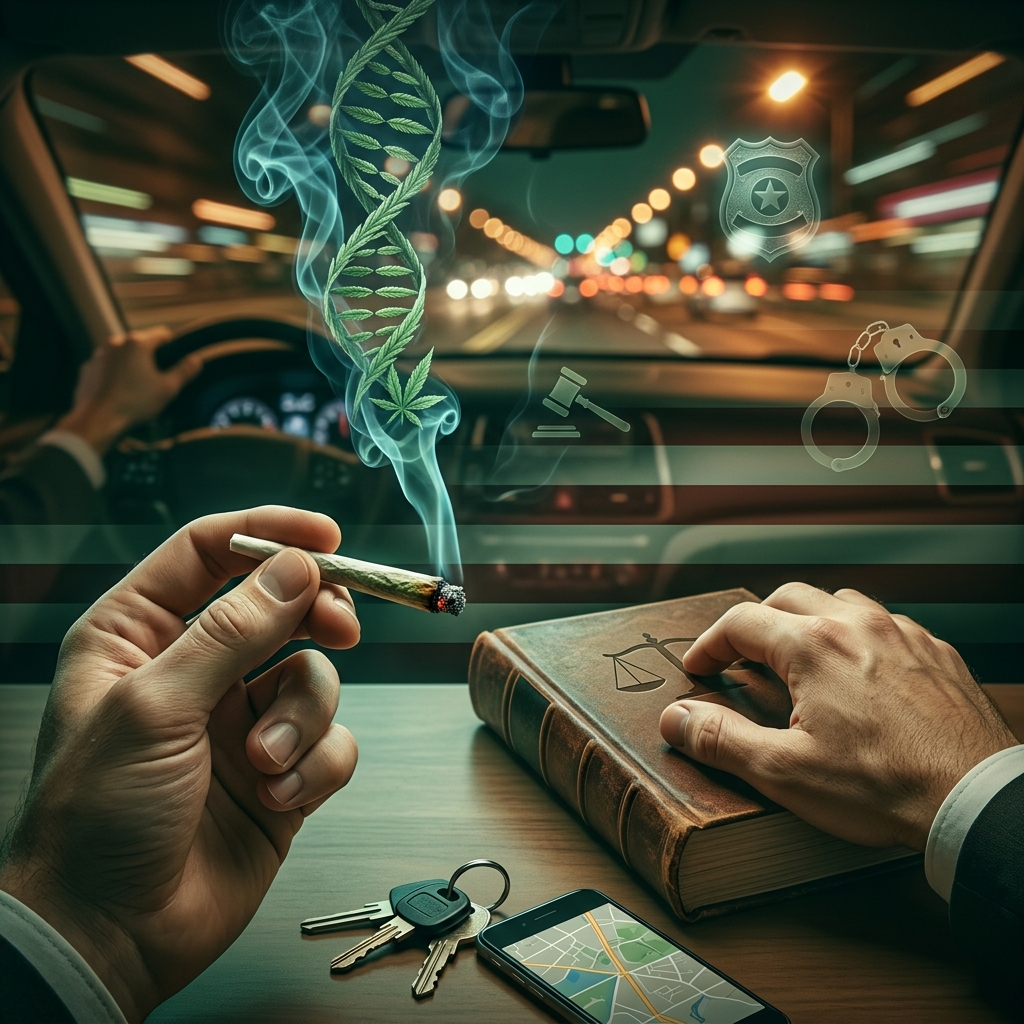
As cannabis legalization spreads across the United States, one area of law remains consistently strict: driving under the influence of marijuana. Even in states that allow medical or recreational cannabis, operating a vehicle while impaired by THC can lead to criminal charges, license suspension, fines, and long-term consequences for your record.
This article explains how marijuana affects driving, the main types of impaired driving laws, how THC testing works, and what legal issues often arise when someone is accused of a marijuana-related DUI.
Why Marijuana Use Matters for Safe Driving
Driving is a complex task that depends on attention, coordination, judgment, and rapid decision-making. Cannabis affects several regions of the brain responsible for these skills, which is why public health agencies treat drug-impaired driving as a serious safety concern.
Key Driving Skills Affected by Cannabis
According to national traffic safety and public health authorities, acute cannabis use can interfere with multiple aspects of driving performance.
- Reaction time: THC can slow the speed at which a driver responds to unexpected hazards or changing traffic conditions.
- Decision-making: Impaired judgment may lead to risky choices, misreading of traffic situations, or delayed responses.
- Coordination and balance: Cannabis affects the systems controlling body movement and balance, undermining vehicle control, especially in sudden maneuvers.
- Perception of time and speed: Drivers under the influence may misjudge how fast they are traveling or how quickly another car is approaching.
- Memory and attention: Impaired short-term memory can reduce the ability to rely on past driving experience in emergencies, while divided attention tasks become more difficult.
Research summarized by the California Office of Traffic Safety suggests that people who drive immediately after using marijuana may increase their risk of being in a crash by roughly 25% to 35% compared with sober driving. This risk may be higher when cannabis is combined with alcohol or other drugs.
Timing of Impairment
The intensity and timing of cannabis impairment depends on how it is consumed:
- Smoking or vaping typically produces rapid onset, with the strongest effects often within the first 30 minutes after use.
- Edibles and other oral products can produce delayed onset, meaning drivers might feel sober when they start driving but become impaired while on the road.
Because of these variations, law enforcement focuses on observable impairment rather than just the fact that a driver has used cannabis.
The Legal Framework: How States Regulate Marijuana DUI
U.S. states use several different legal approaches to address driving under the influence of cannabis. While terminology and details vary, most laws fall into three main categories: impairment-based laws, per se limits, and zero tolerance rules.
Impairment-Based (Effects-Based) Laws
An impairment-based or effects-based law makes it illegal to drive while your ability to operate a vehicle is actually impaired by a substance, regardless of the specific concentration of THC or other drugs in your body.
Under this approach, prosecutors must prove that the driver:
- Used or had THC in their system; and
- Was impaired to the extent that they did not have the normal use of their mental or physical faculties.
Evidence can include driving behavior, officer observations, field sobriety tests, drug recognition expert evaluations, and chemical testing.
Per Se THC Limits
Per se laws set a specific THC concentration above which a person is presumed legally impaired, similar to blood alcohol concentration limits for alcohol.
Under per se rules:
- Having THC at or above the legal threshold in blood or other specimens can itself constitute a DUI offense, even if observable impairment is disputed.
- Some states use additional concepts such as “permissible inference” laws, where THC above a certain level allows—but does not require—courts to infer impairment.
For example, Washington law defines driving under the influence if a driver’s blood THC concentration reaches 5 nanograms per milliliter within two hours of driving. Colorado has a similar level that can be used as a basis for an inference of impairment.
Zero Tolerance Rules
Zero tolerance laws prohibit driving with any measurable amount of certain drugs, including THC or its metabolites, in the body.
Characteristics of zero tolerance rules include:
- Making it illegal to drive if laboratory testing detects specified drugs above very low thresholds, even without clear evidence of impairment at the time of driving.
- Often applied to young drivers or to drugs that are illegal to possess, on the theory that any use should be incompatible with driving.
The Governors Highway Safety Association reports that multiple states use zero tolerance or non-zero per se standards specifically for marijuana, reflecting a policy choice to discourage any drug use before driving.
Comparing Law Types
| Approach | Main Legal Test | Evidence Emphasis | Key Advantage | Key Challenge |
|---|---|---|---|---|
| Impairment-based | Driver is actually impaired while driving | Driving behavior, officer observations, field tests, lab results | Focuses on real-world impairment, similar to rules for many medications | Requires more complex proof; impairment can be subjective |
| Per se THC limit | THC at or above a specified numerical threshold | Laboratory measurement of THC level | Creates a clear numerical standard analogous to alcohol limits | Scientific uncertainty about which THC level reliably equals impairment |
| Zero tolerance | Any measurable amount of specified drug or metabolite | Presence of the substance in blood, urine, or other sample | Strong deterrent effect and simple to apply, especially for illegal drugs | May criminalize drivers who are no longer impaired but still test positive |
Scientific and Legal Challenges in Measuring THC Impairment
One of the core difficulties in marijuana DUI law is that THC does not behave like alcohol in the body. While blood alcohol concentration correlates reasonably well with intoxication, specialists note that there is no universally reliable THC level that always equates to impairment for every driver.
THC Detection vs. Actual Impairment
Several factors make it hard to translate a THC test result into a precise measure of driving impairment:
- Variable tolerance: Regular cannabis users may function differently at the same THC level compared with occasional users.
- Different consumption methods: Smoking, vaping, and ingesting products cause different patterns of onset and decline in blood THC.
- Slow decline in the body: THC and its metabolites can remain detectable long after the peak effects have worn off, especially in heavy users.
- Limitations of roadside testing: Many roadside tools are designed for alcohol; specialized drug recognition methods and lab tests are needed for cannabis.
A review of legal THC limits emphasizes that, because of these complexities, jurisdictions have struggled to identify a concentration that reliably predicts impairment for all drivers. Public safety organizations such as AAA have similarly cautioned that no single THC threshold guarantees a driver is impaired or sober.
Types of Tests Used in Marijuana DUI Cases
When police suspect cannabis impairment, they may use several forms of evaluation and testing:
- Observational evidence: Driving pattern (weaving, speeding, delayed responses), physical appearance, odor of cannabis, speech, and behavior.
- Field sobriety tests: Standard tests assessing balance, coordination, eye movements, and divided attention, sometimes supplemented by drug-focused protocols performed by trained specialists.
- Blood tests: Measurement of active THC in blood, often considered the most direct indicator of recent use.
- Urine tests: Detection of THC metabolites, which may remain long after acute impairment has resolved; more common in zero tolerance systems.
Because THC can linger in the body, many legal commentators argue that test results should be treated as one piece of evidence, not the sole basis for a conviction, particularly in effects-based states.
Penalties and Collateral Consequences of Marijuana DUI
Although penalties vary by state, driving under the influence of marijuana is generally treated comparably to alcohol-related DUI. It is a crime in most jurisdictions to operate a vehicle while impaired by marijuana or any other drug, including prescribed medications.
Common Legal Consequences
Depending on the jurisdiction and the driver’s record, a marijuana DUI can lead to:
- Criminal conviction: Charges ranging from misdemeanors to felonies, especially where injury or death occurs.
- Fines and fees: Substantial court fines, additional assessments, and costs associated with mandatory educational programs.
- License suspension or restrictions: Temporary or extended loss of driving privileges, sometimes with ignition interlock requirements for alcohol-related offenses.
- Incarceration or probation: Jail time, community service, and supervised probation conditions.
- Insurance and employment impact: Significant increases in auto insurance premiums, and potential loss of jobs requiring a clean driving record.
For perspective, the California Highway Patrol has estimated that an impaired driving offense can ultimately cost a driver around $13,500 after considering legal fees, fines, insurance hikes, and other collateral outcomes, even when the case involves alcohol rather than cannabis specifically.
Practical Guidance for Cannabis Users Who Drive
Given the safety risks and legal consequences, public health experts consistently recommend avoiding driving if you have recently used cannabis.
Risk-Reduction Tips
If you use cannabis, consider the following steps to reduce the chance of impaired driving:
- Plan ahead: Arrange a sober ride, designate a driver, or use a taxi or rideshare service.
- Allow sufficient time: Recognize that impairment can last longer than it feels, especially with high-potency products or edibles.
- Avoid mixing substances: Combining cannabis with alcohol or other drugs can significantly increase impairment.
- Secure your cannabis in the vehicle: Many states prohibit open cannabis containers in the passenger area; keeping products sealed and stored in the trunk or glove compartment can help you comply with these rules.
- Know your state’s law: Understand whether your state uses effects-based, per se, or zero tolerance rules, and any specific THC thresholds that apply.
Frequently Asked Questions (FAQs) About Marijuana DUI
Is driving after using cannabis always illegal?
Driving after cannabis use is illegal if you are impaired or if your state’s law prohibits driving with certain levels of THC or any detectable amount of specified drugs in your system. Even in states that allow cannabis possession, impaired driving remains a criminal offense.
Is there a universally safe THC limit for driving?
No single THC level has been scientifically validated as universally safe. Research and traffic safety experts emphasize that unlike alcohol, THC concentrations do not consistently predict impairment across all individuals. Some states have adopted numerical limits, but these are policy choices rather than guarantees of safety.
Can I be charged with DUI if I use medical marijuana?
Yes. Having a medical cannabis authorization does not exempt a driver from DUI laws. Driving under the influence of any drug, including legally prescribed or recommended medications, can still be treated as impaired driving if your ability to operate a vehicle is affected.
How do officers determine if a driver is high?
Officers typically rely on a combination of observed driving behavior, physical signs of impairment, performance on field sobriety tests, and sometimes evaluations by trained drug recognition experts. Laboratory testing of blood or other samples may be used to confirm the presence and level of THC.
Does a positive THC test automatically mean I am guilty of DUI?
The legal effect of a positive test depends on your state’s law. In impairment-based systems, test results are one piece of evidence and prosecutors still must prove you were impaired while driving. In per se or zero tolerance states, certain THC levels or any measurable amount can themselves form the basis of a DUI charge.
Are passengers allowed to use cannabis in a moving vehicle?
Many states prohibit open cannabis use in vehicles by both drivers and passengers, similar to open container rules for alcohol. Guidance from state agencies indicates that cannabis products should be stored in closed containers and kept out of the passenger area when the vehicle is on public roads.
References
- Cannabis and Driving — Centers for Disease Control and Prevention. 2023-01-10. https://www.cdc.gov/cannabis/health-effects/driving.html
- Drug-Impaired Driving — Governors Highway Safety Association. 2021-09-01. https://www.ghsa.org/state-laws-issues/drug-impaired-driving
- Marijuana and DUI Laws — Marijuana Policy Project. 2022-06-15. https://www.mpp.org/issues/criminal-justice/marijuana-and-dui-laws/
- Establishing legal limits for driving under the influence of marijuana — Hartman RL & Huestis MA, American Journal on Addictions. 2017-09-01. https://pmc.ncbi.nlm.nih.gov/articles/PMC5005632/
- Drug-Impaired Driving — California Office of Traffic Safety. 2023-03-01. https://www.ots.ca.gov/media-and-research/campaigns/drugged-driving/
- Driving and Traveling — Washington State Liquor and Cannabis Board. 2022-05-01. https://lcb.wa.gov/education/driving_and_traveling
- Cannabis and Driving — New York State Department of Motor Vehicles / Traffic Safety. 2023-05-10. https://trafficsafety.ny.gov/system/files/documents/2023/05/draft-revised-cannabis-slide-deck-v-4.0.pdf
Similar Articles








Read full bio of Sneha Tete




