
Understanding Mail Theft Laws and Penalties
A clear guide to how federal and state laws treat mail theft, its penalties, and what to do if you are accused.
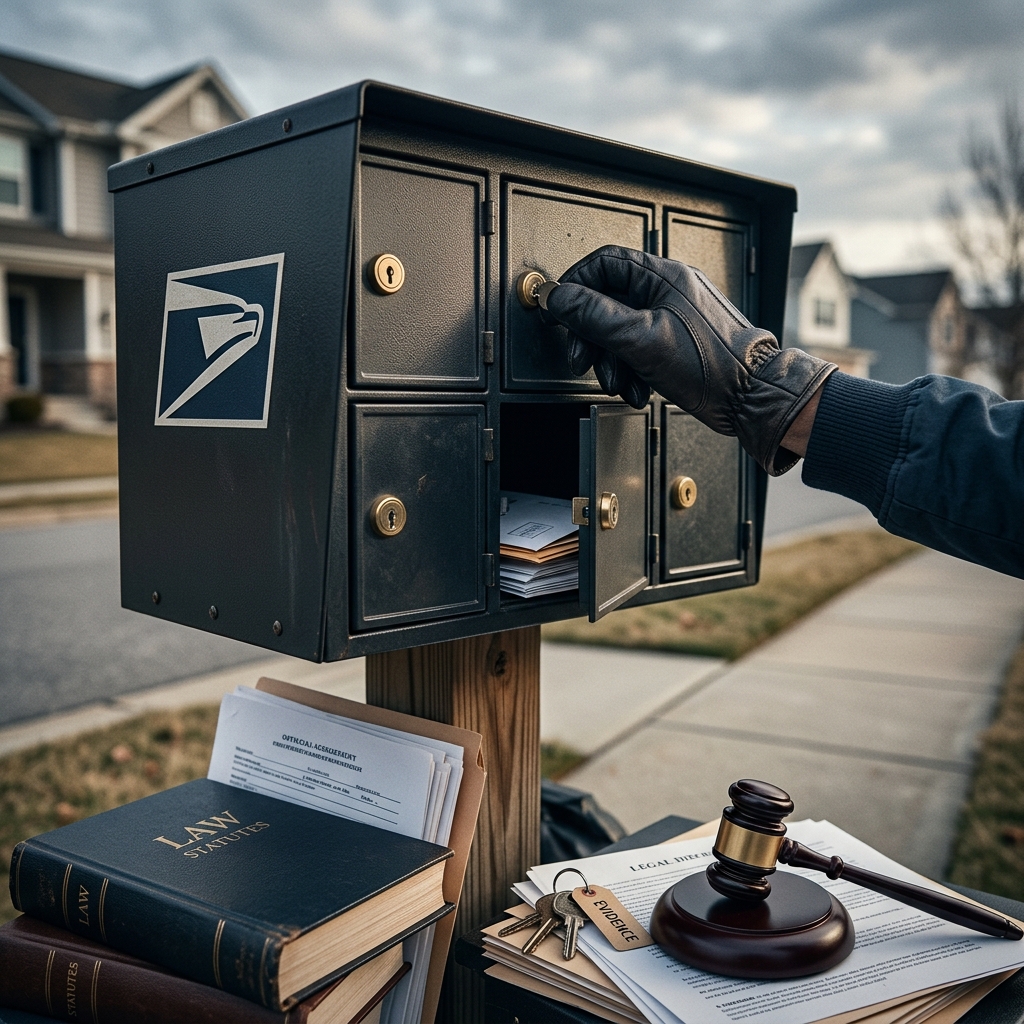
Mail theft may sound like a minor property crime, but in the United States it is often treated as a serious offense under federal and state law. Interfering with letters, packages or other postal items can expose you to felony charges, substantial fines, and potential time in jail or prison. This article explains how mail theft is defined, why the law treats it so strictly, what penalties you could face, and what steps to consider if you are accused.
Why Mail Theft Is Taken So Seriously
The U.S. mail system is a core part of the country’s communications and commerce infrastructure. The United States Postal Service (USPS) is a federal agency, and Congress has long viewed the protection of the mail as a matter of national importance. Historically, penalties for mail theft were extremely harsh. In 1792, an act of Congress made mail theft punishable by death, and although those sanctions have since been reduced, modern law still imposes strong penalties.
Today, federal statutes make it a crime to steal or tamper with mail, obstruct its delivery, or receive mail you know to be stolen. States often layer their own criminal statutes on top of federal law, meaning a single act of mail theft can potentially trigger both federal and state charges.
- Protection of privacy: Mail frequently contains sensitive personal information, financial documents, and confidential communications.
- Protection of property: Letters and packages can include negotiable instruments, checks, money orders, and valuable goods.
- Integrity of the postal system: Public confidence in the mail depends on reliable and secure delivery.
Federal Definition of Mail Theft
The main federal statute governing mail theft is 18 U.S.C. § 1708, which broadly prohibits stealing or receiving stolen mail matter. The law covers much more than simply taking letters from someone else’s mailbox.
Conduct Covered by 18 U.S.C. § 1708
Under 18 U.S.C. § 1708, a person may commit mail theft by engaging in any of the following types of conduct:
- Stealing, taking, or abstracting mail from a post office, letter box, mail receptacle, mail route, or other authorized depository.
- Obtaining mail by fraud or deception from any such postal facility or authorized depository.
- Removing items from a letter or package after it has entered the mail.
- Embezzling, secreting, or destroying letters, postcards, packages, bags, or their contents.
- Buying, receiving, or possessing mail or its contents while knowing that the items were stolen or unlawfully taken.
Importantly, you do not have to personally take the mail from a mailbox to be charged under this statute. Simply possessing mail you know is stolen can be enough to support a federal mail theft charge.
Other Federal Postal Offenses
Mail-related conduct can also fall under other federal statutes, depending on the facts of the case. For example, federal law separately prohibits obstructing the delivery of mail, damaging mail receptacles, and misusing postal property.
- Obstruction of mails generally (18 U.S.C. § 1701): Interfering with the movement or delivery of mail.
- Opening or destroying mail without authority (18 U.S.C. § 1703): Applies particularly to postal employees in some contexts.
- Theft or destruction of postal property (18 U.S.C. §§ 1705, 1706, 1707): Involves damage to mailboxes, mail bags, or property used by the Postal Service.
Typical Federal Penalties for Mail Theft
Because mail theft involves the federal postal system, offenders can be prosecuted in federal court. Under 18 U.S.C. § 1708, the standard penalty for mail theft is up to five years in federal prison and a fine, which can reach $250,000 for individuals in many federal cases. The statute itself states that offenders “shall be fined under this title or imprisoned not more than five years, or both.”
| Type of Federal Offense | Statute | Maximum Penalty |
|---|---|---|
| Theft or receipt of stolen mail matter | 18 U.S.C. § 1708 | Fine and up to 5 years in federal prison |
| Obstruction of mails generally | 18 U.S.C. § 1701 | Typically misdemeanor; fine and/or up to 6 months or 1 year (case-dependent) |
| Damage to mailboxes or mail bags | 18 U.S.C. §§ 1705, 1706 | Varies; can include fines and imprisonment |
In addition to prison and fines, courts may order restitution to compensate victims for stolen property, financial losses, or identity theft-related damages. In aggravated situations, such as mail theft connected to disaster fraud or financial institution crimes, penalties under other federal statutes can reach substantially higher terms of imprisonment.
State-Level Mail Theft Laws and Penalties
Many states have enacted their own mail theft statutes to complement federal law. These statutes often focus on theft of mail from multiple addresses, negotiable instruments in the mail, or identity theft linked to stolen mail. State penalties can range from misdemeanors to serious felonies, depending on the volume of mail involved and the nature of the items stolen.
Example: Texas Mail Theft Law
Texas has a specific mail theft provision, Penal Code § 31.20, making it illegal to intentionally appropriate mail without the addressee’s consent, with the intent to deprive them of the mail or to steal a negotiable instrument.
- Class A misdemeanor: Theft from fewer than 10 addressees; punishable by up to one year in county jail and a fine up to $4,000.
- State jail felony: Theft from at least 10 but fewer than 30 addressees.
- Third degree felony: Theft from 30 or more addressees.
- Enhanced penalties: When negotiable instruments are involved, penalties may rise to second or first degree felonies if the number of instruments is high.
Texas also applies different statutes of limitations depending on whether the offense is charged as a misdemeanor or felony, illustrating how states treat repeated or large-scale mail theft particularly seriously.
Example: California’s Approach
California’s Penal Code § 530.5(e) incorporates the federal definition of mail theft from 18 U.S.C. § 1708 and classifies mail theft as a misdemeanor. Conviction can lead to:
- Up to one year in county jail.
- A fine of up to $1,000.
- Both fine and jail, or court-supervised probation.
California’s statute makes it illegal to steal mail from any authorized depository, obtain mail by fraud, open or destroy stolen mail, or possess mail knowing it was stolen. The law therefore covers both the initial theft and subsequent handling of the stolen correspondence.
Example: Ohio and Related Identity Theft
Ohio does not have a single dedicated “mail theft” statute, but mail theft can be prosecuted under general theft laws or identity theft provisions when stolen mail is used to obtain personal information. For instance:
- First-degree misdemeanor theft: Up to 180 days in jail and up to $1,000 in fines.
- Fifth-degree felony theft: Six to twelve months in prison and up to $2,500 in fines.
- Identity theft involving certain classes of victims: Penalties can reach as high as 11 years in prison.
Mail is a common source of personal information, so stolen mail frequently intersects with identity theft charges, significantly increasing the potential punishment in state court.
Common Scenarios That May Constitute Mail Theft
People are sometimes surprised to learn that seemingly minor or casual conduct can be treated as mail theft. Examples that may trigger criminal liability include:
- Taking a neighbor’s package from a shared lobby or front porch without permission.
- Removing checks or payment cards from another person’s mail and using them.
- Collecting envelopes left near a collection box, thinking they were abandoned, when they were actually awaiting pickup.
- Receiving packages or letters known to be stolen and keeping or reselling their contents.
- A postal employee or contractor discarding, delaying, or destroying mail rather than delivering it.
Intent is important. Accidental misdelivery and honest attempts to redirect mail to the correct recipient usually do not amount to mail theft. However, once someone intentionally interferes with mail for personal gain or to harm another, criminal exposure increases.
Investigations and Enforcement
Mail theft cases often involve multiple agencies. The U.S. Postal Inspection Service (USPIS) is the primary federal law enforcement arm responsible for protecting mail and investigating postal crimes. Postal Inspectors may work with local police, state investigators, and federal prosecutors depending on the nature and scope of the alleged offense.
Mail theft investigations can include:
- Surveillance of suspected mail theft hotspots, such as apartment mailbox clusters or porch delivery areas.
- Review of CCTV footage from residential buildings, post offices, and delivery vehicles.
- Interviews with victims, neighbors, postal workers, and others who may have witnessed suspicious activity.
- Analysis of financial records when checks or financial instruments are stolen and later cashed or deposited.
USPIS encourages the public to report suspected mail theft or tampering promptly. Reports can be filed directly with the agency, and early reporting may help investigators identify patterns or organized theft rings.
Potential Defenses in Mail Theft Cases
Legal defenses in mail theft cases depend on the facts, the applicable statutes, and the evidence gathered by investigators. While this article does not offer legal advice, it is useful to understand some common themes that appear in mail theft defenses.
- Lack of theft: Arguing that the accused did not actually take or possess the mail, or that someone else committed the theft.
- Lack of knowledge: Contending that the accused did not know the mail or property in their possession was stolen, which is especially relevant to charges based on receiving or possessing stolen mail.
- Lack of intent: Showing that any contact with the mail was accidental or based on an honest belief that the accused was allowed to handle it, undermining the required criminal intent.
- Unlawful search or seizure: Challenging how evidence was obtained, particularly if it involves searches of homes, vehicles, or digital devices; illegal searches can result in evidence suppression.
Because mail theft statutes can be complex and penalties are often severe, individuals under investigation or charged with mail-related offenses typically benefit from consulting a qualified criminal defense attorney familiar with federal and state law.
Practical Steps If You Are Accused of Mail Theft
Facing a mail theft investigation or criminal charge can be stressful and confusing. While every situation is different, the following practical steps are often recommended from a general information standpoint:
- Do not ignore the allegations: Contact from law enforcement or a summons from court should be taken seriously; failing to respond can worsen your position.
- Seek legal counsel promptly: Speak with a defense lawyer who understands both federal and state mail theft statutes; early legal guidance can influence how your case develops.
- Be cautious about statements: Anything you say to investigators can be used as evidence. Consult with your attorney before providing written or recorded statements.
- Preserve relevant information: Keep any documents, communications, or video footage that may help explain your involvement or show that you lacked criminal intent.
- Follow all court orders and deadlines: Appear for scheduled hearings, comply with bond conditions, and respond promptly to notices.
These steps are general and do not replace individualized legal advice. Only a licensed attorney can advise you on how the law applies to your specific circumstances.
Frequently Asked Questions (FAQs)
Is mail theft always a federal crime?
Mail theft is often chargeable under federal law because it involves the USPS and the national postal system. However, many states also have their own mail theft or related statutes, and prosecutors sometimes pursue charges in state court instead of, or in addition to, federal court. Whether a case is handled federally, at the state level, or both depends on the facts, scale of the conduct, and prosecutorial discretion.
What is the maximum penalty for federal mail theft?
Under 18 U.S.C. § 1708, the maximum penalty for mail theft is a fine and up to five years in federal prison. In practice, actual sentences depend on factors such as prior criminal history, the value of the stolen items, and whether other related crimes, such as identity theft or fraud, are also charged.
Can I be charged for possessing stolen mail if I did not steal it myself?
Yes. Federal law makes it illegal to buy, receive, or possess mail that you know has been stolen. Similar principles apply under many state laws. The key element is knowledge; if the prosecution can prove you knew the mail was stolen and chose to keep or benefit from it, you may face criminal liability.
Does taking a misdelivered package count as mail theft?
It can, depending on your intent and what you do with the package. If a package is clearly addressed to someone else and you intentionally keep it rather than returning it or notifying the carrier, prosecutors may treat that as theft of mail or property. Each case turns on its specific facts and local law.
Who should I contact if I suspect mail theft in my neighborhood?
If you believe your mail is being stolen or tampered with, you can report it to the U.S. Postal Inspection Service and your local law enforcement agency. Providing details such as dates, times, and any available video footage can assist investigators in identifying patterns or suspects.
References
- 18 U.S. Code § 1708 – Theft or receipt of stolen mail matter generally — Legal Information Institute, Cornell Law School. 2010-01-05. https://www.law.cornell.edu/uscode/text/18/1708
- 1792 – Death penalty for mail theft — United States Postal Service, Postal Facts. 2023-01-01. https://facts.usps.com/1792-death-penalty-for-mail-theft/
- Is Mail Theft a Federal Crime? — Patituce & Associates. 2024-02-01. https://www.patitucelaw.com/blog/2024/february/is-mail-theft-a-federal-crime-/
- The Texas Mail Theft Law | Penal Code § 31.20 — Saputo Toufexis Criminal Defense. 2023-09-01. https://saputo.law/criminal-law/texas/mail-theft/
- Mail Theft in California | Penal Code 530.5(e) PC — Eisner Gorin LLP. 2022-11-01. https://www.keglawyers.com/mail-theft-penal-code-530-5e
- Mail Theft Punishment in Ohio — Gounaris Abboud, LPA. 2023-03-01. https://www.gafirm.com/legal-blog/mail-theft-punishment/
- 1468. Misdemeanor Postal Crimes — U.S. Department of Justice, Justice Manual. 2018-03-08. https://www.justice.gov/archives/jm/criminal-resource-manual-1468-misdemeanor-postal-crimes
Similar Articles








Read full bio of medha deb




