
Traffic Arrests After a Stop: What Drivers Need to Know
Understand how routine traffic stops can lead to arrest, what your rights are, and how to protect yourself legally and safely on the road.
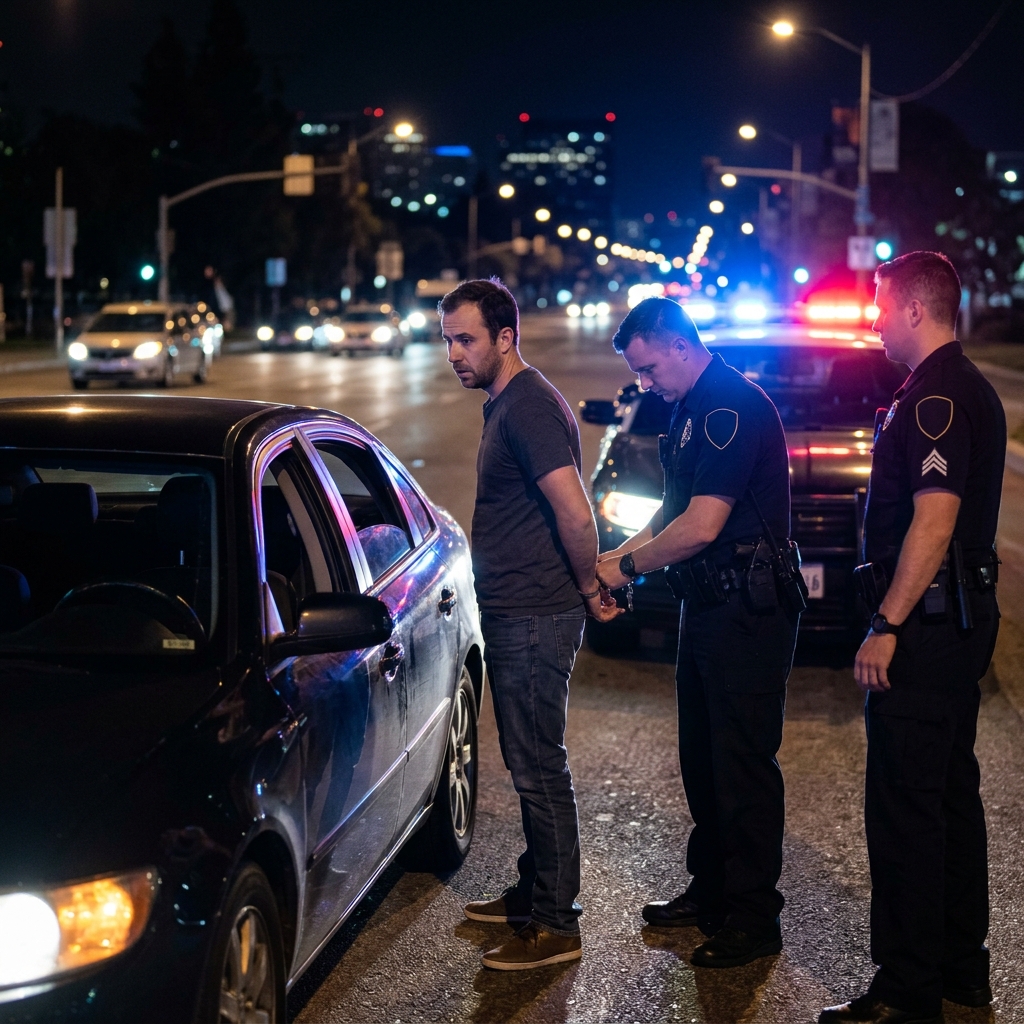
Many encounters with law enforcement begin as simple traffic stops, yet some end in handcuffs and criminal charges. Understanding when a stop can turn into an arrest, what your rights are, and how to respond can make a major difference in the outcome of the situation.
This guide explains, in plain language, how traffic arrests work in the United States, what officers are allowed to do, and how you can protect both your safety and your legal interests.
1. How Routine Traffic Stops Work
Traffic stops usually start with an alleged violation: speeding, failing to signal, broken lights, or other issues with your driving or vehicle. An officer may also stop a car based on reasonable suspicion of criminal activity, such as impaired driving.
Under the Fourth Amendment, police need at least reasonable suspicion that a law is being violated to stop a vehicle, and a stop for even a minor traffic violation is generally allowed if the officer can point to a specific reason.
- Initial signal: You will typically see flashing lights and may hear a siren.
- Safe pull-over: You are expected to pull over as soon as it is safe.
- Officer approach: The officer will come to your window, usually the driver’s side, and begin the interaction.
During this phase, officers may ask for your license, registration, and proof of insurance and may ask a limited number of questions about the reason for the stop and your recent activities.
2. When a Traffic Stop Becomes a Detention or an Arrest
A traffic stop begins as a short investigative encounter, but it can escalate. There are roughly three stages of police-citizen interaction on the road:
| Type of Interaction | Legal Standard | What It Means for You |
|---|---|---|
| Consensual contact | No suspicion required | You are free to leave; cooperation is voluntary. |
| Investigative stop (traffic stop) | Reasonable suspicion | You are not free to leave until released; stop must be reasonably brief. |
| Arrest | Probable cause | You may be searched, transported, and formally charged. |
Asking, “Am I free to go?” is a practical way to understand whether you are merely being stopped or are being detained for further investigation.
Common reasons a stop turns into an arrest
- Outstanding warrants discovered during checks
- Driving under the influence (DUI/DWI)
- Possession of drugs or illegal weapons
- Reckless driving or racing
- Refusal to sign a citation in jurisdictions where signatures are required
- Obstruction, physical resistance, or assault on an officer
Once the officer has probable cause to believe you committed a crime, the traffic stop can lawfully become a full custodial arrest.
3. Your Core Constitutional Rights During a Traffic Arrest
Even if you are arrested after a traffic stop, you retain important constitutional protections. Knowing these rights helps you avoid self-incrimination and unlawful searches.
Right to remain silent
Both drivers and passengers have the right to remain silent about anything beyond basic identifying information. This right stems from the Fifth Amendment, which protects against self-incrimination.
To use this right effectively, it is usually best to state it out loud, such as:
- “I choose to remain silent.”
- “I wish to remain silent.”
After clearly expressing this, you do not need to answer questions about where you were, what you were doing, or whether you have used drugs or alcohol.
Right to an attorney
If you are detained or arrested, you have the right to an attorney before answering further questions. This right becomes crucial once the encounter turns into custodial interrogation.
- You can say, “I want to talk to a lawyer.”
- If you cannot afford one, a lawyer can be provided for you.
Police should stop asking you substantive questions after you clearly invoke this right.
Protection against unreasonable searches
The Fourth Amendment limits when officers can search your car or personal belongings. As a general rule, officers cannot conduct a full search of your vehicle merely for a minor traffic violation.
However, there are important exceptions, including:
- Consent: If you agree to a search.
- Probable cause: Evidence or strong suspicion of drugs, weapons, or other contraband.
- Arrest-related searches: Vehicle inventory after towing or evidence search related to the crime.
You have the right to say, “I do not consent to a search.” This does not guarantee officers will stop if they believe they have legal grounds, but it preserves your ability to challenge the search later in court.
4. Safe and Smart Behavior When You Are Stopped
Your behavior during a stop can affect both your safety and how the incident unfolds. Many rights are easier to use when you stay calm and avoid escalating the situation.
Practical steps as the officer approaches
- Pull over to a safe location as soon as possible.
- Turn off the engine and, if it’s dark, consider turning on your interior light so the officer can see inside.
- Roll down the window and keep your hands visible, preferably on the steering wheel.
- Passengers should make their hands visible too.
When the officer asks for documents:
- Tell the officer what you are about to reach for, such as, “I’m going to reach for my registration now.”
- Retrieve your license, registration, and proof of insurance slowly, without sudden movements.
- Provide your name and basic identifying information when required.
What you should avoid doing
- Do not run or attempt to leave without permission.
- Do not argue or insult the officer, even if you believe the stop is unjust.
- Do not reach into bags, compartments, or pockets without explaining your actions.
- Do not physically resist, push, or pull away from officers.
Remaining polite and composed does not mean giving up your rights; you can be respectful and firm at the same time.
5. Vehicle Searches and Passenger Rights
Searches are one of the most confusing aspects of traffic stops. Drivers and passengers often don’t know what officers can and cannot do. Understanding some basics helps you react appropriately.
Driver and passenger rights
Both drivers and passengers have the right to challenge the legality of a stop and to remain silent. According to federal court guidance, passengers can, in some circumstances, challenge whether the stop itself was lawful.
- Step-out orders: Officers may direct the driver and passengers to step out of the vehicle if they believe it is necessary for safety.
- Pat-downs: If officers reasonably suspect someone may be armed, they can conduct a brief pat-down for weapons and seize any contraband discovered.
Consent and non-consent to searches
Officers often ask, “Do you mind if I search your car?” or a similar question. You are not required to say yes. Clearly and calmly stating your lack of consent is important:
- “I do not consent to a search of my vehicle.”
- “I do not consent to a search of my belongings.”
If officers search anyway, do not physically interfere. Your clear refusal creates a record that can be reviewed by a court later, where a judge may decide whether the search was lawful.
6. What Happens If You Are Arrested
Being arrested at a traffic stop is stressful, but understanding what typically happens next can reduce confusion and help you make better decisions.
During the arrest
- Officers may place you in handcuffs and inform you that you are under arrest.
- Your vehicle may be searched as part of an inventory before being towed.
- You may be transported to a police station or jail for booking.
At this stage, your best legal protection is to remain calm, avoid resisting arrest, and continue to assert your right to remain silent and to have an attorney.
After booking
Local rules differ, but in many jurisdictions:
- You may have the right to make phone calls within a set time after arrest or booking.
- You can contact a lawyer, a bail bondsman, or a family member, and sometimes have extra calls to arrange childcare if you have minor children.
- You may be given written information about charges and court dates.
It is usually wise not to discuss the incident with anyone except your attorney, especially because calls from jail are often recorded and may be monitored.
7. Documenting Problems and Filing Complaints
If you believe the officer violated your rights or mistreated you, you can take steps later to challenge the conduct or file a complaint. Doing so methodically and calmly is more effective than arguing during the stop.
Information to preserve
- Officer names, badge numbers, and patrol car numbers.
- Time, date, and exact location of the stop.
- Descriptions of what happened, including specific words used and actions taken.
- Names and contact information of any witnesses.
- Photos of injuries or property damage, taken as soon as reasonably possible.
Writing down these details shortly after the event helps ensure accuracy. Memory fades quickly, and notes can be very helpful to your attorney or a reviewing agency.
Where to file complaints
- Internal affairs or professional standards division of the police department.
- Civilian oversight boards where they exist.
- State civil rights agencies or similar bodies for civil rights violations.
Filing a complaint does not guarantee discipline or legal relief, but it can trigger internal investigations and create a record of concerning conduct that may be relevant in later legal proceedings.
8. Practical Tips to Protect Your Rights and Safety
Combining legal knowledge with practical actions is the best strategy. Below are concise, action-oriented points to keep in mind:
- Stay calm and polite. Your tone can influence the course of the stop.
- Keep hands visible. This is critical for everyone’s safety.
- Provide required documents. License, registration, and proof of insurance should be offered when requested.
- Ask why you are being stopped. Officers should be able to state a reason.
- Exercise your right to remain silent about anything beyond basic identification.
- Clearly decline consent to searches. A simple statement like “I do not consent to a search” is usually sufficient.
- Request a lawyer if arrested or seriously questioned.
- Do not resist arrest physically. Contest the legality later through legal channels.
9. Frequently Asked Questions
FAQ 1: Do I have to answer the officer’s questions during a traffic stop?
You are generally required to provide basic identifying information and documents such as a driver’s license, registration, and proof of insurance. Beyond that, you have the right to remain silent and are not required to answer questions about where you were, what you were doing, or other potentially incriminating topics.
FAQ 2: Can I ask if I am free to go?
Yes. Asking “Am I free to go?” is a lawful and useful way to clarify whether the encounter is still a brief investigative stop or has become a detention. If the officer says you are free to go, you may leave calmly; if not, you can ask why you are being stopped.
FAQ 3: Are passengers required to stay during the stop?
Passengers are generally considered part of the stop and may not be free to leave until the encounter ends. However, passengers, like drivers, have rights under the Fourth Amendment and may raise legal challenges if the stop or subsequent search is unlawful.
FAQ 4: When can the police search my car?
Police can visually inspect your car’s interior from the outside as any other person could. A more intrusive search typically requires your consent, probable cause of criminal activity, or a search incident to arrest, such as an inventory search after towing the vehicle. You can always state that you do not consent to a search, although officers may proceed if they believe legal grounds exist.
FAQ 5: What should I do if I think my rights were violated?
Do not argue or resist physically at the scene. Instead, focus on staying safe and preserving information. Afterward, write down details of the incident, seek legal advice, and consider filing a complaint with the appropriate agency. An attorney can help you evaluate whether your rights were violated and what remedies might be available.
References
- Traffic Stops by Police & Your Legal Rights — Justia. 2023-04-01. https://www.justia.com/traffic-tickets/police-stops/
- Stopped by Police — American Civil Liberties Union. 2022-09-15. https://www.aclu.org/know-your-rights/stopped-by-police
- Know Your Rights: Police Interactions — ACLU of Northern California. 2022-06-20. https://www.aclunorcal.org/know-your-rights/police-interactions/
- Stopped by the Police — ACLU of North Carolina. 2021-11-10. https://www.acluofnorthcarolina.org/know-your-rights/stopped-police/
- Traffic Stops: Police Powers Under the Fourth Amendment — National Institute of Justice (OJP). 2000-05-01. https://www.ojp.gov/ncjrs/virtual-library/abstracts/traffic-stops-police-powers-under-fourth-amendment
- FOURTH AMENDMENT: PASSENGERS AND POLICE STOPS — Administrative Office of the U.S. Courts. 2013-01-01. https://www.uscourts.gov/sites/default/files/rights-police-stops.pdf
- Your Rights During a California Traffic Stop: What to Know — Guraiib Law. 2023-02-18. https://gabrielaguraiiblaw.com/your-rights-california-traffic-stop/
Similar Articles








Read full bio of medha deb


