
Collision Insurance: What It Covers, When It’s Worth It In 2025
Understand when collision coverage helps, what it excludes, and how deductibles affect claims.
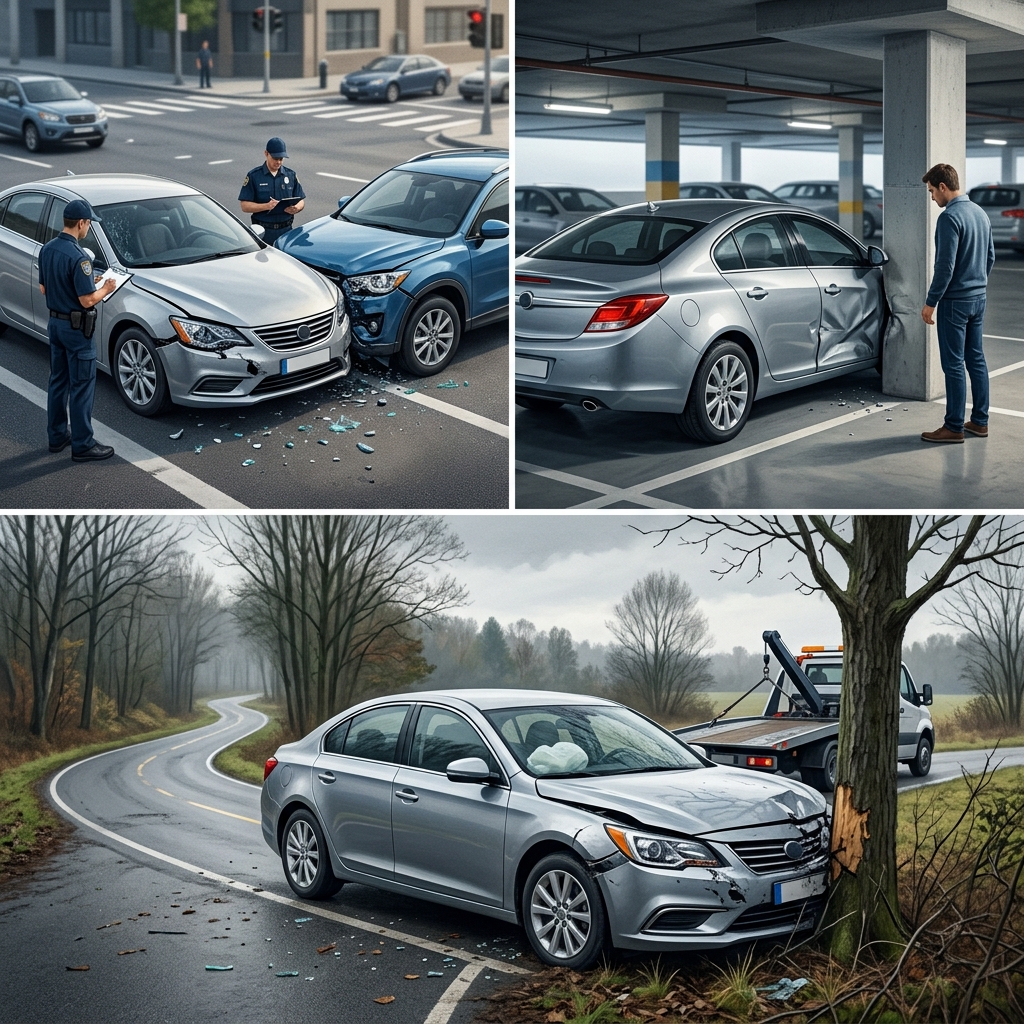
Collision insurance is designed to help pay for damage to your own car after a crash. It is usually an optional auto insurance coverage, but it can be especially important if you want help repairing or replacing a vehicle after a serious accident, whether the crash was your fault or not.
Many drivers confuse collision coverage with other parts of an auto policy. The simplest way to think about it is this: collision coverage focuses on your vehicle after a collision-related event, while liability coverage protects other people and their property, and comprehensive coverage addresses many non-crash losses.
How collision coverage works
When you file a collision claim, your insurer typically pays for covered repairs or replacement costs up to the actual cash value of the vehicle, minus your deductible. If the repair bill is higher than the car’s value, the vehicle may be declared a total loss, and the payout is generally limited to that vehicle value rather than the full repair estimate.
The deductible is the amount you agree to pay out of pocket before the insurance company contributes to the claim. A higher deductible often lowers the premium, while a lower deductible usually increases the premium. Because collision claims are tied to the value of the vehicle, this coverage becomes less useful as a car ages and loses market value.
Situations that are commonly covered
Collision insurance generally applies when your car is damaged in a crash or impact event. Typical covered situations include striking another vehicle, hitting a fixed object, or rolling over.
- Vehicle-to-vehicle crashes: If your car is involved in a fender-bender or a more serious collision with another car, collision coverage may help pay for damage to your vehicle.
- Impact with a stationary object: Hitting a tree, fence, pole, mailbox, guardrail, or building is usually within the scope of collision coverage.
- Rollovers: If your car flips over, collision insurance generally applies to the damage from that event.
- Pothole damage: Some insurers and industry sources describe pothole-related damage as a collision loss because it results from impact rather than a non-collision hazard.
- Parking-lot and low-speed accidents: Backing into a post, scraping a wall, or being struck in a parking lot may also fall under collision coverage depending on the facts.
At-fault and not-at-fault accidents
One important feature of collision insurance is that it can apply regardless of fault. That means you may use it whether you caused the accident or another driver did, as long as the damage is the kind collision coverage is designed to address.
This does not mean the other driver disappears from the picture. If another person caused the crash, their liability insurance may be responsible for paying for your vehicle damage. Collision coverage can still be useful when that claim is delayed, disputed, underinsured, or impossible to collect from quickly.
What collision insurance does not cover
Collision coverage is narrower than many drivers assume. It does not generally pay for losses that are unrelated to a collision event, and it also does not cover injuries.
- Medical expenses: Collision coverage does not pay for your injuries or anyone else’s injuries.
- Damage to another person’s car or property: Those losses are usually handled by liability coverage, not collision.
- Theft: A stolen car is typically handled under comprehensive coverage rather than collision.
- Vandalism: Keying, broken windows from vandalism, or similar intentional damage usually falls under comprehensive coverage.
- Weather and natural disasters: Hail, floods, windstorms, and similar events are generally not collision losses.
- Animal strikes: Hitting a deer or other animal is commonly treated as comprehensive damage, not collision.
Collision vs. comprehensive coverage
Collision and comprehensive coverage are often purchased together, but they solve different problems. Collision is about impact-related damage from a crash or rollover; comprehensive covers many other kinds of physical damage to your vehicle.
| Coverage type | Typical events covered | What it does not usually cover |
|---|---|---|
| Collision | Crash with another vehicle, collision with an object, rollover, some pothole damage | Theft, vandalism, weather damage, animal strikes, injuries, damage to other people’s property |
| Comprehensive | Theft, fire, vandalism, storm damage, flooding, animal contact, falling objects | Most crash-related damage from colliding with another vehicle or object |
For many drivers, the difference matters because one type of claim can leave them surprised if they chose the wrong coverage. A car damaged by hail may not be covered by collision, while a car damaged in a crash may not be covered by comprehensive.
When collision coverage is often required
Collision insurance is usually optional for a car you own outright, but lenders and leasing companies commonly require it while a vehicle is financed or leased. Their reason is practical: the car is still tied to an outstanding loan or lease obligation, so the lender wants protection if the vehicle is badly damaged or totaled.
Drivers who own older cars without a loan sometimes choose to drop collision coverage if the premium no longer makes sense relative to the car’s value. That decision depends on the vehicle’s market value, the deductible, the driver’s savings, and how much financial risk they are willing to carry.
How to decide whether the coverage is worth it
The right choice depends on more than just the monthly premium. A cheap policy may still be a poor fit if the deductible is high and the car’s actual cash value is low.
- Vehicle value: If the car is worth only a modest amount, a large premium may not justify the coverage.
- Deductible amount: If you could not comfortably pay the deductible, a collision claim may not help as much as expected.
- Driving environment: Heavy traffic, tight parking, icy roads, and frequent commuting can increase the chance of a collision claim.
- Loan or lease terms: Financing agreements may leave you little choice until the debt is paid off.
- Your savings cushion: Drivers who could replace or repair the car on their own may decide to self-insure instead of paying for collision coverage.
Filing a collision claim
If your car is damaged in a qualifying crash, the claim process usually begins with reporting the incident to your insurer and documenting the damage. Photos, repair estimates, police reports, and the other driver’s insurance information can help support the claim and reduce delays.
After the insurer reviews the loss, it will determine whether the damage is covered, whether the vehicle can be repaired, and whether the car is a total loss. If another driver was responsible, your insurer may later try to recover some or all of the payout from that driver’s insurer through subrogation.
Common misconceptions
Drivers often assume collision coverage is broader than it is. A few misunderstandings come up frequently.
- “It covers every kind of damage.” It does not. Non-collision losses usually belong under comprehensive coverage.
- “If I’m not at fault, I never need it.” Not always true. The other driver’s insurer may not pay promptly, may deny responsibility, or may be uninsured or underinsured.
- “It covers injuries too.” It does not. Medical costs are handled by health insurance, medical payments coverage, personal injury protection, or liability coverage depending on the policy structure and state rules.
- “It always pays the full repair bill.” Deductibles and the vehicle’s actual cash value limit the payout.
FAQs
Does collision insurance cover hitting a tree?
Yes, collisions with stationary objects like trees are generally included because the loss results from impact damage to your vehicle.
Does collision insurance cover a car accident if I was at fault?
Yes, collision coverage can still apply even if you caused the crash, as long as the damage is the type the policy covers.
Does collision insurance pay for the other driver’s car?
No. Damage to another person’s vehicle or property is normally covered by liability insurance, not collision.
Is collision insurance the same as comprehensive insurance?
No. Collision covers crash-related damage, while comprehensive generally covers non-crash losses such as theft, weather damage, vandalism, and animal-related incidents.
Can I drop collision coverage on an older car?
Possibly. Many drivers consider dropping it when the premium plus deductible no longer makes economic sense compared with the car’s value, especially if the car is fully paid off.
References
- What Is Collision Coverage and What Does It Cover? — State Farm. 2025-01-01. https://www.statefarm.com/simple-insights/auto-and-vehicles/what-is-collision-coverage
- What is covered by collision and comprehensive auto insurance? — Insurance Information Institute. 2025-01-01. https://www.iii.org/article/what-is-covered-by-collision-and-comprehensive-auto-insurance
- What Does Collision Insurance Cover? — GEICO. 2025-01-01. https://www.geico.com/information/aboutinsurance/auto/collision-coverage/
- Collision Vs Comprehensive Insurance: What’s the Difference? — Edgar Snyder. 2025-01-01. https://www.edgarsnyder.com/resources/collision-comprehensive-insurance
- Auto Collision Insurance — Progressive. 2025-01-01. https://www.progressive.com/answers/auto-collision-coverage/
- Collision Insurance Coverage: What It Is & Why It’s Important — Nationwide. 2025-01-01. https://www.nationwide.com/lc/resources/auto-insurance/articles/what-is-collision-insurance
- Collision Insurance Coverage — Liberty Mutual. 2025-01-01. https://www.libertymutual.com/vehicle/auto-insurance/coverage/collision-insurance
- What is Collision Insurance? — Allstate. 2025-01-01. https://www.allstate.com/resources/car-insurance/what-is-collision-insurance
- Collision insurance coverage — Cornell Law School, Legal Information Institute. 2025-01-01. https://www.law.cornell.edu/wex/collision_insurance_coverage
Similar Articles








Read full bio of medha deb




